
Archery target stand aluminum frame cutting starts with a boundary: which released aluminum members belong to the stand, and which items belong to the target system? A target face, foam block, fiberglass rod, bungee, wheel or fastener is not a cut aluminum frame member. Send a saw supplier a stand assembly photograph alone and the quotation can hide incompatible assumptions about stock shape, interfaces and kit quantities. This guide turns the drawing package into a cut-member RFQ that a buyer can compare and inspect.
Archery target stand aluminum frame cutting starts with the architecture
Commercial archery stands demonstrate why one universal cut list is unsafe. Jaypro’s PE-120 describes a tubular aluminum frame with an adjustable target support and two wheels, while the target is excluded. A S.A.F.E. Archery Target Dummy combines a collapsible aluminum stand with fiberglass rods and a foam target. Its StickIt A.S. set includes a collapsible aluminum frame alongside a target, bungees and other kit items. These are separate maker examples, not interchangeable specifications for a Jiurun customer project.
Before asking about a saw, decide whether the released product is a wheeled adjustable stand, a collapsible display frame or another geometry. Define the operating configuration, storage configuration and assembly revision. A straight production cut may be only one step in a member that later needs holes, slots, inserts, bends, welding or coating. Mark the owner of each downstream operation.
Give each cut member its own identity
Use one row per unique aluminum member and revision. Record the profile drawing and alloy/temper supplied by the extrusion source, incoming stock length and tolerance, finished cut length and datum, end angle or square-cut requirement, end-face acceptance and required quantity per stand. Identify left/right or mirrored pieces rather than assuming one part number covers both. If the frame telescopes or folds, identify the mating tube and hinge or sleeve separately. The saw quotation should state whether it covers loose cut blanks, deburred blanks or a further processed kit.
- Stock: profile cross section, wall thickness range, straightness and finish condition from the approved drawing.
- Cut: datum, length range, angle, permissible burr and squareness requirement, with the inspection method.
- Interface: insert depth, mating clearance, hole-to-end datum and which operation creates each feature.
- Kit: unique part number, revision, count per stand, orientation and traceable packaging label.
- Exclusions: target, target mount, fiberglass components, wheels, bungees, fasteners, coating and final product testing unless explicitly included.
The numeric acceptance limits must come from the released drawing and a feasible first-off trial; none can be inferred from a finished stand photograph or a generic saw brochure.
Check the end that mates, not only the tape-measure length
A stand can fail to assemble even if each blank passes a nominal length check. A high burr can stop an insert; a slanted end may change a hinge gap; a dented or flared thin wall may interfere with a telescoping section. For a wheeled base, a cut-end datum can also affect the position of later drilled holes. Specify where the measuring tool contacts the part and whether the recorded dimension is before or after deburring and coating.
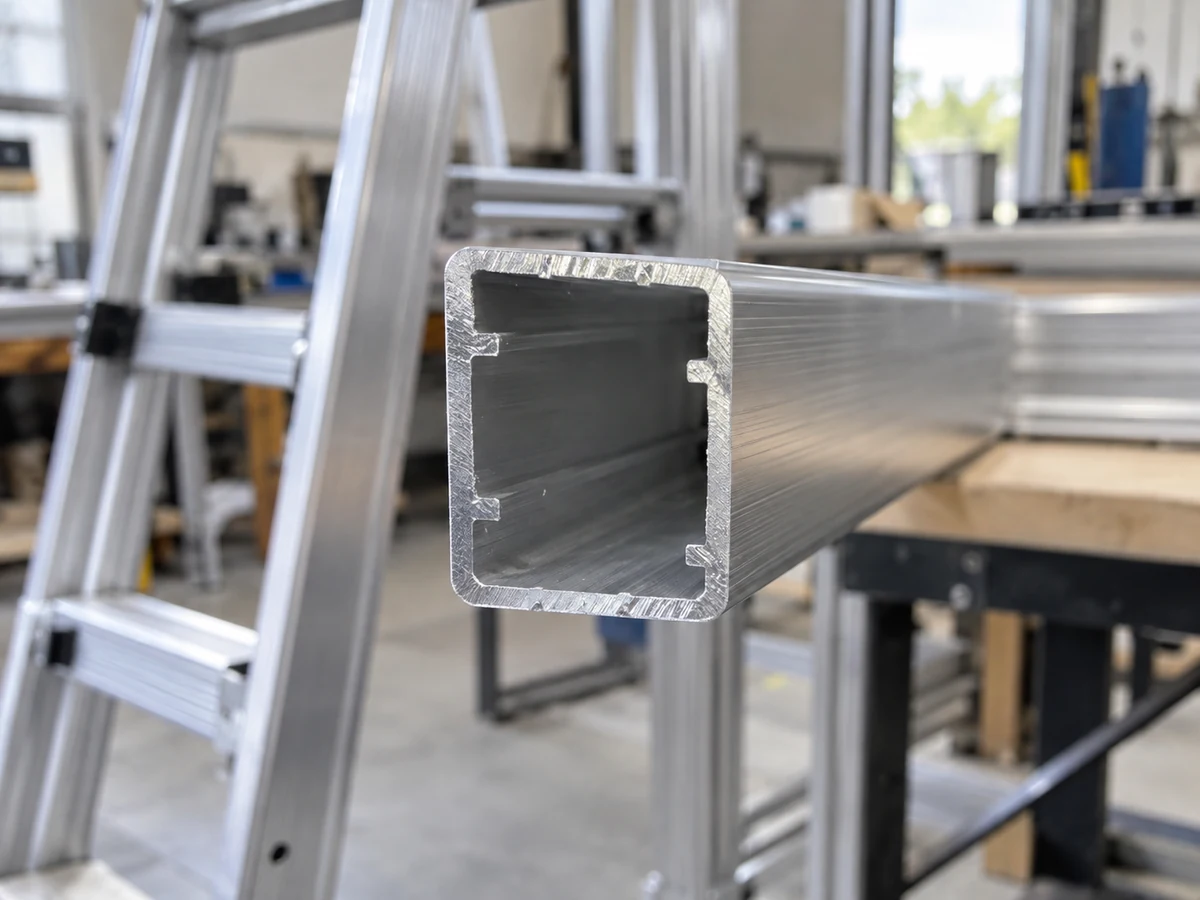
Do not copy the rectangular section in this illustrative photograph into a tubular stand design. Ask the stand designer for the actual cross section and mating drawing, then test a representative sample and document the joint result separately from the saw’s cut result.
Match stock support and clamping to the released profile
Long tubes need support along the feed path so the saw is not asked to clamp a bowed or overhanging bar. Thin walls need a holding method that prevents slip without crushing or marking the section. Protective contact surfaces may matter when stock is prefinished. A multi-cavity extrusion may need different supports from round tube. Send the actual profile sample and the acceptable clamping-contact zones with the RFQ; require a documented trial when those details are still open.
The related Jiurun channel video below shows an aluminum stock-cutting machine in operation. It is an equipment/process illustration only: it does not show an archery stand member, this article’s profile, a customer setup, a validated cut, or target stability.
Separate first-off cut approval from finished-stand safety
For the first-off sample, check the identification and revision before measuring. Record incoming profile condition, cut length at the nominated datum, angle or squareness, burr condition, visible deformation and surface damage. Compare a mating sample where the drawing calls for one, and retain photographs or a measurement sheet tied to the part revision. Restart the first-off approval after a stock/profile change, blade or fixture change, or drawing revision when those changes can alter the result.
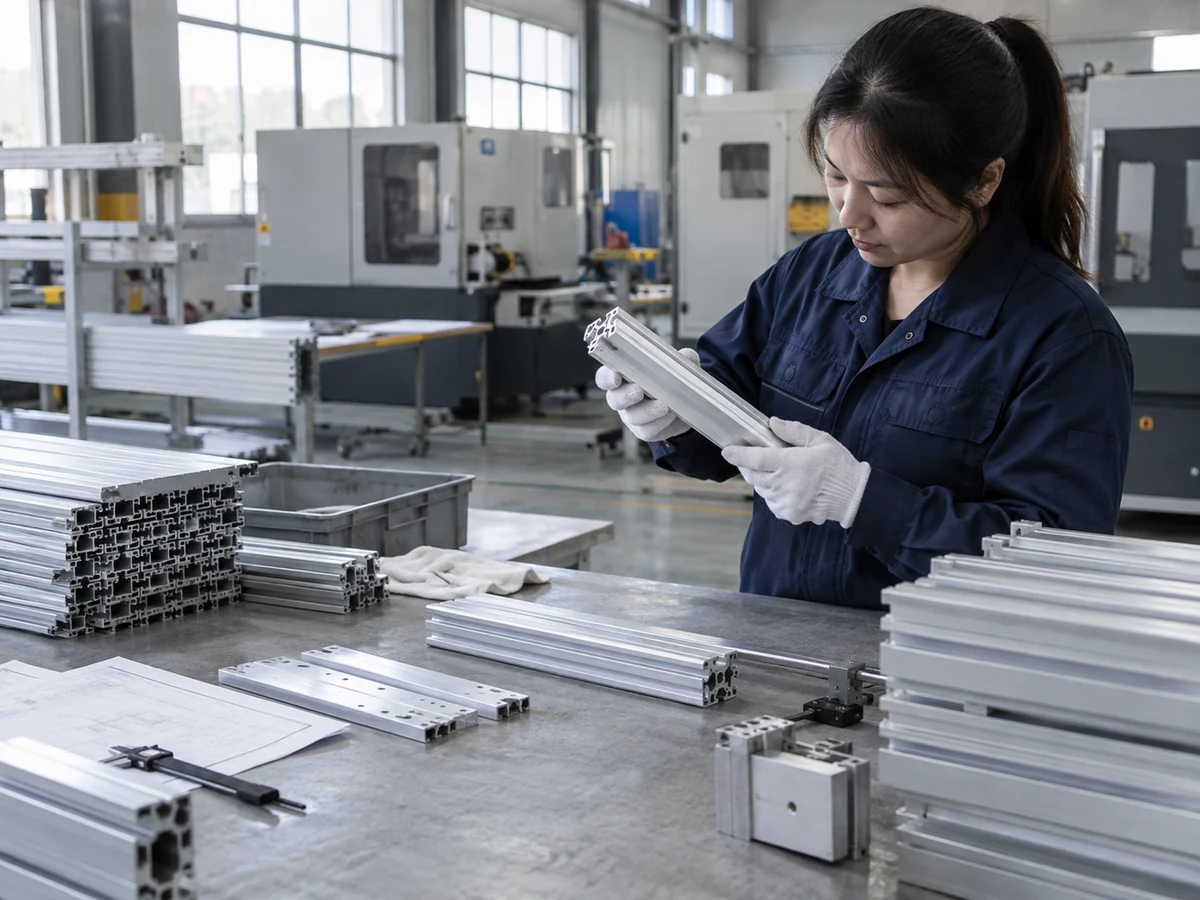
Target retention, tipping resistance, wheel behavior, frame stability and safe use in the intended shooting environment belong to the finished-product designer and test plan. A clean cut does not establish those outcomes. Do not turn an equipment demonstration, inspection photograph or shop first-off into a claim about arrow impact or user safety.
Compare quotes using the same scope
Ask each supplier to quote the same drawing revision, lot size and material condition. Separate tooling and fixture cost, cut cycle assumptions, expected bar yield, setup loss, deburring, inspection, labeling and packing. Confirm who supplies stock and who owns offcuts. A low piece price can be misleading if it omits kit sorting, first-off records or surface protection. Conversely, avoid paying for assembly operations that your own team will perform.
For a small or variable program, outsourced cutting may reduce the initial machine and fixture commitment; an established high-volume program may justify in-house cutting if actual utilization, operator time, scrap and verification cost support it. Compare total cost per accepted kit, not merely cost per saw cut. If dimensions or product architecture are unreleased, get a process discussion first and defer a firm production quote.
RFQ handoff: seven items that prevent rework
- Released stand assembly and cut-member drawings with revision control.
- Approved aluminum profile cross sections, material condition and sample stock.
- Cut list: part IDs, quantities, lengths, angles and datum definitions.
- Mating interfaces and downstream machining/coating ownership.
- Burr, deformation and cosmetic acceptance criteria plus inspection method.
- Batch volume, stock length, labels, packaging and first-off evidence.
- Explicit exclusions for target, hardware, full assembly and stability validation.
With that package, archery target stand aluminum frame cutting becomes a defined member-kit purchase rather than a guess from a finished-product photograph. A saw supplier can propose feed, clamping and inspection around the actual members. For another portable sports frame whose mixed-material kit must also be separated, see our portable pickleball net frame cutting guide. For a stand-specific process discussion, contact JiurunCut with the released profile and cut list. We can review what information a representative cutting trial would need; no trial or machine fit is claimed here.