
Portable backdrop aluminum frame cutting needs a member schedule before it needs a saw quotation. A portable event wall is assembled from identified profiles or tubes, connectors, feet or bases, and a fabric graphic or screen. Cutting straight aluminum lengths prepares one part of that system; it does not validate how the wall locks together, carries its skin or stands at an event.
Real products show why the boundary matters. ShowTex AV Drop uses modular aluminum profiles with quick-lock assembly and a choice of fabric or screen finishes. A Displays2Go portable backwall frame uses aluminum poles, button locks and internal elastic cords. These are separate external designs, not Jiurun projects or interchangeable parts. Neither product page establishes the stock, dimensions or equipment needed for another backdrop.
Portable backdrop aluminum frame cutting starts with the kit map
Begin with one approved configuration: overall event wall size, segment arrangement, profile cross-section, connector type, base interface and fabric attachment route. Then give every physical aluminum member a part number, revision, orientation, quantity per kit and cut-length datum. Distinguish a full-height upright from a short connecting segment, a top rail from a base member, and a spare from the production kit. If the product can be reconfigured, prepare a schedule for each configuration instead of assuming that a nominal wall width is a single cut length.
Pack size creates a second design boundary. A portable wall may divide a span into shorter segments joined on site. That split increases connector count and identification work even when the installed overall size is unchanged. The saw quote should count actual member blanks, stock lengths, cuts per family and changeovers. The assembled wall width belongs on the layout drawing; it is not an instruction to cut every rail to that width.
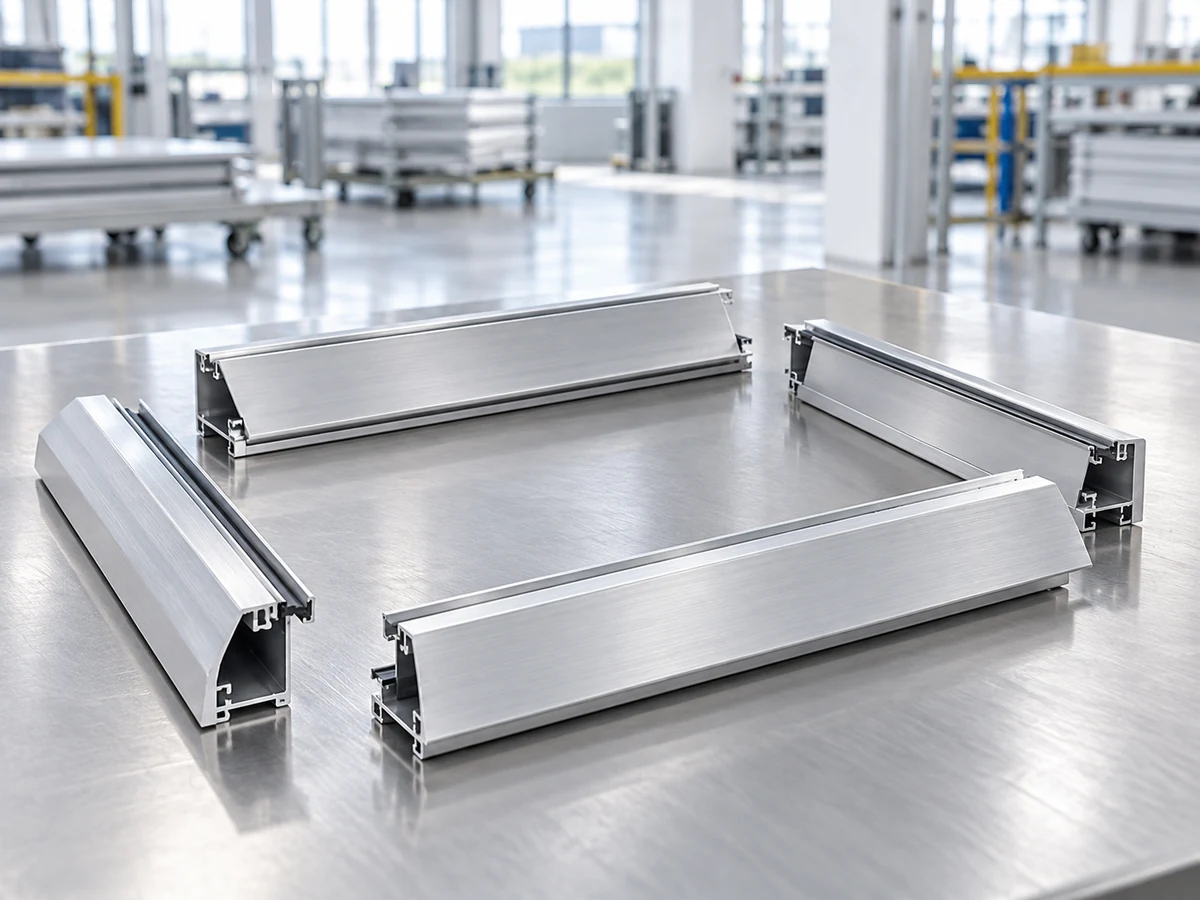
Define the cut face and the connector interface separately
A straight crosscut, approved angled end, drilled lock hole and installed connector are different deliverables. Ask for the finished blank length measured between named faces or datums, plus squareness or angle requirements where the drawing specifies them. State which side of a profiled extrusion is the visible face and how it must be protected. A damaged coating or burred edge can make a later snap fit or fabric fitting difficult even if the saw length is correct.
The joining method is design-specific. Quick locks, button fasteners, internal spigots, corner brackets and cords cannot be substituted merely because they all appear in portable displays. ShowTex’s profile system and Displays2Go’s button-lock poles illustrate different approaches. Require the owner of the system drawing to specify holes, slots, connector clearances, engagement and final assembly checks. A saw supplier should mark these as included secondary operations, downstream partner work or exclusions.
Do not infer the connector construction from a generic frame photo. The comparison below shows a joined aluminum corner in a different application; the backdrop’s real joint may use an entirely different mechanism and require a different end condition.

Handle the fabric and base as independent acceptance items
The graphic skin, projection fabric or acoustic textile can attach through a specific edge, hook-and-loop strip, spline, keder channel or another method. The profile must have the correct interface, but the saw does not make or tension the fabric. Keep printing, sewing, fabric orientation and wrinkle or fit checks in the fabric supplier’s scope. If a fabric panel is purchased separately, verify its identity against the same configuration and revision as the frame kit.
Likewise, feet, counterweights and wall or ceiling interfaces are part of the system design. The article cannot assign a load rating or indoor/outdoor suitability from a picture of aluminum stock. The system owner must determine the site conditions, base or rigging specification, installation method and any required approvals. A cut sample proves only the agreed blank characteristics until subsequent assembly and system checks are complete.
Compare quote stages on the same accepted unit
- Loose saw-cut members: identified profiles cut to drawing, with agreed end, burr, finish and length checks. The buyer supplies connectors and handles assembly.
- Prepared member kit: the parts also receive the specified holes, slots, connector preparation and kit labels. Define who installs hardware and checks each set.
- Complete backdrop hardware kit: an assembler supplies the frame, connections and base parts, and proves the approved configuration can be built. Fabric may be included or separate.
- Installed event wall: the provider also owns transport, on-site assembly and site-specific acceptance. That is beyond a cutting-machine qualification.
A price per cut, a price per prepared segment and a price per installed wall measure different work. Ask bidders to quote the same deliverable, campaign volume, revision mix and packaging. Include replacement segments and reconfiguration cases; a missing short rail can stop a kit even if the long members were accurately cut.
Trial the actual member family, not a convenient demonstration bar
Provide representative long and short profiles, finished surfaces, and the latest drawings. At minimum, inspect a first-off sample from each distinct section and end geometry. Record the measurement datum, burr criterion, visible-face condition, clamp contact, label identity and fit with the specified connector. When a profile has a fabric channel, protect it and check that a sample cut does not leave damage or chips that obstruct the later attachment operation.
Ask the machine vendor to state stock support, clamp contact, blade or tooling assumptions, changeover steps and sample acceptance plan in writing. Jiurun lists aluminum profile cutting equipment, but a catalog family or photograph does not verify a configuration for this backdrop. Qualification should use the buyer’s real material and agreed part drawing.

This video from Jiurun Machinery’s own YouTube channel shows another aluminum cutting equipment scene. It is a process illustration; it is not a backdrop-member trial and does not establish the product material, fit, configuration or throughput.
RFQ checklist for portable backdrop aluminum frame cutting
Send the approved wall layout and revision; an exploded member and connector list; actual aluminum stock section and finish; each blank’s length datum and end geometry; secondary hole or slot drawings; fabric-interface protection criteria; kit labels and packing method; forecast mix, batch size and spares; and the sample acceptance plan. State whether the quote is for cut members, a prepared kit, complete hardware or an installed wall. Identify who approves the assembled configuration and site conditions.
Need to compare cutting routes? Contact Jiurun with a released profile drawing and representative stock. Ask for a written trial scope that separates saw-cut blanks from connector work, fabric, bases and finished-wall qualification.
Common questions
Is a wall’s installed width the cut length of its top rail?
Not necessarily. Segments and connectors change the relationship. Use the member drawing and named measurement datums.
Can a saw make the quick-lock connector?
A saw prepares eligible blank ends. Lock holes, slots and assembled hardware need separate process and acceptance definitions unless specifically included and demonstrated.
Does a cut trial prove the backdrop is safe at an event?
No. The responsible system designer and installer must verify the complete approved wall, base or rigging and site conditions.