
Microphone boom arm aluminum tube cutting starts with a simple purchasing question: which parts of the approved arm are actually hollow aluminum blanks? A desk arm can also contain hinges, springs, threaded mounts, cable guides and a clamp. A saw quotation for “the whole microphone arm” hides those boundaries. Start with a component drawing and a bill of materials, then quote each tube blank by its own stock, end geometry, length and downstream operation.
This guide is for OEM buyers, fabricators and equipment planners comparing tube-blank supply or a cutting cell. It does not prescribe one machine for every arm. An all-aluminum desktop boom arm example from AWEDA includes joints, internal springs, a desk clamp and cable routing alongside its tubular structure. A different microphone stand example from Audiophony mixes steel tube and base components with an aluminum joint. These are external design examples, not Jiurun projects. They illustrate why a material or process assumption should be checked at the part level.
Microphone boom arm aluminum tube cutting: make a cut list first
Mark the upper and lower arm members on the approved assembly drawing. For each member, record the actual alloy and temper from the purchaser’s specification, outside dimensions, wall thickness, supplied stock length, finished blank length, quantity per assembly, and which end features are required. Separate telescoping sections if their stock sizes differ. Do not infer alloy from a product photo or use “aluminum microphone arm” as a blanket description of every component.
A useful RFQ has one row per cuttable part number. Add the drawing revision, annual and batch quantities, cosmetic surface requirements, allowable length tolerance, squareness or angle tolerance where defined, burr limits, and the inspection datum. Ask whether blanks are supplied loose, paired by kit, or packed to protect visible finishes. A tolerance belongs to a drawing and acceptance method; a generic saw brochure cannot supply it.
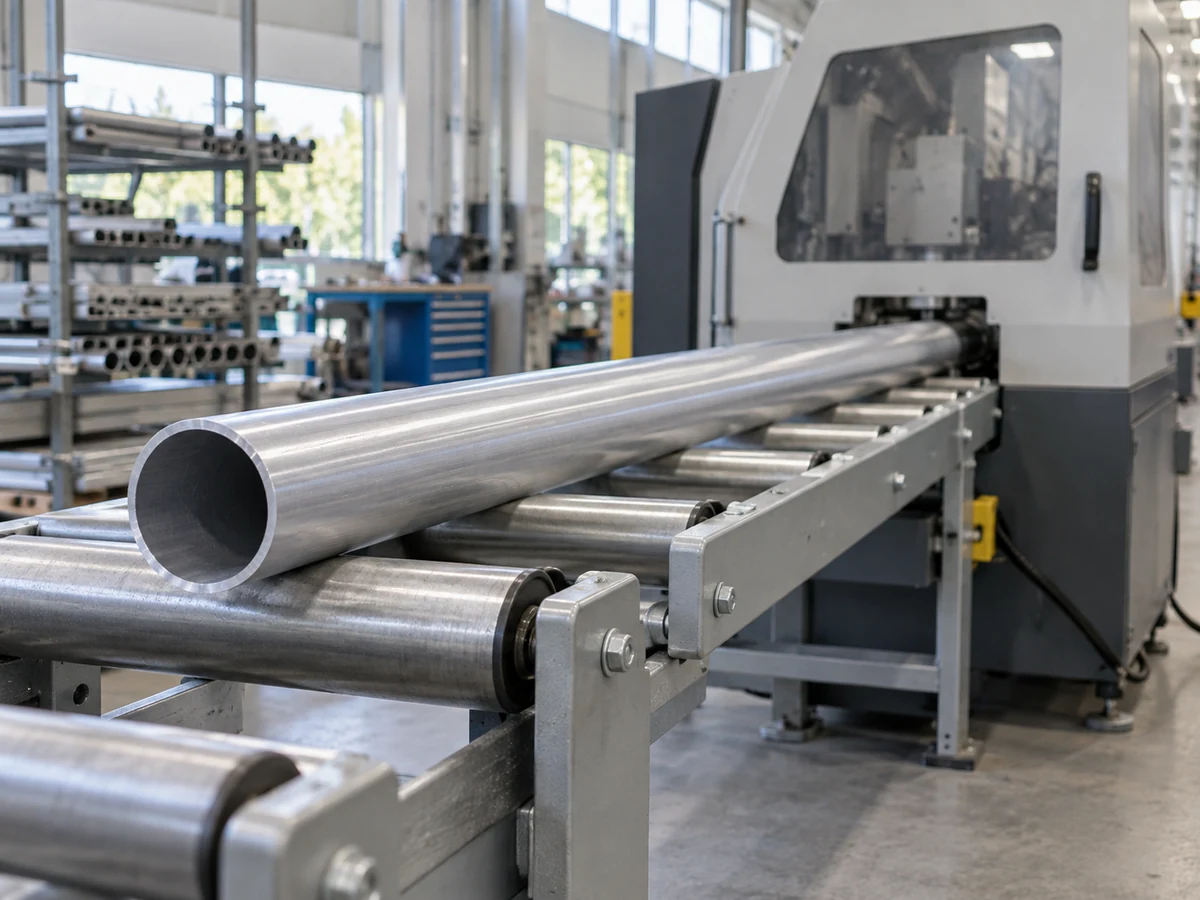
Check stock support and clamping with the real section
Thin-walled tube can mark or deform if the clamp load and contact area are wrong. Long stock can also move or sag before the cut. Send a sample or accurate section drawing to the equipment supplier and discuss where the tube contacts the infeed support, back fence, top or side clamp, and outfeed. The right support depends on the real diameter or profile, wall, finish and stock length.
Ask for a fixture review using the narrowest and most easily damaged member, not just the largest member that is easy to hold. If an arm uses square or rectangular extrusions, specify that separately from round tube. Include any anodized, painted or polished surface that must remain visible after assembly. A non-marking contact proposal should be checked on the actual finish; it should not be assumed from a photograph of a different tube.
Separate cut ends from joints and other machining
A saw can prepare a length and, with the appropriate setup and capability, an approved flat or angled end. A hinge pocket, spring anchor, thread, cross-hole, cable opening or fitted connector may need drilling, milling, tapping, deburring or another operation. The purchase order should say whether the seller supplies raw cut blanks, deburred blanks, machined components or a tested assembly. These are different deliverables with different inspection points.
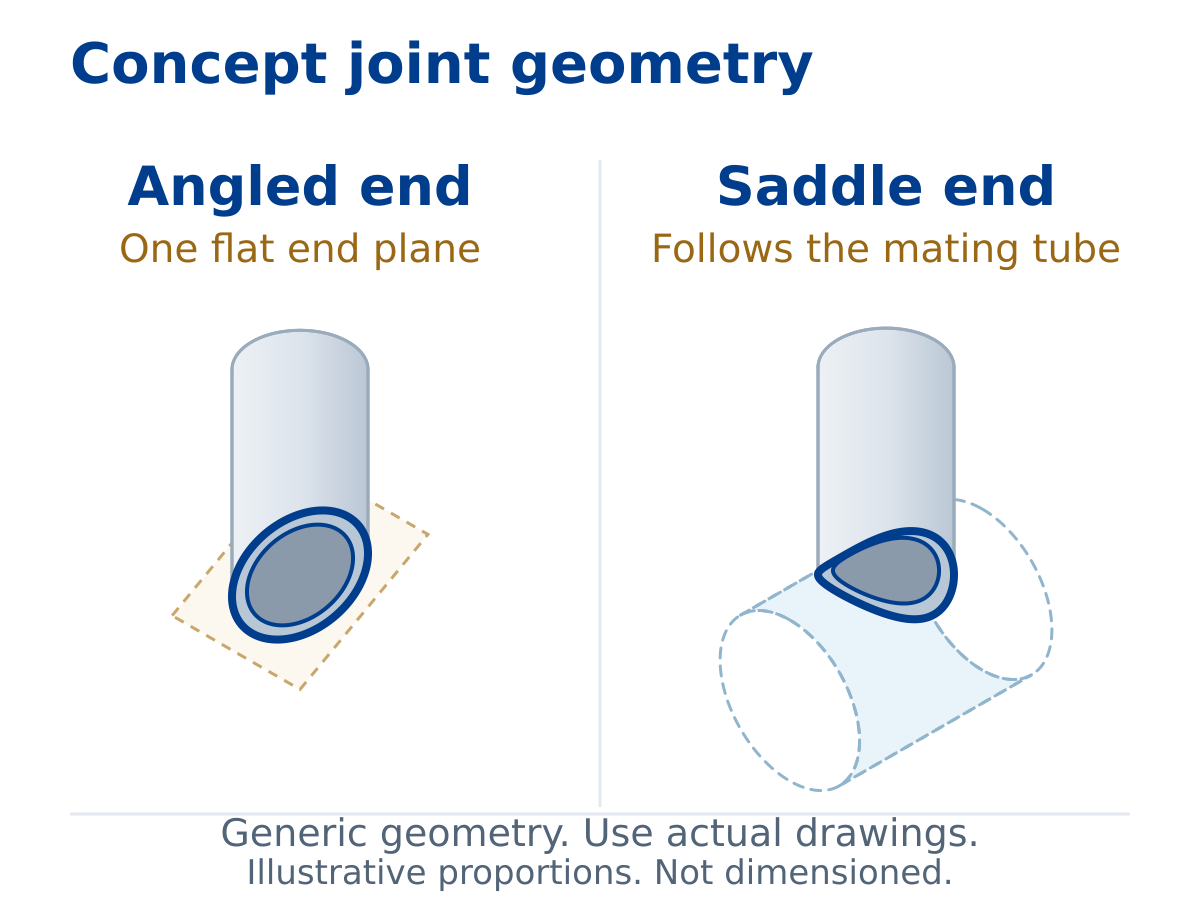
In particular, do not call a saddle-shaped joint a “miter cut” and assume a standard saw will produce it. If the drawing has an end contour that follows another tube, identify the contour, datum and fit requirement explicitly and confirm the proposed process. The same applies to a connector that covers a tube end: a concealed edge may permit a different cosmetic finish, but only the buyer’s specification can establish acceptance.
Estimate yield and flow from a specific nesting plan
Provide commercial stock length, each blank length, quantity mix, trim allowance, kerf assumption and any damaged-end exclusion. Ask the supplier to return a nesting or cut plan with expected usable blanks per stock length and leftover handling. Kerf and trim are process inputs, so do not promise a yield percentage before confirming blade, setup and stock. If several arm sizes share a machine, include changeover frequency, fixture swaps and how the operator identifies the correct drawing revision.
Then map what happens after the saw. Where are chips and burrs removed? Who checks length and the critical end? How are left/right or upper/lower arm blanks kept separate? What protective packing prevents parts from rubbing? This sequence matters more to a reliable kit than a headline cutting speed. It also helps buyers compare a blank-only supplier with a supplier that offers secondary machining.
What to ask during a cutting trial
- Run the actual purchased section and finish, including the smallest or most fragile tube.
- Use the intended stock length, support arrangement, blade and clamp proposal.
- Measure first, middle and last blanks in the batch against the approved drawing.
- Inspect burr, cut-face condition, surface marks and any deformation after release from the clamp.
- Record the setup, operator checks, changeover steps and rejected blanks, not just one acceptable sample.
- Repeat only if the drawing, stock or fixture changes materially; do not generalize one trial to every boom-arm design.
The result should be a signed sample report tied to part number and drawing revision. A photograph or unrelated demo video can show equipment, but cannot establish your dimensional acceptance or assembly fit.
Where an aluminum saw supplier fits
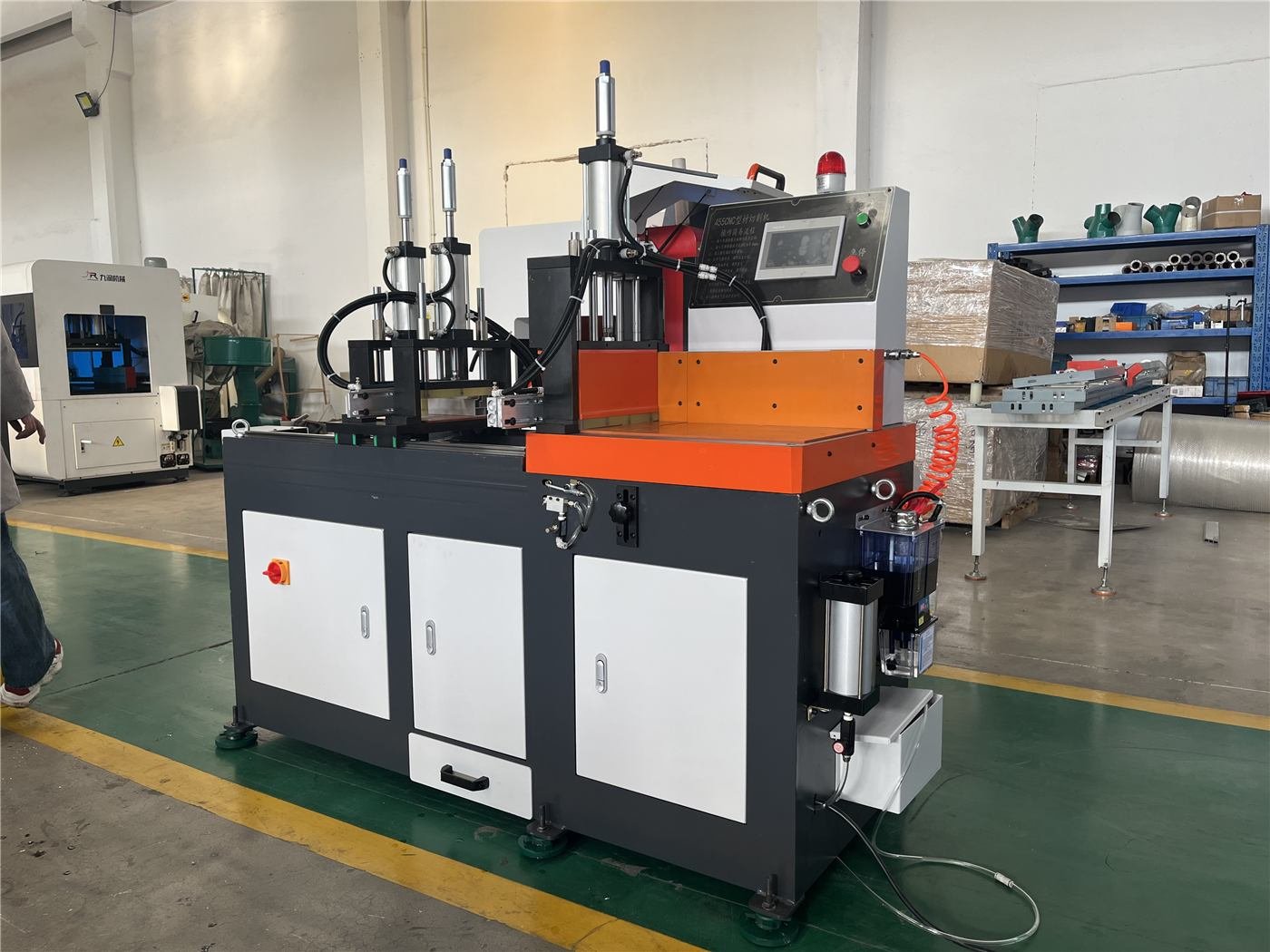
Jiurun offers aluminum profile cutting equipment. A useful conversation starts with the actual tube or extrusion drawing and the supply boundary, then checks whether a proposed saw, support and clamp arrangement can meet it. Ask for the equipment configuration and validation plan in writing. A catalog family or image alone does not confirm suitability for a slender microphone-arm component.
The following video from Jiurun Machinery’s own YouTube channel shows a related aluminum cutting equipment scene. It is an equipment illustration, not footage of the microphone boom arm described here, and it does not verify a particular alloy, fixture, tolerance or throughput.
RFQ checklist for microphone boom arm tube blanks
Send: (1) a drawing and revision for each tube part; (2) material and surface specification; (3) stock and blank dimensions; (4) expected batch and annual volume; (5) end-feature and burr requirements; (6) visible-surface protection needs; (7) whether drilling, threading, deburring or packing is included; and (8) the proposed acceptance and sampling method. If the final product is a floor stand rather than a desktop boom arm, say so—its materials and components may differ.
Need to evaluate a cutting setup? Contact Jiurun with the current drawing and stock details. Ask for a part-specific review and, where appropriate, a trial plan for your real material. That gives you a defensible quote for blanks and clarifies which joint features remain downstream.
Common questions
Can one saw finish a complete microphone boom arm?
A saw prepares cuttable blanks. Joints, springs, mounts, cable routing, machining and assembly are separate scope items unless a supplier explicitly includes and validates them.
Should I specify round aluminum tube for every arm?
No. Some designs use rectangular extrusion, multiple tube sizes or different materials. Confirm each part against its approved drawing and bill of materials.
Is an angled end the same as a saddle end?
No. The two end geometries are different, and neither should be assumed from a product category. Quote the drawing’s actual contour and confirm the process that can make it.