
Pet stroller aluminum frame cutting is a small but easily misunderstood part of stroller production. A finished stroller includes a pet cabin or carrier, a folding frame, wheels, brakes, hinges, fabric and restraint details. A buyer asking a saw supplier for “one stroller frame” has not yet defined the metal blanks to be cut. Start with the released design and separate straight aluminum members from formed, machined, purchased and assembled parts.
That distinction is visible in commercial products. ibiyaya describes a lightweight aluminum frame alongside a folding arrangement, detachable wheels and a covered cabin. Its HUE-GO model separates a removable capsule, a tri-fold frame, wheels and canopy. These are useful examples of product architecture, not drawings for JiurunCut, a material specification, or evidence that a particular saw has cut either model.
Choose the supply stage before quoting
First decide whether the purchase is for loose saw-cut blanks, prepared tubes with holes or slots, paired subassemblies, a welded or riveted frame, or a complete stroller. A replacement stroller frame sold separately from its carrier shows that even a “frame-only” finished product can include hinges, wheels and attachment hardware. A cutting quote should name only the members that will enter the saw and the accepted condition in which they will leave it.
For each retained member, put a part number on the assembly drawing. Distinguish the push handle, side rails, crossmembers, foot or wheel-support members and any short connector pieces. Mark the folding joint and wheel interface, but do not assume the saw supplier makes those features. A bent handle cannot be priced as a straight finished handle merely because a straight tube was its starting stock. If a supplier is asked to add drilling, bending, welding, surface finishing or assembly, request a separate operation and inspection scope.
Pet stroller aluminum frame cutting: build the cut schedule
The finished stroller’s unfolded width, height or load rating is not a saw length. The designer must release each blank length and its datum. Is a rail measured end-to-end between square faces, between the long points of two angled ends, or from a pivot-side face to an end that will be machined later? Record the drawing revision, stock section, material and temper where specified, starting condition, quantity per stroller, order quantity, blank length, tolerance, end geometry, handedness and cosmetic faces.
Folding mechanisms make handedness important. A left side member may have the same nominal length as its right counterpart but a mirrored angle or downstream hole location. Put the end orientation and part ID on the cut schedule and first-off inspection sheet; do not rely on a pile of unlabeled equal-length tubes. If several stroller sizes share a profile, keep revisions and member identities separate until assembly fit is proven.
Request a nesting and handling plan only after the stock length and accepted end trim are known. A long push-handle blank and several short brace blanks may produce different offcuts and fixturing needs. Blade kerf, start-end cleanup and any unusable stock segment belong in the calculation. Quoted yield should be tied to the real bar length, part mix and acceptance requirements, not inferred from a marketing dimension of the complete stroller.
Do not assume every aluminum member has the same section
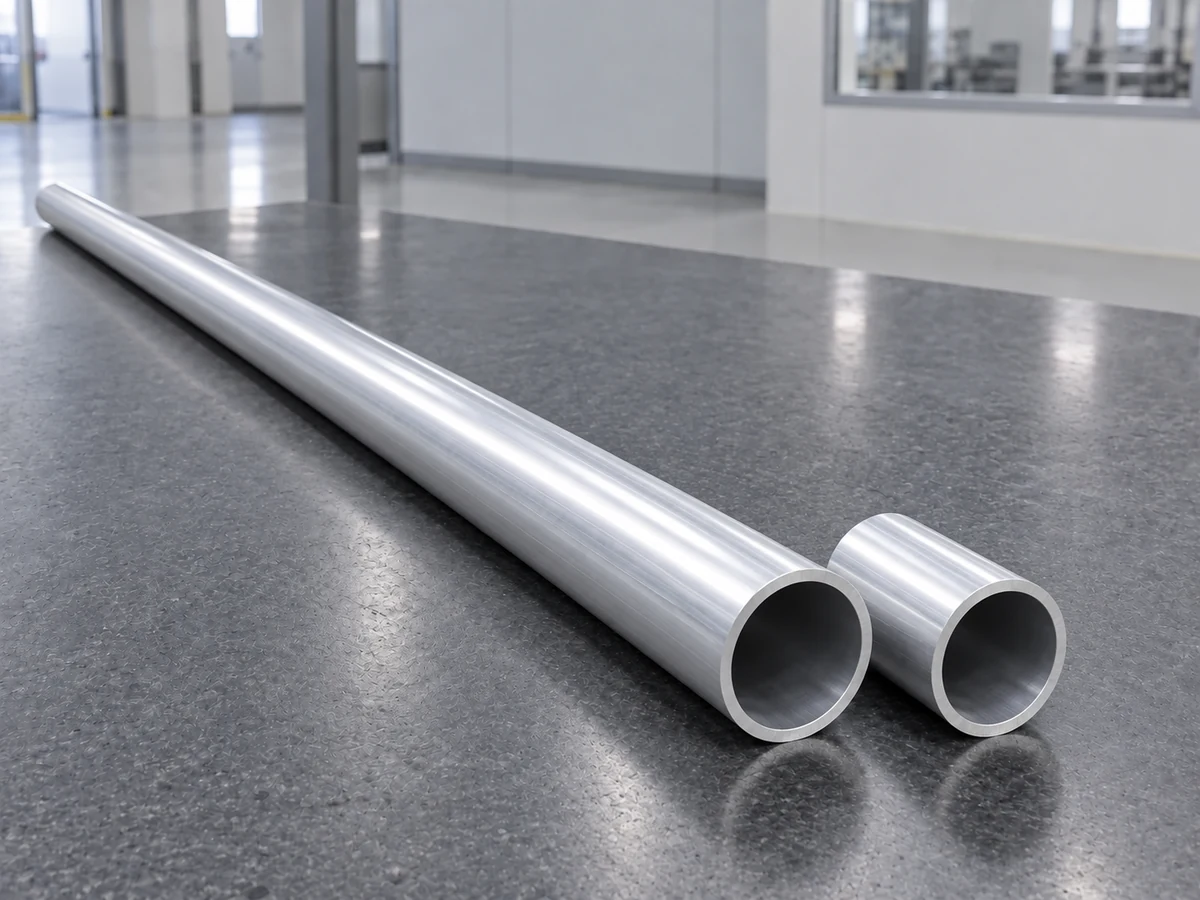
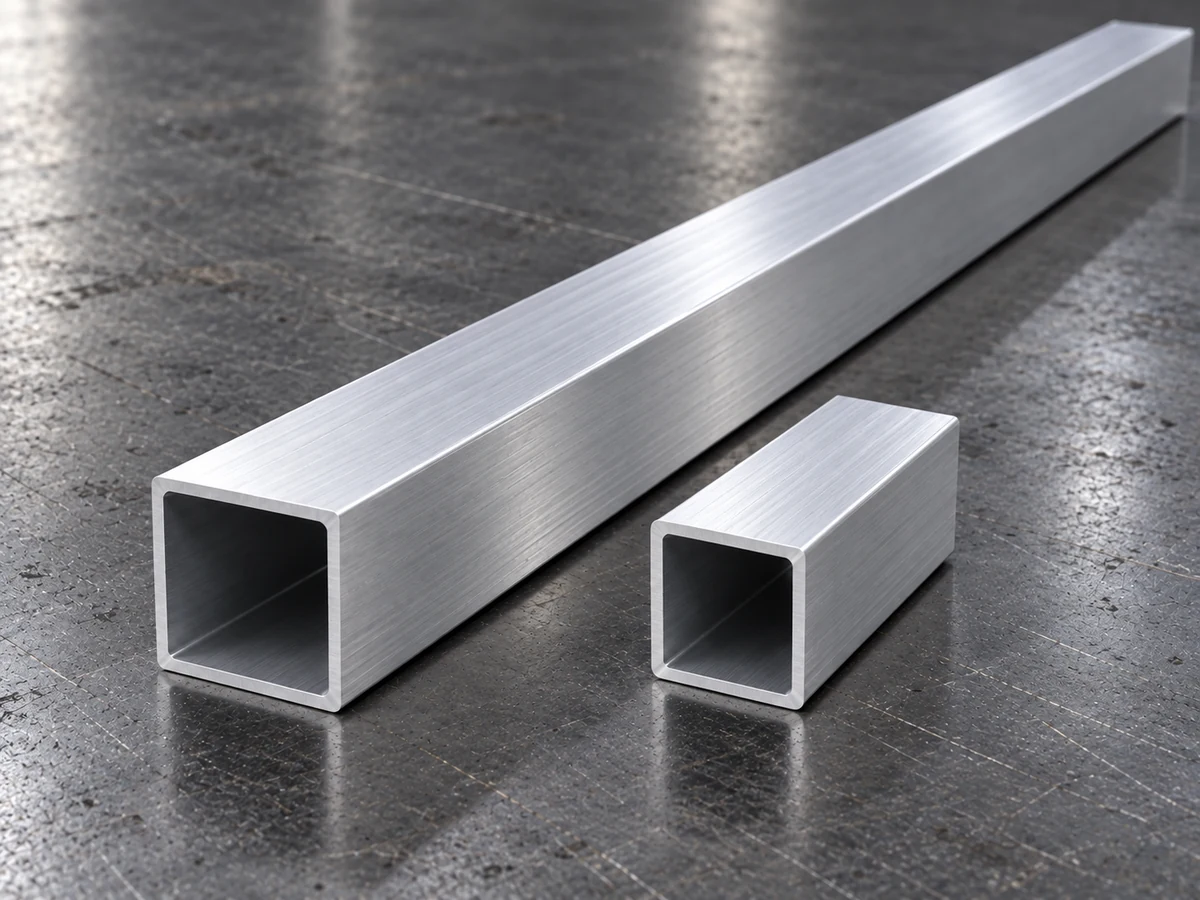
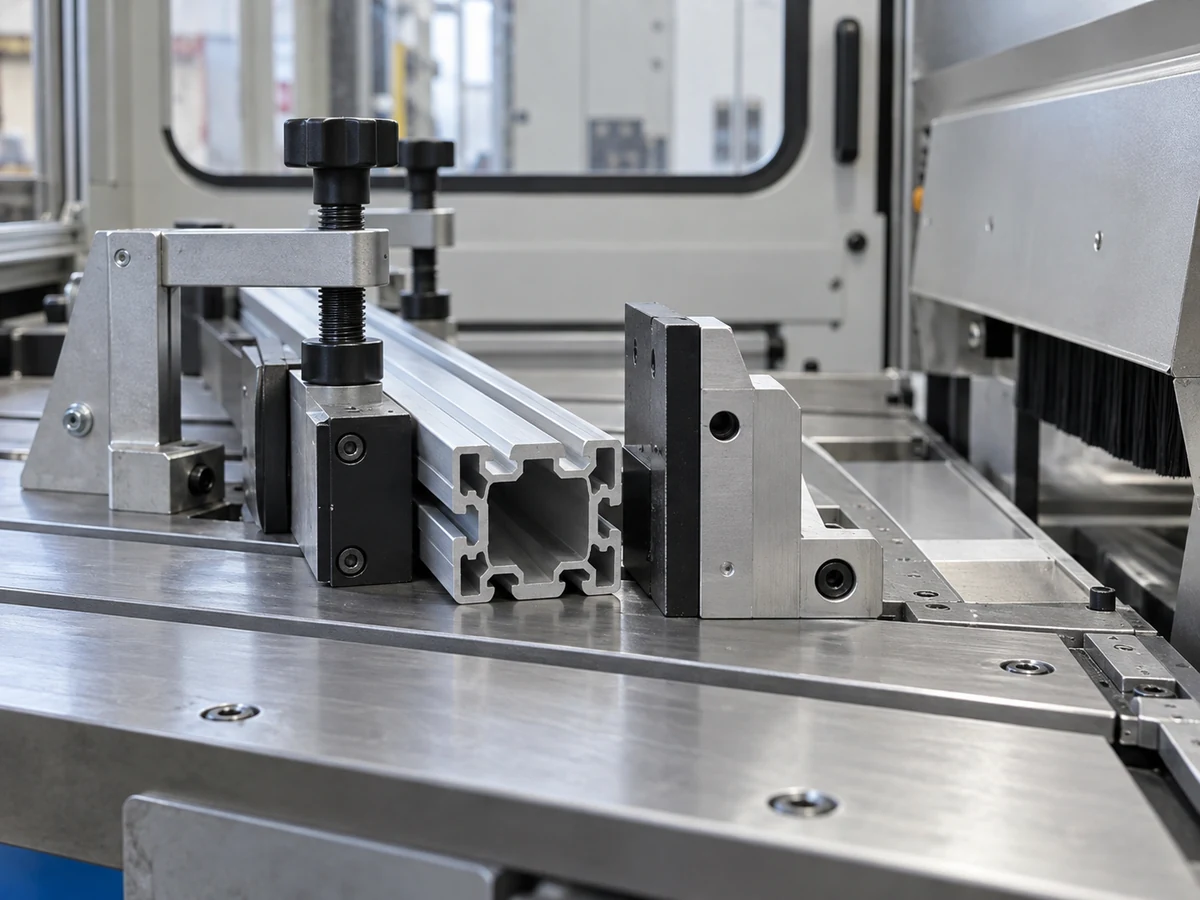
One design may use round hollow tube, another may contain square tube or a special extrusion, and a single stroller may combine different forms. The manufacturer’s finished-product phrase “aluminum frame” does not identify the profile for every part. Ask for a section drawing or physical sample of each retained stock family. Check outer dimensions, wall thickness, surface condition, allowable marks and whether the stock arrives straight enough for the proposed feed and stop arrangement.
For an exposed handle, clamp pressure can mark the visible face. For a thin-walled tube, inadequate support can distort the section. A slotted extrusion can have a different stable reference surface from a round tube. Decide where the stock rests, what face touches the fence, and how the clamp contacts it. If the design uses a non-aluminum member or a purchased hinge tube, exclude it from the aluminum saw quantity rather than silently substituting a nearby material.
Prove the cut on the approved stock
A useful saw trial uses the actual approved tube or extrusion, or a clearly documented representative sample. Cut at least the members that challenge the setup: a long rail, a short brace and an angled or cosmetic end if those occur in the design. Record the stock identification, fixture and blade setup, measured length against the stated datum, angle or squareness, burr condition, clamp marks and visible deformation. Inspect the surface that the assembled stroller will expose.
Then pass the first-off blanks to the frame owner. The manufacturer checks whether the pieces meet the hinge, wheel mount, carrier attachment and folding clearances in the released assembly. Those fit checks belong to the actual product design. Saw acceptance alone does not validate a wheel brake, frame stability, animal restraint, safe folding action or finished-product load claim. Keep the saw’s measured blank result and the designer’s assembled-product approval as separate records.
Make competing quotations comparable
Ask every bidder to price the same accepted output. Separate the cost of stock, saw cuts, end preparation, downstream features, coating, kitting and delivery. Note whether material is buyer-supplied and who bears rejected first-off pieces. A low unit cut price is not comparable with a price for inspected, labeled and packed member pairs. For a machine purchase, include changeovers between section families and the inspection time needed to maintain a mixed order.
| RFQ item | Information the buyer supplies | Decision it supports |
|---|---|---|
| Frame version | Released assembly drawing, revision and member list | Identify cut blanks and exclude finished stroller parts |
| Incoming stock | Actual section, material, finish and bar length | Feeding, support and clamp review |
| Accepted cut | Length datum, end angle, burr and cosmetic limits | First-article plan and inspection cost |
| Delivery unit | Loose blanks or labeled left/right kits | Comparable quotation and assembly handoff |
For repeat pet stroller aluminum frame cutting orders, define how a changed hinge or carrier interface will trigger a new part revision. Do not combine visually similar blanks from different revisions simply to save setup time. Traceability can be simple: part ID, revision, material batch, cut lot and inspection disposition. This prevents an old rail from reaching a new folding mechanism without an intentional fit review.
The video below is from Jiurun Machinery’s own channel and shows another aluminum-cutting equipment scene. It is a general process illustration. It does not show this stroller, its approved stock, a tested machine configuration, a customer project or finished-product safety performance.
Send the member package, not a catalog picture
A useful machine discussion starts with one approved stroller configuration, a part-numbered metal cut list, real stock samples or sections, the range of blank lengths, end shapes, estimated volumes, cosmetic protection needs and first-off acceptance points. Say which party will bend, machine, join and finish the members, and who will approve the assembled stroller. If the design is not yet released, mark open interfaces rather than guessing dimensions from a competitor’s product page.
Send JiurunCut the approved profile drawings and cut schedule to discuss feeding, support, clamping and inspection for the retained aluminum blanks. The stroller manufacturer remains responsible for its complete design, assembly and safe use.