
Bicycle cargo trailer aluminum frame cutting starts with a narrower question than “Can your saw build this trailer?” An OEM or approved fabricator usually needs loose, identifiable aluminum members cut to a released drawing before anyone can judge the complete frame. A useful request for quotation (RFQ) separates those blanks from the hitch, wheels, panels, fasteners, welding, assembly and load testing.
There is no single cargo-trailer frame layout. For example, Burley describes a 6061-T6 aluminum frame on both its Nomad and Coho XC, yet these are different complete trailer designs. Thule describes an adjustable aluminum structure on its Reacha Sport. Those product pages establish that aluminum frame members occur in this application; they do not provide Jiurun with a cut list, machine setting, achievable tolerance or evidence of a trial on any of those products.
1. Define the purchase boundary before discussing a saw
Start with a bill of parts for the cut-only scope. Identify each side rail, crossmember, upright, drawbar or brace by part number and revision. If your released design has two mirrored rails, mark left and right explicitly. State whether the supplier is quoting loose straight-cut blanks, mitred blanks, machined members, or an assembled frame. A trailer’s finished footprint or load rating cannot be converted into individual saw lengths.
Keep interfaces outside the cut-only quotation visible but separate. A hitch or tow arm, wheel mounts, suspension elements, deck, fabric cover, fasteners and welding can control the final assembly. Their existence does not mean the saw vendor has accepted responsibility for them. If the drawing is still conceptual, request a process discussion and a drawing review, not a firm production tolerance.
2. Give every member a released stock identity
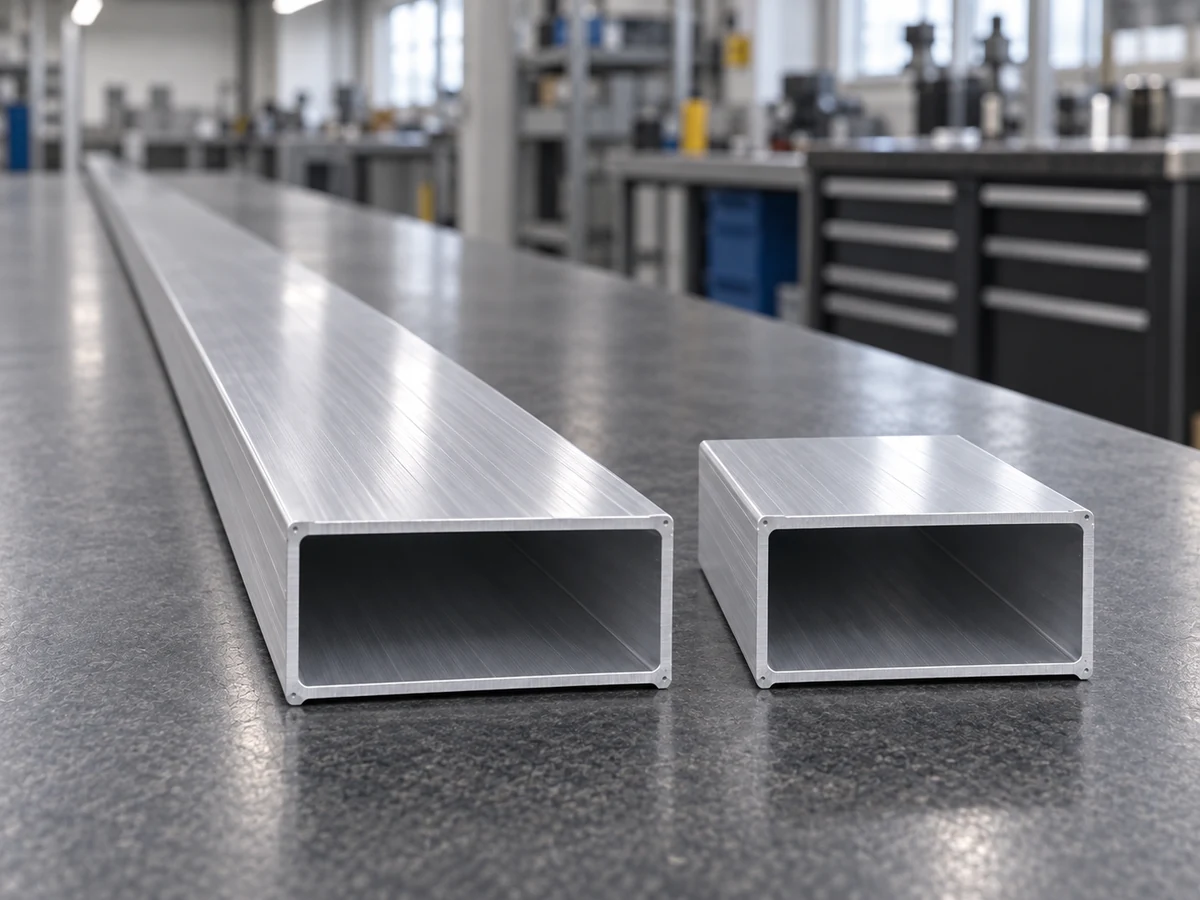
For each part, provide the alloy and temper from the drawing, hollow or solid form, outside width and height or diameter, wall thickness, corner radius where relevant, and the actual extrusion or tube specification. Rectangular hollow tube, square tube, channel and proprietary profiles need different support and clamping decisions. The examples above mention 6061-T6 for particular finished trailers; that is not a default material specification for another customer’s design.
Also distinguish purchase length from finished blank length. Supplied bar length, damaged-end allowance, kerf allowance, remnant policy and the quantity of each part affect yield. A quote based only on “aluminum frame tube” hides these decisions. If a supplier is expected to procure the stock, give the approved mill specification and substitution rule. If you supply it, disclose straightness, packaging, surface finish, any protective film and the usable length of each bar.
3. Release the cut list with end geometry
A practical list has one row per unique blank: part ID, drawing revision, stock profile, quantity per trailer, batch quantity, nominal length, tolerance, end A and end B condition, orientation mark and downstream operation. Use a defined datum and measurement method. “Cut to 800 mm” leaves open whether the length is measured at the long side of a miter, the short side, the profile centerline or the longest point on a complex end.
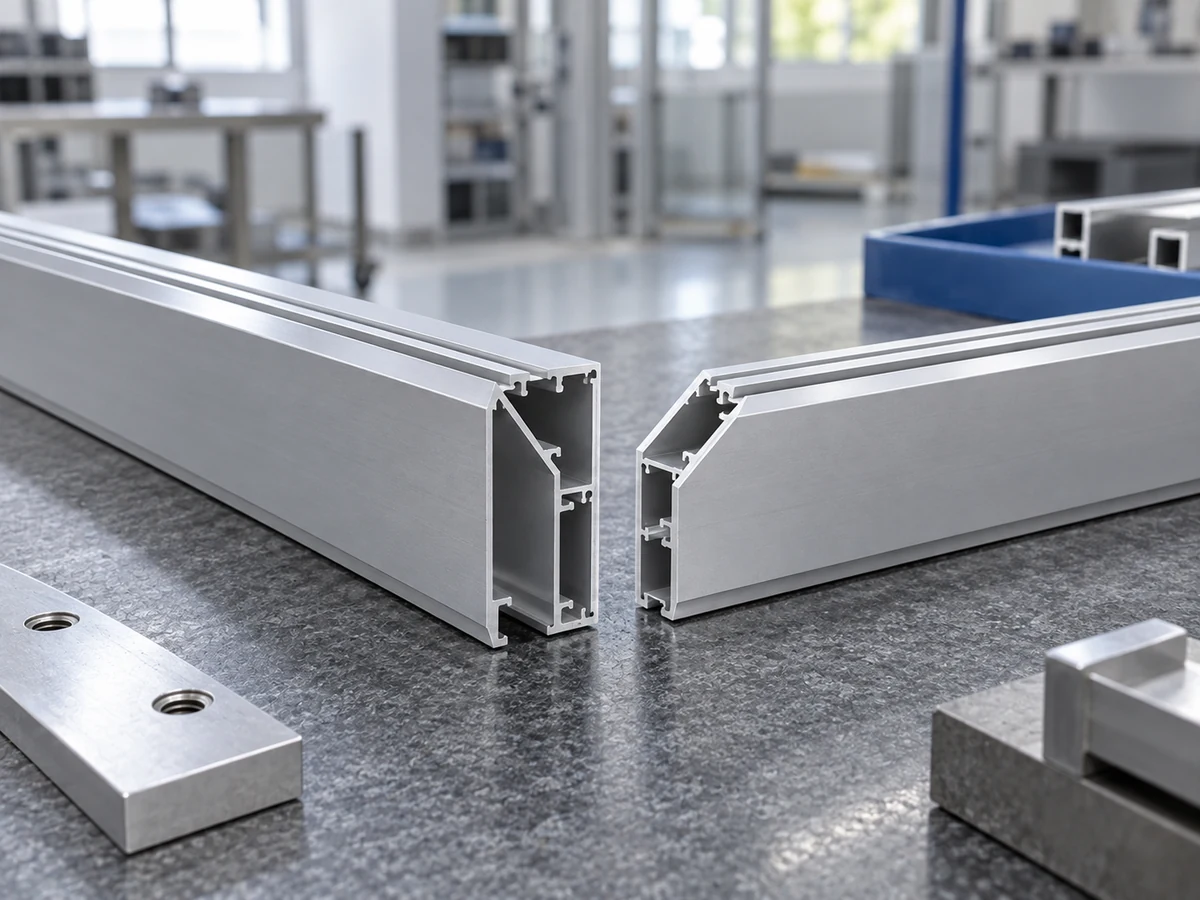
For square ends, say whether an as-sawn surface is acceptable. For angled ends, show the angle reference and the relationship of the open face or extrusion feature to the machine datum. Label handed parts; a mirrored brace can be visually close to its mate but unusable after the wrong end is cut. If the frame uses a proprietary extrusion with internal ribs or grooves, provide the cross-section drawing. A photograph alone cannot establish the controlling dimension.
4. Agree on the clamping and first-off check
Thin-wall hollow profiles can distort if force is applied to an unsupported face. Ask how the stock will be supported near the cut, how the operator will establish the datum, and what clamping contact is acceptable on a visible or coated surface. The answer depends on the actual cross-section and wall thickness. Do not infer a fixture, blade, feed rate or capacity from a general machine photograph.
Before a production batch, define a first-off check. A representative checklist may include length at the specified datum, squareness or angle, visible deformation, burr condition, surface marks and the left/right label. Set the acceptance limits in the released drawing or purchase specification. Agree who signs off that first piece and what happens if material or drawing revision changes. A repeatable inspection record is more useful than an unsupported claim that a cut is “precise.”

5. Separate the cut quality from trailer approval
A cut vendor can describe the blank condition at handoff. It cannot certify the finished cargo trailer merely by supplying cut pieces. Weld procedure, joint design, wheel alignment, hitch retention, fatigue, rated payload and road-use requirements belong to the responsible design and assembly team. Keep these obligations explicit in the RFQ so a saw quote is not mistaken for an assembled-product approval.
The same boundary matters for aluminum temper. Cutting a released 6061-T6 member does not prove what happens to its properties after welding or other downstream processing. The frame designer should assess those effects. If a customer requests deburring, hole making or identification marks after cutting, list each as a distinct operation with its own acceptance criterion.
6. Make batch and packing instructions measurable
Quantities per part, order frequency and changeover strategy influence a cutting quotation. Tell the supplier whether the order is a prototype set, pilot batch or repeat release. For a mixed set, specify whether all members for one trailer must ship together. Ask for identification that survives packing and prevents handed components from being mixed. State surface-protection and damage rules for parts that remain visible after assembly.
Record how short remnants will be managed and whether the supplier may combine different part numbers from the same approved stock. Yield can only be calculated once real stock lengths, cut lengths, kerf and discard allowances are known. A generic percentage based on a trailer’s finished dimensions is not a sound basis for purchasing.
Video: a general aluminum cutting equipment example
The Jiurun Machinery video below is an owned-channel example of cutting equipment. It does not document this cargo-trailer design, a particular alloy or profile, a customer trial, a machine configuration for these parts, or an achieved tolerance. Use it to see a general equipment context while preparing your own released blank list.
Bicycle cargo trailer aluminum frame cutting RFQ checklist
- Current drawing and revision for every member, plus the authorized person for technical questions.
- Material, profile cross-section, temper, supplied bar length and procurement responsibility.
- Part number, quantity, datum, cut length and tolerance for each blank.
- End condition, angle reference, handedness, visible-surface protection and burr limit.
- First-off inspection method, approval point, batch size and change-control rule.
- Packing, labels, traceability and whether prototype and production pricing should be separate.
If you are evaluating equipment for these loose aluminum members, compare the approved cross-section, required cut geometry and inspection method with the aluminum cutting machine range. Send the released cut list and stock drawing through the JiurunCut contact page so the team can discuss a suitable process and the evidence needed for a responsible quotation. No published example here substitutes for a trial on your own material and drawing.