
Food truck serving window frame cutting should begin with a released loose aluminum member, not a drawing of the complete service window. A concession window can arrive as a finished unit with glazing, sash, hinge, seal, flange and installation hardware. An OEM or approved window fabricator may also cut individual extrusions before assembly. These are different purchase routes. This guide sets out the part-level evidence needed before asking an aluminum saw supplier to quote a cutoff process.
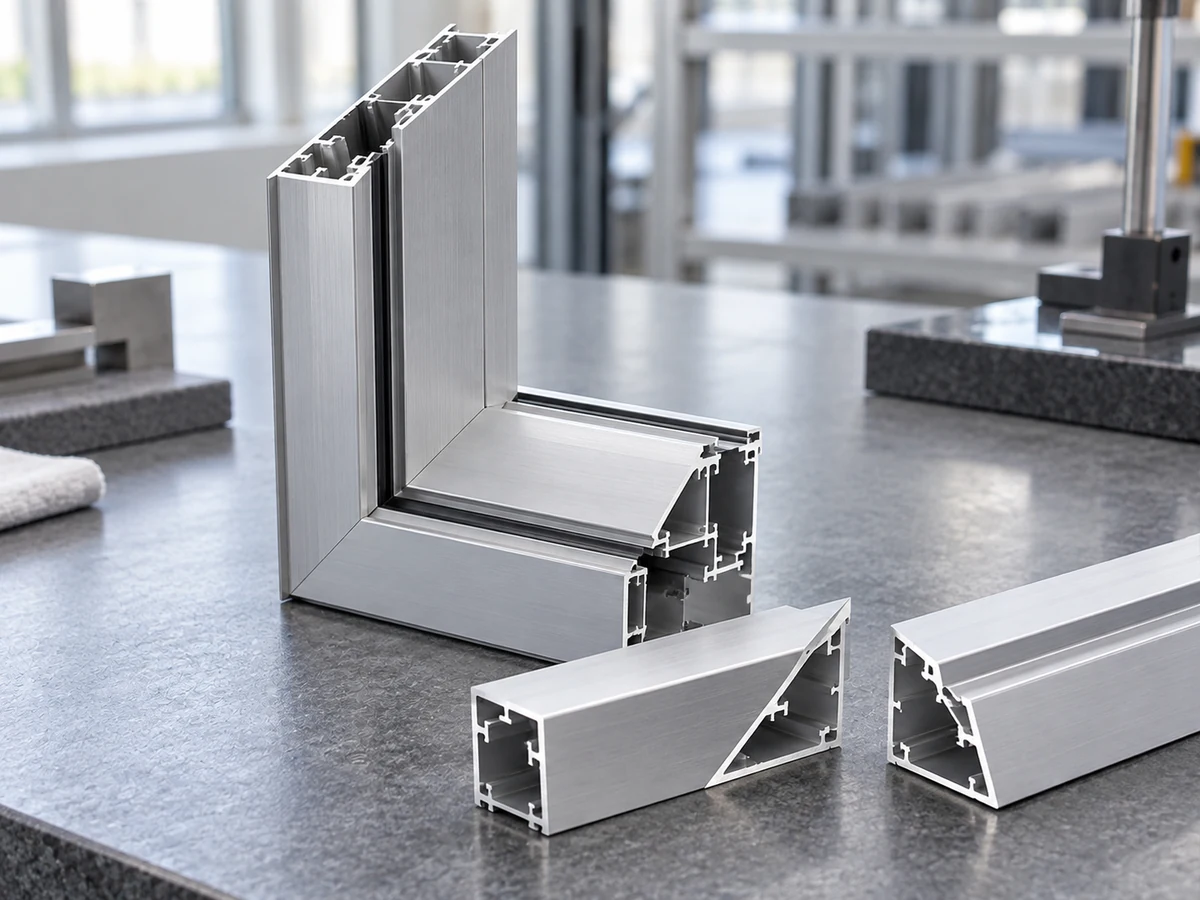
First decide which serving-window package is being purchased
J&R Aluminum Products describes custom concession windows built to a truck or trailer opening, with choices around layout, hardware and ventilation. All-Rite describes its concession windows as assemblies made from aluminum extrusion with a mounting flange and clamp ring. Midwest Concession Trailers says its trailers include a serving window within a customized vehicle. These manufacturer examples establish that a serving window is a product package with multiple interfaces; they do not establish a universal profile drawing or a Jiurun machine specification.
Ask whether the buyer needs a complete window assembly, a preassembled frame, a labeled cut-member kit, or an in-house saw cell for repeat production. If the order is for a complete approved unit, a saw quotation for loose members is not a substitute for the window maker’s product and installation responsibilities. If a released extrusion is to be cut by the OEM, identify its part number and where that blank hands off to machining, miter joining, glazing or final installation.
Translate the window opening into a member schedule
An opening width is not automatically a rail cut length. Obtain the window maker’s revision-controlled section drawings, corner method, cut list and bill of materials. Separate outer mounting frame, opening sash, sliding track, trim and any support tube by part number. For each, state stock length, nominal blank length, tolerance, cut angle, left/right orientation, quantity per window and planned batch size. Include the finish and which faces may touch tooling.
Do not infer a 45-degree miter from a photo. Some constructions use square-cut members with a connector; others use mitered corners, welded joints or a preassembled frame. A serving-window flange, drainage path, weather seal, screen track and hinge clearance may make one face the controlling datum. The approved manufacturer drawing determines that datum. Mark the cut end that is allowed to be deburred, drilled or joined downstream, and keep those later operations outside the saw’s acceptance claim.
Check profile support before promising a cut
Bring the actual stock sample to a stopped setup review. Identify hollow cavities, projecting lips, thin walls and decorative faces. The fixture must support the chosen locating face without crushing a flange or marking a visible surface. Check blade-path clearance, clamp reach and support for both long stock and short offcuts. A jaw that looks secure on a plain rectangular extrusion can be wrong for a window profile with a seal groove or unsupported lip.
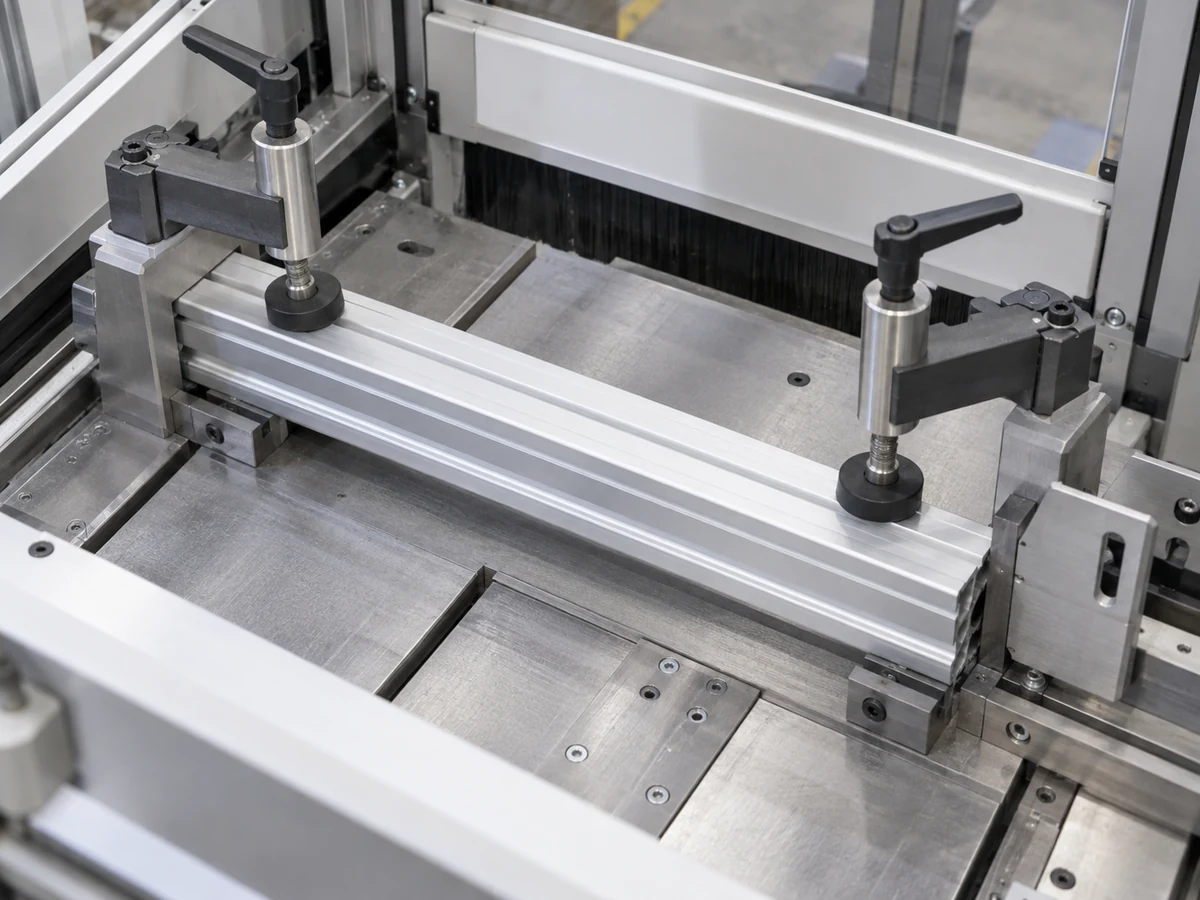
Ask the machine supplier to explain how the proposed saw locates a released section through changes in stock length and end angle. Record whether the part is presented face up or face down and where the stop references it. If multiple frame members share the machine, include changeover and first-off checks in the trial plan. Use actual samples to assess burrs, cut-face condition, distortion and surface protection rather than assuming a performance figure from a generic video.
Make the first-off check part of the RFQ
The first accepted part should be measured against the window maker’s drawing. Specify the length datum, end angle or squareness method, corner-fit check, visible-face condition and orientation label. Inspect after the part is released from the fixture: a hollow section can appear aligned under pressure and move after unclamping. Keep a retained first-off sample and record the approved correction if the setup changes.

For a kit, label the outer-frame and sash members separately and protect their finished faces in transit to assembly. The window fabricator then checks corner fit, sealing, glazing, opening movement and hardware. The vehicle builder checks the complete window’s fit in the truck opening and its installed requirements. A successful saw cutoff alone does not prove water tightness, security, ventilation, vehicle compliance or any customer-specific performance.
Send a bounded food truck serving window frame cutting RFQ
| Provide | Why the saw supplier needs it |
|---|---|
| Released profile drawing and actual stock sample | Locates cavities, lips, finish and usable clamp faces. |
| Part-level frame and sash cut list | Separates blank lengths, end conditions and batch mix. |
| Approved datum and corner method | Defines the measured end and fixture orientation. |
| Finish protection and downstream operations | Prevents a cutoff proposal from implying a completed window. |
| First-off acceptance owner | Places fit and release decisions with the window builder. |
Request a proposal that states the stock range, workholding concept, cut sequence, changeover plan and trial assumptions. If the window supplier retains the full assembly and only sells a finished unit, ask that supplier for its approved dimensions and delivery terms; there may be no buyer-owned sawing operation to quote.
Related equipment video
This Jiurun Machinery channel video shows a general aluminum-cutting equipment scene relevant to positioning and cutoff discussion. It does not show a food truck serving window, the specific stock or configuration in this article, a customer project, a qualifying trial or window performance.
Decide what Jiurun should review
When the window maker has released a loose aluminum frame or sash extrusion and can supply drawings and samples, review industrial aluminum profile cutting options and send the part details to Jiurun for a bounded equipment discussion. Keep the complete serving-window design, glazing, sealing, hardware and vehicle installation with their responsible owners. Food truck serving window frame cutting is one possible intermediate process, not a substitute for those approvals.