
Aluminum trench drain frame cutting can be quoted as a saw operation only when the released drawing identifies a straight aluminum member that is supplied as stock and cut to a defined length. A trench drain may instead arrive as a complete channel system, a welded grate frame, a removable grate or several different materials in one assembly. These are different purchasing and production routes. This guide is for drain-system manufacturers and approved fabricators who need to isolate the cutoff step before asking an equipment supplier for a cycle or a sample cut. It is not an installation design, hydraulic calculation, load rating or slip-resistance approval.
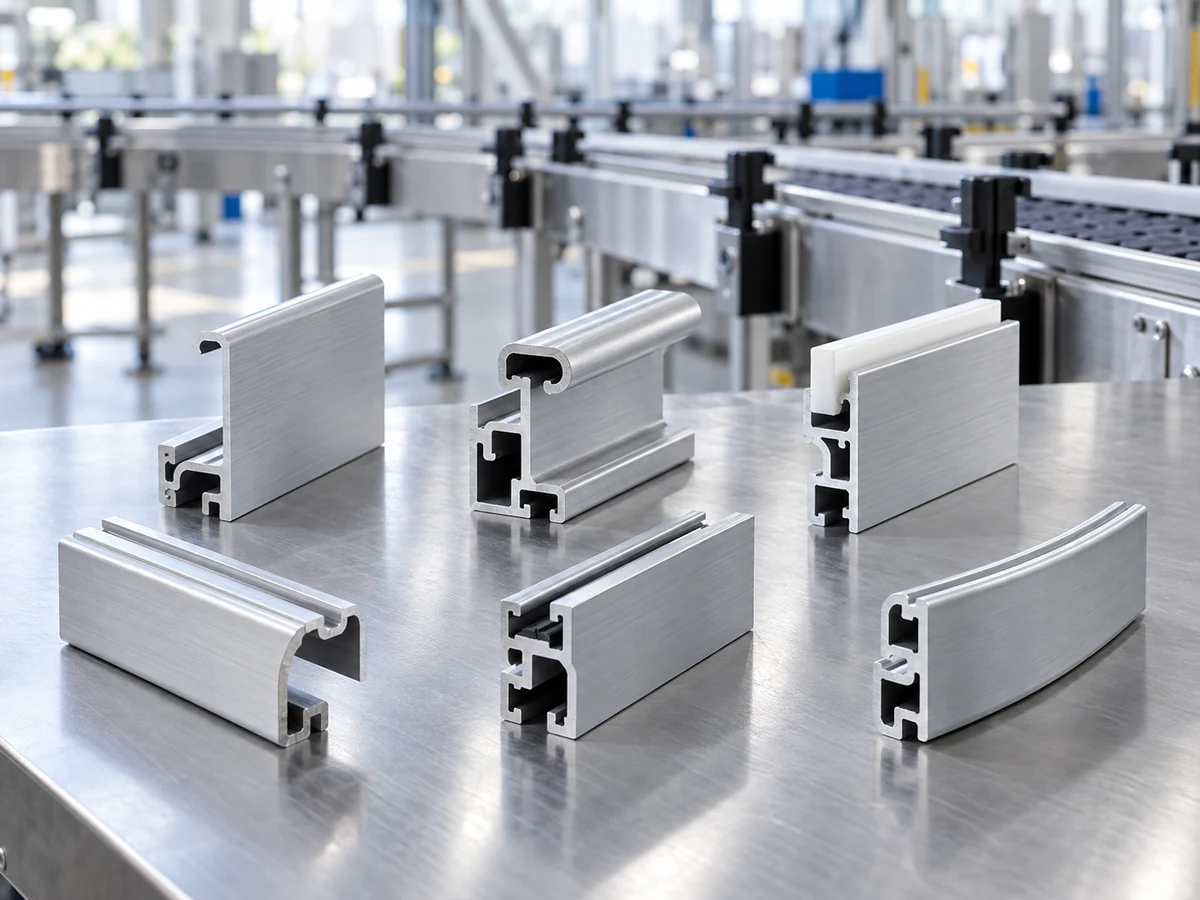
Aluminum trench drain frame cutting starts with member identity
Start with the system bill of materials, not the overall trench length. An aluminum extrusion forming the channel body, a separate perimeter rail carrying a grate, a removable grate panel and an outlet assembly can all appear in one project. A saw vendor should receive only the part number and stock form for the member under evaluation. The final installed run may include joints, corners, caps, liners, outlets and site tolerances that do not belong in the saw-cut length.
Manufacturer literature illustrates the distinction. Latham describes aluminum trench grating with frames, removable grate sections, optional liners and factory-welded angles or T pieces. Its example is a system offering, not evidence that every frame is a straight extrusion available for cutoff. A Zurn trench-drain catalog separately describes an extruded-aluminum channel and grate sections; one listed configuration uses 96-inch channel sections with 24-inch grates. Those numbers describe that catalog example, not a Jiurun machine capacity, a recommended cut length or a specification for another supplier.
Ask the product owner to mark the exact part on an assembly drawing. Is the requested supply unit a loose cut rail, a matched pair of rails, a finished frame, a grate, or a complete drainage channel? Identify the point where the blank leaves the saw station and the point where later machining, welding, coating or assembly begins. This boundary prevents a quote for a raw blank from being mistaken for a quote for the entire drain.
Confirm that a straight aluminum stock route exists
The phrase “aluminum frame” does not prove that the component is an extruded section. It may be bent sheet, an angle welded into a rectangle, a cast component or an extrusion with substantial downstream machining. Ask for the approved material and section drawing, incoming stock length, straightness condition, finish, and whether the member is delivered before or after anodizing or coating. Record any attached liner, insert, seal or non-aluminum part. If the approved route has no loose straight aluminum blank, there may be no separate aluminum-saw decision to make.
For a genuine extruded member, mark the bearing lip, narrow wall, open cavity and visible face on the cross-section. These features determine which surfaces can touch a fence or clamp. A nominal width alone does not establish a safe or repeatable datum. The grating should be treated as a different part unless its own drawing, material and manufacturing route are released for a separate evaluation.
Translate run dimensions into a cut list
A site trench run and a stock cutoff length are not interchangeable. Before issuing an RFQ, convert the approved layout into a part-level cut list with part number, nominal length, tolerance, end condition, handedness and quantity. State whether each end remains square, receives a miter, meets a factory-welded corner or is later milled. Put expansion joints, corner returns, end caps and outlet locations in their own columns. A curved or field-fitted run should not be silently turned into a straight saw program.
For repeated members, define the length datum and measurement temperature if they matter to the drawing. For a rail with a bearing lip, identify whether the dimension is measured along the main web, the lip or a finished assembled edge. Give the downstream assembler the drawing that ties the cut blank to grate seating and frame alignment. The saw supplier can then discuss positioning and first-off measurement without claiming to validate drainage performance.

Set the fixture around the actual bearing surfaces
On a narrow frame member, clamp pressure can distort a grate-bearing edge or mark a visible face. The fixture study should use the released section and show stable contact surfaces, local support near the cut, clearance for projecting lips and a positive length stop that references the specified datum. Avoid assuming that a broad jaw is harmless just because the member is aluminum. With thin walls or an open section, the stock may need a different nest, sacrificial support or pressure distribution; those choices require a sample and a controlled trial.
Separate cut accuracy from part movement after unclamping. A long, flexible rail can appear aligned in the fixture while changing shape when released. Ask how the first-off will be measured in a free state and at what points along the profile. Also discuss chip evacuation from cavities and protection of any finish surface. The safe operating procedure and blade choice must be set for the actual section, machine and material by the responsible shop. This article does not prescribe a universal cutting parameter.
Agree on the end condition and handoff
A clean-looking cut face is only one part of acceptance. The drawing may require length, squareness, edge burr condition, lip integrity and orientation marks. Where the grate seats on a lip, an edge defect can interfere with later assembly even if overall length passes. Conversely, a saw station should not be credited with certifying the grate load class, drainage capacity or installed surface level. Those are system and installation responsibilities.
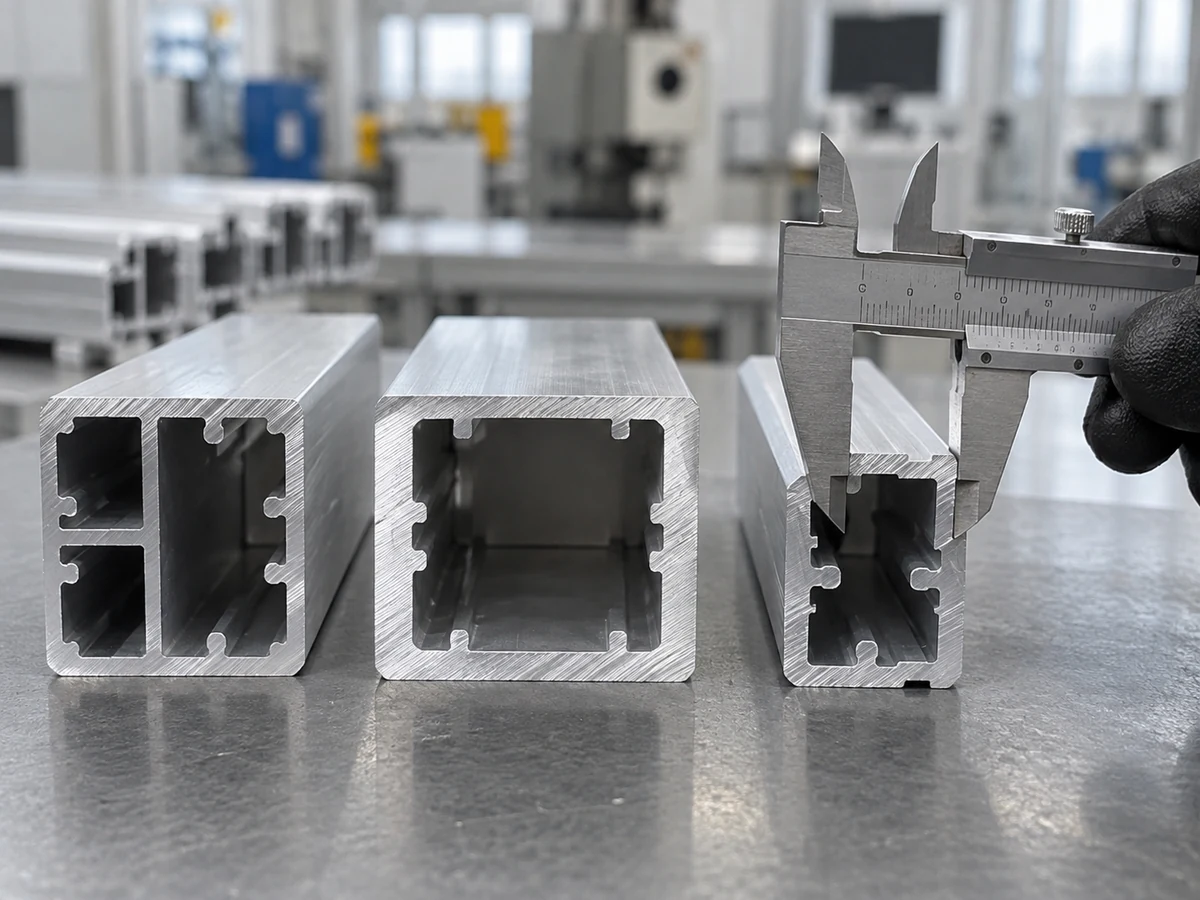
Use a first-off sheet that records the stock batch, setup revision, cut orientation, measured length, end-face observations and any surface marks. Have the downstream fabricator or drain-system owner approve the actual part against its drawing. If later steps include drilling, slotting, welding or finishing, label the cutoff as an intermediate blank and specify who owns those operations. A sample cut is useful only if it is made on the approved stock, measured by the agreed method and evaluated at the correct handoff.
RFQ checklist for an aluminum trench drain frame blank
| Send | Why it matters |
|---|---|
| Released part and assembly drawings | Distinguishes channel, frame rail, grate and finished system. |
| Actual stock sample, alloy/temper and finish | Shows the bearing lip, wall support and surfaces that must stay unmarked. |
| Part-level cut list with end details | Prevents an installed-run length from becoming a wrong blank length. |
| Datum and first-off measurement method | Makes the cutoff acceptance repeatable. |
| Downstream process and owner | Separates sawing from welding, outlet work, grate fit and installation approval. |
| Expected mix, batch size and available stock lengths | Lets the supplier study handling, changeover and material yield. |
When an RFQ says only “cut aluminum trench drain frames,” return it for the missing part definition. An aluminum trench drain frame cutting quotation can cover a straight member cutoff, proposed holding concept and controlled sample review. It cannot responsibly promise that a completed drainage system will meet project loads, flow requirements, slip classification or site dimensions from the saw step alone.
Related equipment view
The following video is from Jiurun Machinery’s YouTube channel and shows a general aluminum-cutting equipment scene relevant to discussing stock positioning and cutting. It does not show a trench-drain frame, the particular stock described here, an approved fixture for it, a customer trial or product performance.
Make the buying decision at the stock-route boundary
If the product owner can supply a released straight aluminum rail or channel section, its cut list and a sample, an equipment discussion is timely. If the job is actually a welded frame, a cast or non-aluminum grate, or an installed drainage assembly, define those supply packages first. For a feasible aluminum blank, use the industrial aluminum profile cutting overview to frame the machine discussion, then send the part drawing and stock details to Jiurun for a bounded cutting review. Keep the drainage-system approvals with the manufacturer and project team.