
Aluminum traffic sign post cutting begins with the approved support system, not a generic pole length. A sign face, its vertical support, mounting hardware, foundation or base, and any required roadside impact treatment form a defined assembly. The factory may be asked to deliver a straight aluminum blank, a prepared post with later features, or a complete sign-support package. These are different buying units. This guide helps sign-system manufacturers and approved component suppliers prepare a cut-blank RFQ. It does not specify a roadside installation or certify a support for vehicle impact.
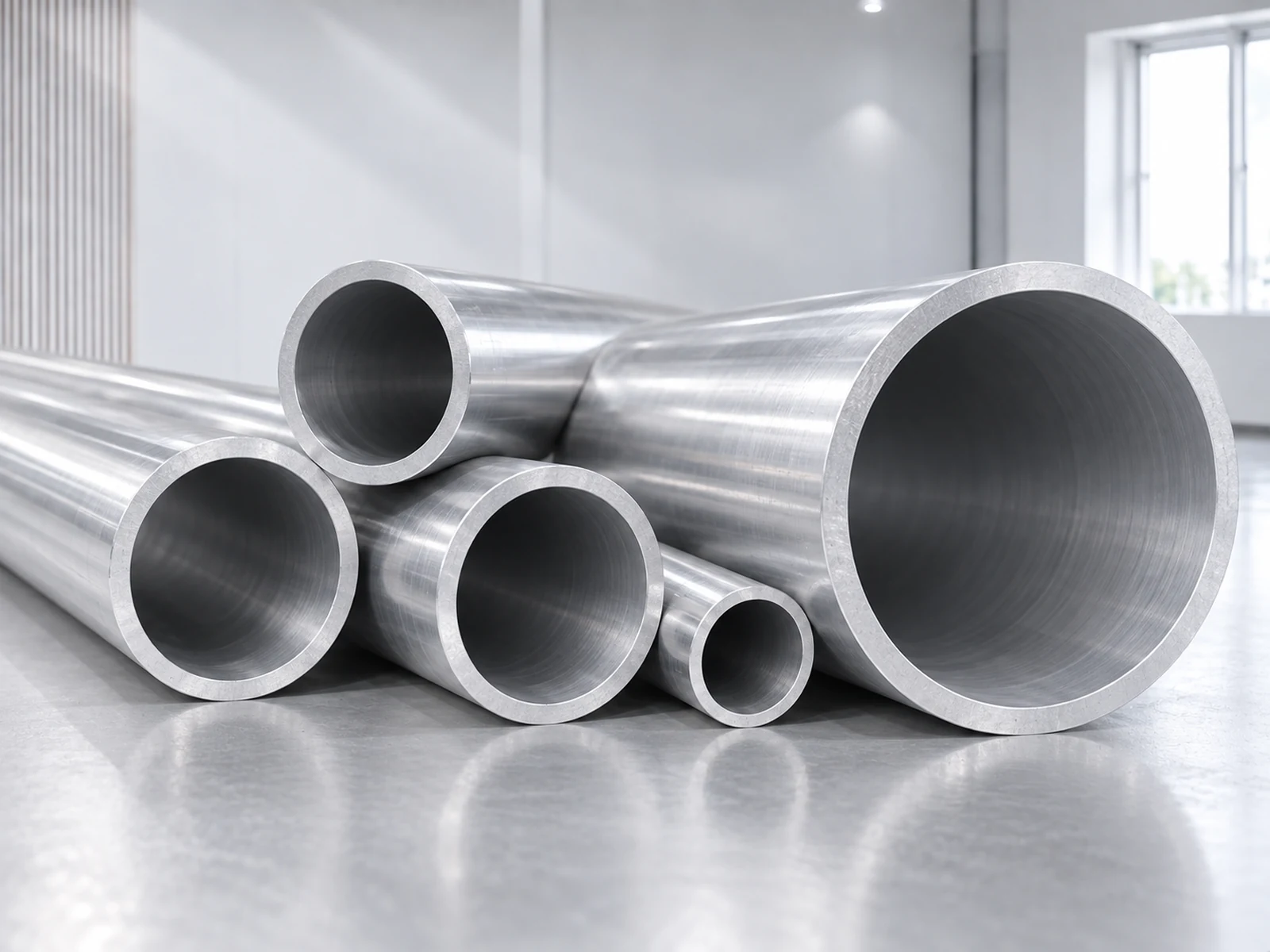
Confirm that the released post is an aluminum cut blank
Do not convert every sign-support order into an aluminum-saw forecast. The Federal Highway Administration’s sign-support guidance describes roadside supports made from wood, steel channel, steel tube and other routes, and explains why some locations require a breakaway, yielding or shielded support. That guidance addresses a safety system, not an instruction to substitute a cut aluminum tube for an approved post. The project owner must identify the governing drawing, location and acceptance authority before a component supplier chooses a stock route.
Aluminum sign products also differ. Howard Industries describes linear aluminum post and frame extrusions in several shapes and offers specified cut sizes. Directional Systems describes an extruded aluminum post mount with end caps and separate direct-burial or baseplate routes. These are manufacturer-specific examples of how a post can be supplied. Their sizes, finishes and installation statements are not Jiurun machine settings or permission to change another sign system.
Ask the sign-system owner which exact member remains to be cut from straight stock. If the buyer already receives a complete approved post and base assembly, there may be no retained saw job. If the buyer receives a straight extruded post, establish whether the saw delivers only the blank or also owns later hole making, bracket slots, welding, end caps, finish protection and labeling. Name the downstream owner of each step.
Separate the blank, prepared post and installed support
A blank is the released aluminum section cut to an accepted length and end condition. A prepared post may include mounting holes, welded or bolted base features, caps, surface finish and hardware. An installed sign support includes the sign panel, connections, footing or foundation, site geometry and any required impact performance. A clean saw cut can demonstrate only the blank criteria actually inspected. It cannot establish post capacity, sign visibility, wind design, roadside crashworthiness or installation approval.
| Quoted route | Receiving unit | What the saw trial can address |
|---|---|---|
| Complete approved sign support | Post, base, hardware and required documentation | Only an identified retained cutting step, if one exists |
| Prepared post | Cut member plus named secondary features | Blank geometry and surface before downstream work |
| Straight aluminum blank | Released extrusion with accepted ends | Stock holding, length, end condition and part identity |
| Steel or wood support | Different approved material route | Exclude from an aluminum-extrusion saw RFQ |
On a phone, swipe the table sideways. Keep the complete-support price and the cut-blank price at their actual receiving stages. If comparing make with buy, add the work remaining after the saw to the in-house route and count only the post families the factory actually makes.
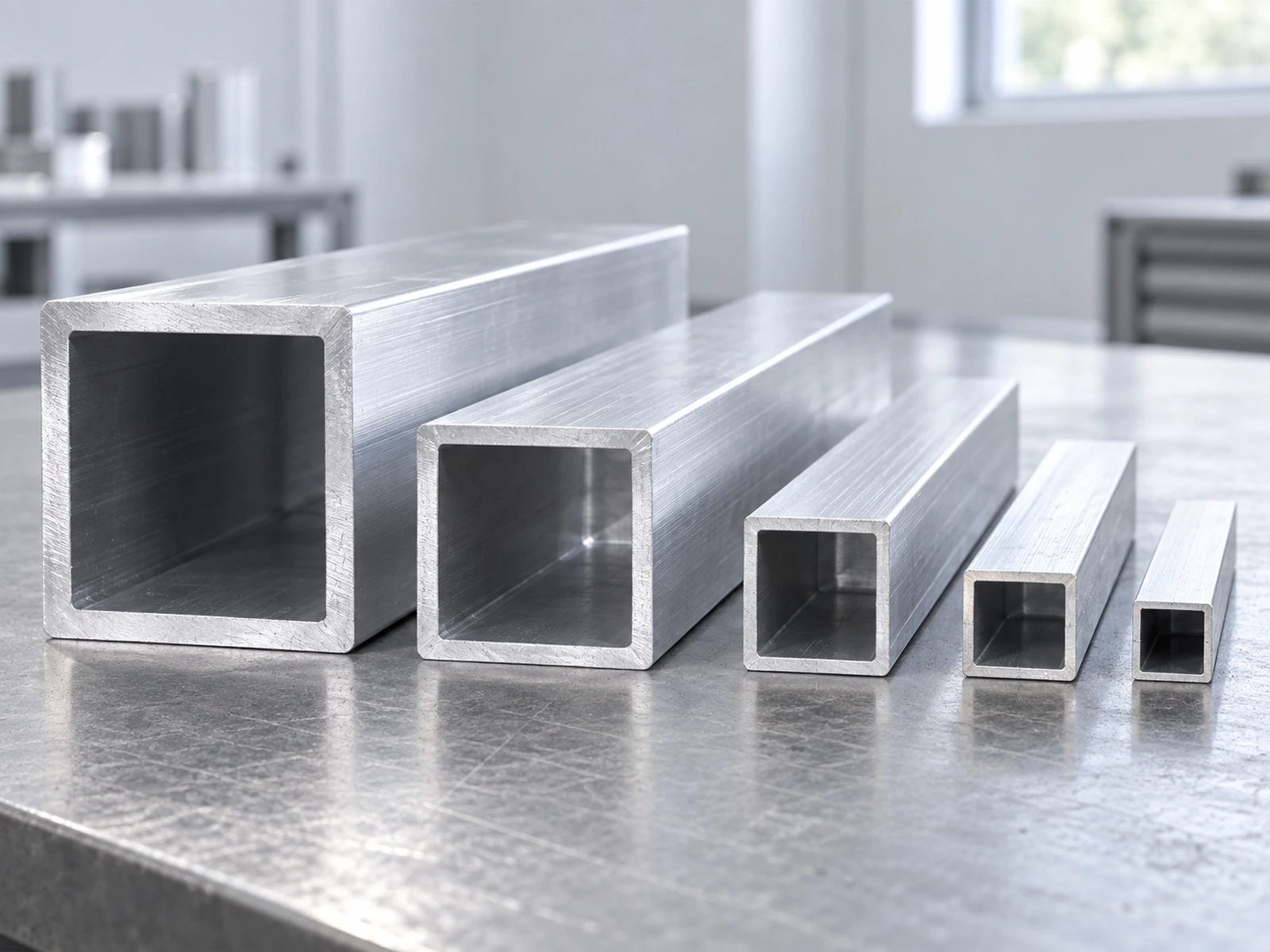
Turn an installed height into a physical member drawing
A drawing may give sign-face height above grade or an overall post height. Neither number automatically equals the factory cut length. Direct burial, a separate baseplate, a sleeve, an end cap and a mounting bracket change where the physical member begins and ends. A supplier must use the released post-part drawing and bill of materials, not subtract a guessed embedment or cap allowance from a site elevation.
For each member row, give the support family and revision, alloy and temper if specified by the owner, cross-section and wall, incoming stock length and finish, factory cut length, datum, end form, quantity per accepted sign, and whether a base or cap is supplied separately. Name the visible face and any orientation feature. Round and square sections, decorative profiles and channel-shaped supports can have different locating surfaces even if a purchasing list calls them all “posts.”
Keep post body, cap, baseplate, bracket and panel stiffener as distinct parts. A post may need holes or slots after cutoff, but the saw quotation should not silently include them. If the support has a defined breakaway component or connection, keep its approved detail and test documentation with the responsible design and certification authority. Do not infer that trimming the post preserves approval; ask the owner whether the proposed blank and later operations are within the released support configuration.
Prove workholding on the actual approved extrusion
Send the supplier an actual stock piece or a released section drawing plus representative stock. A round tube can roll under an unsuitable clamp; a square tube needs contact on approved faces; a decorative section may have thin lips or a coating that marks. The trial plan should show the locating datum, supported span, clamp contacts, stock feed and outfeed, and how a short final piece is retained. Do not accept a demonstration on a convenient but different tube as evidence for the purchased post.
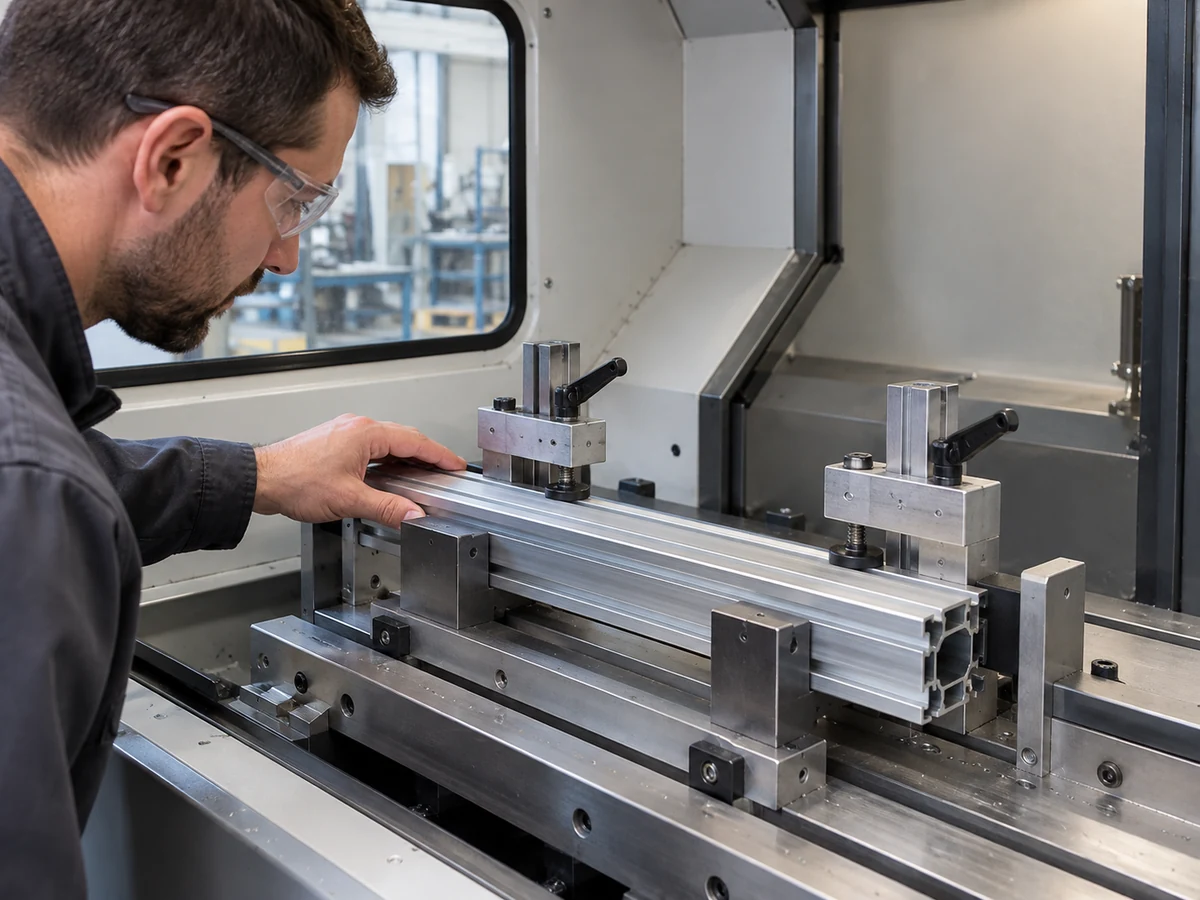
Include the shortest and longest relevant blanks, the finished surface condition and any section that changes the fixture. Define acceptance from the released drawing: length measured from named end planes or datums, end squareness or angle, burr and edge limits, surface marks, chip removal and part identification. State whether inspection is on an unrestrained blank, in a gauge or after later preparation. Keep first-off samples labeled with stock and drawing revisions, observed setup and measured results.
A factory may use a common saw for several approved post families, but that is a trial conclusion rather than an assumption. Ask for changeover steps and first-off verification when moving between round, square and shaped stock. A cycle-time claim for one straight cut says little about the complete mix when loading, support, inspection, sorting and later preparation consume time.
Keep roadside approval with the support owner
Some roadside sign supports are required to yield, break away or be shielded, depending on the road authority and site. The FHWA overview explains the purpose of those systems and describes common post types. The relevant project documents and responsible authority decide which requirement applies. A cutting-machine vendor cannot establish it from a photo of a tube or a smooth cut face.
Separate evidence at three handoffs. The saw supplier provides an identified cut blank and measured end acceptance on the approved stock. The sign-system manufacturer checks every secondary feature and the prepared support against its released configuration. The project or road authority reviews the complete support, base, panel and installation documentation. Record who owns each approval; do not lift a claim about a finished roadside system into a saw-blank quotation.
This distinction is commercially useful as well as necessary for clear responsibility. A buyer who specifies only “sign pole” may receive quotes for raw stock, a finished decorative post or an installed sign package. Those are not comparable prices. Ask every bidder to state exactly what leaves its facility and what evidence accompanies it.
Compare make and buy at the same accepted output
For a retained cutting route, calculate real stock yield and offcuts, saw loading, changeovers, fixture cost, blade and consumables, first-off and ongoing inspection, deburring or cleaning, finish protection, labels, rejects, storage and delivery to the next station. Add later drilling, brackets, caps, base fabrication, assembly and final support inspection where they remain in-house. On a purchased-post route, include incoming verification, documentation, hardware completeness and any site preparation that remains with the buyer.
Use the real mix of post families and lengths. A large volume of one round blank and a small batch of custom square posts can justify different sourcing routes. Do not treat an entire sign-installation forecast as aluminum cutting volume when many supports use steel, wood or bought-in approved assemblies. Quote accepted, labeled blanks or accepted prepared posts over a representative period; the unit must be the same across offers.
Aluminum traffic sign post cutting: seven RFQ checks
- Approved route: identify the responsible sign-support system, project drawing revision and material route for each post family.
- Receiving stage: say whether the order is for raw blanks, prepared posts or complete approved supports.
- Stock identity: give the actual aluminum section, material, finish and incoming length; separate round, square and shaped members.
- Cut definition: mark physical length datum, end condition, orientation, quantity and allowed variation from the released drawing.
- Trial plan: provide real stock and test the most demanding short, long and finished pieces with documented clamp and support contacts.
- Downstream boundary: assign holes, caps, baseplates, brackets, finish, labels and any breakaway detail to named owners.
- Comparison unit: request accepted parts with records and price the remaining work before comparing with a purchased post or assembly.
A concise inquiry can say: “We are assessing cutoff of approved aluminum post stock for sign-support family [ID]. Attached are the released section and blank drawings, length schedule, finish, datum and acceptance criteria. Please describe support and clamping for the actual stock and propose representative first-off trials. Exclude base design, breakaway qualification, installation and complete sign-support approval from the saw scope unless separately specified.”
Related Jiurun equipment footage
The video below shows a Jiurun cutting-equipment example. It is general context for workholding and cut-part review. It does not show an approved traffic-sign post, a stated machine configuration for this job, a customer trial, a breakaway test or roadside performance.
Send a released post-blank package
The best first question is whether the factory actually cuts a released aluminum support member from straight stock. If it does, send the physical member drawing, representative extrusion and blank acceptance plan. If it buys a complete approved support, evaluate that procurement route at the complete-unit boundary. For broader equipment context, see Jiurun’s industrial aluminum profile cutting overview. To discuss a real cut-blank job, send the member package to Jiurun; the team can assess the stated cutting step without claiming approval of a roadside sign support.
Source basis: Howard Industries’ post extrusions, Directional Systems’ post-mount options, and FHWA sign-support guidance. These sources illustrate distinct stock and assembly routes; they do not establish Jiurun use, compatibility or tested support performance.