
Aluminum kennel frame cutting is a purchasing decision about released metal members, not a shortcut to a finished animal enclosure. A saw may make a square-tube blank to length, but a kennel panel or swing gate can still need joints, rods, sheet, latches, welding or connectors, cleaning, and final acceptance. When an RFQ says only “kennel frame,” suppliers may price different delivery stages and appear comparable when they are not.
Start by naming the exact member and the stage at which the buyer will receive it. Is the request for bare cut tubes, prepared frame parts, a welded gate, a complete panel, or an installed kennel system? That boundary decides what a cutting-machine trial can prove and which organization must approve the enclosure.
Confirm the frame system before specifying a saw
Real kennel systems use different frame architectures. LGL Animal Care Products’ aluminum kennel specification distinguishes primary framing tubes, side panels, swing gates, resting benches, back panels, and flooring. Its own specification names extruded square tubes for certain frame members and also describes rods, sheet, seals, hinges, and hardware. Those dimensions and alloys are LGL’s product requirements; they are not universal settings for Jiurun equipment or a substitute for a buyer’s released drawing.
Another enclosure route uses cut-to-size extrusions with connectors. Moxitec describes an L-shaped aluminum enclosure framing system that joins with connector pieces without mitering or welding. The existence of both routes matters: a saw quote for a welded square-tube panel should not be silently reused for a connector-built section. The stock section, end condition, holding method, and downstream assembly differ.
Obtain the actual drawing or approved sample for the kennel product being built. Check whether each listed member is aluminum extrusion, aluminum sheet, rod, steel, polymer, or a bought-in assembly. Keep sheet cutting, rod work, forming, welding, and latch installation outside a plain extrusion-cutting quote unless they are separately specified and priced.
Separate the blank from the completed panel or gate
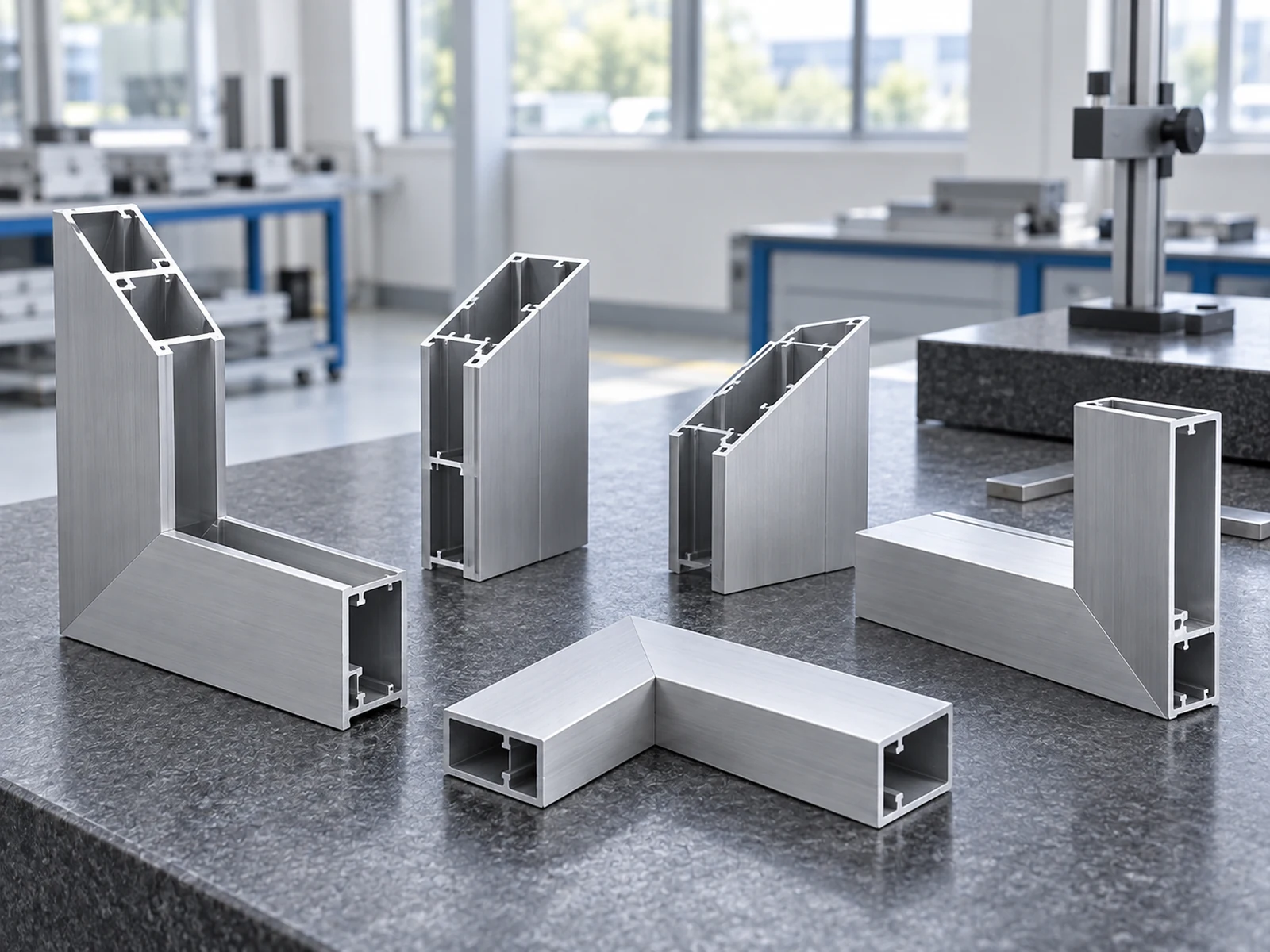
Put the receiving stage in the first line of the quote. A bare cut blank is an identified length of approved stock with an accepted end condition. A prepared member may also include a second angle, holes, deburring, identification, or finish protection. A gate adds joints, infill, hinge and latch interfaces, and assembly checks. A complete enclosure includes a much wider set of design, installation, cleaning, and animal-containment responsibilities.
On a narrow screen, swipe sideways to read each purchasing route.
| Route | Buyer receives | Question for the supplier |
|---|---|---|
| Approved cut blank | Drawing-identified tube length and specified end condition | Which stock, datum, angle, burr limit, and label are included? |
| Prepared frame member | Cut tube plus agreed secondary features | Who supplies holes, slots, coating repair, and part-level inspection? |
| Panel or swing gate | Assembled frame with specified infill and fittings | Who owns welding or connectors, latch, hinge, cleanability, and final acceptance? |
Do not compare a cut-blank unit price with a finished gate price. Place all remaining work, reject risk, and receiving checks beside the machine price. If a buyer already purchases approved finished panels, the relevant comparison is the complete accepted panel supply route against the complete in-house route, not saw cycle time alone.
Build a member list that a saw supplier can test
For each approved frame member, record the panel or gate variant, drawing number and revision, stock cross-section, material and finish, required quantity per accepted unit, and whether the end is square or angled. Name the part’s hand or orientation when left and right members differ. Do not use outside kennel width as a surrogate cut length; joints, connectors, and assembly allowances change the actual member dimension.
Keep unlike members on separate rows. A side-panel upright, gate rail, grooved back-panel member, and bench support may look like “square aluminum” in a summary but have different wall, groove, surface, or end requirements. LGL’s published example itself distinguishes frame, gate, bench, and back-panel construction. The buyer’s own released package determines what goes on the saw and what remains for another station.
Provide representative stock, not only a photograph. The supplier needs the actual section to evaluate support, fixture contact, guarded opening, offcut handling, and whether thin walls or a groove can be marked or distorted. Identify which faces must remain visible or seal-bearing. If anodizing or coating occurs before the cut, specify permitted contact and post-cut protection. If finish occurs later, identify the handoff condition and who handles it.

Define a physical cut datum and end condition
A usable blank drawing tells the operator where length begins and ends. For a square cut, define the finished end planes and how the part is restrained for measurement. For a miter, identify the reference face, angle direction, and long-point or short-point length. A mirror-image gate pair needs explicit left and right rows; “same as opposite side” invites reversed pieces.
Agree on the inspection method before quoting precision. State the length range, allowable variation, angle acceptance, end-face condition, burr limit, and any visible-surface restriction from the customer’s drawing or approved sample. Do not invent a tolerance from a machine brochure. Where a later welded joint or connector has a critical interface, the system owner should identify the relevant feature and acceptance limit.
Check both the shortest and longest planned blanks. A short offcut can be harder to support or identify than the longest rail. A long, thin-wall tube may deflect or rotate unless the feed and exit support suit its section. Include any grooved or asymmetric variant in the trial, and document the actual blade, clamp contact, orientation, and part ID. The trial result is only as broad as the stock and acceptance conditions tested.
Keep fabrication and animal safety with the responsible owner
A saw can produce an accepted metal blank, but it does not establish the strength of a welded corner, the fit of a connector, the security of a latch, the absence of snag points, or the suitability of the full enclosure for animals. Those are design and finished-product decisions for the kennel manufacturer or facility owner. Do not present a smooth cut end as proof of containment, hygiene, corrosion life, or regulatory compliance.
Separate chips and sharp-edge controls at the handoff. The buyer should specify whether the cutter removes loose swarf, deburrs ends, protects exposed edges for transport, or simply delivers inspected raw blanks to a later cleaning and fabrication station. Do not assume that a welded or assembled product will conceal defects safely. A gate with access to animal or handler contact surfaces demands its own completed-product review.
The kennel system may mix aluminum with rod infill, sheet, stainless hardware, polymer seals, and flooring. These parts require their own sourcing and checks. LGL’s modular kennel overview illustrates how a housing system can include panels, gates, floors, and accessories. The example supports a scope distinction, not a claim that Jiurun has manufactured or tested that manufacturer’s product.
Compare the whole accepted-unit cost
For a make-or-buy decision, choose the same receiving unit and accounting period. If the buyer needs one accepted side panel or gate, include stock yield, saw loading, fixture changes, blade service, inspection, identification, rejected blanks, downstream joining and infill, finish work, packaging, and final gate or panel inspection. Purchased prepared members or finished panels may move several of these responsibilities to a supplier; state what is included before comparing prices.
Run the comparison on the real product mix. An isolated straight rail may cut quickly while short gate members, special miters, and revision-controlled replacement sets drive setup and sorting time. Ask for a representative first-off set for each risk-bearing family, not a single demonstration on the easiest tube. Count accepted parts or accepted complete kits, not merely machine strokes.
Label and protect member sets at receiving
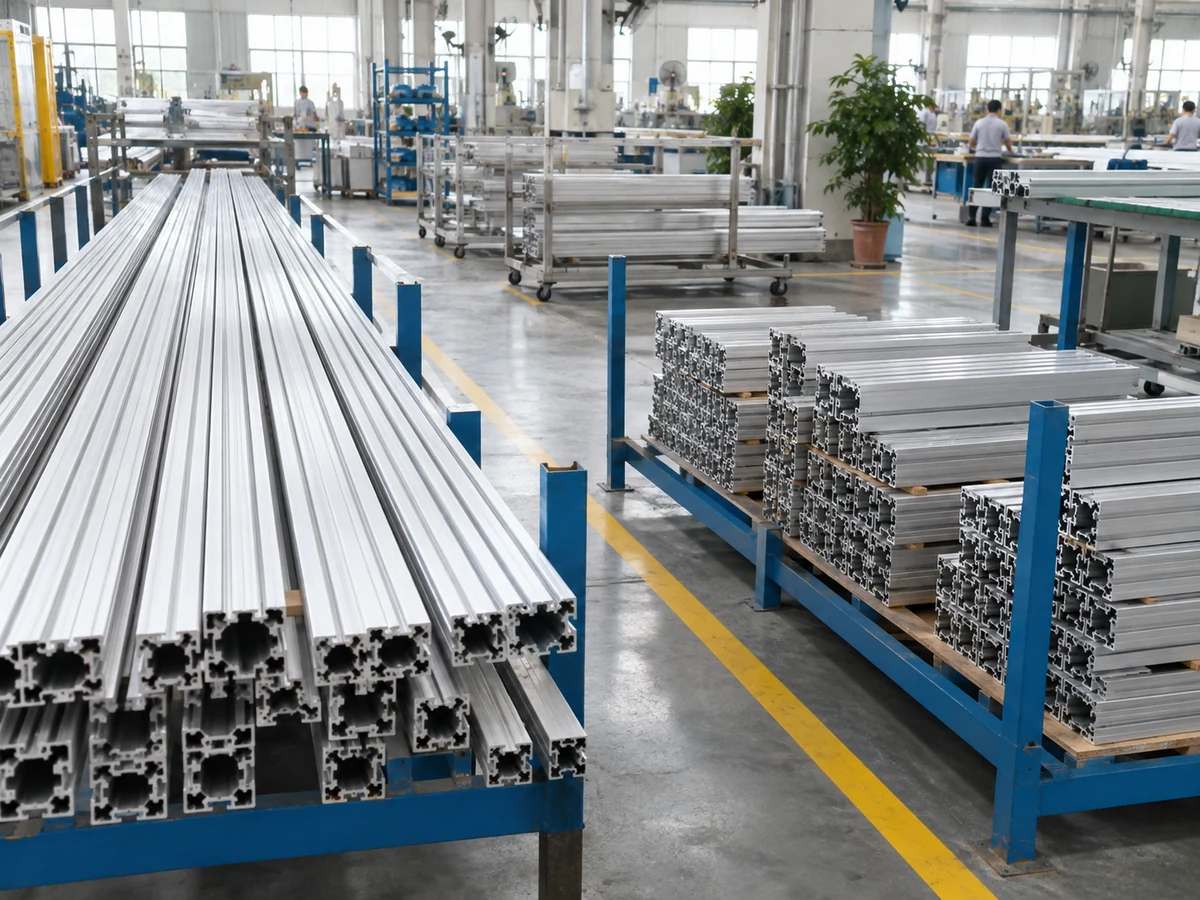
Part identity matters when similar silver tubes leave the saw. Bundle by product variant, drawing revision, member code, hand, finish, length, lot, and destination. Separate accepted and rejected parts. Agree on corner and face protection during transport and a receiving check against the member list. A mixed pile can erase the value of otherwise accurate cuts.
Aluminum kennel frame cutting: RFQ checklist
- Release the actual kennel panel or gate drawing, revision, bill of members, and finished-unit receiving point.
- Mark exactly which approved aluminum tubes or extrusions are saw-cut blanks; separate sheet, rod, hardware, and finished assemblies.
- For every blank, specify cross-section, material and finish, physical datum, length, end angle, quantity, and inspection condition.
- Identify protected surfaces, feed orientation, permitted clamp faces, short-piece handling, and chip or burr acceptance.
- Provide representative stock and require first-off evidence for difficult sections, ends, and product variants.
- Assign the owner of joints, infill, latch and hinge features, cleaning, panel acceptance, and enclosure safety.
- Request prices at a common accepted-unit boundary, including remaining fabrication and rejects.
For aluminum kennel frame cutting, a precise blank specification lets a saw supplier discuss the equipment and trial without implying approval of a finished kennel. Share the released tube drawing and representative stock when you contact Jiurun for a cutting-machine discussion. Jiurun’s industrial aluminum profile overview gives general equipment context; the specific setup depends on your approved material and receiving criteria.
Related equipment video
The following Jiurun machinery video is a related example of aluminum-profile cutting equipment. It does not show a kennel frame, gate, LGL product, customer order, or performance validation for this article.
Frequently asked questions
Does a square-tube dimension specify a kennel gate blank?
No. The approved tube section, material, finish, drawing revision, hand, physical length datum, and end condition are needed. A published manufacturer’s dimension applies to its own product specification.
Can a saw trial approve an assembled kennel panel?
No. It can evaluate defined cut-blank criteria on representative stock. The responsible system owner must separately accept joints, infill, fittings, cleaning, and finished-product use.
Should a welded gate and connector-built enclosure use the same quote?
Only after their distinct member sections, end conditions, remaining fabrication, and receiving stages are itemized. Compare complete accepted-unit routes rather than treating both as generic frame cutting.