
Airport security desk aluminum frame cutting starts with the purchasing boundary
Airport security desk aluminum frame cutting is a small part of a much larger furniture and passenger-flow project. A buyer can order a complete repacking desk, a prepared frame subassembly, or released aluminum members cut to a controlled schedule. These are different deliverables. A saw supplier can discuss how to support and cut an identified extrusion; it cannot turn an unapproved desk concept into an approved airport installation. Decide which party owns the design, joints, cladding, tray openings and site acceptance before asking for a cut-price comparison.
Real airport furniture examples explain why this boundary matters. Thinking Space describes repacking desks with aluminum frameworks, 40 × 40 faced profiles, low and high supports, composite panels and tray inserts in one specific project. Evans describes a modular extruded-aluminum counter frame with separate cladding and technology integration. Those are manufacturer examples, not Jiurun projects or a universal airport-desk specification. Your approved drawing and the desk maker’s requirements control the actual members.
Choose the deliverable before quoting a cutting cell
| Buying route | What the buyer receives | Who must control the interfaces |
|---|---|---|
| Complete desk or OEM kit | Designed furniture, finishes, inserts and installation scope as contracted | Desk OEM and project team; ask what site verification is included |
| Prepared frame subassembly | Cut members plus the agreed drilling, brackets or assembly work | Frame fabricator to the approved drawing and inspection plan |
| Cut aluminum blanks | Identified extrusion members at released lengths and end conditions | Buyer or downstream fabricator owns joints, panels, installation and final desk approval |
A quotation for cut blanks must not be read as an offer for a finished security desk. If the design is still changing, keep the frame schedule provisional and request a sample or a process review rather than treating a rough overall desk dimension as a cutting release.
Release a member list that a saw operator can actually use
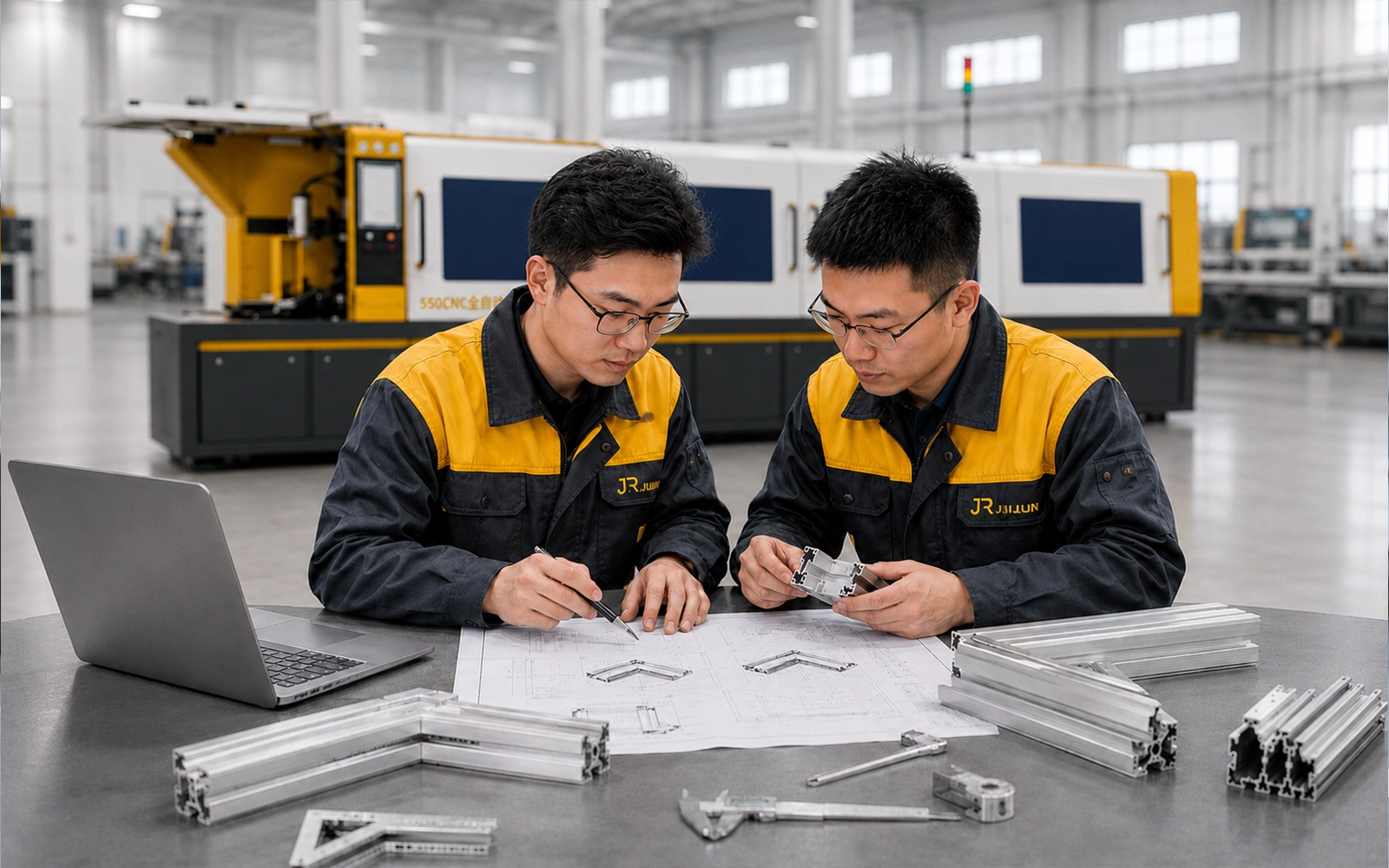
The useful input is a revision-controlled member schedule, not a photograph of a finished counter. Give every member family a stable identifier and connect it to a drawing detail. Where a profile has visible and concealed faces, mark orientation on the section. Where an end joins a bracket, post or adjoining rail, identify the datum from which length is measured. At minimum, release these eight items:
- Profile identity: section drawing, alloy and temper specified by the product designer, supplier part code and finish state at cutting.
- Member role: base support, upper rail, upright, return or other named position. Similar-looking sections may have different connection duties.
- Length and datum: finished length definition, measurement face, tolerance and any allowance for subsequent machining or finishing.
- End condition: square or angled end, handedness, exposed-face requirement and whether deburring belongs in the cutting quote.
- Joint interface: bracket, fastener, insert or joining method selected by the desk designer; show the no-clamp or no-mark zones.
- Batch logic: quantities by member ID, kit grouping, revision and replacement/spare quantities.
- Inspection rule: first-off sample, measuring method, cosmetic acceptance on visible faces and traceability required at receipt.
- Commercial boundary: who provides stock, offcut disposition, packaging, rework decision and approval to start production.
Ask the responsible desk designer to sign off this schedule. A stock photo, a nominal 40 × 40 callout from another maker, or an old frame drawing cannot establish your extrusion geometry or permitted tolerances.
Clamping and feeding depend on the real extrusion, not the desk label
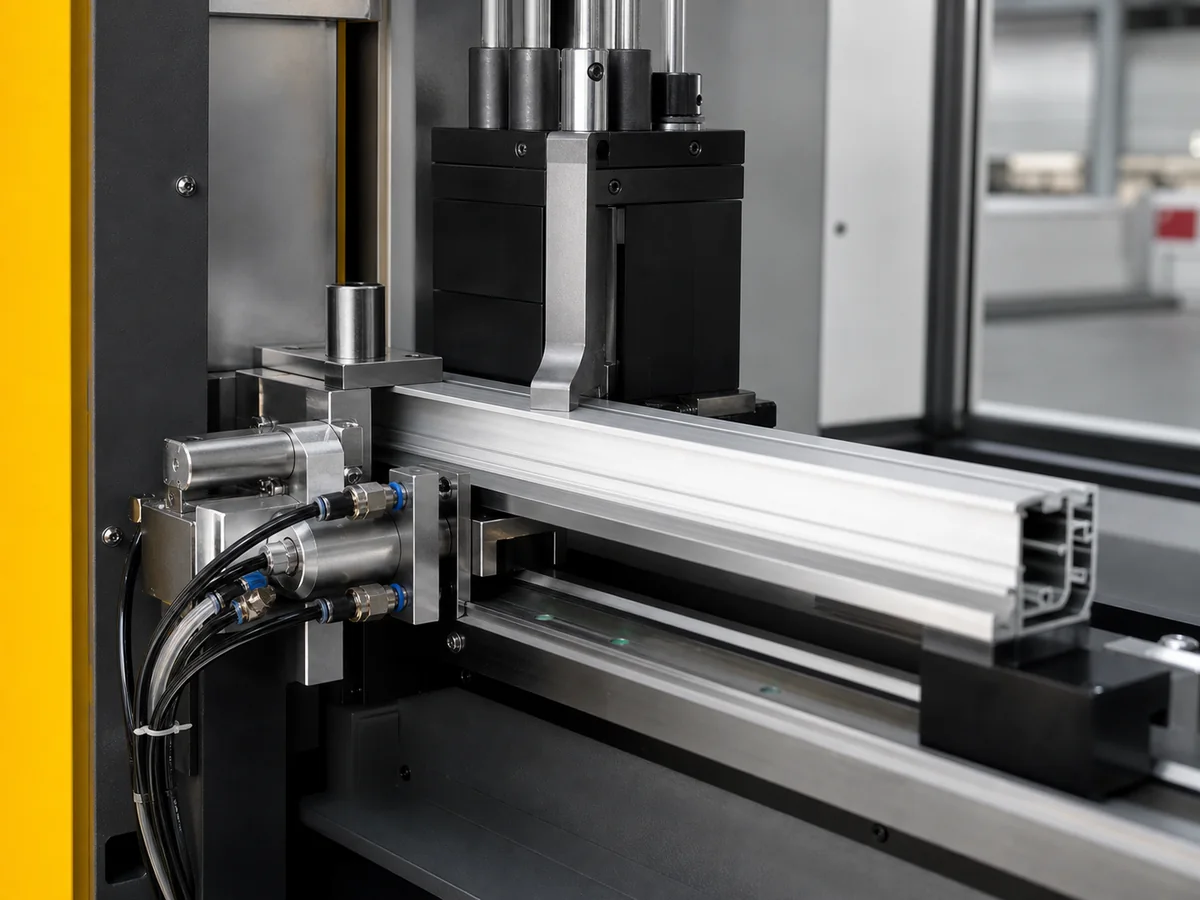
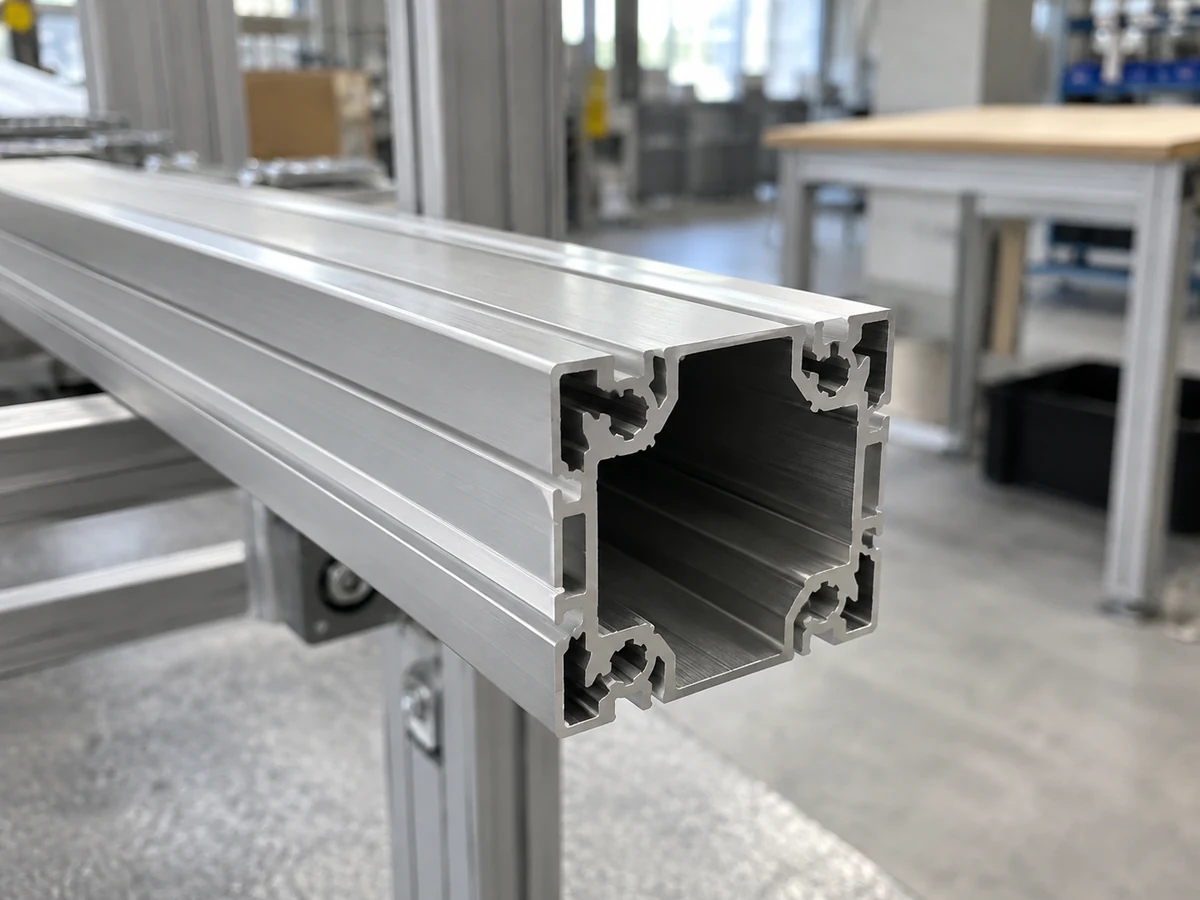
Long, thin-walled, multi-cavity and slotted profiles can behave differently under the same clamp contact. The cutting team needs the actual section, straightness condition, stock length and visible-face map to decide where support and pressure can be applied. A fixture should restrain movement without distorting a chamber or marking a face that will remain visible after cladding. A first trial should check the cut end and the next assembly interface, not merely whether the blade passed through the stock.
For a modular desk, orientation errors may travel downstream: a slot intended to face an insert can end up on the wrong side; a rail cut to the right number but from the wrong datum can shift a tray opening. Mark a reference face and first-off part, then have the downstream assembler check one representative joint before a long batch is released. This is a process proposal, not a claim that any pictured machine has been validated for this customer’s section.
Inspect the end that will meet a joint, panel or insert
A desk frame end is rarely judged in isolation. Ask which surfaces become visible, which ends enter concealed joints, and which edges sit beside a panel, tray insert or user contact area. The desk OEM or integrator must define the required finish and safety acceptance. The cutter should know whether a sharp burr, miter gap, crushed chamber, damaged slot lip or surface scratch would block downstream assembly. Record the chosen inspection method and acceptance sample before full production, rather than inventing a generic cut-quality number.
Where members will receive brackets or fasteners, confirm whether the cut happens before or after drilling and whether hole-to-end distances are controlled in another operation. An approved cut length cannot by itself guarantee tray fit, wiring clearance, load capacity or compliance with an airport’s project rules. Those require the designer’s assembly and installation checks.
Compare shop cutting, prepared frames and a complete desk fairly
If the buyer already owns a released design and assembly capacity, cut blanks can keep machining and finishing within its existing route. If it lacks fixture design, panel integration or final inspection, a prepared frame or complete OEM desk may shift those responsibilities to a specialist. Compare the routes on the same scope: stock purchase, cut setup, first-off approval, secondary holes, joint hardware, cladding, protection, transport, site fit and rework ownership. A low saw-cut line price is not an all-in desk price.
For repeat orders, include revision control. A change to tray spacing, end seating or visible finish may alter member IDs even when the overall counter size appears unchanged. Require the quotation to state which revision it priced and how remaining old-revision stock will be handled. When a project has several nearly identical members, label each bundle by position and orientation so installers do not have to infer the cut list at the site.
A practical RFQ for the frame-cutting supplier
Send the current profile and member drawings, finish and visible-face requirements, stock length and procurement responsibility, quantities by ID, datum and end conditions, allowed secondary operations, and the proposed first-off assembly check. Ask the saw supplier to explain how it would support and locate the actual section, identify any clamping risk, estimate material use from your stock length and specify what it will inspect. Request a sample plan if geometry or cosmetic acceptance is uncertain. Compare lead time only after both parties agree on the same deliverable and approval steps.
Jiurun supplies industrial aluminum and nonferrous circular-saw cutting equipment. A machine selection conversation can cover profile support, feeding, clamping, cut orientation and the test evidence needed for a released member. It does not replace the desk designer’s engineering, airport approval, seating, electrical or passenger-safety assessment. See the aluminum cutting machine range for equipment context and contact Jiurun with a controlled section drawing and target cut schedule for a focused discussion.
Related equipment video: what it does and does not show
The Jiurun channel video below shows an aluminum cutting machine example and helps buyers discuss machine handling and cut-process questions. It is not footage of an airport desk frame, the 40 × 40 manufacturer example, a customer run-off, an approved fixture or evidence of a particular tolerance, load or installation outcome.
Before releasing production
Approve one member list and one first-off frame interface. Confirm the supplied section against that list, verify orientation and cut-end acceptance, then release each batch by revision and member ID. If the desk’s panels, tray inserts or site dimensions are still open, hold those interfaces for the responsible designer; buy a scoped sample rather than treating a provisional cut list as a finished-desk commitment.