
Medical walker aluminum tube cutting is a narrow manufacturing decision inside a much larger product route. A saw can make approved tube blanks; it does not make a folding walker, rollator, wheel assembly, height-adjustment joint, or clinically suitable mobility aid. Before asking a machine supplier for cycle time or a model recommendation, the buyer should define which tube members are retained in-house, which are already formed or purchased, and what the next operation will accept. This guide turns that boundary into a practical RFQ and first-off trial.
The distinction matters because walker designs are not interchangeable. Drive Medical’s trigger-release folding walker information describes an aluminum frame with a folding release, wheels and adjustable height. Its two-button folding walker uses a different product arrangement. Medline’s upright walker range is another example of a complete walking aid. These manufacturer examples establish that tubes, joints and finished devices are different purchasing units. They do not identify those makers’ tube-cutting processes, suppliers, or any Jiurun installation.
1. Name the exact item leaving the saw
Write the accepted output in one sentence: for example, “straight aluminum tube blank to drawing revision,” “formed and drilled frame member,” “matched front and rear frame-member kit,” or “complete walker.” A straight blank still may require bending, notching, drilling, deburring, surface finishing, assembly, labeling and product-owner inspection. Those steps cannot be silently included in a saw quotation. If the buyer purchases preformed tubes or an assembled frame, the saw may have no retained work in that route.
Use a part list with member identifier, left or right hand, drawing revision, stock form, operation sequence, accepted output quantity and receiving department. A two-sided walker can look symmetrical while still containing different pieces or hardware interfaces. If the released design uses different variants by height range, wheel package or folding mechanism, identify each variant before aggregating demand. Compare price per accepted set only after the same scope is counted on every quote.
2. Prove the released tube stock, not a catalog silhouette
The customer drawing and approved bill of materials must establish alloy and condition, outside diameter or section, wall thickness, incoming straightness, length range, finish and supplier traceability. A product photo does not show whether a member began as straight round tube, a formed tube, a special extrusion or a bought subassembly. Do not substitute a convenient round tube from the saw showroom. Ask the device owner which parts can be made from straight stock, which are formed before cutoff, and which require controlled surface handling.
For round tube, record both outside diameter and wall thickness. Thin walls can respond differently to clamps from thick stock; a stop that locates a solid bar may not locate a tube without local deformation. Define the cut-length datum and the allowance left for any later forming or machining. A final assembled height is not the same as a saw blank length. If the drawing uses telescoping sections, identify the mating member and the later fit check rather than assuming one tube diameter from the outer appearance.

3. Separate straight cutoff from bends, holes and folding joints
A saw trial can establish whether a specified straight member can be fed, supported, clamped and cut to the blank acceptance drawing. It cannot establish the later bend radius, hole location, folding-joint motion or assembled stability. Mark the stage of every dimension. A cut that is square to the incoming tube may still fail the frame assembly if the bend, hinge or drilled interface uses a different reference. Conversely, a final device dimension should not be imposed on a loose blank without the downstream operation’s allowance.
Make a route map from incoming stock to accepted device member. Highlight the first operation outside the saw cell, the owner of that operation, and the inspection handoff. For formed members cut after bending, identify a safe location surface and the clearance envelope of the bent shape; do not assume a straight-bar automatic feeder can handle it. For parts cut before bending, specify how blank identity survives the forming and drilling steps. A machine supplier should quote the saw cell against that exact route, not against an attractive finished-walker photo.
4. Trial actual tube support, clamp contact and short pieces
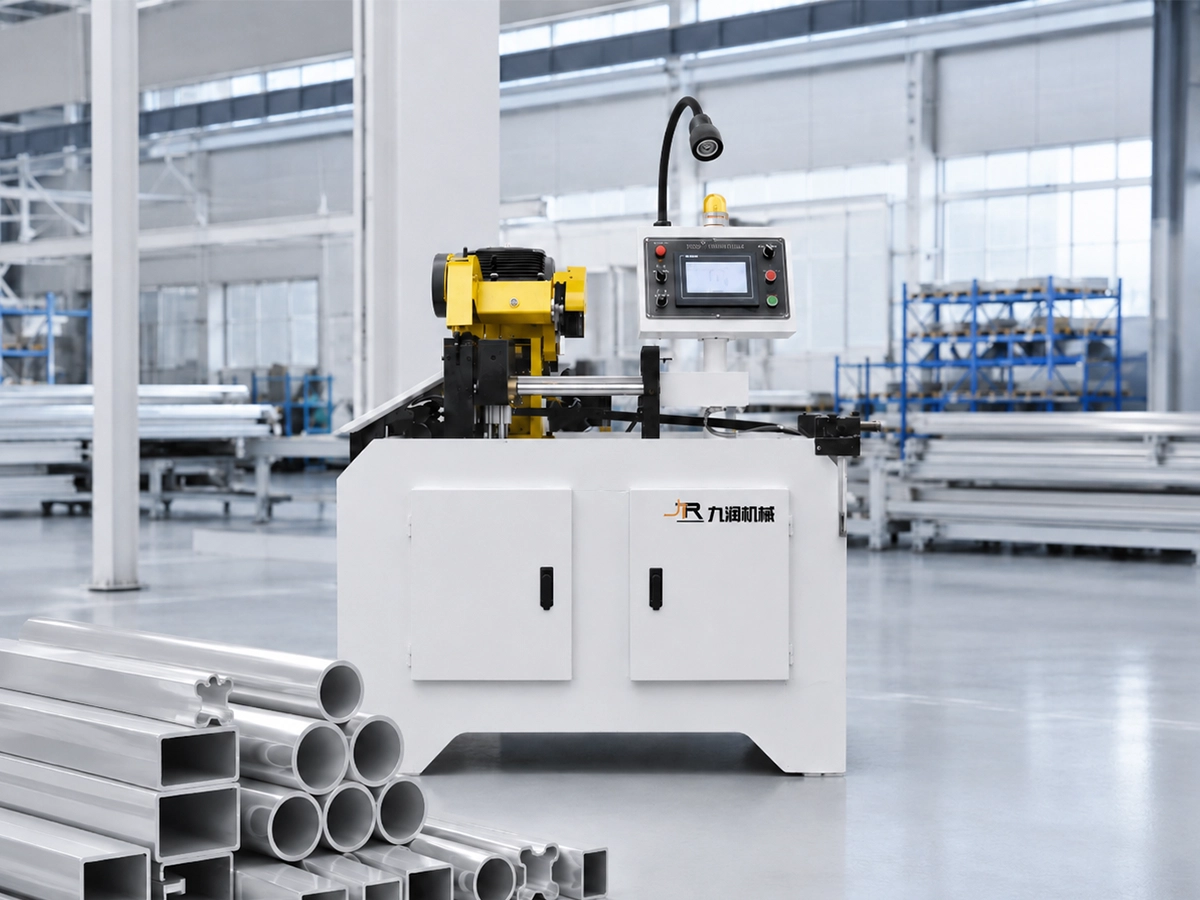
Give the saw supplier representative released stock. Include the smallest and largest approved section, thinnest relevant wall, longest and shortest blanks, and the finish most vulnerable to contact marks. Ask the supplier to show the infeed support, stock locator, clamp pads, blade and feed plan, outfeed handling and short-piece procedure. Keep the guarding and operating method within the machine maker’s safe instructions; do not turn a difficult short blank into an improvised hand-holding operation.
Record setup conditions for each sample: stock lot, section, blade, clamp contact, stop or feed setting, operator method, cut sequence and any fixture change. Observe whether the tube rolls, slips, flattens, dents or scratches. Look at the cut end and the receiving surface after transfer, not just at the moment the blade retracts. If a proposed feed system is designed around long straight lengths, test the final useful piece and the remnant route too. One smooth first cut does not prove a mixed-family production plan.
5. Build a first-off record the assembly owner can use
Agree acceptance criteria before the demonstration. The first-off sheet should identify part and revision, material lot, saw setup, cut-length datum, measured length, end condition, visible surface damage, sample order and the downstream owner’s decision. When the member is later bent or drilled, add enough identity and orientation information to prevent a good blank from being routed to the wrong variant. Segregate any pieces from setup changes until they have been checked.
A caliper picture is not a qualification report. Measurement tools, contact points and uncertainty must suit the dimension being accepted. Ask whether the receiving operation needs a blank-length record, an end-squareness check, surface-protection evidence or a complete matched set. The product owner must separately validate joints, adjustment, folding action, stability, load rating and finished-device labeling under its applicable requirements. Jiurun’s saw trial should report only the cut-member observations actually measured.

6. Compare four purchasing routes on the same accepted unit
Retain straight-tube cutting: include approved incoming stock, saw cell, blade and fixtures, loading, inspection, scrap, short-piece handling and all downstream forming and assembly costs. This route is plausible only if the buyer owns the drawing and has a qualified receiving process. Buy cut blanks: compare delivered blank identity, incoming inspection, transport damage, lot traceability and any remaining operations. Buy formed frame members: define bends, holes, surfaces and the acceptance records included. Buy finished frames or walkers: price the assembly and its product-owner documentation on a consistent basis.
For each route, estimate total cost and lead time per accepted device-member set over the same demand period. Show variant changeovers, minimum order quantities, rework and line shortages. Do not compare a saw cycle time with the delivered price of a tested finished walker. The right sourcing boundary may differ between a high-volume released part family and a rare replacement variant; document the decision rather than assuming that owning a saw makes every variant economical.
7. Send a decision-ready RFQ and request the correct demonstration
Send the released tube and blank drawings, bill-of-material identities, real stock samples, material and wall ranges, required blank lengths, variant mix, annual and batch demand, cut-end criteria, visible-surface limits, traceability needs and the next operation’s acceptance sheet. Ask bidders to identify the infeed, support, fixture, blade, outfeed, inspection, guarding, utilities, operator work and service scope. Require a marked-up trial matrix and actual measured first-off pieces. Ask which tasks remain outside the quoted saw cell.
An automatic aluminum cutting machine overview can introduce equipment classes, and the sample-cutting trial checklist can help structure evidence. Neither replaces the walker designer’s released drawings. If the proposed supplier cannot show the real tube and short-blank route, treat a generic equipment video as orientation only.
Equipment video: a separate machine scene
The Jiurun Machinery channel clip below shows a separate aluminum cutting machine. Watch it to understand general machine motion and material handling. It does not display this article’s walker tube, selected model and fixture, customer order, accepted first-off pieces, output rate or finished-device performance. Confirm the proposed cell through a witnessed trial on the released material.
Medical walker aluminum tube cutting: the purchase boundary
Buy or retain a saw-cut route only when the buyer has released straight-member drawings, approved stock and a receiving process that can use the blanks. If the production requirement is for bent, drilled, adjustable or assembled members, quote those stages explicitly. Send JiurunCut the approved tube and blank drawings to discuss a representative saw trial; keep finished walking-aid design, safety and market claims with the responsible product owner.