
An air curtain is normally purchased and judged as a working assembly, not as a pile of cut aluminum. Yet an OEM or contract fabricator may also have a released design that uses straight aluminum members in its exterior housing. Those are two different purchasing routes. Before including an aluminum saw in an air-curtain project RFQ, identify exactly which route the drawing and bill of materials authorize.
This guide is for factory sourcing and process planning. It does not specify an air-curtain model or authorize a replacement housing for an installed unit. For example, Berner’s Drive-Thru Unit 3 flyer describes a factory-assembled unit with a satin-anodized aluminum exterior cabinet. That description establishes the cabinet material and finished-unit supply context for that product; it does not establish that its cabinet is made from straight saw-cut extrusions. The OEM’s actual part drawings, service instructions, and approvals control any fabrication decision.
1. Separate the finished air curtain from a cut housing blank
Start the RFQ with a three-way question: are you buying a complete certified unit, an approved housing or spare assembly, or cut blanks for a released factory build? A saw quote is meaningful only in the third route, and only if the approved bill of materials contains stock that a saw can actually cut. A complete air curtain includes functional items and interfaces beyond the cabinet. A saw trial cannot validate the final airflow, motor, electrical, mounting, guarding, or installation requirements.
If the request concerns an installed product, identify its manufacturer, model, and serial number before asking for a cut replacement. Berner’s installation and maintenance guidance directs users to model-specific documentation and replacement parts. A shop should not infer that a visually similar extrusion is an approved substitute for a finished enclosure.
2. Confirm the actual stock form and released member
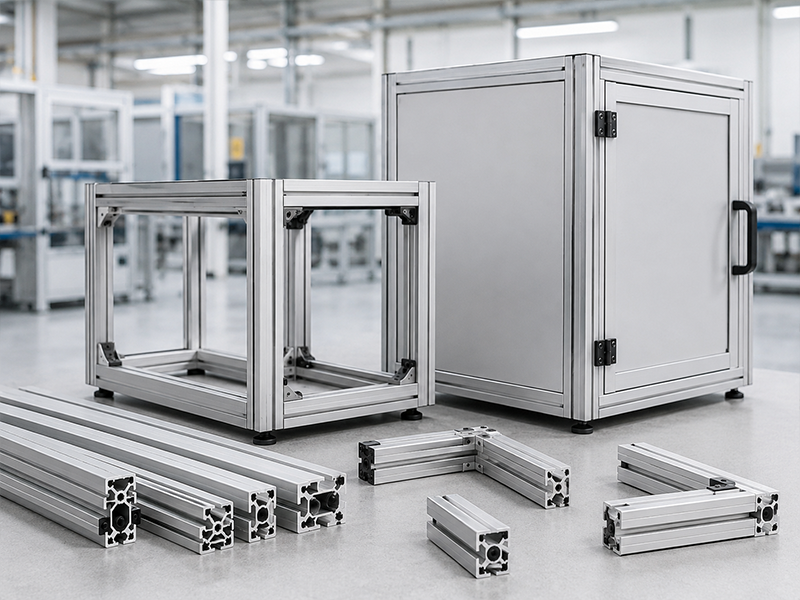
“Aluminum housing” is too broad to select a cutting machine. The approved design might use an extrusion, sheet-metal cabinet, casting, purchased module, or a combination. Ask for a part number and revision for every proposed cut member. The drawing should identify alloy and temper where relevant, cross-section, wall and internal cavity geometry, nominal stock length, and any finish applied before or after cutting. Record whether the end will remain visible, receive a cap, enter a joint, or later be machined.
If the stock is a straight extrusion, supply a real sample from the intended lot. A catalog image is not enough to assess workholding: a thin lip, asymmetric cavity, decorative face, or concealed mounting channel can change how the member rests and where clamping force may be applied. If the stock is not a straight cuttable member, remove the saw from that portion of the RFQ and price the correct supply route.
The featured image is a related aluminum lighting-housing section, used only to show why the cross-section matters in an RFQ. It is not identified as an air-curtain cabinet profile or evidence of any specific customer’s material.
3. Put the length datum, orientation, and finish into the order
For each released member, name the finished-length datum and tolerance on the drawing. State whether length is measured between square cut faces, from a feature to an end, or after a subsequent operation. Add a marked section view showing the visible face, top and bottom, left and right hand, and feed direction when handed parts exist. An air-curtain cabinet may look symmetrical in a sales image while its fastener, bracket, access, or cable features are not. The drawing, not appearance, decides.
Also specify whether an anodized or painted face is already finished when it enters the saw. Agree which faces may contact supports, stops, and clamps; whether protective film can remain in place; and what marks or edge defects are unacceptable. Do not replace that agreement with a generic “clean cut” promise. Agree a visual reference and measurement method so the supplier and buyer inspect the same condition.
4. Trial the real profile with the intended support and clamping plan
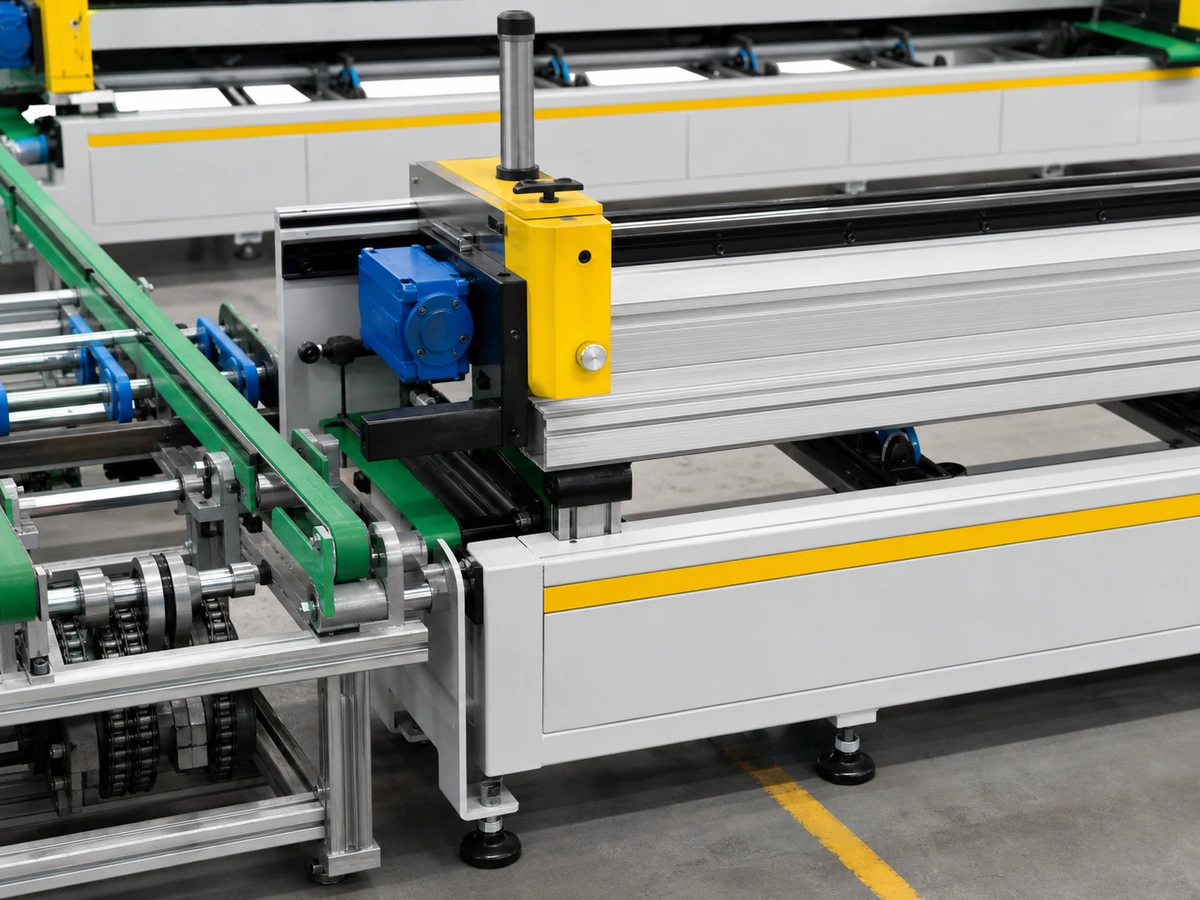
Give the saw supplier the actual longest and shortest cut lengths, representative profile sample, quantity mix, and packaging plan. During a supervised trial, observe how the stock is supported before and after the blade, how the stop contacts the member, and whether clamping changes its shape or damages the visible surface. Check that a short offcut can be handled safely under the machine’s normal instructions. A machine photograph alone cannot establish these results for your profile.
Have the factory record trial settings and the specific sample identity. Measure the first-off pieces against the released drawing, including length, squareness or specified end angle, visible-face condition, burrs, and any fit feature that the cut could affect. If later drilling, fastening, sealing, or finishing changes the acceptance criterion, note which operation owns the final check. Do not extrapolate a result from a different aluminum section or blade setup.
5. Keep system approval with the air-curtain owner
A passed blank inspection means only that the cut member meets the agreed blank criteria. The product owner must verify the subsequent assembly and any required fit, mounting, electrical, airflow, service-access, and safety obligations for the actual air curtain. This distinction is especially important when someone proposes a replacement for an installed unit: purchasing a model-specific spare may be the only approved path. Ask the OEM or responsible engineer to sign off any change in stock, geometry, finish, or assembly route before production.
What to send in an air curtain housing cut-blank RFQ
- Approved product and member identifiers, drawing revision, and bill-of-materials route.
- Actual stock form and sample profile, including finish condition at cutting.
- Part lengths, datum, tolerance, handed orientation, and cut-end function.
- Allowable contact faces, cosmetic limits, burr and cut-face acceptance examples.
- Longest and shortest parts, batch quantities, incoming stock lengths, and offcut handling.
- First-off inspection method and the person authorized to release production.
- Clear boundary between cut-blank acceptance and final air-curtain system approval.
With those inputs, Jiurun can discuss a sample-led aluminum-saw trial for an approved cuttable member. The discussion should begin with the drawing and real stock, then establish whether a suitable machine and support arrangement can be quoted. See our remote saw site-survey checklist for the factory-side information, or contact Jiurun with the released member drawing and sample details. We cannot validate a finished air curtain from a cut-blank trial.
Related saw demonstration
The Jiurun video below shows a general aluminum-saw equipment view. It illustrates the type of cutting-process discussion to have with a supplier; it is not a trial of an air-curtain housing or evidence for a particular material, model configuration, customer, or performance result.