
AGV top module frame cutting is easily mistaken for a quotation for the whole mobile robot. The metal frame above an automated guided vehicle can be a separate assembly from the base cart, drives, controls and installed tooling. A saw can make released extrusion blanks; it cannot, by that cut alone, establish a complete mobile platform, payload rating or safe operating envelope. This guide helps an OEM or contract fabricator specify the cut-member boundary, compare supply routes and obtain a useful first-off trial before buying an aluminum saw or ordering a batch of parts.
1. Name the top module and its delivery stage
First identify the approved robot family, top-module drawing revision and receiving stage. Is the order for loose cut profiles, a labeled frame-member kit, a joined top module, or an assembled vehicle? The stages carry different work and responsibility. As one manufacturer example, item describes an AGV mobile-work-bench top module based on Line 8 aluminum profiles, delivered as a set that is not preassembled. Its description treats the Base Cart as a separate substructure and says overall stability and load limits must be checked for the scaled solution and robot model. Those details describe that product, not a universal AGV design or a Jiurun-tested application.
Another Bosch Rexroth demonstration platform uses an aluminum-profile modular chassis together with separate software and hardware. It shows why a photograph of a mobile robot is not a cut list. State whether the saw buyer is responsible for a top module, chassis members, both, or neither. Have the system owner approve the interface between them before releasing parts.
2. Translate the released assembly into cut-member records
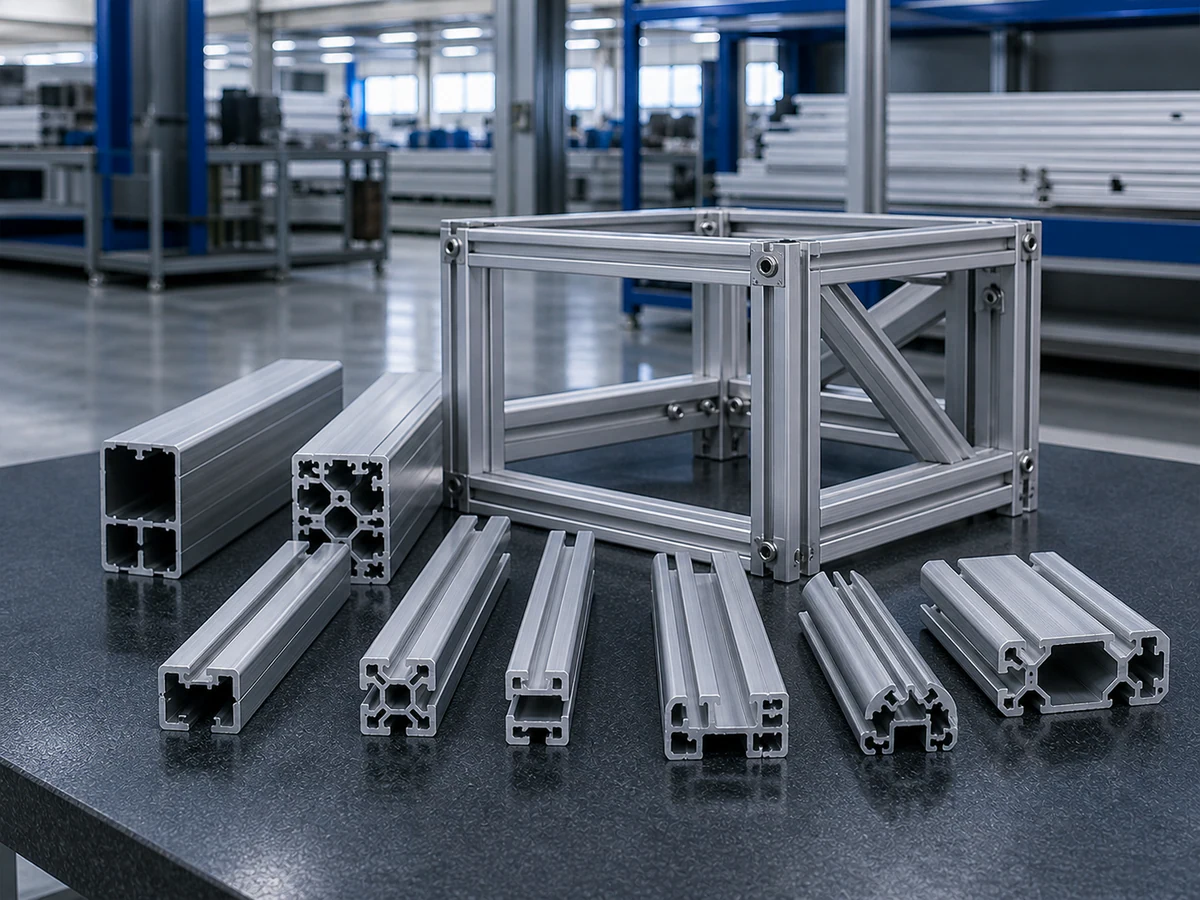
For every member, request a part number, revision, extrusion profile identifier, material and finish specification where applicable, nominal stock length, issued cut length, quantity per module, end condition and locating datum. Show which slot face points upward or outward at assembly and whether a connector or plate later covers an end. Use a drawing view or labeled sample if two similar profiles have different internal cavities or slot patterns. The overall work-bench width is not automatically the saw length of either long rail: connector thickness, end plates and joint design can change the member schedule.
Separate cross members, uprights, diagonal braces and mounting rails even if they share one extrusion family. A mirrored pair may need opposite end orientation or a different location for a downstream hole. Give left- and right-hand members separate line items when the approved drawings require it. Keep the released cut list tied to the module revision; a new tool panel, battery enclosure or payload mount can change an interface without changing the sales name of the AGV.
3. Mark the boundary between saw cuts and later features
A square cut creates a blank, not a mounting-ready frame. Item’s top-module example includes a grooved work surface, a tool panel and an intended Base Cart interface. For the actual buyer design, list drilling, tapping, countersinking, end machining, bracket fitting, joining, surface treatment and final assembly as separate operations. Identify which supplier performs each step and which drawing controls it. Do not ask a saw vendor to infer bolt patterns or robot compatibility from the end of a profile.
Make the purchase unit explicit. Route A may buy complete approved top-module sets from the system supplier. Route B may buy prepared member kits from a profile fabricator. Route C may retain only the approved blank-cutting stage in-house and send members through downstream operations. Compare the cost and lead time at the same accepted receiving stage. A low price per cut is not a complete saving if the buyer must still sort members, create missing features, protect surfaces and resolve interface fit.
4. Protect the faces that locate the module
On the actual extrusion drawing, mark clamping zones, datum faces, visible surfaces and slots used by connectors. Ask how long stock is supported at the infeed and how short finished pieces are retained and removed. A clamp can hold a profile firmly yet mark an exposed face or distort a thin lip. A burr or chip trapped in a slot can delay assembly even if the overall length measures correctly. Define an agreed cleaning and deburring handoff instead of assuming the saw includes it.
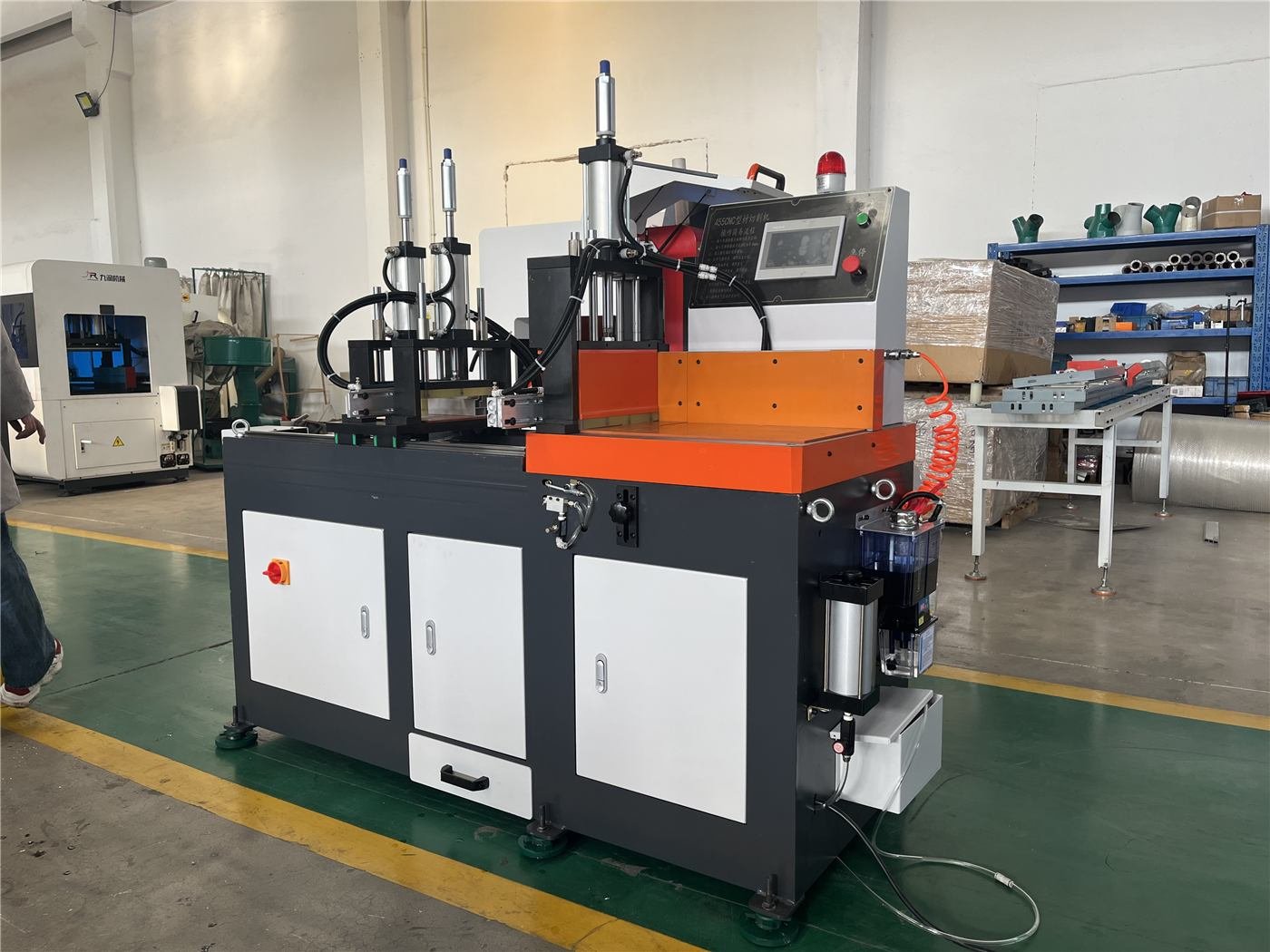
At an RFQ stage, ask for a setup drawing or short representative trial showing the actual profile orientation, support and part removal route. Record what remains to be proven on the buyer’s extrusion and chosen finish. A machine brochure image or a similar section is useful for discussion, but it does not validate contact pressure, cut quality or final module fit for an untested profile.
5. Trial a representative module kit, not one convenient bar
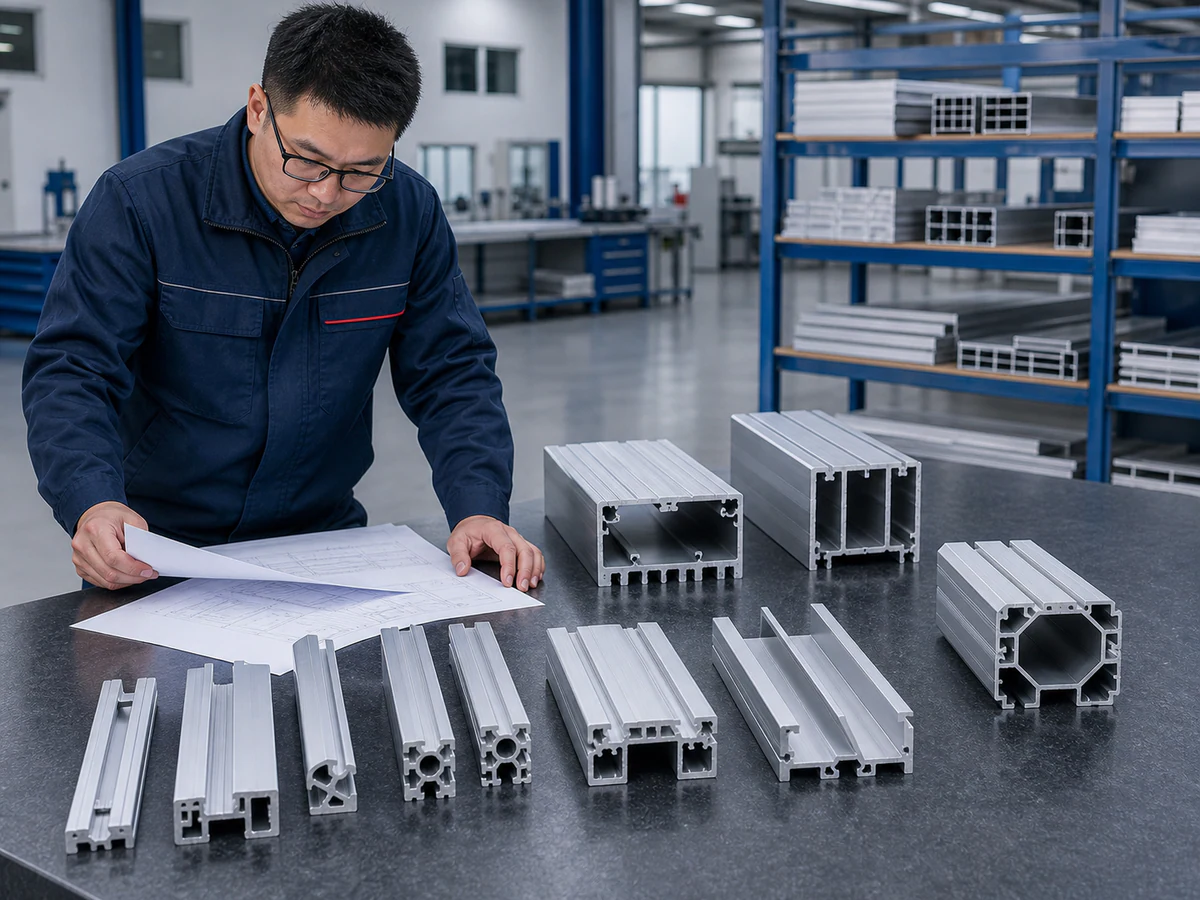
Select actual released stock lengths and the profile variants that challenge the proposed saw: the longest member, a short brace or cross member, a visible finished rail and any section with a fragile slot or asymmetric locating face. Agree the number of first-off pieces, changeovers and responsible inspector before the trial. The vendor should identify the setup used and show feeding, cutting, offload and segregation of acceptable parts from scrap. If only a short sample is available, label the trial as section feasibility; it has not proved full-bar handling.
Measure the features specified by the issued drawing: the correct overall or datum-to-end length, end squareness or angle, burr condition, slot damage and surface marks. Then have the module owner dry-fit a representative member set with the approved joints and base-cart interface as appropriate. Saw acceptance ends at the agreed cut-part criteria; final robot stability, payload, motion and safety remain with the system authority. Record pass/fail against each acceptance item, not a generic promise that every AGV will fit.
6. Make kit identity survive the batch
For production, define how cut members are labeled by module family, position, revision and lot. Decide whether one package contains a complete module’s profile set or a bulk quantity of identical members. Identify the owner of connector hardware, protective film, the grooved plate and purchased assemblies. A missing cross member can make a nominally complete kit unusable even when every delivered rail is within length tolerance. Put shortage, damaged-surface and revision-mismatch rules into the receiving agreement.
7. Send a quote package that can be compared
- Approved AGV and top-module family, drawing revision, receiving stage and the person authorized to release changes.
- Member-by-member cut list with extrusion identity, stock form, finish, issued length datum, end shape, quantity and orientation.
- Marked locating and visible faces, slot and connector interfaces, allowed clamp-contact zones and surface acceptance criteria.
- Operations included and excluded after the saw, including drilling, tapping, deburring, cleaning, kit labeling and joining.
- Representative long-stock and short-part samples, changeover count, first-off checks and responsible assembly-fit reviewer.
- Accepted output definition: loose blanks, position-labeled kits or assembled top modules, with packing and rejection rules.
- Commercial comparison over the same period: usable output, purchased material, fixtures, labor, rework, downstream features and supplier responsibility.
If the project also includes a separate end-effector frame, treat it as its own released family rather than quietly adding it to the mobile-top-module kit. Our robot gripper profile cutting guide covers that distinct interface. For this RFQ, send the top-module drawings and sample profiles that a cutter can actually assess.
What the Jiurun video can and cannot show
The channel video below shows a general aluminum-profile saw and feed process. It can help discuss stock presentation, feeding and cut-piece handling. It does not show the AGV top module, an approved base-cart interface, this article’s pictured JR-455CNC setup, a customer trial, load qualification or achieved performance for the proposed job. Ask for a representative trial against your released member drawings.
Need to compare a top-module frame cutting route? Send JiurunCut the released profile drawings, cut list, real stock and first-off criteria. We can discuss a suitable saw and trial plan for the cut-member work you actually retain.