
Aluminum saw control cabinet protection should be specified from the buyer’s actual shop conditions, not inferred from a photograph of a clean machine. Aluminum chips, airborne dust, coolant mist, cleaning water and humid shutdown periods create different exposures. A cabinet that suits one indoor line may be unsuitable beside another saw. These five buyer checks turn the environment into a verifiable RFQ and acceptance package without assuming that any particular Jiurun model carries an unverified enclosure rating.
1. Map the exposure at the cabinet, not just the room
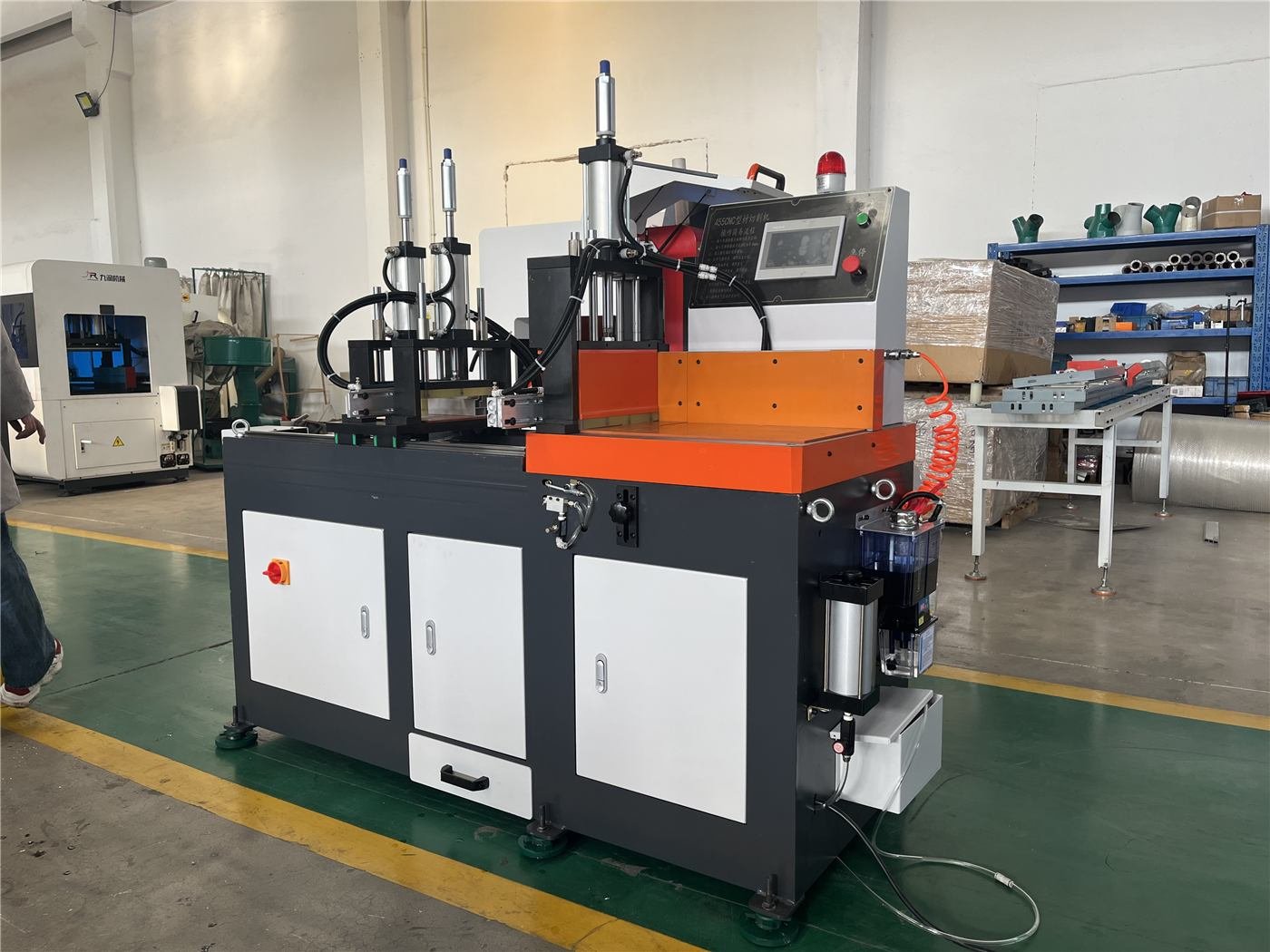
Send the supplier a plan of the intended saw position. Mark the cabinet location, feed and discharge paths, chip extraction, coolant equipment, doors, nearby cleaning operations and the service aisle. State whether the cabinet may face dry chips, fine airborne dust, mist, drips, splashes or directed cleaning water. Record peak and low ambient temperatures and what happens when the line is off overnight. These are buyer-supplied site facts; the machine photograph below is only a related layout example and does not establish the conditions at your plant.
2. Aluminum saw control cabinet protection: claim the supplied assembly
Write the required enclosure protection in the inquiry only after the exposure is understood. IEC 60529 defines the IP classification for electrical enclosures; NEMA’s enclosure-type guide describes a different set of type definitions and intended conditions. Do not treat an IP code and a NEMA Type as automatically interchangeable. Ask which standard and edition the quotation uses, what the stated rating covers, and what evidence supports it.
More importantly, identify the exact delivered boundary. Is the claim for an empty purchased box, or for the assembled saw cabinet after the HMI opening, door hardware, cable glands, fan, filter and field connections are installed? Request the cabinet drawing and component schedule. If a rating applies only before an accessory is fitted, the buyer needs that exception in writing. Avoid converting a supplier’s component data sheet into a whole-machine claim.
3. Inspect every opening and cable route
The service door, HMI cutout, emergency-stop mounting, gland plate, conduit entry and ventilation path are possible changes to the enclosure boundary. Ask the supplier to show how each opening is finished and protected in the proposed configuration. Identify who supplies and fits the field cable entries, and who checks the enclosure after site wiring. A sketch of the cable route is more useful than a rating printed next to an unmodified cabinet shell.
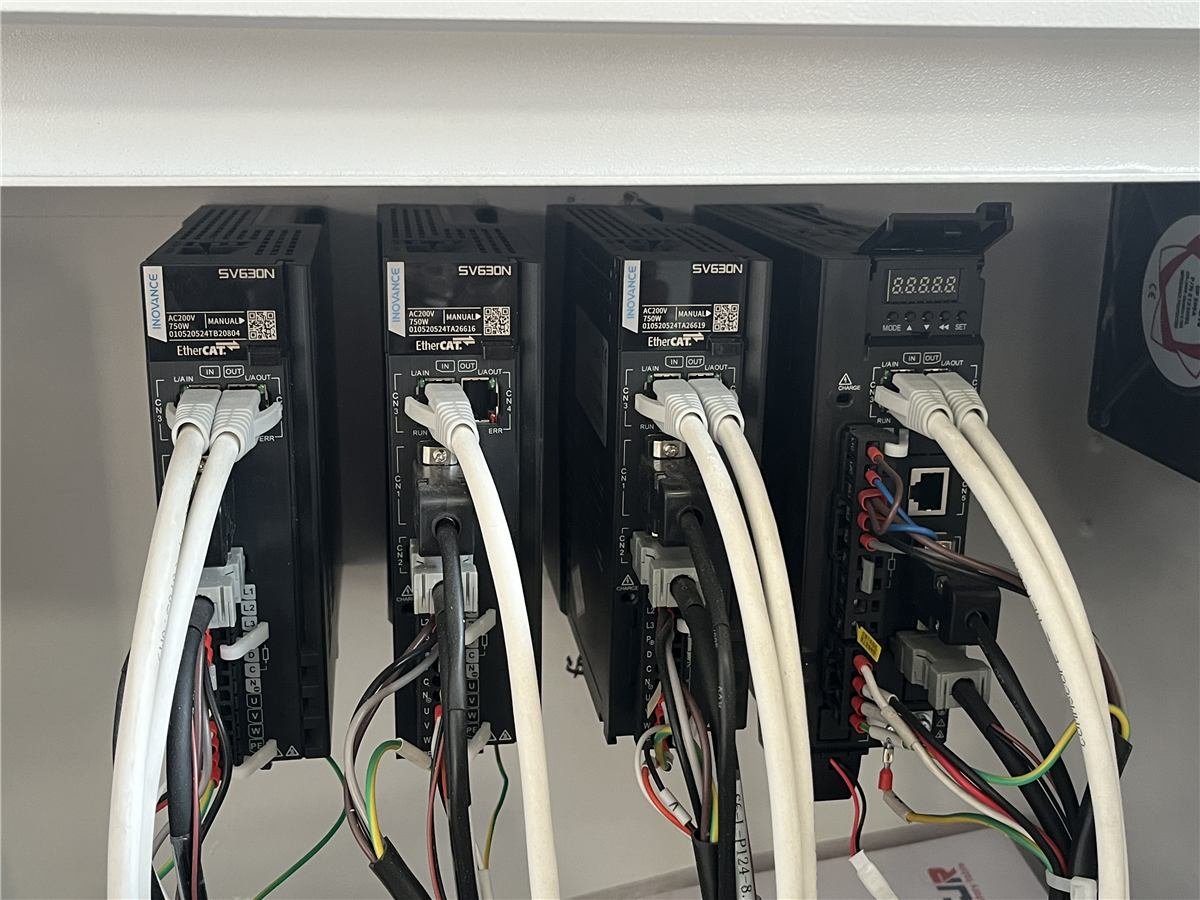
Photographs of drives and wiring can help a buyer ask where connectors and service access sit, but cannot prove sealing. The image below shows a related electrical cabinet scene, not an approved saw schematic, ingress test, customer installation or machine configuration.
4. Reconcile sealing with heat and condensation
Closing openings can change how heat leaves a cabinet. Rittal’s industrial enclosure guide ties thermal management selection to heat load and ambient conditions. Ask for the expected installed electrical heat load, permissible component temperatures, site ambient range and the proposed ventilation or cooling method. Then confirm that any fan, filter, heat exchanger or cooling unit preserves the stated enclosure protection in the finished assembly.
Ask what happens during idle periods when equipment cools and ambient humidity changes. A dust or water classification alone does not resolve condensation inside the cabinet. A separate aluminum saw condensation checklist can help the buyer describe shutdown conditions. Do not assume the pictured equipment has any particular cooling or moisture-control hardware.
5. Make the acceptance evidence and service boundary explicit
Before order release, request a marked cabinet layout, accessory list, claimed protection basis, installation exceptions and a responsibility matrix for factory and site work. At acceptance, reconcile the as-built cabinet against that package: door seals and latches, fitted entries, cooling accessories, visible damage, accessible service clearances and any approved deviations. Have a qualified electrical professional review electrical work and site rules; a buyer should not open energized equipment to perform an informal inspection.
Agree what evidence will be delivered: supplier declarations or test documentation where available, component manuals, as-built drawings, photographs of fitted entries and a record of site changes. If an entry is added after factory acceptance, identify who rechecks the protection claim. For broader handover, see our electrical cabinet handover guide. The related control-panel scene below illustrates inspection planning only; it does not document a specific Jiurun saw build or test result.

Aluminum saw control cabinet protection RFQ packet
Include a site layout and exposure description, required standard and classification, ambient and shutdown conditions, electrical supply details, cable-entry responsibility, cooling expectations, access constraints and the evidence you expect at acceptance. Ask the supplier to state the protection boundary, exceptions and any options needed to meet the request. This makes competing quotations comparable without inventing a rating for an unspecified saw.
Frequently asked questions
Does a rated empty enclosure guarantee the complete saw cabinet?
No. Ask whether the claim covers the delivered assembly after openings, fittings and site cable entries. Obtain the manufacturer’s documented basis and exceptions.
Can a cabinet photograph prove washdown suitability?
No. A photograph cannot establish a tested protection classification or whether the finished installation matches it. Define the cleaning exposure and request the applicable evidence.
Contact Jiurun with your saw application, shop exposure map and cabinet-protection requirements to request a configuration review. The Jiurun video below shows a CNC aluminum saw and its visible control area in operation. It is a related workflow demonstration, not an electrical drawing, enclosure rating, ingress test or proof of the configuration offered to your plant.