
Aluminum boat rub rail cutting starts with the rail system, not a target saw length. A rub rail may include an aluminum carrier, a flexible insert, fasteners, splice pieces and end caps. Shortening the carrier without mapping those interfaces can leave a clean cut that cannot be installed as intended.
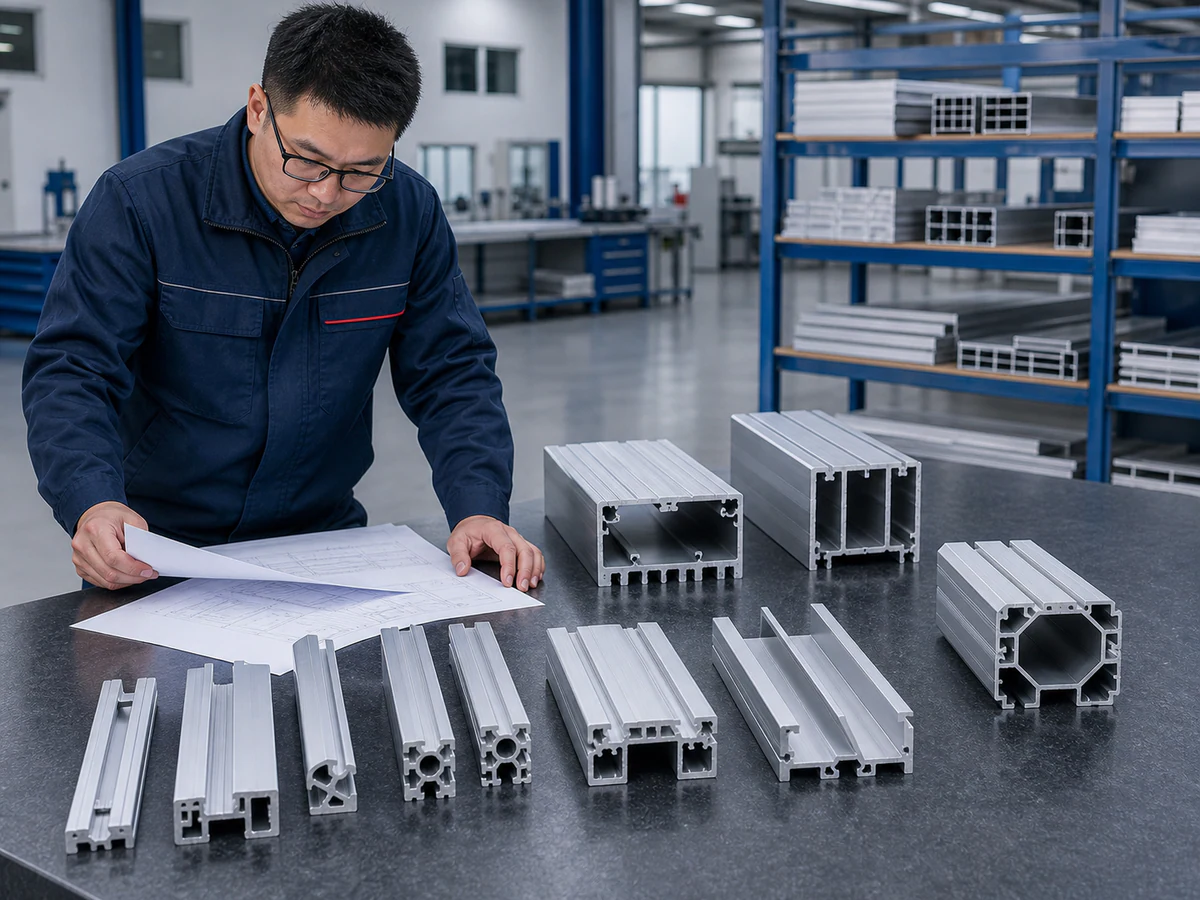
Featured image: related industrial aluminum clamping equipment, shown only to explain saw-support review. It is not the boat rub rail, a marine project or a trial result.
This guide is for buyers specifying factory-cut aluminum carrier blanks. It does not approve a hull attachment, impact protection, corrosion performance or a finished marine installation. The rail-system supplier, boat builder and qualified installer must sign off the installed assembly.
1. Identify the approved carrier and insert
Request the supplier’s current part number, cross-section drawing and an actual sample of the aluminum carrier. Record the insert type, finish, supplied stock length, hole pattern and any splice or cap hardware. An open channel seen in a photograph is not proof that another supplier’s insert fits it.
For example, TACO Marine’s aluminum rub-rail installation guidance describes specific 12- and 20-foot supplied lengths and predrilled holes at six-inch intervals for its illustrated products. Those are supplier examples, not universal rub-rail dimensions or Jiurun saw specifications.
2. Choose the supply boundary before asking for a saw quote
Compare three routes: buy complete standard-length rail kits; order a rail-system supplier’s prepared cut package; or buy approved aluminum carrier stock and cut carrier blanks in your own production flow. Identify who supplies the insert, fasteners, caps and splice covers. A saw quote covers a defined cut operation only; it does not convert a carrier blank into an approved installed rub rail.
The TACO Marine kit description is a useful reminder that an installation kit can include several separate items. Check the actual bill of materials for your system rather than assuming the extrusion is the complete order.
3. Set the boat rub rail cutting datum and hole positions
Mark the installed rail’s start and finish positions on the approved boat drawing. Then state the carrier’s cut length, which end is the datum, the distance from that datum to the first retained mounting hole, and how much unperforated end land is required for the approved cap or splice. Record a separate identifier for port and starboard parts if they differ.
When stock is predrilled, cutting to a nominal length alone can shift the final hole-to-end relationship. TACO Marine’s installation guide discusses adjusting the end relative to its hole pattern. Follow the instructions for the actual selected rail; do not transfer that layout to another extrusion.
4. Trial support and clamping on the real profile
Bring full-length production stock and an approved sample to the saw trial. Show where the carrier can be supported and clamped without crushing a lip, marking a visible face or trapping the insert channel. Confirm that the stock sits consistently at the datum and that the cut end remains accessible for inspection. Ask the machine supplier to demonstrate the agreed blank on the actual section and document any dedicated fixture.
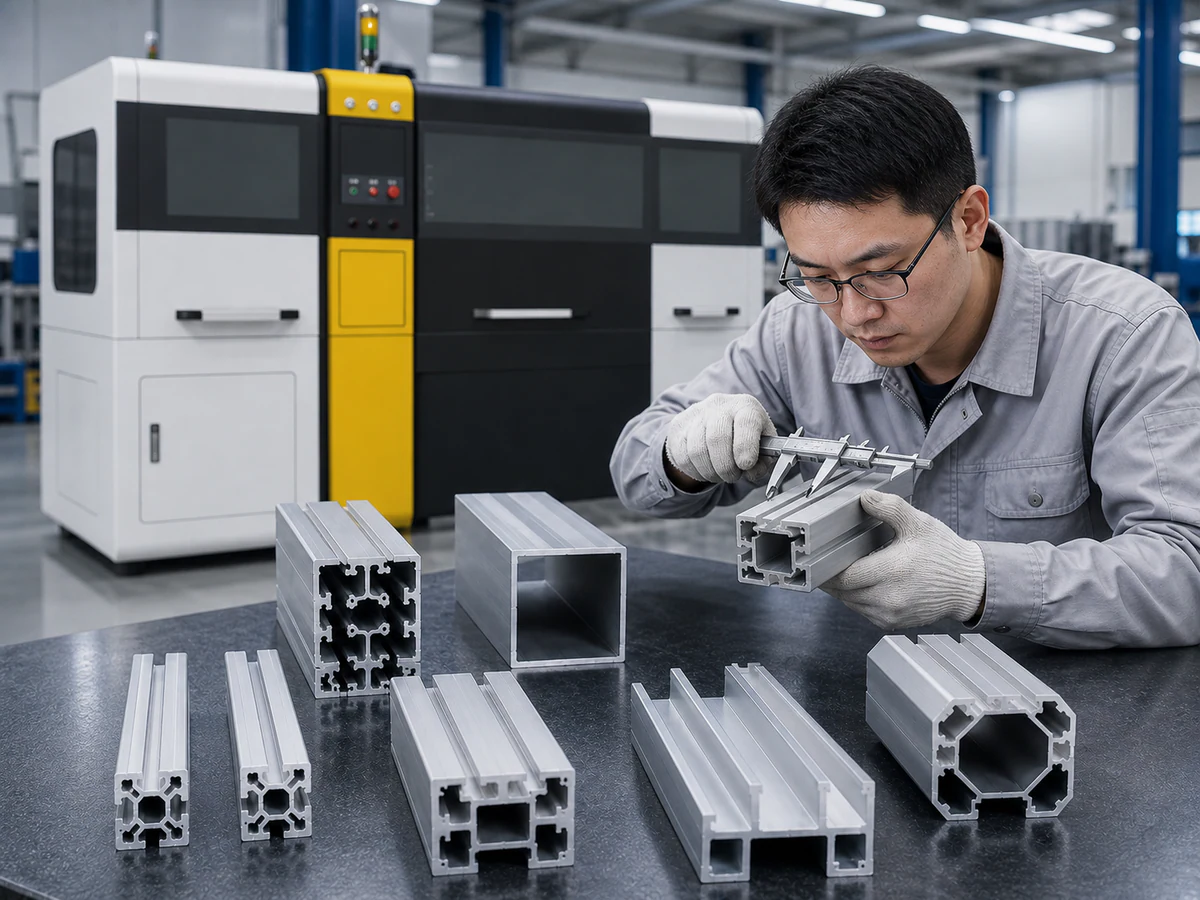
Do not infer a capacity, speed or cut quality from a machine photograph. Those results belong to a witnessed trial using the correct carrier, tooling and acceptance criteria.
5. Define the cut end and downstream work separately
For boat rub rail cutting, the RFQ should state length tolerance, squareness, burr condition, visible-face protection and whether a cap or insert must pass over the cut end. If the design needs drilling, countersinking, bending, end shaping, insert fitting or boat-side sealing, assign each operation to its owner. Do not describe an untouched saw blank as an installation-ready kit.
Insert and cap details are especially easy to miss. TACO Marine’s insert and end-cap notes distinguish ways of finishing and securing flexible insert ends. Use the instructions for the selected system to specify what must remain possible after the carrier is cut.
6. Keep system performance out of the cut acceptance claim
Carrier cut-length inspection cannot establish attachment strength, collision resistance, water sealing or corrosion life. Those depend on the whole rail system, hull substrate, fasteners, finish and installation. Keep the saw acceptance record limited to the released blank features and hand the finished installation questions to the appropriate marine-system authority.
7. Send a trial-ready RFQ
Provide the carrier part number and revision; material and finish; stock and finished lengths; quantity and batch mix; datum and hole map; protected faces; cut-end acceptance method; required fixture or support; and who supplies the sample, insert, cap and other hardware. Ask for first-off evidence and a clearly labeled lot before accepting repeat production.
If the same operation must handle several rail profiles, quote each real section and its fixture change separately. An average cross-section is a poor substitute for the narrowest lip, deepest channel or longest stock that the cell will actually run.
Related equipment example
The following video from Jiurun Machinery’s own YouTube channel shows a general aluminum cutting equipment example. It does not demonstrate this boat rub rail, a marine installation, a specified machine configuration, a customer job or verified performance for this application.
Request a useful saw trial
Send JiurunCut the approved carrier drawing, stock length and cut-blank acceptance list through the contact page. We can discuss the cutting route and the evidence a trial should produce. For a different boundary between cut blanks and complete assemblies, see our marine deck-hatch frame cutting guide.