
Aluminum L-track cutting is a small part of a cargo tie-down system, but the cut length alone does not define a useful rail. A buyer must also preserve the intended mounting-hole pattern, usable fitting positions and approved end condition. If a rail is shortened after those features have been selected, a dimensionally correct blank may still be unusable at the installation location.
This guide is for buyers and production teams specifying a saw-cut aluminum rail. It does not design a trailer attachment, assign a working load limit, approve a wheelchair restraint or certify cargo securement. The track-system supplier, vehicle or trailer manufacturer and qualified installer must approve the complete installed arrangement.
Identify the actual L-track before requesting a cut
Ask for the product number, current drawing or approved physical sample, supplied length, material and finish, mounting-hole layout, fitting geometry and the installation location. Do not substitute a visually similar slotted extrusion. The fittings need to engage the intended track profile, and the fasteners need to suit the approved mounting surface.
For one concrete example, US Cargo Control’s 48-inch aluminum L-track listing describes a rail with ten pre-drilled installation holes and compatible single- and double-stud fittings. Its guidance says that the rail can be cut or drilled when the standard length or hole positions do not work. Those details apply to that supplier’s product. They do not establish Jiurun machine capacity, a universal L-track pattern or permission to modify another manufacturer’s rail.

Decide whether to buy standard lengths or cut blanks
Start with the number of rails and the space actually available on the vehicle or equipment. Compare three supply routes before commissioning a saw trial:
- Buy standard rails: use the supplier’s unmodified lengths when they fit the approved layout and preserve all intended mounting and fitting positions.
- Order factory-cut blanks: release an end datum, finished length, quantity and feature map for each rail. Assign inspection and labeling to the cutting supplier.
- Allow controlled site trimming: use this route only if the track-system supplier and installer permit it. Identify who measures, cuts, finishes and accepts the final end.
A standard section may be a better purchase even when a factory saw is available. Cutting creates an extra operation, an exposed end and a new inspection question. Conversely, a prepared cut kit can reduce repeated field work if the installation dimensions and feature positions are truly released. The right comparison is the cost and completeness of accepted, installable rails, not machine speed alone.
Map mounting holes and fitting positions from one datum
Mark the end from which each rail length is measured. On the same drawing, show every existing hole, any proposed new hole, the usable fitting positions and the required end clearance. State whether the cutting supplier receives undrilled extrusion, pre-drilled rail or a fully finished product. These are different input conditions, and a saw trial on one does not prove the other.
Do not let a cut remove a mounting point or leave a partial fitting position without a reviewed drawing change. If the desired length falls between the supplier’s established features, ask the system owner to choose a new length, relocate an allowed feature or retain the standard rail. A cut shop should not infer where to drill from a product photograph. Hole placement, countersink details, fastener choice and substrate attachment remain within the approved installation design.
US Cargo Control’s four-section L-track kit makes the distinction visible: it lists pre-drilled mounting holes, repeated fitting positions, studs and fasteners as separate parts of the supplied system. A new cut length does not by itself validate how many of those positions remain useful.
Check support and contact on the real section
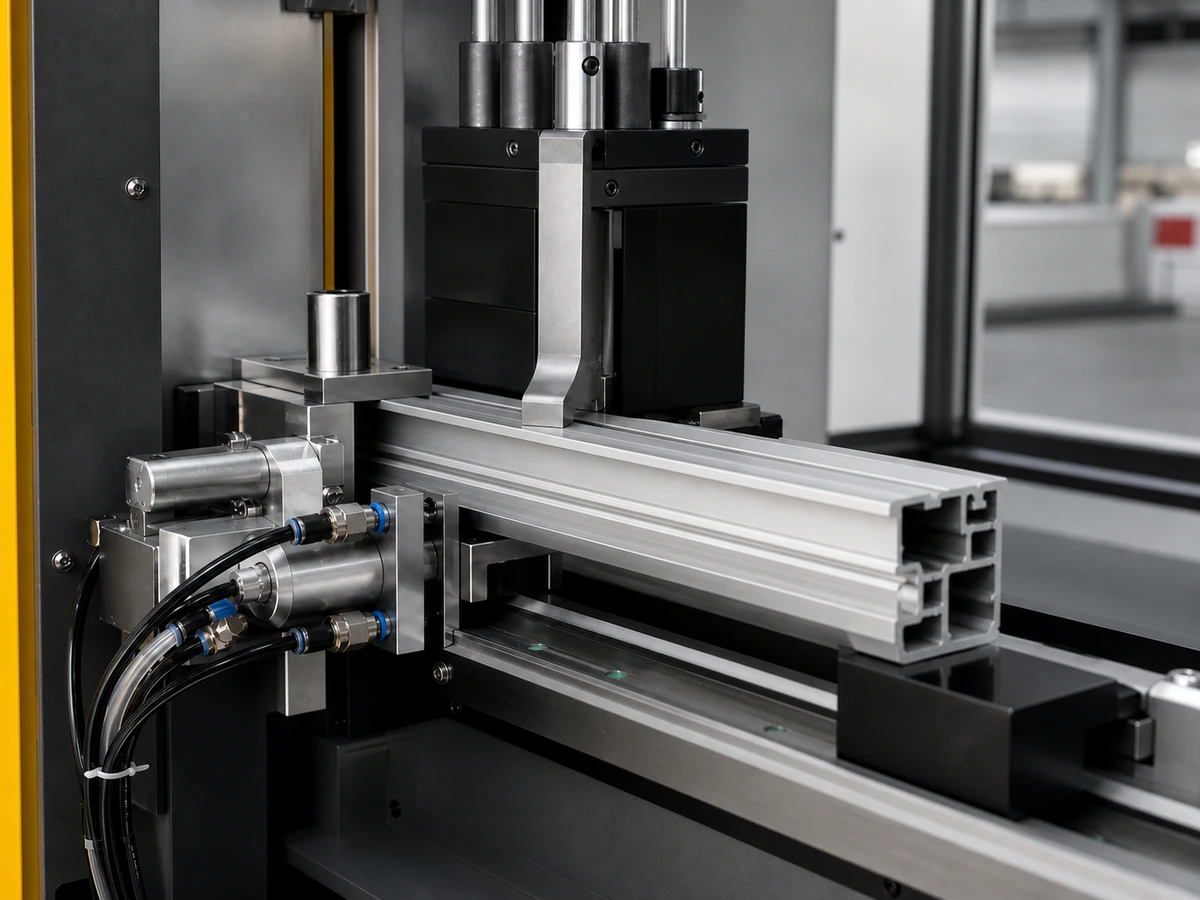
For an in-house cutting decision, give the machine supplier the actual rail and its drawing. Ask for a stopped setup review before running a blade: which face sits on the table, where the fence and clamps contact the section, whether a raised lip or slot can be damaged, and how the long incoming rail and short outgoing piece are supported. Check that the required end can reach the cutting line without contact with a pre-installed feature.
Witness a small sample at the shortest and longest released lengths. Record rail identity, stock condition, orientation, support, blade and setup, then compare the pieces with the drawing. A generic saw catalogue value is not evidence that this particular rail, with this finish and feature pattern, is accepted. Existing-fixture transfer questions can help frame the support review if the buyer plans to reuse tooling.
Specify the accepted cut end separately from system strength
The drawing should identify overall cut length and its datum, end squareness if required, burr condition, slot and lip damage limits, and the condition of visible or finished surfaces. Agree how a factory-cut end will be protected in packing and whether a separate edge-finishing operation follows the saw. Record the acceptance method rather than using a phrase such as “clean cut” with no measurable reference.
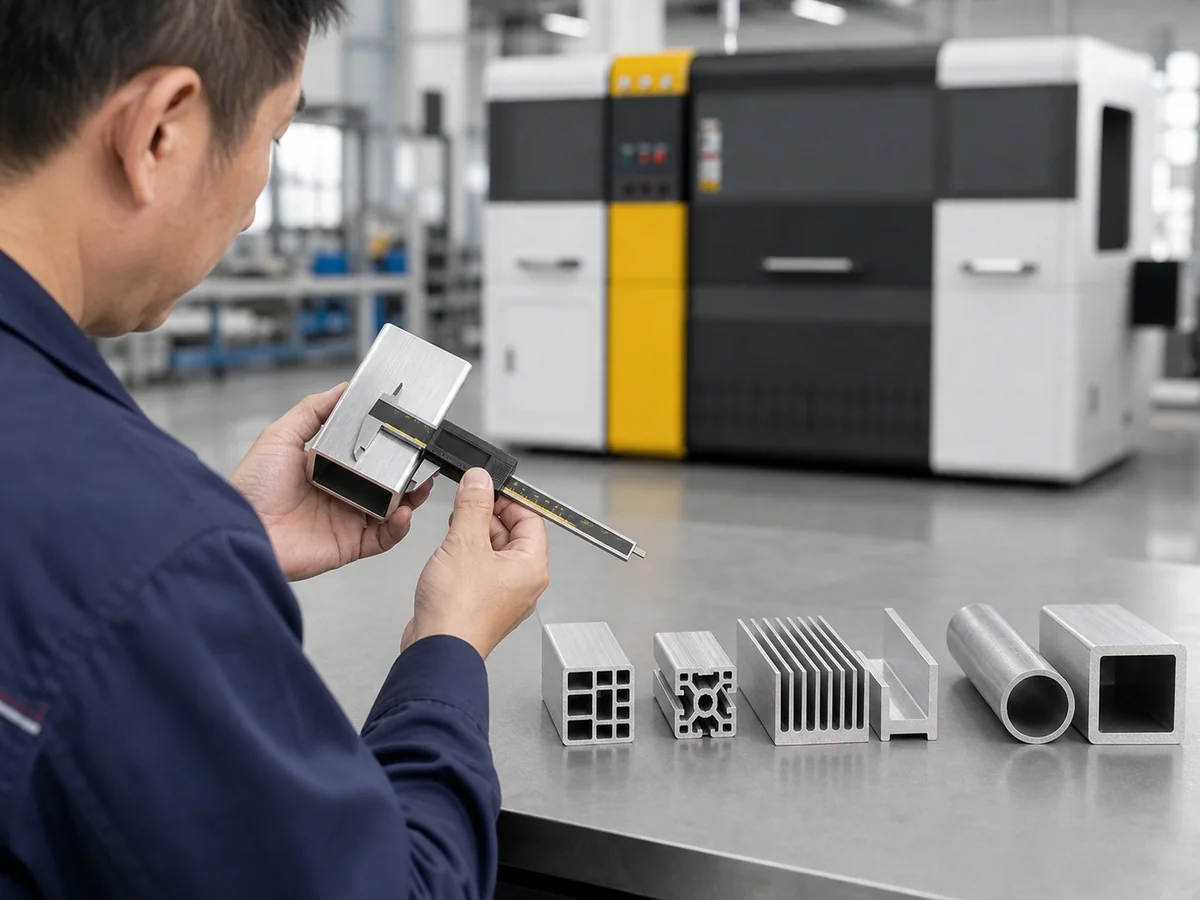
Check one representative piece with the actual drawing and the intended fitting at a separate fit-review step. A caliper reading on another aluminum section cannot prove that a cargo fitting locks into the chosen L-track. Keep the cut-part inspection record, the fitting check and the installation approval distinct. This protects both buyer and machine supplier from turning a saw demonstration into an unsupported claim about the complete tie-down system.
Keep load ratings and installation outside the saw quote
A rail cut to the ordered length is not automatically a rated anchor. The same L-track supplier cautions that fasteners and mounting surfaces affect the installed arrangement, so it does not give a blanket working load limit for its track. It also states that this recreational/cargo-control product is not certified for official wheelchair restraint in transport vehicles. Buyers should preserve those boundaries in the RFQ and send load and attachment questions to the responsible system and vehicle specialists.
Keep every offered saw capability tied to an actual material and trial. Jiurun can discuss cutting equipment for an approved aluminum section; it cannot approve a trailer wall, fastener pattern, cargo load, restraint use or other supplier’s fitting system. Avoid writing a load capacity, alloy, hole pitch or saw accuracy into the purchase request simply because it appears on a different product page.
Send a cut-blank RFQ that can be trialed
Include the following in one controlled package: product and drawing revision; sample rail and stock condition; finished lengths and quantities by installation position; reference end and feature map; allowed and prohibited cut ends; visible-face and burr criteria; handling and packaging requirements; downstream drilling or fit-check responsibility; and a clear statement of what the saw supplier must demonstrate. If any item is provisional, label it as provisional and request a trial quote rather than presenting it as a released production order.
Ask the saw supplier to return a proposed support and contact plan, sample-piece inspection plan, excluded operations and a list of information still needed. A good answer can be “keep the supplier’s standard rail” when the complete system is already available. For a broader vehicle fabrication decision, the trailer-manufacturing saw guide addresses the retained member portfolio; this page deals with the specific L-track cut blank and its preserved features.
For aluminum L-track cutting, release the rail drawing and feature map before the trial. Once they are approved, send Jiurun the cut list and a representative sample to discuss a bounded aluminum-saw trial. The track-system supplier and installer remain responsible for fitting compatibility, attachment and use.
Watch a general Jiurun aluminum-saw example
This Jiurun Machinery video shows general aluminum-cutting equipment. It does not show this L-track product, its alloy or finish, a proposed machine configuration, a customer installation, a witnessed trial or cargo-system performance.