
Aluminum fence slat cut blanks are a narrow purchase unit inside a larger fence system. A saw can deliver straight members to a released cut list, but it cannot decide the approved slat section, post spacing, fixing method, site dimensions or finished privacy and wind behavior. An RFQ should identify the exact blank the cutter must supply and the work that remains with the panel fabricator or installer.
This guide concerns straight horizontal slats for an already approved fence design, purchased as raw or finished aluminum extrusions. It does not provide structural design, installation instructions, load approval or permission to substitute a different member. Where the fence is a controlled or engineered system, its manufacturer or designer must approve the section, span, fixing and acceptance criteria.
Start with the released fence system
The Stratco Ezi-Slat installation guide shows slats installed between posts and receiving rails, with caps and fasteners as separate elements. The DECO DecoSlat guide also treats the supporting channel and slats as parts of a system. These are examples of why a slat cut list must be tied to a specified assembly; their dimensions or fixing details are not transferable to an unrelated fence.
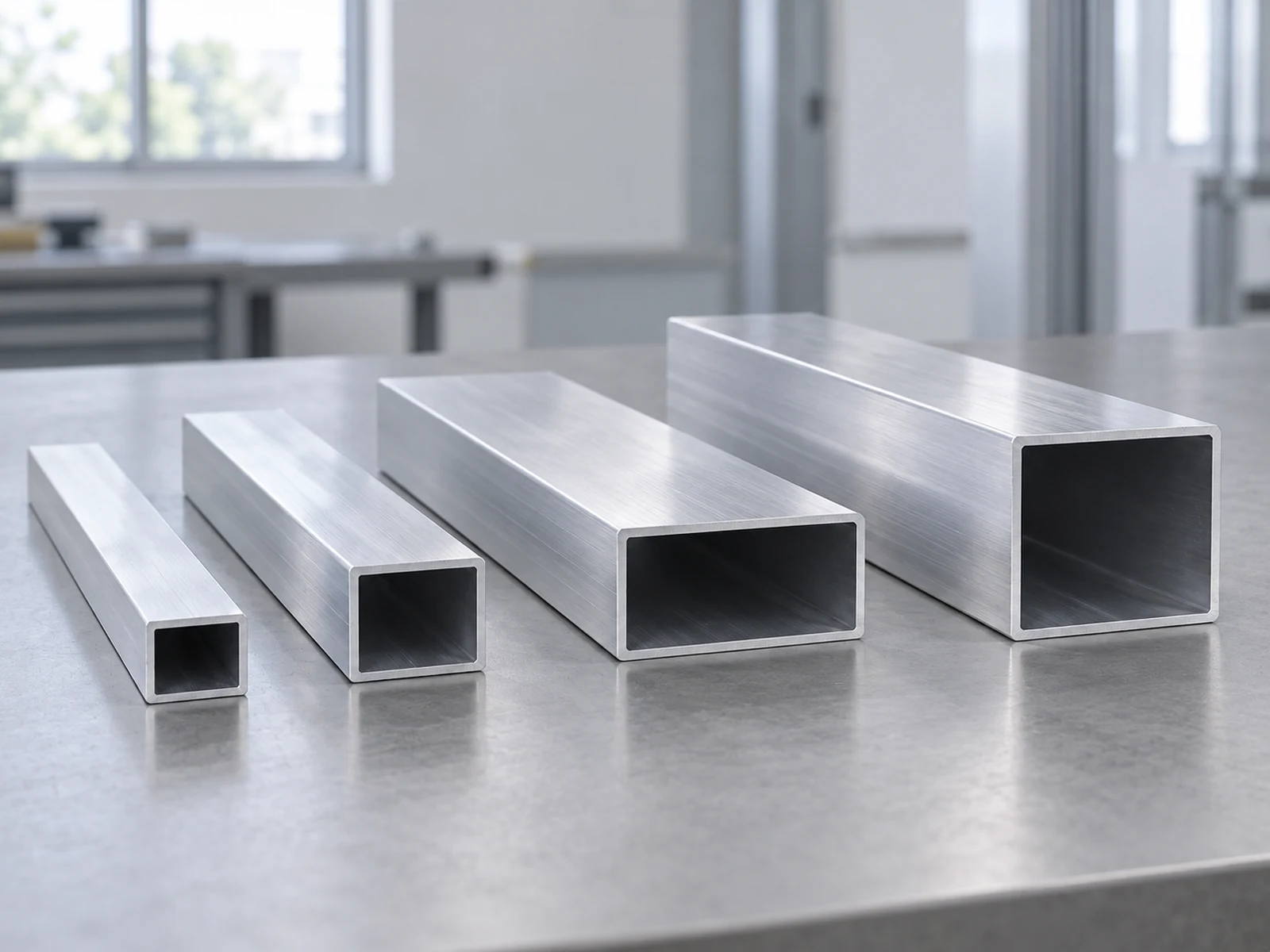
Seven RFQ checks for aluminum fence slat cut blanks
1. Identify the exact slat family and finish
Provide the approved system, profile code, drawing revision and finish for each slat family. Distinguish horizontal slats from posts, rails, gates and infill pieces. The blank may arrive mill-finish, pre-coated or in another specified condition; state whether cutting occurs before or after finishing. If the supplier provides stock, its material and traceability requirements come from the released specification. A generic rectangular tube photo cannot replace that identity.
2. Define the panel and cut-list units
Separate the number of finished fence bays from the number of slat blanks. For each bay, list the approved slat count, member position, section code and quantity. Define whether the buying unit is an individual length, a labeled bay bundle or a completed panel. Posts, receiving channels, spacers, caps and fixing hardware must appear as separate lines or explicit exclusions. Otherwise a low cut-only quotation can be mistaken for a ready-to-install panel price.
3. Release the length datum and end condition
Provide the cut length and tolerance from a named reference face or end-to-end datum. Specify square ends, angled ends, drainage or fixing notches only where the approved drawing calls for them. A nominal post-to-post distance is not automatically the slat blank length: receiving depth, engagement and designed clearances belong to the system owner. Identify handed pieces and any bay-specific end details so a cutter does not substitute a single length for unlike positions.
4. Protect coated faces while supporting long stock
Mark the visible face, edge and coating that need protection. Ask the cutter how a long, possibly thin-walled slat will be supported at infeed, clamp and outfeed without twisting, denting or leaving visible marks. Check chip clearance and end deburring against the actual supplied profile. The correct support method depends on the real section and finish; a demonstration using another extrusion is only a starting point for a trial.

5. Request a representative first-piece trial
Choose a long member, a short member and any fragile or finished variant from the released schedule. Record the actual stock lot, coating state, blade and support setup, cut direction and resulting piece. Check length, end condition, visible surface and coating edge against an agreed inspection sheet. A successful sample of one rectangular section cannot approve a different wall thickness, surface or span; the buyer decides which families need separate evidence.
6. Keep panel and site acceptance separate
The saw supplier can show conformance of cut blanks, not the completed fence. Assign panel spacing, post fixing, gate hardware, site setting-out and any structural or privacy requirement to the responsible system designer and installer. State who inserts slats into receiving members, drills any holes and checks the completed bay. Do not treat a clean cut end as proof of wind load, corrosion life, installation safety or finished appearance.

7. Label the receiving bundle by bay
Agree how many lengths form one bay bundle and whether gates or end bays need separate labels. Mark the project, system, revision, finish, bay position, section code, cut length and batch. Protect coated faces, separate unlike lengths and restrain long pieces against bending in transit. Receiving should reconcile the labeled count and first-piece record before the panel team mixes parts across bays.
Example RFQ line and decision package
“Supply straight saw-cut aluminum horizontal slat blanks to approved section FS-24 Rev D and the attached bay-by-bay schedule. Protect the designated visible face, verify the named length datum and end condition on first pieces, and pack each bay’s slats as a labeled group. Posts, receiving rails, fasteners, panel assembly, installation and structural verification are excluded.” The identifiers are examples; replace them with approved project documents.
Send the release drawing, finish specification, cut schedule, receiving unit and acceptance sheet with the inquiry. Ask for a representative trial on the actual extrusion and a quotation that distinguishes blank cutting from later panel work.
General aluminum saw equipment view
This video is from Jiurun Machinery’s own channel. It shows a general aluminum saw, not this fence slat, coating, customer project, sample cut or completed-fence performance.
Contact JiurunCut with the approved extrusion drawing and cutting scope to discuss a representative saw trial. Keep final fence design and site acceptance with their responsible parties.