
Straight curtain track cut blanks are only one part of a working drapery system. A saw supplier can quote a clean, repeatable aluminum cut, but that quote does not establish that the track will accept the specified carriers, end stops, brackets or installation method. Before issuing an RFQ, release the actual track family and define exactly what must arrive as a cut blank.
This guide is for buyers of straight aluminum track members who are considering outsourced saw cutting or a representative cutting trial. It does not cover bending, motor installation, load rating, building fixing or a finished curtain-system approval. If your purchase includes manual and motorised system families or a whole saw investment, use our separate curtain-track manufacturing saw guide.
Why a generic length quote can fail
Curtain-track systems are not interchangeable pieces of plain channel. Forest’s MCS product information describes an aluminum extrusion with multiple glide channels, optional cover components and fixing holes; its separate KS technical brochure shows a different extrusion, carriers, end stops, brackets, finishes and straight or curved applications. These are examples of system-level differences, not specifications for Jiurun equipment or for your order. The buyer must use the approved drawing and component list for its own track family.
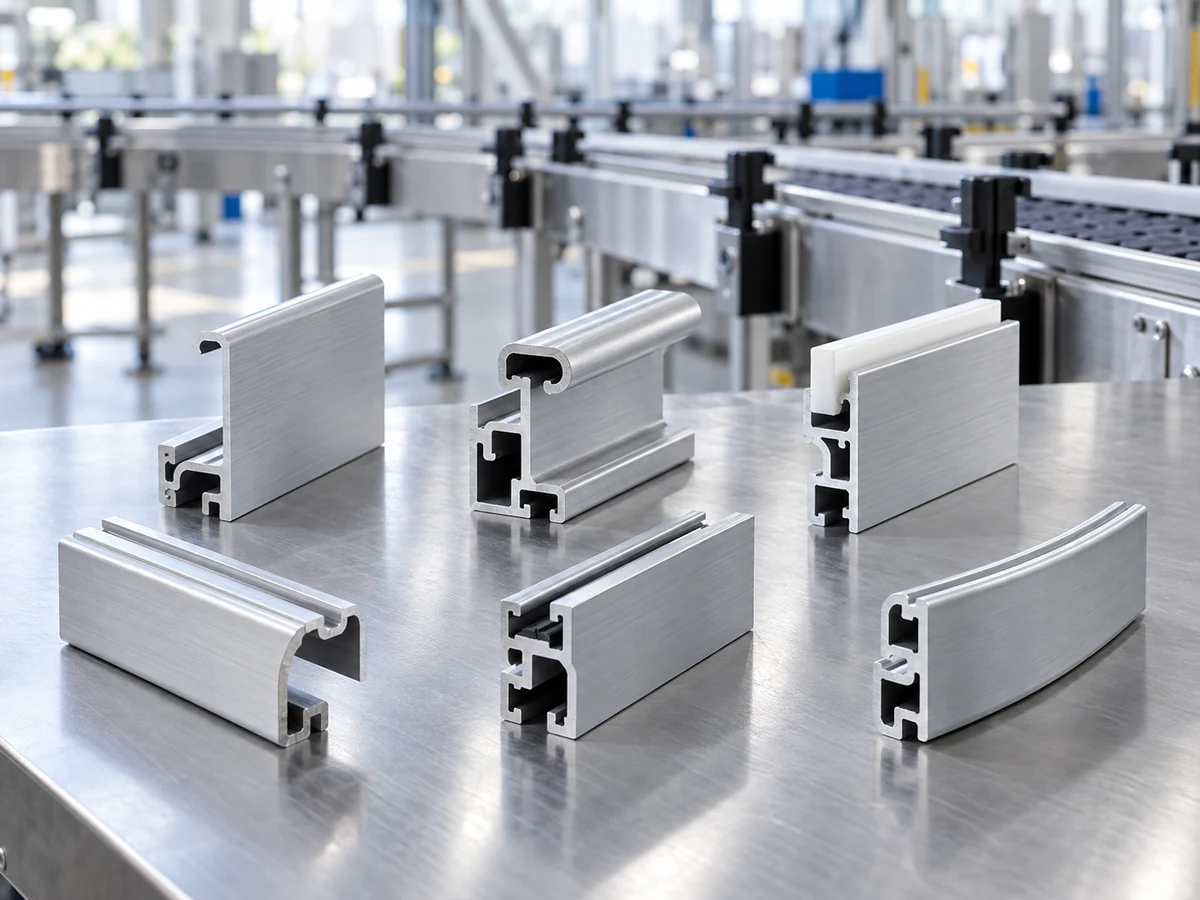
Seven RFQ checks for straight curtain track cut blanks
1. Name the approved system and section revision
Put the system owner, profile code, section drawing revision and finish on each RFQ line. Attach a section view that identifies the glide opening, mounting face and any cover or end-stop interface. Do not replace those identifiers with “aluminum curtain rail” or a photo. A visually similar section may not accept the released carrier or mounting hardware.
2. Define the purchased unit and length datum
State whether the supplier delivers a bare straight track blank, a drilled track member, a cut-and-finished member, or a labeled kit with purchased accessories. Give the finished length, tolerance, measurement temperature or method where relevant, and the two physical end faces used as the length datum. Specify whether the order calls for a square cut or an approved non-square end. Do not treat a room opening or curtain width as an automatic saw length; the system designer must translate the installation into a released member length.
3. Separate pre-cut and post-cut operations
Identify whether the incoming stock is already powder coated, lubricated, predrilled or otherwise prepared. Then mark which party owns any remaining drilling, bending, deburring, touch-up, cleaning and end-stop fitting. A hole pitch mentioned in one manufacturer’s brochure cannot be copied into another system’s cut plan. If a hole must be a set distance from a cut end, show its datum and inspection method on the released drawing.

4. Tell the cutter what must remain undamaged
Identify the glide path, decorative face, coating, lubricant-sensitive area and thin lips on the supplied section. Ask the cutter to propose workholding that supports the section without crushing the track or marking the visible surface. Require trial evidence from the actual material and finish condition; a generic machine photo cannot prove acceptance. Agree how burrs and loose chips will be inspected, because debris in a functional channel can matter after the saw cut even when the measured length passes.
5. Choose representative trial pieces
A trial should include the smallest and longest released straight lengths that challenge handling, plus any materially different section or finish within the order. Define a first-piece check for length, cut-face condition, channel clearance and visible finish. Where a downstream component is available, have the system owner check its fit to a trial cut end. Record the profile revision, stock batch, support arrangement and accepted sample; do not extrapolate one trial to every section or curved variant.
6. Keep system function with the responsible owner
Carriers, brackets, fixing substrate, curtain mass, motor and controls are outside a bare cut-blank acceptance unless the purchase order explicitly includes them. The saw trial can demonstrate a defined cut output. It cannot establish installed glide behavior, bracket strength, electrical safety or a load rating. Make a separate system-level acceptance owner and method for those outcomes. For a curved run, request a separate drawing and route rather than assuming that a straight-track cut trial qualifies bending.
7. Quote identification, protection and receipt
Specify the label fields: system family, section code, revision, finish, cut length, quantity and job or room reference. Ask how the supplier will separate different lengths and protect visible faces and channel lips in transit. At receipt, compare the delivered count and labels against the released list before mixing kits. The accepted commercial unit may be one labeled straight member, one length group or a complete project kit; price and inspect the same unit across quotes.

A short RFQ line example
For straight curtain track cut blanks, keep the released length schedule and the hardware compatibility review attached to the same RFQ revision.
“Supply straight cut aluminum track blanks to drawing CT-04 Rev C, finish code F2, measured between the two cut faces after coating. Deliver 24 pieces at the released length schedule, with the glide opening and visible face protected. Quote cutting and deburring only; drilling, bending, hardware and installation are excluded. Submit three first-piece samples across the nominated length range for drawing-based inspection and component-fit review by the system owner.” Replace every example identifier and quantity with your real released documents.
What the equipment demonstration shows
The video below is from Jiurun Machinery’s own channel and shows a general aluminum saw equipment view. It is not a test of the curtain-track section, finish, length tolerance, support setup or system performance in this article.
Send a quote-ready package
To compare suppliers on the same basis, send the approved section drawing, cut-length schedule, finish and stock condition, operation boundary, trial acceptance sheet and delivery unit. Ask each supplier to list assumptions and exclusions rather than silently adding drilling, system hardware or installation. Contact JiurunCut with the released track profile and required cut blank scope to discuss a representative saw trial.