
Aluminum bike carrier tray cuts belong in a saw quotation only when a manufacturer has confirmed that it receives a cuttable aluminum member and keeps the blank-cutting operation in-house. A finished roof or hitch carrier can include a tray, wheel restraints, arms, clamps, mounting hardware and vehicle interfaces. A product’s overall length or bike capacity is not a cut length. The buyer needs a released tray member, its actual incoming form and a defined handoff from cutoff to the remaining operations.
This is an industrial purchasing guide for aluminum profile cutting. It does not provide a carrier design, vehicle fitment, load rating, road-use approval or installation instruction. Those decisions belong to the carrier’s product owner and applicable approval process.
Confirm that the tray is the part your factory will cut
1UP USA’s Heavy Duty Add-On describes an aluminum add-on tray that fits specified rack families. Its Super Duty Roof Rack describes a tray with a bottom T-slot. These examples show that a tray is a distinct member within a larger carrier system and that the mating geometry can matter. Their public product pages do not identify incoming mill stock, cut lengths, saw configuration or another manufacturer’s approved section. They are not Jiurun customer projects or saw-trial evidence.
Start an RFQ with three possible supply routes: buy a complete approved carrier; buy a prepared tray assembly or pre-cut member; or retain cutoff of a released aluminum tray profile. Compare those routes on the same required finished output and schedule. A saw quote is relevant only to the third route, and only for the operations the buyer actually retains.
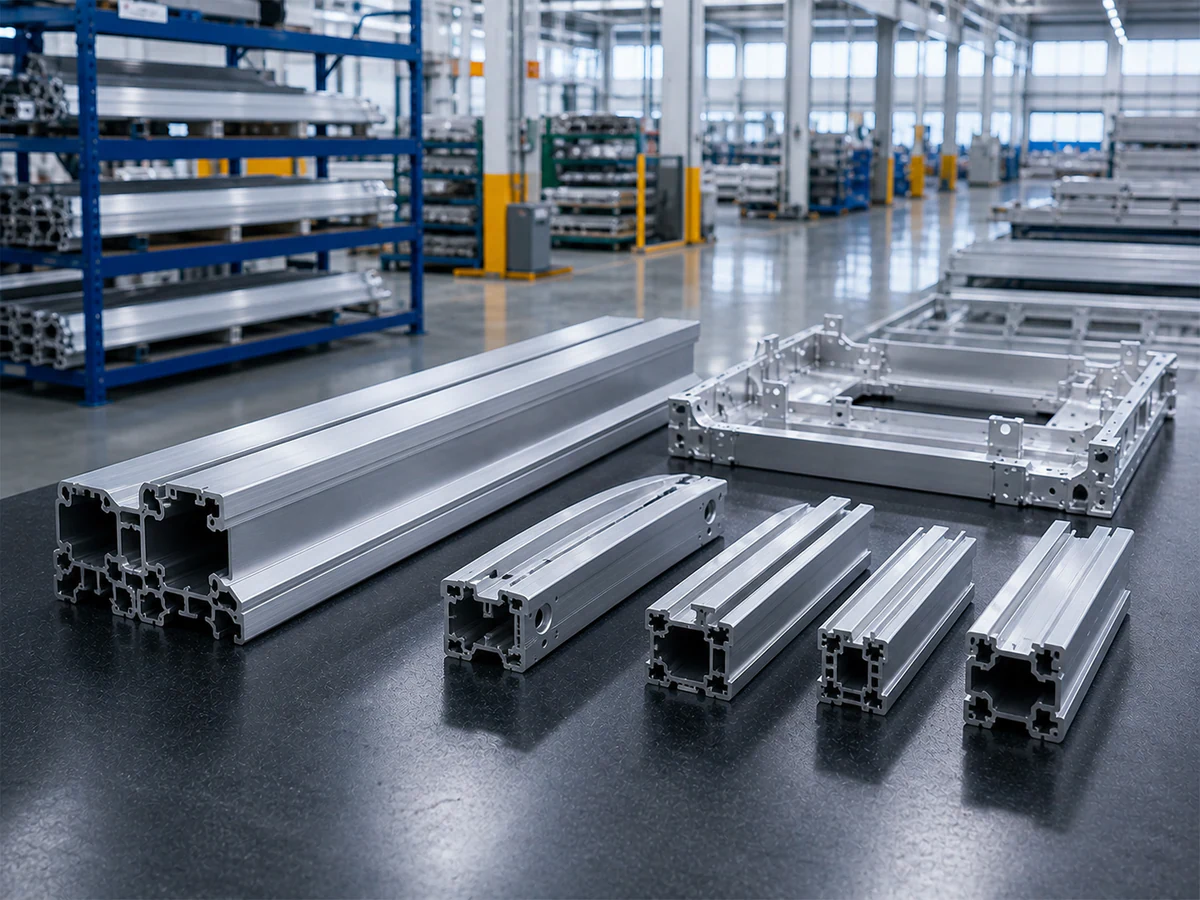
Aluminum bike carrier tray cuts: seven RFQ checks
1. Freeze the tray family and revision
Provide a controlled part number and drawing for every tray member to be cut. Identify roof and hitch families separately, along with single-bike, add-on, left/right or other actual variants. Do not assume that a visually similar tray shares one length or section across carriers. Record whether a spare or replacement tray follows the same revision as the current assembly. The vendor should quote a defined portfolio, not a photograph or catalog label.
2. Identify the real stock, not the finished carrier
State whether the incoming item is an extrusion, formed section, prepared rail, casting or complete tray. Supply the actual cross-section drawing and stock sample; specify alloy and temper, outer envelope, wall and cavity geometry, straightness, stock length, surface finish and handling condition. A bottom slot or wheel-track surface may be relevant to location or clamping, but it is not permission to clamp a finished contact face. If stock form is still undecided, keep blade, clamp, feed and capacity proposals provisional.
3. Define the blank-length datum and end condition
Place the measured blank length between named end datum faces on the drawing. Mark which face is top, bottom, front and rear, and label both ends. State whether the saw releases square ends, angled ends, extra machining allowance or a different condition. Separate blank length from the product’s assembled span, wheelbase fit range and shipping size. Record the inspection method and allowable length, end-squareness and burr condition; do not replace these with a generic promise of precision.

4. Separate cut ends from downstream interfaces
The tray assembly may require wheel restraints, a sliding arm, an end cap, a fastener slot or a vehicle-mount interface. List which geometry comes in the extrusion, which features are made after cutoff and which are purchased. If holes, pockets, deburring, coating or assembly are outside the saw station, name the receiving operation and the owner of each acceptance gate. An acceptable cut blank does not establish that an arm slides correctly, a cap retains or a carrier fits a vehicle.
5. Plan support and surface protection on the actual section
Ask the saw supplier to show how the released section will be supported at loading, feed, cut and exit. Identify permitted clamp faces, slot protection, support spacing and the shortest scheduled piece. A long open channel and a compact closed profile may react differently to the same fixture. Inspect trial parts for movement, deformation, marks, burr and end geometry with the buyer’s drawing. Use real stock with its actual finish where appearance or contact surfaces matter.
6. Trial the production mix, not one convenient sample
Select at least the smallest and largest retained blanks and any distinct cross-section or setup family. Record stock-lot identity, initial setup, first-off measurements, changeover time, usable output and rejected-piece disposition. Trial against the agreed inspection method rather than a machine brochure. If a prepared tray is sourced instead of cut in-house, compare its received condition and service route on the same order mix. The purchasing decision is about reliable released blanks per working period, not a theoretical maximum strokes-per-minute figure.

7. Quote the complete handoff and receiving unit
Ask each vendor to price the same package: saw and specified tooling, loading and outfeed, required guarding and controls, setup support, trial stock, inspection, training and the agreed collection or labeling method. Name the receiving unit as a labeled tray blank, prepared component or assembled carrier. If part identity, finish lot or orientation must survive downstream processing, define its label and packaging before the RFQ. Keep the carrier’s final structural, fitment and road-use verification outside the saw’s cut-part acceptance.
A compact RFQ package
Send the controlled tray drawings and revision list; actual stock samples and finish condition; forecast part mix, lengths and lot sizes; required end and surface acceptance; allowed clamp faces; downstream process map; and the first-off and production-mix trial plan. Ask the supplier to list exclusions and assumptions alongside the price. This makes a prepared-tray offer and an in-house cutoff proposal comparable without treating a complete carrier as a raw profile.
Video: The clip below is from Jiurun Machinery’s own channel and shows a JR-455CNC aluminum cutting machine as a general equipment view. It does not depict a bike-carrier tray, the stock in this article, a customer job, a specified machine configuration or validated part performance.
Request a part-specific cutting review
If your factory retains aluminum tray-member cutoff, send Jiurun the released section drawing, real stock, cut list and receiving criteria. Ask for a quotation that states its assumed process boundary and what a representative trial would verify. Final carrier design, vehicle compatibility and product approval remain with the responsible product owner.