
Medical equipment cart aluminum column cuts should enter a saw RFQ only after the cart manufacturer identifies a retained blank-cutting operation. A finished equipment cart can combine an extruded upright with a die-cast or steel base, prepared shelves, brackets, handles, casters, power accessories and purchased assemblies. Its advertised height, payload or clinical use does not define the incoming aluminum stock or the column blank. The buying question is narrower: which released aluminum member arrives as cuttable stock, what end condition must leave the saw, and who completes the interfaces that follow?
This guide concerns industrial cut-to-length procurement. It does not set a medical device design, electrical routing, hygiene specification, regulatory approval or finished-cart acceptance plan. The product owner must release those requirements and decide whether a saw is needed at all.
Start with the column’s supply boundary
iTD’s medical equipment cart range describes examples with extruded aluminum columns or vertical profiles alongside die-cast or steel bases, cable management, shelves and accessories. Metro’s general-use medical cart range includes polymer, metal and mixed aluminum/polymer constructions. These public product descriptions show why “medical cart” is not a stock specification. They do not disclose either manufacturer’s incoming column stock, saw settings, production route or acceptance criteria; no product in those links is a Jiurun customer case.
Before requesting a machine quote, map the cart model and revision to each aluminum-bearing component. Mark the vertical column separately from a rail, handle, shelf edge or drawer. Record whether the factory receives a raw extrusion, a pre-cut column, a drilled and coated column, a frame kit or a complete cart. A supplier-prepared column may remove the blank cut from the buyer’s factory. An aluminum drawer in another cart design does not create a column-cutting job.
Medical equipment cart aluminum column cuts: seven RFQ checks
1. Name the retained column and its receiving stage
Give the vendor a controlled part number, cart model, revision and drawing for each upright that your factory actually cuts. State whether a powered, non-powered, monitor or general supply variant uses the same member. If a metal-bearing part arrives ready for assembly, place it in the bought-component route rather than adding a second fictional saw cut. Separate replacement-column demand from complete-cart demand. The RFQ should count the blanks that the cutting station must deliver, not multiply a catalog’s number of finished carts by an assumed number of poles.
2. Supply the real extrusion and surface condition
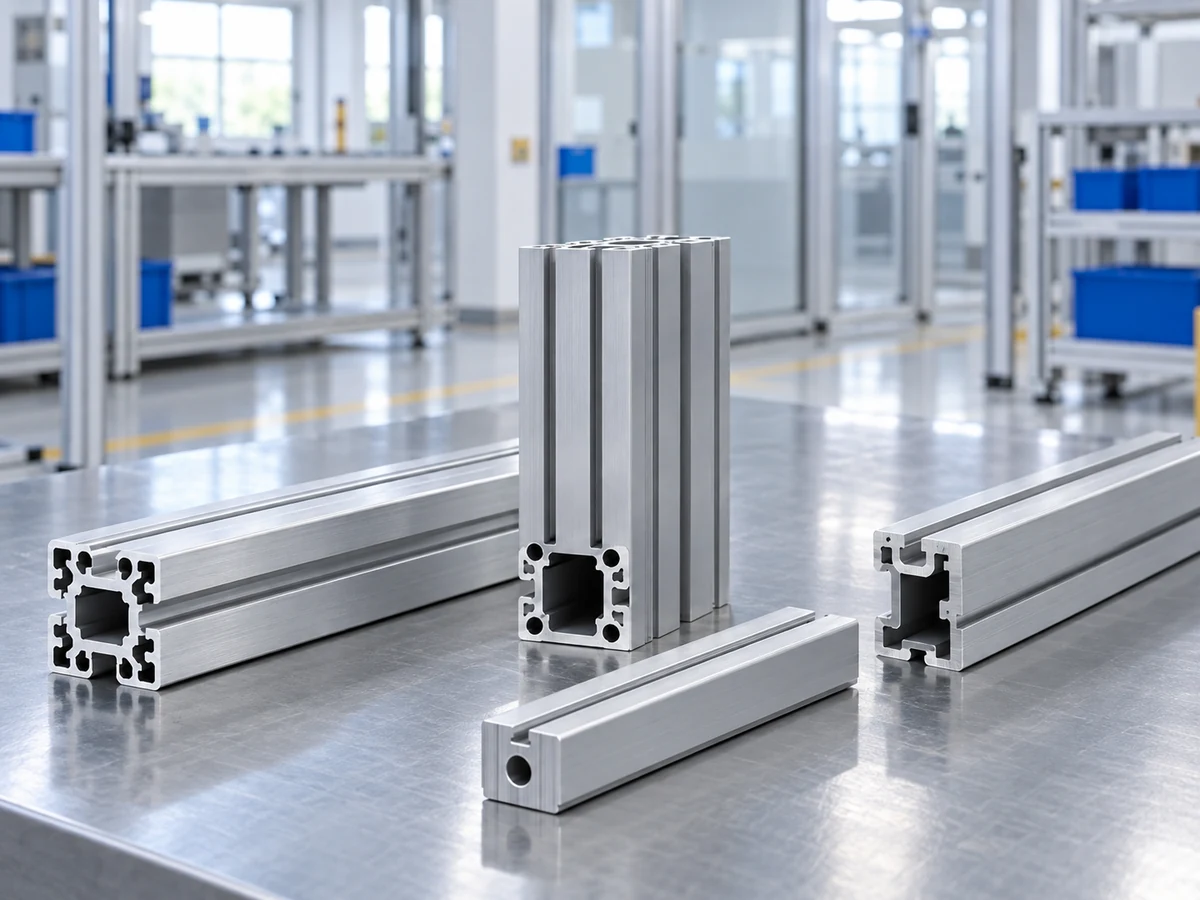
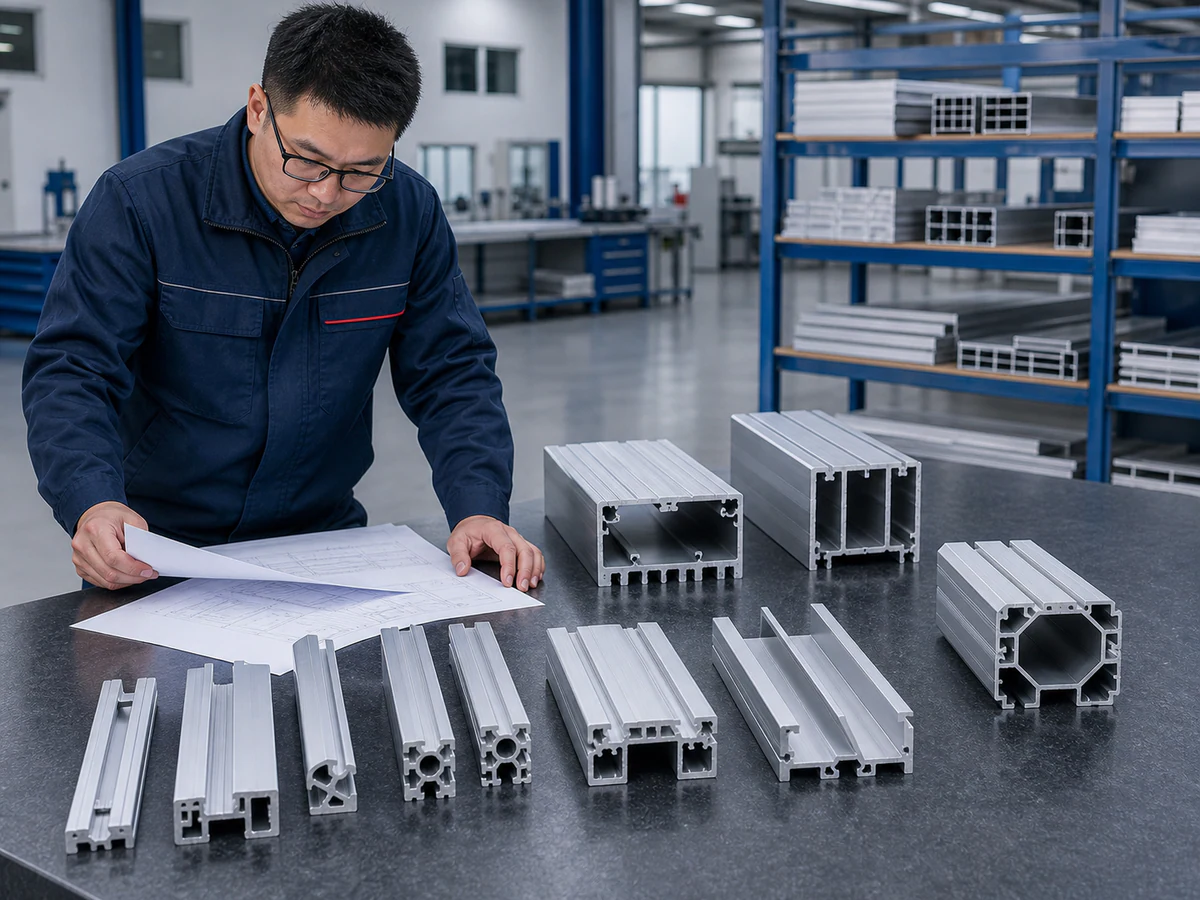
Identify alloy and temper, cross-section, outer envelope, wall and internal-web geometry, straightness, stock length, finish and packaging state. A column can have open slots, enclosed cavities, cover channels or internal features that affect how it rests against a stop and clamp. A product photograph cannot resolve those faces. Send the actual supplied stock sample and a section drawing, including which face may be contacted and which finished surface must remain unmarked. If the incoming form is not confirmed, keep machine capacity and tooling selection provisional.
3. Release the blank-length datum and two end references
Specify the unassembled blank length between named datum faces and the measurement method. Distinguish that length from overall cart height, equipment mounting height and the occupied length after caps or bases are installed. Label both ends and their orientation. State whether each end is square-cut, angle-cut, later faced, drilled, milled or prepared elsewhere. Include downstream allowances and the receiving operation’s tolerance. A saw can be assessed against a released blank; it cannot infer a controlled length from a finished cart’s marketing dimensions.
4. Separate slot and cable interfaces from the saw cut
If the column design includes covers, slots, routed cables or a height-adjustment assembly, identify which interfaces are already present in the extrusion and which are created later. Tell the saw supplier whether the cut face will remain exposed, meet a cap, seat in a base or be machined away. Protect any surface or channel designated by the product drawing during clamping and collection. Do not treat a clean saw end as proof that cable separation, insulation, electrical functions, fit or a complete device is approved. Those are separate engineering and verification work packages.
5. Test support and clamping on the actual column
Show the supplier the shortest and longest scheduled blanks, stock lengths and changeover mix. Ask where the extrusion is supported at loading, feeding, cutting and exit, and which faces the clamps touch. Thin walls, large hollow cavities and asymmetric slots can make an apparently simple section difficult to hold without movement or marks. Define acceptable deformation, surface marks, burr and end squareness using the buyer’s inspection method. A trial on an unrelated heavy profile demonstrates only that the machine ran; acceptance requires a representative specimen of the released member.
6. Compare accepted blanks, not impressive machine motions
For a sample trial, record machine configuration, blade and fixture, stock identity, batch size, setup and operator interventions. Measure the agreed blank characteristics after normal collection and handling. If a later operation removes the saw face, inspect the allowance and handling condition that operation receives. Keep feeder positioning figures separate from finished blank measurements. Ask for failed as well as accepted samples and a repeatable decision rule. Cart assembly, payload, mobility, electrical and any applicable product-level qualification stay with the responsible teams and cannot be established by a blank cut.
7. Quote the same accepted supply stage
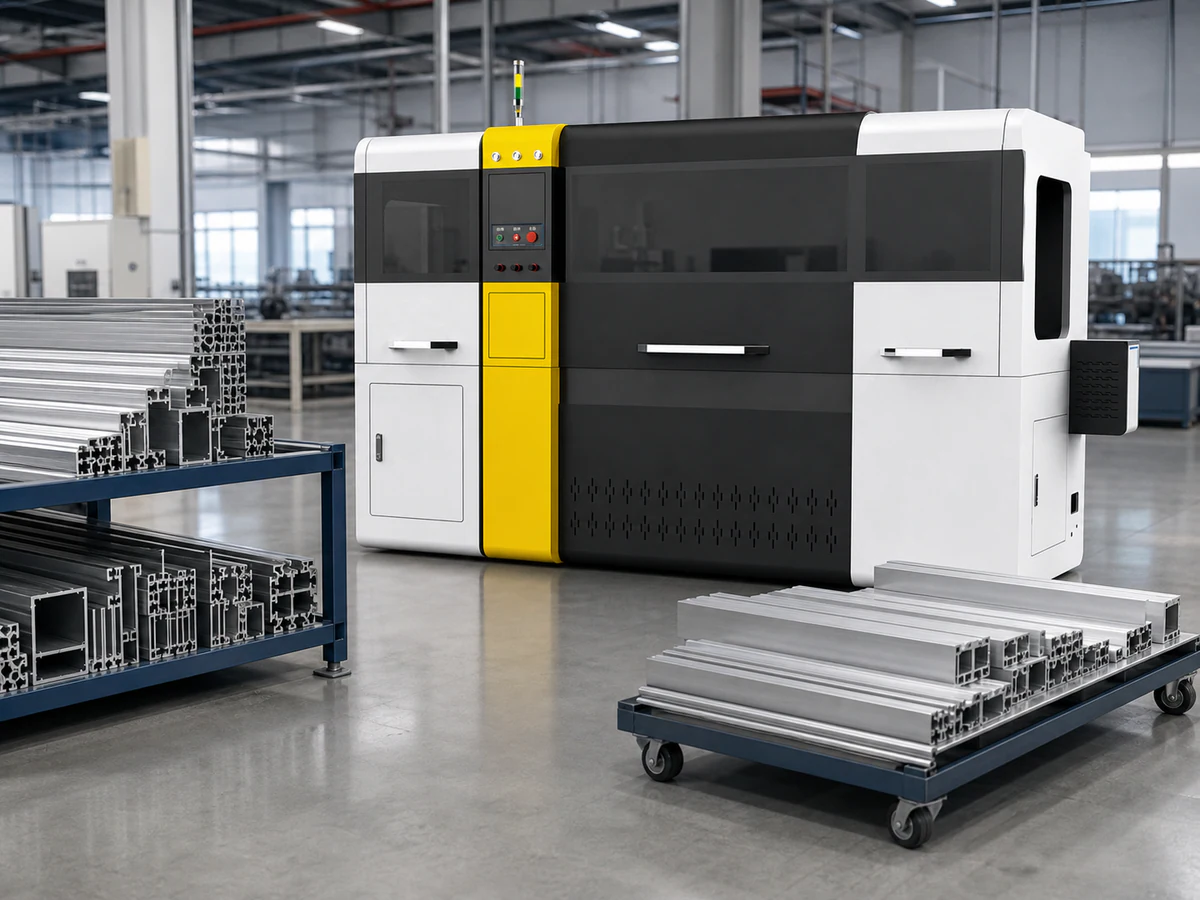
Compare three plausible routes: in-house cutting of approved extrusion stock; purchase of prepared columns accepted at a later stage; or purchase of a frame kit or complete cart. Use the same model mix, demand period and receiving boundary. Include stock, cutting and fixtures, consumables, setup, scrap, downstream machining, surface finishing, assembly, inspection, logistics and supplier qualification where each route actually incurs them. A low saw-only cycle estimate is not a finished-cart cost. Capacity should count accepted blanks across a representative mix, then account separately for the operations that turn those blanks into accepted components and carts.
Send a column-specific RFQ package
Provide a revision-controlled component and supply map; actual incoming extrusion sample; alloy, temper and cross-section; stock-length and blank-length schedules; end labels, datums and downstream allowances; surface-contact restrictions; quantity and mix by period; and written receiving criteria for the blank. Identify the cap, base, cover, mounting and any cable-related interfaces, with the process owner for each. Ask the saw vendor to list the proposed configuration, fixture assumptions, sample-trial plan, measured output evidence and exclusions. If the supplied state is unresolved, request a bounded feasibility review instead of a production guarantee.
Related Jiurun equipment video
The video below is from Jiurun Machinery’s official YouTube channel and shows a general aluminum-cutting machine. It is not a medical-cart column trial, a recommended configuration, a customer application or performance evidence for this RFQ.
Questions buyers often ask
Does an extruded column always justify an in-house saw?
No. The factory may receive a prepared column or an assembled carrier system. Establish the supply stage and retained blank work before evaluating saw ownership.
Can finished cart height set the saw length?
No. Use the released column blank drawing, its datum faces and allowances for later operations. Overall cart dimensions include other components and interfaces.
Does a clean cut prove the cart is approved for medical use?
No. A saw trial can provide evidence about the specified blank characteristics only. Product-level design, testing and approvals require their own plans and responsible owners.
Discuss a retained column-cutting job with Jiurun
If your factory receives an identified aluminum extrusion and retains its blank cut, share the controlled drawing, actual stock, part mix and acceptance method with Jiurun. Ask for a cutting-scope assessment and a written list of work outside the proposed saw operation. Contact Jiurun with the RFQ package.