
Aluminum saw for industrial stair manufacturing is a useful search only after the buyer decides which parts will actually be cut in-house. A finished access stair is an engineered assembly; a saw supplies cut blanks. Those are different purchasing scopes. Before comparing saws, separate complete modular stair packages, standard components, and the aluminum members your team will retain responsibility for cutting, inspecting, and handing to assembly.
For example, ErectaStep describes a prefabricated modular stair route, while its assembly-line access example shows how stairs and platforms may be configured around an existing facility. These are examples of a finished-system procurement route, not specifications or performance evidence for a Jiurun saw. If your project uses an approved package, ask the system supplier what site trimming, if any, is permitted before you plan a cutting cell.
Start with the supply boundary, not the blade diameter
A purchasing request labelled “industrial stairs” can describe very different work. One plant buys a complete stair and platform package, with shop drawings and assembly details from a system supplier. Another fabricates a limited family of rail, support, or frame members from released aluminum stock. A third cuts replacement components for an existing approved assembly. The saw requirement changes with each boundary.
Write down who owns the drawing release, interface dimensions, fastener pattern, structural assessment, surface treatment, assembly procedure, and final acceptance. The cutting-machine supplier should be asked to demonstrate a repeatable blank-preparation process for defined profiles. It should not be asked to certify the finished access structure merely because it can cut a rail to length.
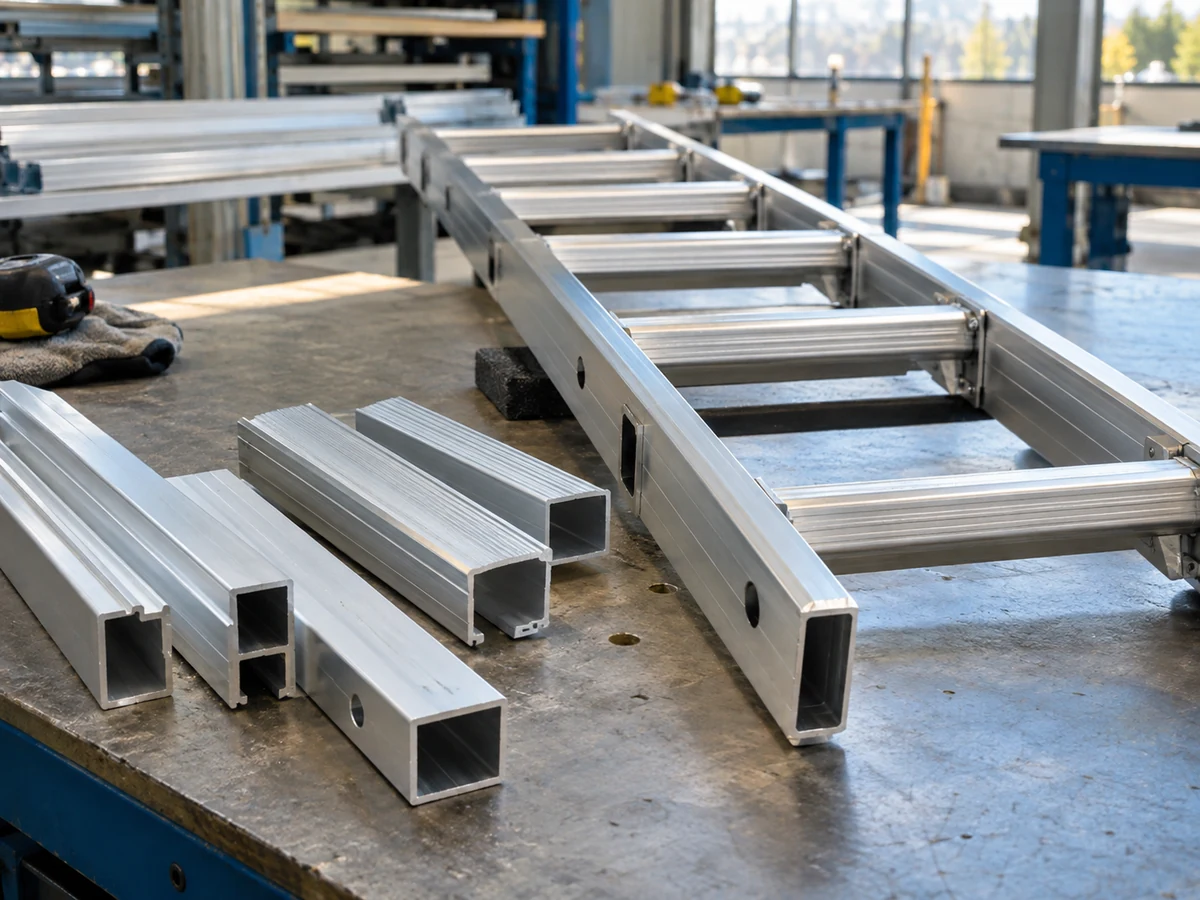
Build a retained-member portfolio from the released bill of materials
Ask engineering to list every aluminum item that the proposed saw cell will receive. For each item, record the actual extrusion or tube drawing, alloy and temper, outside envelope, wall arrangement, supplied length, finished blank length, end geometry, allowable burr or deformation condition, and downstream operation. Include volume by part family, not just a single annual total. A mix of long rail members and short connector blanks can drive different handling and stop-setting decisions.
Separate three classes in the portfolio:
- Buy as an approved module: a staircase or platform supplied as a system with its own design and assembly responsibility. Do not introduce undocumented cuts.
- Cut as a released member: an identified rail, tread support, landing frame member, or other aluminum section for which your team owns blank preparation and inspection.
- Resolve before quotation: parts whose drawing, stock form, required end finish, or permission to alter a supplied module is still unclear.
The last class is often the most important. A saw quote based on an unresolved part can make a low price look attractive while leaving the actual access-system interface untested.
Specify an aluminum saw for industrial stair manufacturing with a useful cut trial
A cut trial should use the retained member that is hardest to hold or inspect, not merely the easiest piece of aluminum available. Send a representative length of the real section and identify the datum surfaces that engineering uses. A wide or thin-wall profile can present different clamping and exit-edge concerns from a compact solid shape. Where several members share a stock form, select a test matrix that covers the largest envelope, thinnest vulnerable wall, shortest practical blank, and any required angle.
Agree on inspection before the trial. State whether length is measured between outer faces, along a particular face, or from an assembly reference. Define how squareness or angle will be checked, where burrs matter to a fastener or contact surface, and whether visible marks are acceptable on exposed faces. Photograph and label each trial piece with the drawing revision, stock batch, programmed cut, and inspection result. Those records support a procurement decision; an attractive video clip alone does not.
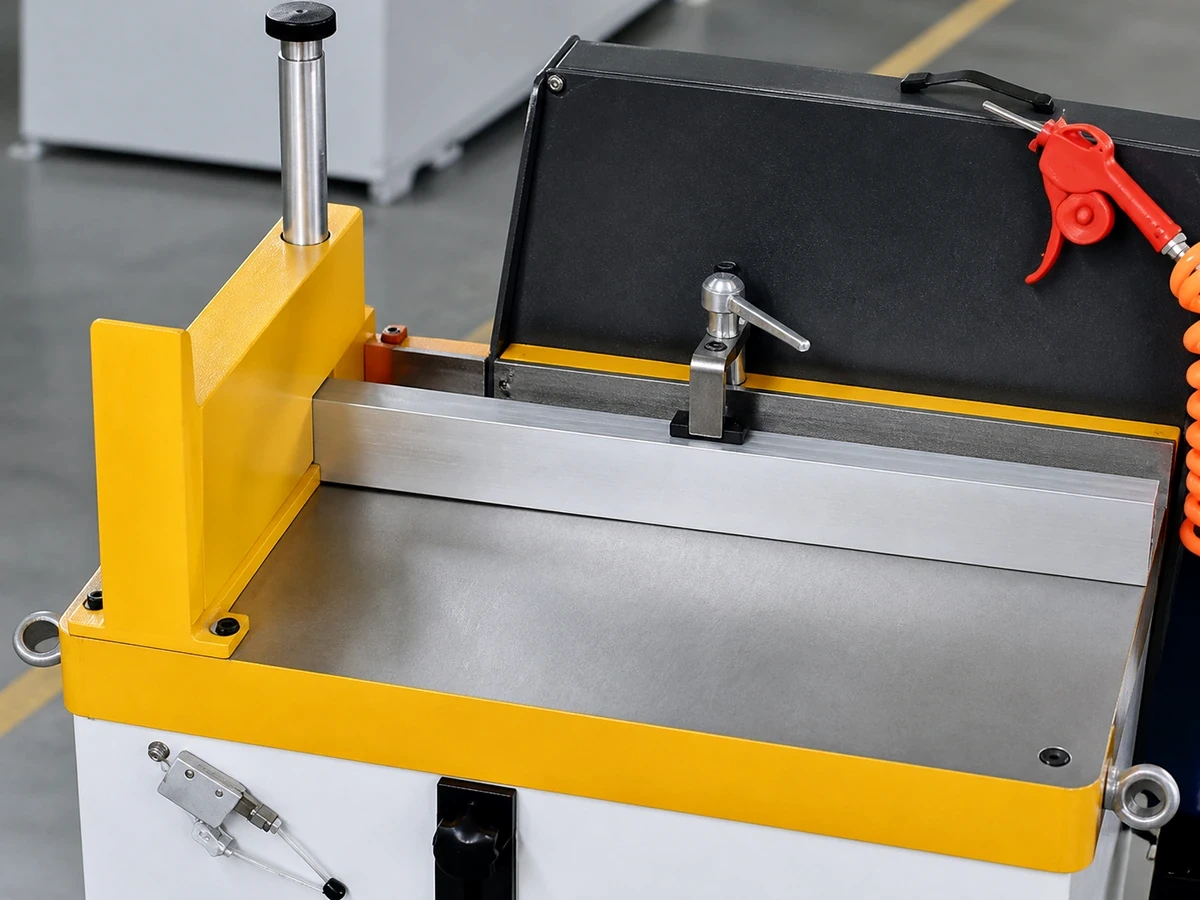
Check the assembly interface after the saw
A blank can pass a length check and still fail at assembly. The buyer should identify any hole, slot, connector, gusset, bracket, or tread support added after sawing. Confirm whether end geometry leaves enough material for those features, whether a cut face is hidden or exposed, and whether a protective finish is applied before or after cutting. If stock arrives anodized or otherwise finished, agree on the treatment of newly exposed ends and how cosmetic surfaces will be supported.
For a modular system, the interface may be controlled by the module supplier. For custom fabrication, the project designer may own it. A cutting equipment quote should state which inspection and finishing steps are included in the trial and which remain with downstream operations. This prevents an apparently successful saw test from being misread as approval of a finished stair.
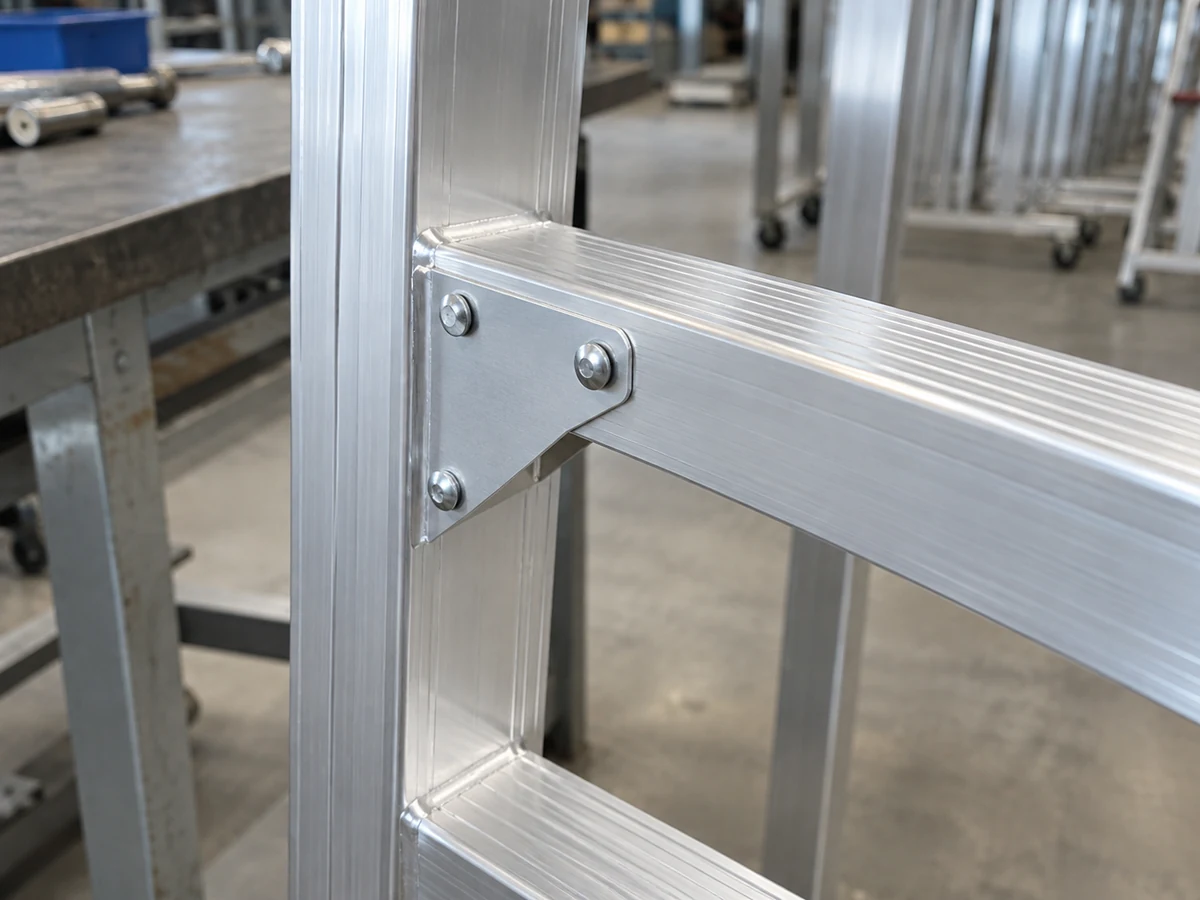
Compare equipment against the real portfolio
When the retained member set is known, compare possible saw arrangements by how they handle that set. Ask the supplier to explain profile support at infeed and outfeed, contact points during clamping, cut-length setting and verification, blade and feed choices for each section, chip management, changeover, and handling of short or long pieces. The answer should be tied to sample drawings and trial evidence. A model name alone does not establish suitability.
Jiurun supplies industrial aluminum cutting equipment, including profile-cutting and CNC-related options. The suitable machine and configuration for a stair-member portfolio require review of the actual drawings, samples, production mix, and test result. See the aluminum profile cutting machine range as a starting point, then request a specific process proposal rather than assuming one catalog machine covers all profiles.
The following video shows a Jiurun saw equipment demonstration. It illustrates a machine and cutting process; it is not a test of the stair parts, materials, dimensions, throughput, or configuration in this guide.
Use one RFQ pack to compare complete-system and cut-stock routes
Give each bidder the same boundary statement. If you are comparing a prefabricated stair with in-house member production, keep the evaluations separate: system scope covers access design, modules, assembly, and acceptance; machine scope covers cutting defined aluminum blanks. The costs, lead times, and responsibilities are not directly interchangeable until the retained work is clear.
- Project route: complete approved system, released in-house member production, or a mixed route.
- Part list: drawing number and revision for every retained cut member.
- Stock: extrusion or tube cross-section, alloy/temper, finish, supply length, and representative samples.
- Cut requirement: blank length range, datum, angle, edge condition, visible-face protection, and inspection method.
- Production mix: quantities by part family, batch size, changeovers, and long/short part handling.
- Downstream ownership: hole making, joining, finishing, assembly, structural review, and final acceptance.
- Trial deliverable: labeled sample parts, measurement report, observed defects, adjustments, and open questions.
- Commercial boundary: included machine configuration, tooling, training, service terms, and any excluded operations.
Decision rule for the buyer
Buy a finished stair or module when the project requires a supplier-controlled access system and your team will not own released member fabrication. Investigate a saw cell when engineering has released a repeatable aluminum member portfolio, owns the downstream process, and can provide representative samples for a trial. If the route remains mixed, resolve module modification permission and interface ownership before asking for a machine recommendation.
Send Jiurun your retained-member drawings, stock photos, expected batch mix, and inspection criteria through the machine inquiry form. We can discuss a sample-cutting review for the defined aluminum parts and identify what a proposed saw configuration would need to demonstrate. The final stair design and approval remain with the responsible project parties.