
An aluminum saw for loading ramp manufacturing should be selected for the parts a factory actually retains, not for the name or overall length of a finished ramp. A buyer might receive complete rated ramps, prepared rail assemblies, or long aluminum profiles to cut in-house. Those routes leave different work, inspection duties, and investment needs with the factory. Decide the receiving unit first. Only then does a saw trial have a useful target.
Loading ramps cover several product forms. An open rung-style rail, a broad hollow-profile bridge, and a folding assembly do not present the same stock, joint, or finishing work. For example, Altec describes an open-surface aluminum rung rail, while its mobile loading bridge uses a hollow aluminum profile. These are examples of different product architectures, not specifications for Jiurun equipment or evidence that one saw handles either product.
Start with the ramp unit your workshop will deliver
Before comparing saws, write one line for each released ramp family: finished ramp or rail pair delivered to the customer; bought finished product, bought prepared assembly, or factory-built product; and the exact aluminum members still cut in your workshop. A rigid rail set may require repeated long members and separate end fittings. A folding design may have shorter segments and an additional joint operation. The sales name, folded length, and installed overall length are not automatically the individual saw-cut lengths.
An aluminum saw for loading ramp manufacturing is relevant where cutting controlled extrusion blanks remains in the factory’s process. If the workshop buys a complete ramp with its own product documentation and only labels or packs it, a new aluminum saw may have no production role. If it buys prepared rails but adds accessories, identify whether any aluminum cutting remains. If it manufactures the retained rail or deck members, map every profile family and released end condition to a drawing revision before asking for a machine recommendation.
Keep the finished-product responsibility separate. A clean cut does not establish a ramp’s capacity, connection integrity, traction, stability, or suitability for a vehicle or site. Those questions belong to the product owner and its applicable design, validation, and use documentation. The saw purchase can address a controlled blank-cutting step, not replace those obligations.
Compare the purchase routes on the same basis
For each ramp family, compare three routes using the same annual and peak-month quantities. Route one is a finished ramp or rail pair, with the supplier delivering an approved assembly. Route two is a prepared rail or profile kit that leaves limited finishing in-house. Route three is long extrusion stock with cutting, joining, fitting, finishing, inspection, and packaging retained by the factory. Record who owns drawings, revision control, scrap, delivery lead time, and nonconforming parts in each route. Otherwise the apparent saving on raw stock can hide additional operations.
Do not compare a full-ramp selling price with only the cut length cost of one rail. Put the complete retained process beside the purchase price. Include stock length and ordering constraints, offcut handling, number of distinct profile sections, scheduled changeovers, rework from rejected blanks, inspection time, and the production space a saw cell would occupy. This is a decision worksheet, not a universal payback claim. The useful answer depends on your approved product mix and local cost records.
For an aluminum saw for loading ramp manufacturing, also check whether the order unit is one rail, a matched pair, a prepared subassembly, or a complete ramp. A pair can need traceable left and right members; a multi-section assembly can need several different blanks. List each member on the released bill of materials. The saw trial should represent the members actually cut, not a photograph of a finished ramp.

Aluminum saw for loading ramp manufacturing: build a profile matrix
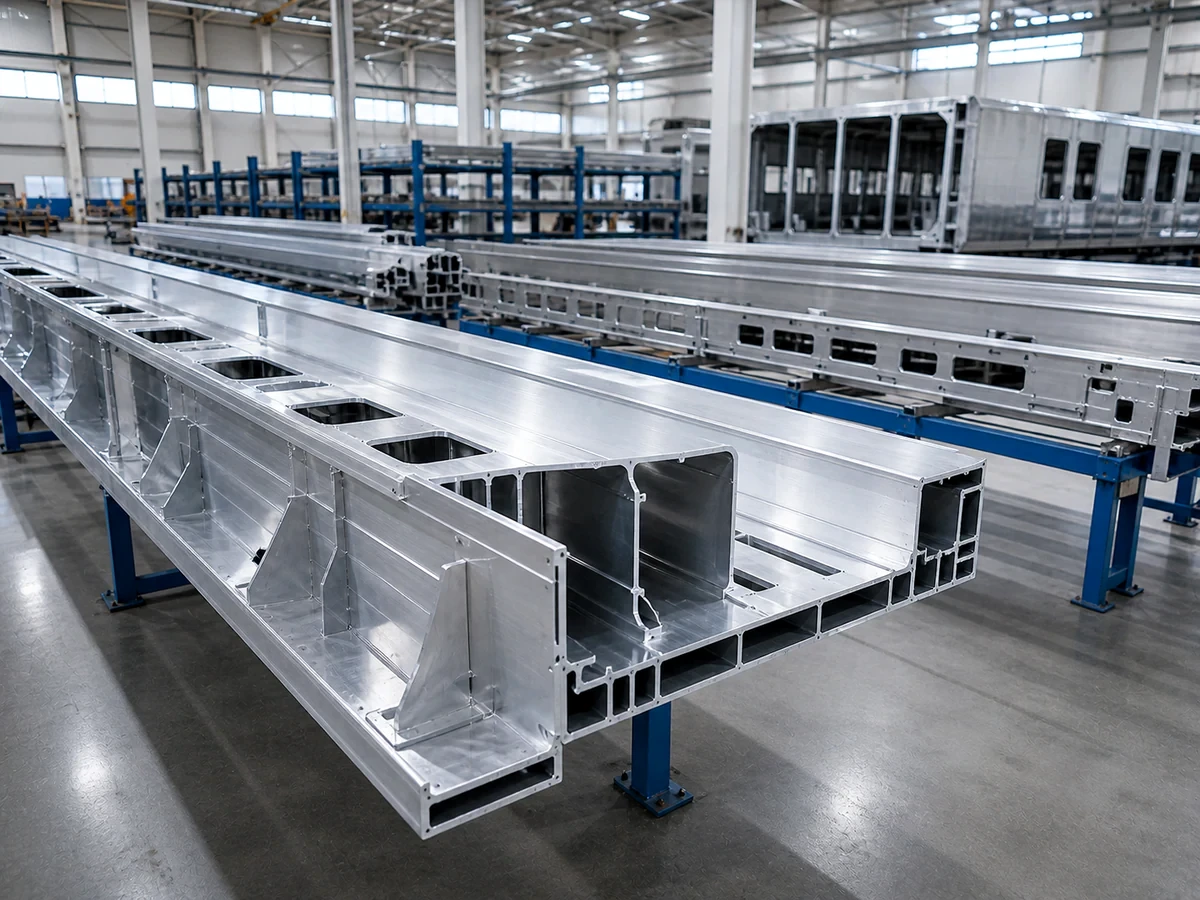
For each retained extrusion, record the drawing number and revision, alloy and temper supplied by the stock vendor, section envelope, wall distribution, stock length, finished blank length, allowed end form, and visible or mating faces. Mark the minimum and maximum lengths in the same family. A wide hollow profile may contact a clamp very differently from a narrow ribbed member. A thin lip may need protection against distortion, while a heavy section can impose a different support requirement. These are reasons to test physical samples rather than infer capability from a machine label.
Identify how much end finishing follows the cut. Is the end hidden beneath a cap, fitted to another section, or used as a reference for drilling and assembly? Does the drawing require a square end, a controlled angle, or a length relative to another feature? State the inspection method and acceptance boundary in the RFQ. Do not assign an unsupported tolerance to the saw simply because a completed ramp has a dimensional requirement elsewhere. Separate blank acceptance from completed-assembly acceptance.
An aluminum saw for loading ramp manufacturing shortlist should be built around the full profile envelope, support path, and changeover pattern. Show the supplier the largest and most flexible sections, short offcut case, longest retained blank, and any asymmetric profile that can be loaded in the wrong orientation. Ask for a drawing of clamp contact and infeed/outfeed support. Confirm what the operator must change between sections and how a wrong program or stop setting would be caught. Any proposed machine model should be verified against those actual samples.
Make the sample-cut trial answer a buying question
Send a sample pack with the real stock, current drawings, and a simple result sheet. The pack should include a high-volume standard member, the largest section, the least stable section, a short blank, and a profile with the most demanding end interface. If a folding or multi-section product uses different members, include the difficult member from that family too. Record stock condition and orientation so a successful cut can be reproduced.
During the trial, document how each section is presented, clamped, supported, cut, unloaded, and inspected. Compare the cut blank against the drawing with the factory’s stated method. Note burr location, visible-face marking, distortion, and repeatability across several pieces where relevant. Capture setup time and changes between parts, because a mixed ramp portfolio may spend more time changing jobs than cutting the longest rail. Reject a trial that uses only a convenient generic extrusion while the actual retained rail remains untested.
Video can help a buyer see a machine layout and operating sequence, but it cannot verify the article’s ramp profiles or finished product. The Jiurun equipment video embedded below is a related machine illustration. Its footage is not a loading-ramp sample cut, approved configuration, customer project, load test, or performance claim. Ask for a trial on your actual profiles and drawings before treating any recommendation as final.
Related Jiurun saw footage only. It does not show the loading-ramp materials, configuration, customer project, or performance discussed here.
Eight details to send with a ramp-manufacturing RFQ
- The released ramp families and whether each is rigid, folding, or multi-section.
- The delivery unit for each order: member, rail pair, subassembly, or complete ramp.
- Which components are bought finished and which aluminum members remain in-house.
- Current drawings and revisions for every retained cut member.
- Physical samples covering the largest, thinnest, asymmetric, short, and high-volume sections.
- Stock and blank lengths, end conditions, mating faces, and stated blank inspection methods.
- Expected batch sizes, changeover frequency, rejected-part handling, and available floor space.
- The decision owner for product validation and assembly acceptance after the cutting step.
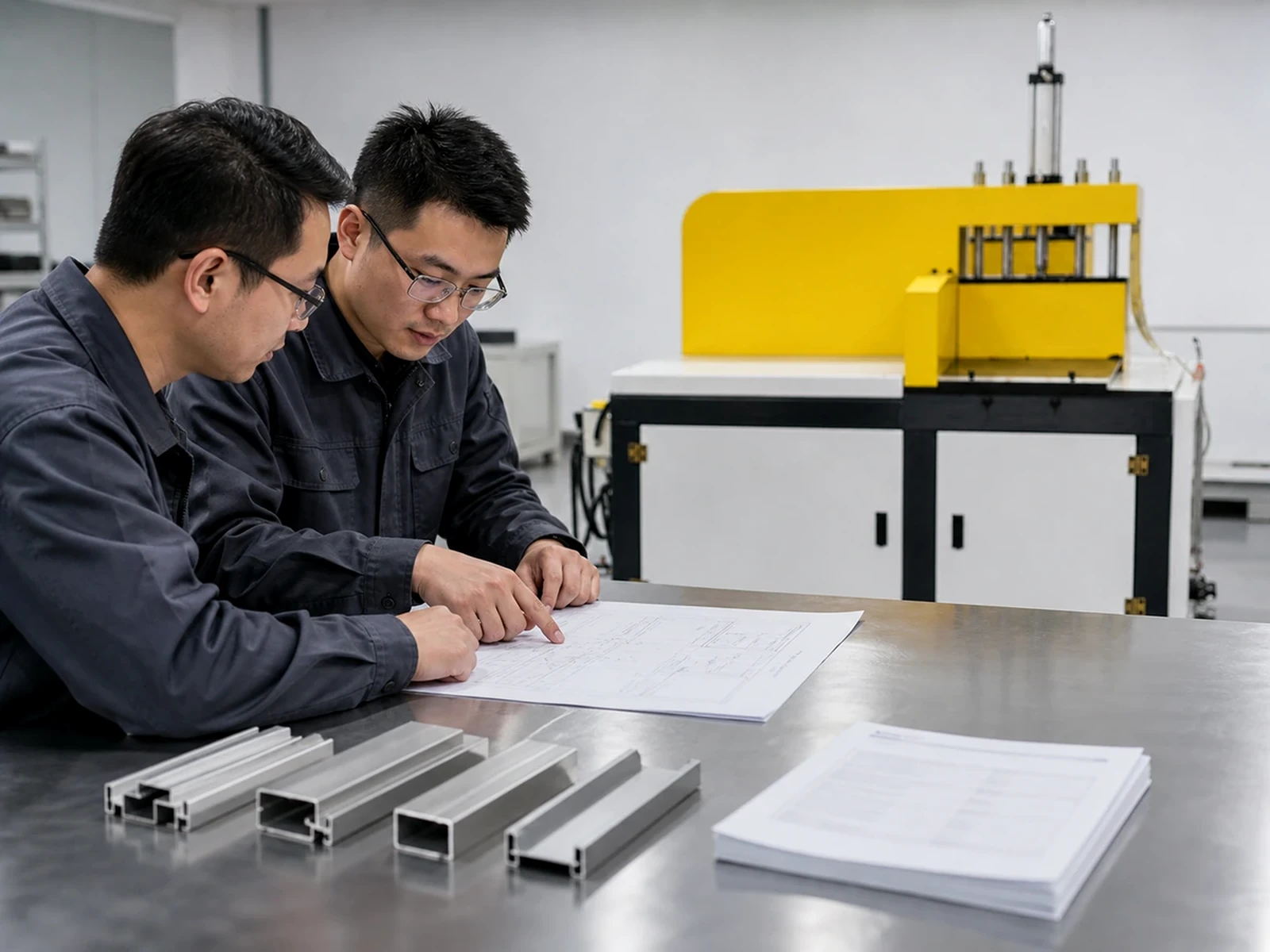
Use the RFQ to request a sample-cut plan and a clear list of what the proposed saw configuration does and does not cover. If several ramp families share a rail, confirm that the drawing revisions and end details really match. If they differ, keep the trials separate. Buying a saw against an unapproved family name can lock the factory into the wrong support, length, or changeover assumptions.
If you are considering an aluminum saw for loading ramp manufacturing, send Jiurun the retained rail drawings, section samples, planned batch mix, and cut-blank inspection criteria. State which completed ramps or prepared assemblies you buy, which components you make, and who signs off the finished product. That gives the discussion a concrete cutting scope without treating machine footage as ramp certification.