
An aluminum saw for formwork manufacturing is useful only after the formwork supply route is clear. Some buyers need a complete engineered panel system; others have an approved frame design and must cut their own extruded members. Those jobs have different responsibilities. A saw can produce a controlled aluminum end cut, but the cut alone does not qualify a wall or slab formwork assembly for a construction project.
Doka’s Alu-Framax Xlife description distinguishes aluminum profile frames, formwork sheets, accessories, and coordinated panel formats. PERI’s formwork overview likewise separates wall and slab systems, accessories, and project-specific services. These are examples of how suppliers package complete systems; they are not evidence that a Jiurun saw is approved for a named system or that a locally fabricated panel meets its performance requirements.
Aluminum saw for formwork: define the retained factory work
Ask the project owner, system designer, and purchasing team whether the order is for complete formwork panels, factory-cut frame parts, replacement members, or cutting services on an already approved extrusion. A complete panel includes more than its perimeter frame. Facing, cross members, connections, ties, handles, release and repair provisions, and site instructions may all be part of the controlled system. If the contract names a proprietary system, confirm whether local cutting is permitted and which parts the supplier must deliver intact.
For an aluminum saw for formwork purchase, a workshop that only cuts loose frame members should not quote itself as the manufacturer of the finished formwork system. Conversely, a factory that owns an approved panel design needs to plan cutting, joining, facing installation, inspection, and traceability as one production flow. This scope decision sets the useful saw trial: the retained aluminum members and their real end conditions.
Map the retained frame before comparing saws
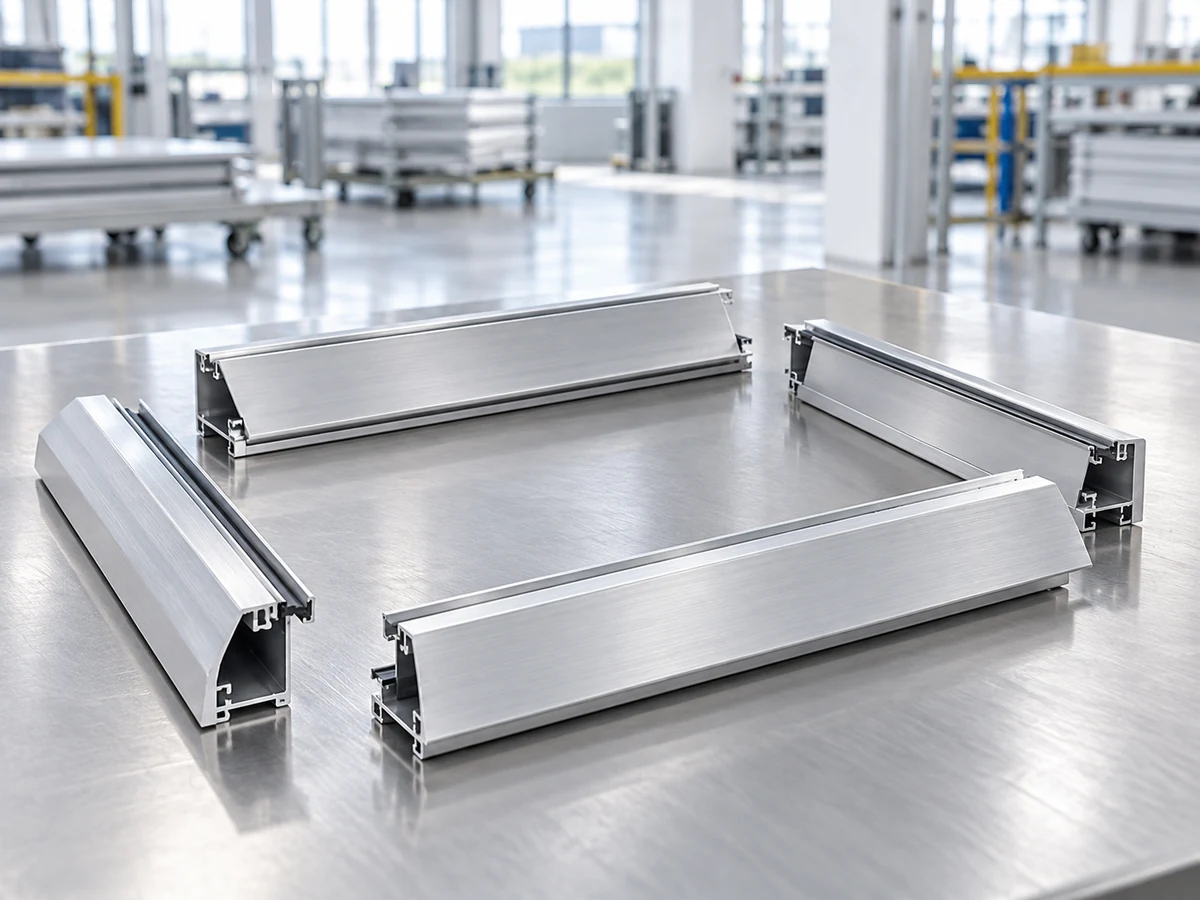
Build a member schedule from a current drawing, not from a photograph of an assembled panel. List perimeter rails, cross members, corner pieces, reinforcing sections, and any profile with a different wall or cavity arrangement. For each part, record stock length, finished length, cut angle, reference face, profile revision, finish, quantity, and where it locates in the assembled panel. Separate any plywood, composite facing, steel hardware, or elastomer component; an aluminum profile saw specification should not silently absorb those processes.
For an aluminum saw for formwork comparison, group profiles by section envelope, support requirement, and changeover frequency. A wide, thin-walled frame rail may need different clamp contact and offcut support from a compact stiffener. If the shop plans both new panels and field replacement members, compare the two order patterns: repeated production lengths versus small, urgent batches. The lowest cycle time on a single rail may not be the best total workflow.
Keep system engineering outside the saw trial
Formwork performance depends on the approved whole assembly and its intended use. The panel system owner must define allowable applications, connection details, facing, maintenance, and site instructions. A cut sample cannot establish concrete pressure capacity, safe lifting, tie behavior, reuse life, or compatibility with another manufacturer’s panels. Do not substitute an apparently similar extrusion without design approval.
Cutting decisions still have consequences for assembly. A burr near a connector slot can block fit; a twisted rail can complicate facing attachment; a mark on a visible frame edge may trigger rework. The shop should define measurable acceptance criteria for the cut member, then verify final panel assembly under the system owner’s procedure. Keep those two sign-offs separate in the purchase order.
How to run a representative aluminum frame cutting trial
For an aluminum saw for formwork trial, send the machine supplier physical samples of the largest, thinnest, most asymmetric, and most frequently cut retained sections. Provide the controlled drawing for each end condition. Mark the visible or mating face and describe whether the cut end will be hidden, bolted, welded, or fitted into another profile. Ask the supplier to show how the stock is supported before and after the blade, how the clamp meets the section’s strong walls, and how the operator maintains orientation through repeat cuts.
Inspect more than one finished piece. Measure the agreed length datum and cut angle, then check squareness, burrs at channels, surface marks, and any local deformation. Try a real joint or assembly fixture if available. Record the blade, clamping setup, feed conditions, handling method, and secondary deburring. If the supplier changes the setup between samples, record the changeover time as well as the cut quality. A trial on a convenient solid bar does not represent hollow frame stock.
Compare factory cutting with supplier-cut panels
Buying complete panels can preserve a single accountable system supply route, especially when project approval, drawings, accessories, and support come from one provider. Ask what panel sizes, replacement parts, special corners, and repair services the supplier can deliver. If only a small fraction of members need custom lengths, paying for supplier preparation may avoid a new machine, fixture, and inspection process.
In-house cutting becomes more plausible when you control the approved frame design, purchase a repeatable extrusion mix, have predictable demand, and can inspect both loose parts and assembled panels. Build the comparison on total cost: stock yield, blade and maintenance costs, labor, changeovers, secondary finishing, rejected parts, storage, and transport. Do not use a quoted saw cycle time as the full panel manufacturing rate.
For factories with both complete-panel and spare-part work, the purchasing decision may be staged. Start by testing the most common retained member. Confirm whether one setup can handle the other released sections without excessive fixture changes. Only then size automation, measuring stops, and material handling around actual batch data.
What to include in the machine request for quotation
- Approved frame drawings and revisions, plus the list of components your factory is authorized to cut.
- Physical samples of representative aluminum sections and required end conditions.
- Stock and finished lengths, angles, quantities, batch mix, and changeover frequency.
- Datum and inspection rules for length, angle, burrs, finish, and mating fit.
- Clamping limits, visible-face protection, long-stock support, and offcut handling needs.
- The downstream joining and facing process that will reveal a poor cut.
- Required trial record, including the setup used and any post-cut work.
- Space, power, extraction, operator, maintenance, and delivery constraints.
Equipment video: process context only
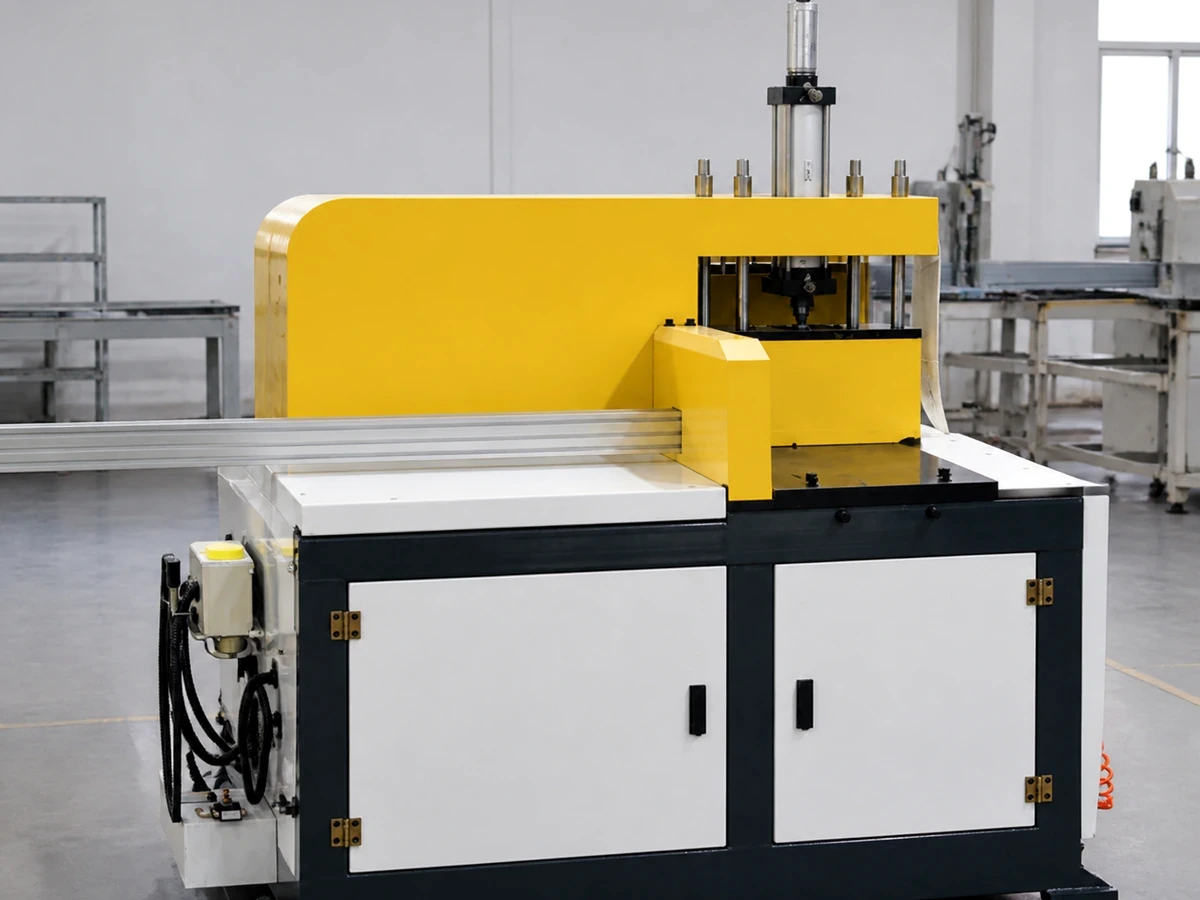
This official Jiurun video shows a saw in operation. Use it to ask practical questions about feeding, clamping, guarding, and operator access. The footage does not show a formwork panel, approved rail, specific project setup, or verified output on your stock. Actual model selection requires your drawings and a sample-cut review.
Make the system boundary visible in the purchase order
For an aluminum saw for formwork investment, the sound sequence is to define the delivered formwork system, identify the retained aluminum frame work, test actual member cuts, and confirm assembly responsibility. That prevents a workshop from buying a saw for a nominal panel size while its critical profiles, connections, or approved supply route are still unresolved.
If you are evaluating an aluminum saw for formwork manufacturing, share the approved aluminum member drawings and sample details with Jiurun. Include which panels or components you will buy finished, which profiles you will cut, and the inspection criteria for those cuts. We can then discuss a suitable trial plan without treating equipment footage as a formwork system approval.