
Aluminum saw for pneumatic manifold manufacturing is a useful buying question only after the supplier and buyer agree on what leaves the saw. Is it a retained aluminum body blank, a drilled and tapped body, a cleaned and finished manifold, or a pressure-tested assembly? A saw can prepare a stock blank for later work. It cannot establish the accuracy of ports, sealing faces, internal passages, or the functional performance of the assembled pneumatic circuit. This guide turns that distinction into a practical drawing and purchasing checklist.
Start with the retained item, not the machine name
A pneumatic manifold may be sold as a raw or prepared body, a machined distribution component, or a complete valve or air-preparation assembly. Those are different purchase scopes. Ask the buyer to identify the exact retained item on the drawing: the blank after cutoff, the body after machining, or the assembly after all components are installed. Record the revision, material specification, starting form, section or envelope, target length, lot size, and who owns each downstream operation.
Commercial catalogs show why one word is insufficient. Parker’s pneumatic product documentation includes an aluminum manifold block and ported connection details, while Festo’s component documentation identifies an aluminium sub-base and pneumatic connection ports. These are third-party examples of product scope, not JiurunCut trials, machine compatibility claims, or substitutes for the buyer’s drawing.
Identify the real stock form before choosing a saw
Do not infer the incoming stock from a finished photograph. A body that appears anodized does not reveal whether its starting form was extruded bar, plate, casting, or another supplied blank. Ask for a photograph of the actual incoming material beside its section dimensions and length. If several body families are involved, list each one separately rather than treating the largest finished part as the only saw case.
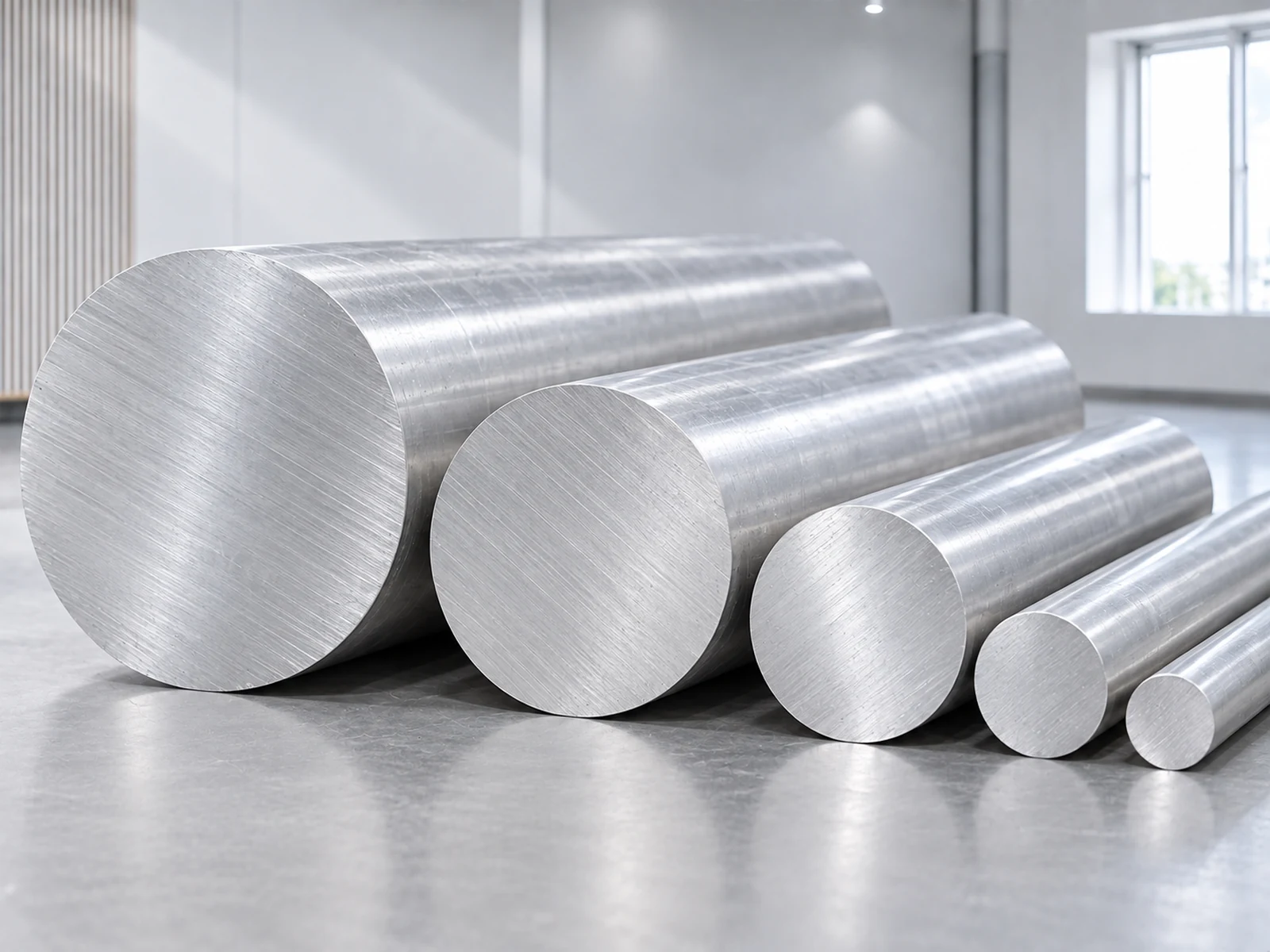
For a solid bar route, the buyer should specify the section geometry, alloy and temper from the approved print or purchase order, stock straightness and surface condition, maximum stock length, and any supplier allowance already present. For an extrusion route, include section tolerances and whether a clamp can hold the profile without distorting thin walls. For a casting or near-net supplied body, verify that sawing is actually required; many programs may only need machining or deburring. A round-bar photograph below illustrates different solid-stock sections, but it is not a photograph of a pneumatic manifold body or evidence that round bar is right for a particular drawing.
Define the cutoff boundary and leave machining dimensions to machining
An aluminum saw for pneumatic manifold manufacturing should have its own cutoff acceptance definition. Usually that means a retained blank length and a practical allowance for downstream facing or machining, with a clearly stated datum and measurement method. Port center locations, threads, cross-drilled passages, sealing lands, and leak performance belong to later operations and tests. Write the cutoff tolerance as a blank requirement rather than copying a finished-body tolerance from the assembly print.
Put the cut plan into a one-page route sheet. Include incoming stock length and section, clamping orientation, cut count per stick, retained blank length, facing allowance, kerf basis, end-of-bar remainder, identification method, and packaging. If the plan mixes families, mark every changeover and the inspection point after it. The supplier should state which dimensions are checked at the saw and which are checked after CNC machining. That prevents a visually square cut from being mistaken for a finished sealing face.
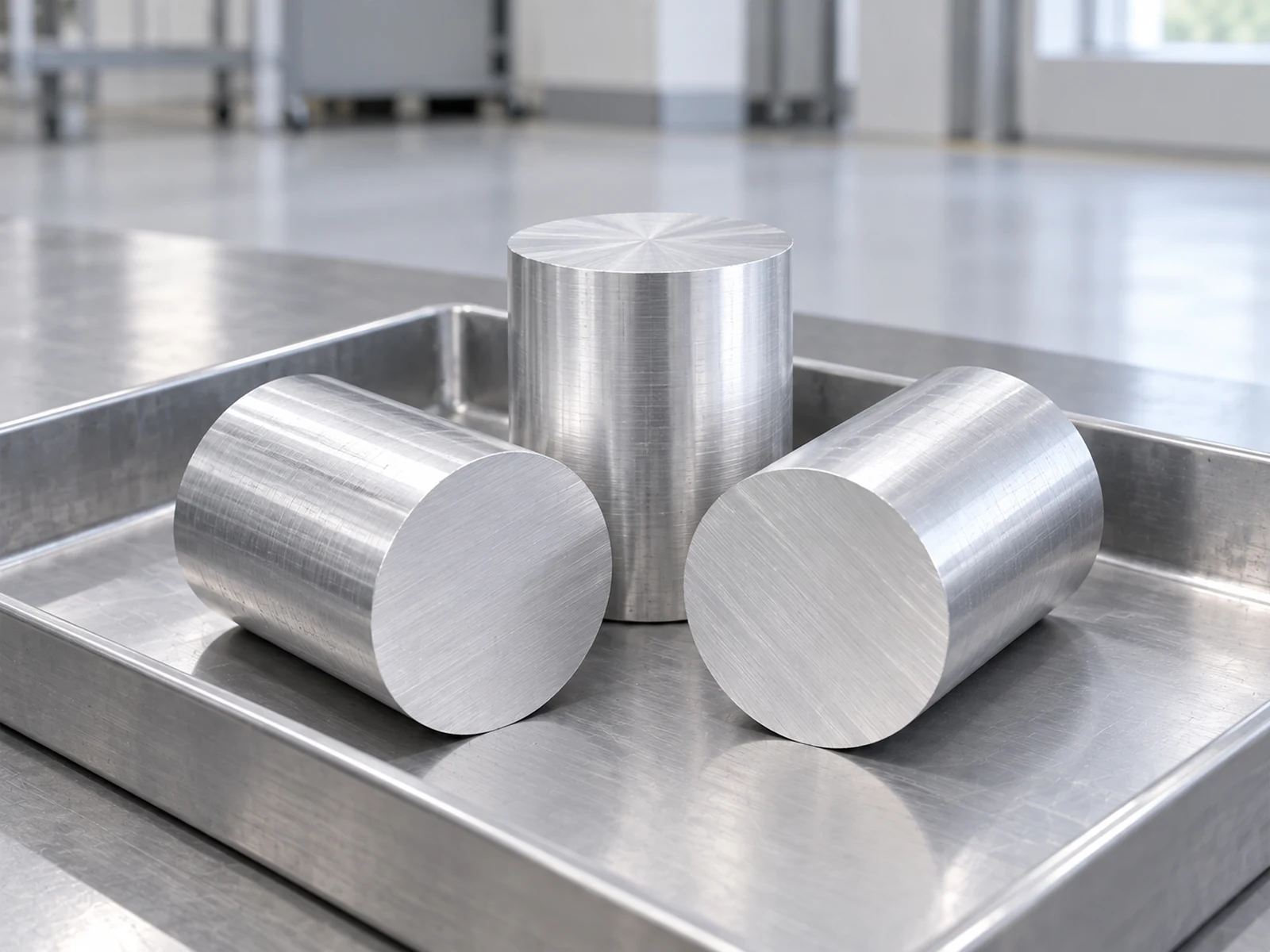
One practical sample review is to label three physical pieces: incoming stock, first-off cut blank, and finished manifold body. Compare the first-off blank with the route sheet, and review the finished body under a separate machining and function plan. The photo below is a related example of cut solid-bar samples arranged for review, not a sample from a pneumatic manifold trial.
Build a purchase test around the hard blank
For an aluminum saw for pneumatic manifold manufacturing purchase, send an actual blank drawing or a dimensioned stock sketch. A meaningful supplier discussion covers the available saw’s stock capacity, clamp access, blade and chip strategy, feed and handling path, and how short retained blanks will be removed and identified. The difficult case may be a short, heavy blank, a thin-wall extrusion, or a high-mix changeover rather than the longest cut. Let the application data reveal the hard case.
| Buyer input | Why it changes the saw review | Evidence to request |
|---|---|---|
| Actual incoming stock form and section | Controls support, clamping, blade engagement, and chip flow | Stock drawing and photo with dimensions |
| Retained blank length and facing allowance | Defines cutoff acceptance without confusing it with finished ports | First-off blank measurements and route sheet |
| Families, lot size, and changeovers | Changes handling, setup, and inspection burden | Timed and documented representative sequence |
| Downstream machining and testing owner | Prevents the saw quote from absorbing unrelated process claims | Responsibility matrix for machining, cleaning, finish, and function |
Ask the supplier to separate a dry machine demonstration from a witnessed trial using your approved stock. During a trial, capture the actual stock size and condition, saw setup, measured first-off and later blanks, scrap and remainder, handling time, and any interruptions. Agree on the measurement tool and sample count before running. One attractive cut face cannot prove production capability or the downstream leak test.
Keep downstream quality gates separate
After sawing, the route may include facing, milling, drilling, tapping, deburring, internal passage cleaning, surface treatment, assembly, and functional or pressure checks. The sequence depends on the design and supplier controls. A saw proposal should state only what the saw is expected to deliver. Finished port geometry and cleanliness need their own drawings and inspection instructions; assembled circuit performance requires a test method suited to the product.
For context, Parker’s industrial pneumatic catalog includes an aluminum bar-manifold example. It shows that a manifold can be described through a product-specific body and port layout, but it does not validate any saw cut in this article. Use such catalogs to formulate questions, then resolve your own material, dimensions, and acceptance criteria from controlled project documents.
Watch a related saw demonstration with the right expectations
The Jiurun Machinery video below is a general equipment demonstration. It lets a buyer observe a saw station and handling sequence. It is not a pneumatic-manifold test, does not establish a stock alloy or body geometry, and does not prove the model, configuration, cycle time, tolerance, customer result, or downstream pressure performance for this article. Request a separate trial against your actual blank specification if those facts matter to the purchase.
Questions to close before requesting a quotation
Can a saw deliver a finished pneumatic manifold?
Cutoff can deliver an agreed blank. Porting, sealing-face machining, cleaning, finishing, assembly, and functional checks are separate scopes unless a supplier explicitly contracts and qualifies them.
Should an anodized manifold be quoted as anodized incoming stock?
No. The finish on a product photograph does not establish the form or condition of material entering the saw. Use the controlled bill of materials and route.
Which trial result matters most?
There is no universal single figure. Specify the retained blank dimensions, sample sequence, changeover pattern, measurement method, and acceptable scrap or remainder for your body families. Review the complete route, not only a fastest isolated cut.
Next step: Send JiurunCut a dimensioned incoming-stock drawing, the retained blank length and allowance, estimated family volumes, and your proposed inspection method through the JiurunCut website. Ask which parts of the route the saw quotation covers and what evidence a representative stock trial would produce. Confirm model, tooling, and performance only from the resulting documented review.