
An aluminum forging blank sawing system should be quoted against the stock the buyer will release and the identified cut batch the next operation will accept. A saw cycle alone is a poor comparison unit: one offer may stop at an unmarked blank on a table, while another includes stock presentation, removal of trim and remnants, count reconciliation, and delivery to a press-side container. Ask suppliers to price the same boundary before comparing equipment cost or cycle claims.
Define the aluminum forging blank sawing system by its delivered charge
Start with a real part family and a written handoff point. Is the purchased output an individual cold-cut blank, a counted set of blanks in an identified container, or a charge already prepared for a retained heating and forging process? Record who owns any heating, transfer, weighing, cleaning, orientation, or press loading after the saw. A cut blank is not a forged component, and a saw acceptance test cannot establish the forging result.
For each family, give bidders the approved incoming stock form, alloy and condition, nominal cross-section range, stock-length range, expected surface condition, and the drawing or process release that defines the blank. Separate what is confirmed from what is still under development. If a downstream team sets blank allowance, orientation, or mass limits, obtain its approved requirements rather than turning a saw supplier’s assumption into the press specification. The earlier guide to aluminum forging stock ordering covers the purchased material decision; this quotation starts where approved stock enters the cutting cell.
Build a family matrix, not a single showcase sample
A representative quote needs more than the largest bar or the easiest alloy. List the actual stock families, blank lengths, batch sizes, changeover frequency, and whether one release contains mixed sizes. Identify any long stock that must be staged beside the machine, short usable remnants that should return to inventory, and offcuts that are scrap. These are scope questions, not promises that one model handles every family. Ask each bidder to mark any family outside its proposed configuration and to identify the evidence needed to close that gap.
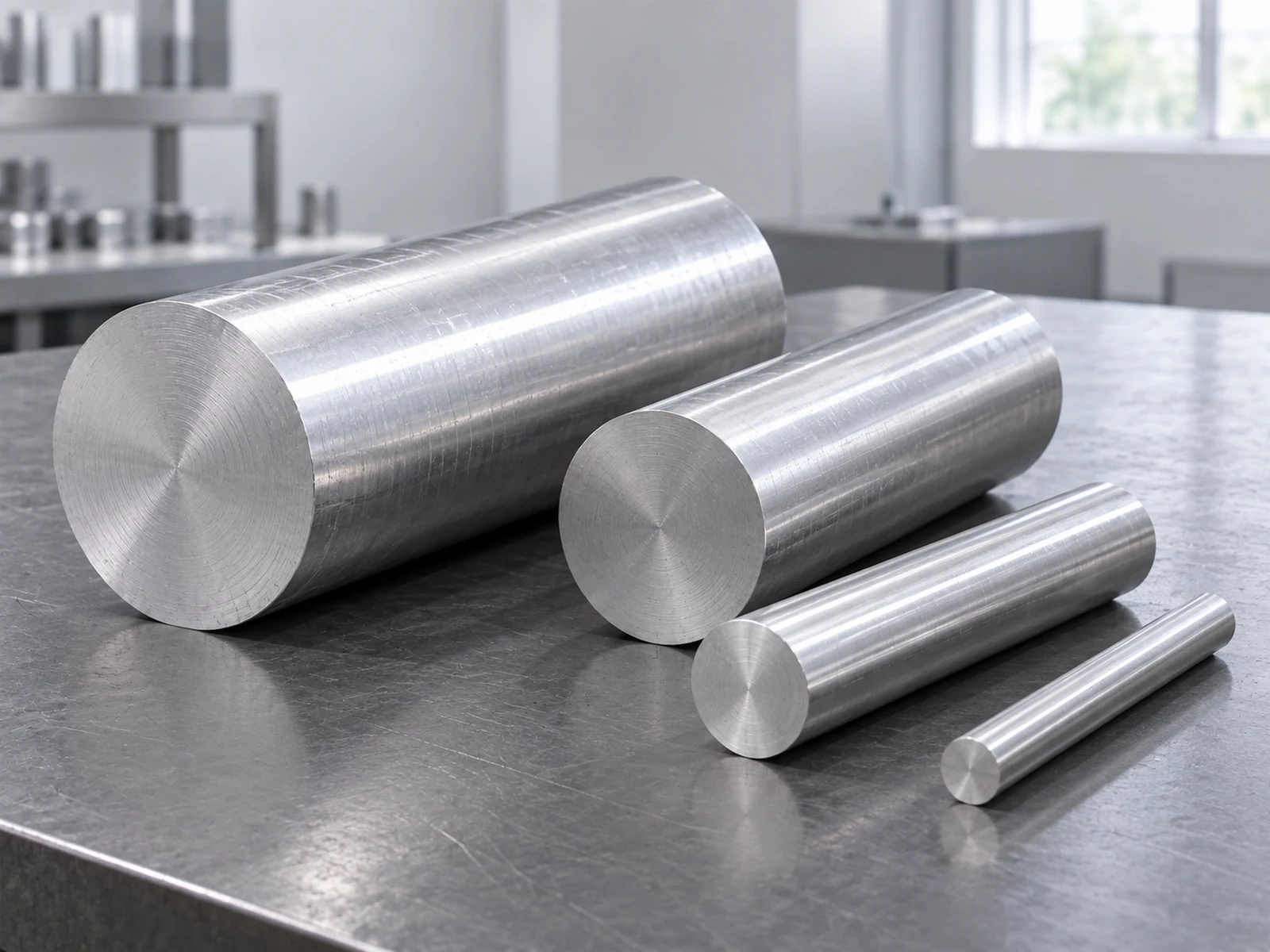
For a buyer considering equipment in the Jiurun range, confirm the material, blade, clamping, feed and handling arrangement for the actual released stock with the supplier. Catalog feed accuracy is not finished-blank accuracy. The accepted blank must be assessed in its own downstream drawing and measurement context.
Map the complete stock-to-batch route
Write the sequence from receipt of an identified stock item to transfer of an identified blank batch. Show where the operator presents a bar; how it is restrained; how first trim is handled; how each blank leaves the cutting area; where short pieces, held pieces and reusable remnants go; and when the batch identity is attached. If the present plant uses a hoist, rack, roller table, manual trolley, or a separate heating line, mark the boundary at which that retained equipment takes over. A quotation should state included interfaces and excluded work in the same language.
There are at least three plausible scopes: retain manual stock loading with a stand-alone saw; add powered presentation and discharge around the saw; or buy an integrated cell with a defined press-side handoff. None is automatically best. Compare them against the real route, floor access, people required to move stock, product mix, and the buyer’s accepted batch unit. Ask bidders to identify guarding and maintenance-access responsibilities across every interface, especially where a retained conveyor or handler meets new equipment.
Published supplier examples show why the boundary must be explicit. Behringer’s aluminum sawing system description discusses handling functions around its saw, while Schuler’s aluminum-wheel forging line description names a billet saw alongside presses, heaters and automation. These are examples of different supplier scopes, not specifications or capabilities claimed for Jiurun equipment.
Keep material and order identity intact
The press-side recipient needs to know which released stock produced which batch. Agree where the heat or lot reference, alloy and condition, order or job number, blank quantity, hold status, and remainder identity are captured. A label, traveler or digital record may carry the information; the buyer should specify the required result and the responsible system, not assume the saw has a particular marking or software feature. Define what happens if mixed bars arrive, a label is lost, a batch is interrupted, or the last remnant is returned to storage.
Match the level of traceability to the customer’s approved requirements. Do not imply that an illustrative photograph or a machine demonstration establishes material certification. The ISO guidance on documented information
Compare bids at one cell boundary
Issue one quotation sheet to every bidder. Require a line for incoming stock presentation; saw and approved cutting configuration; discharge and segregation of accepted, held and rejected pieces; identification and counting; remnant handling; controls and retained-machine signals; guarding; installation; training; spares; and the agreed trial. Mark each item included, buyer-supplied, separately priced, or excluded. This reveals when a low machine price leaves the buyer to buy a loader, redesign a conveyor, or add a manual sorting station later.
Request a layout and responsibility matrix for the same plant boundary. Give suppliers the actual available footprint, access path, utilities, retained machine interfaces, and the point where the press-side team takes custody. Ask for a changeover method and the expected evidence for each family, without asking for unsupported universal performance numbers. If a bidder proposes a different boundary, price the difference as an option so the base comparison remains fair.
Trial the whole stock item and reconcile the result
Before acceptance, select a representative stock item and a released order that exercise the proposed route. Observe loading and setup, first accepted blank, ordinary running, a planned changeover if it belongs to the purchase, final cut, remnant disposition, and batch handoff. Record accepted blanks, held or rejected pieces, trim, saw kerf accounting where relevant, reusable remainder and unrecoverable scrap against the incoming item. Agree the measurement method and pass criteria before the trial. Do not infer a finished forging tolerance from a saw’s feed specification.
Check the first and last accepted blanks under the same approved release conditions, and confirm that the counted batch and its identity reach the named recipient. A simulated demonstration may help explore controls, but it cannot replace the agreed material-and-order trial. If the buyer has separate forging, heating or metallurgical acceptance criteria, those remain downstream evaluations. The related cut-part batch release checklist
Equipment footage and next quotation step
The video below shows general Jiurun aluminum-profile cutting equipment. It does not show the forging stock, a proposed forging blank cell, a customer’s configuration, a press-charge handoff, or proof of the performance discussed here.
For an aluminum forging blank sawing system quote, send Jiurun the released stock-family matrix, the defined cut-blank and batch handoff, the retained equipment boundary, and the agreed trial plan. Ask for an itemized scope and exceptions against that same sheet. That gives the purchasing, cutting and forging teams a decision they can review together without treating an attractive saw demonstration as proof of a complete charge cell.