
A conveyor side rail blank is a length of cut profile. A mount-ready guide can also require the correct rail family, mating joint, holder, wear strip, fasteners, setting range and installation reference. Treating those as one item can make a saw quote look complete when the line still cannot be assembled.
This guide is for a new conveyor build or line modification, where the buyer must decide how far a saw supplier or cutting service should take the rail before handover. It is separate from stocking replacement rails for an installed conveyor. The aim is to compare a cut-only route, a prepared straight-rail kit and a complete guide assembly at the same acceptance point—without implying that a circular saw creates mounting features it was never quoted to make.
Release the rail system before asking for a cut price
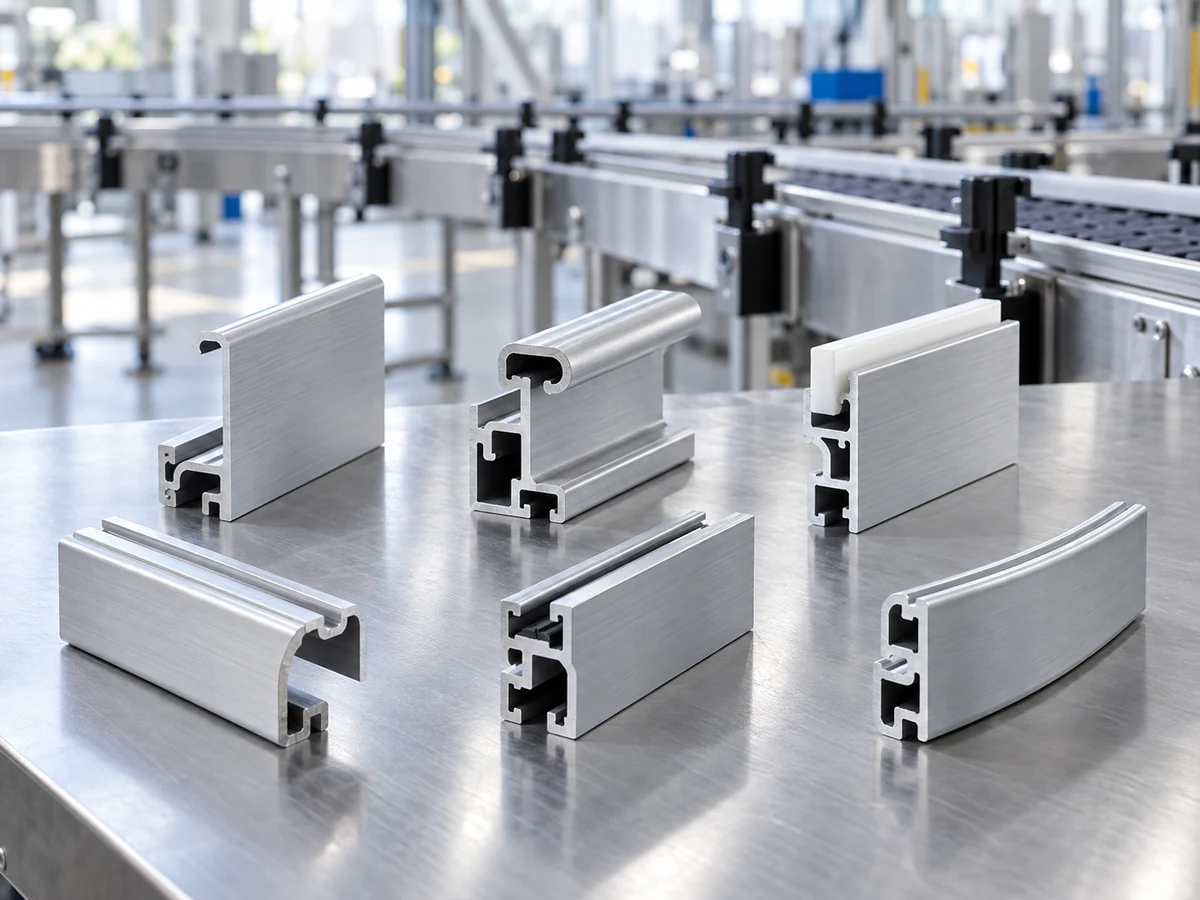
Start with the conveyed product, route drawing and conveyor structure. Mark the guide side or both sides, usable width, required guide height, straight versus curved sections, product-contact surface and adjustment range. Then select the actual rail and holder family. Different extrusions may have similar outside dimensions but incompatible grooves, wear-strip seats or connectors. A picture of a generic profile cannot approve an installed section.
The mk Technology Group side-rail overview distinguishes fixed and adjustable guides and describes profiles, sheets and wear strips as parts of the system. Bosch Rexroth’s VarioFlow product guide lists rail lengths and separate holders, connectors, sliding rails and end caps for one product family. These are examples of why a buyer should name the selected interface; they are not Jiurun configurations or proof that the pictured rail belongs to either system.
Draw the boundary between sawing and preparation
A saw operation can make a specified straight cut in compatible stock under an approved setup. The offer must still state who handles any drilled or milled mounting features, tapped ends, curved sections, wear-strip fitting, holder assembly, labeling and line adjustment. Do not assume that a length tolerance covers hole location or product-path alignment. If a drawing mixes these features, split it into the saw-cut blank and every downstream operation with its own acceptance owner.
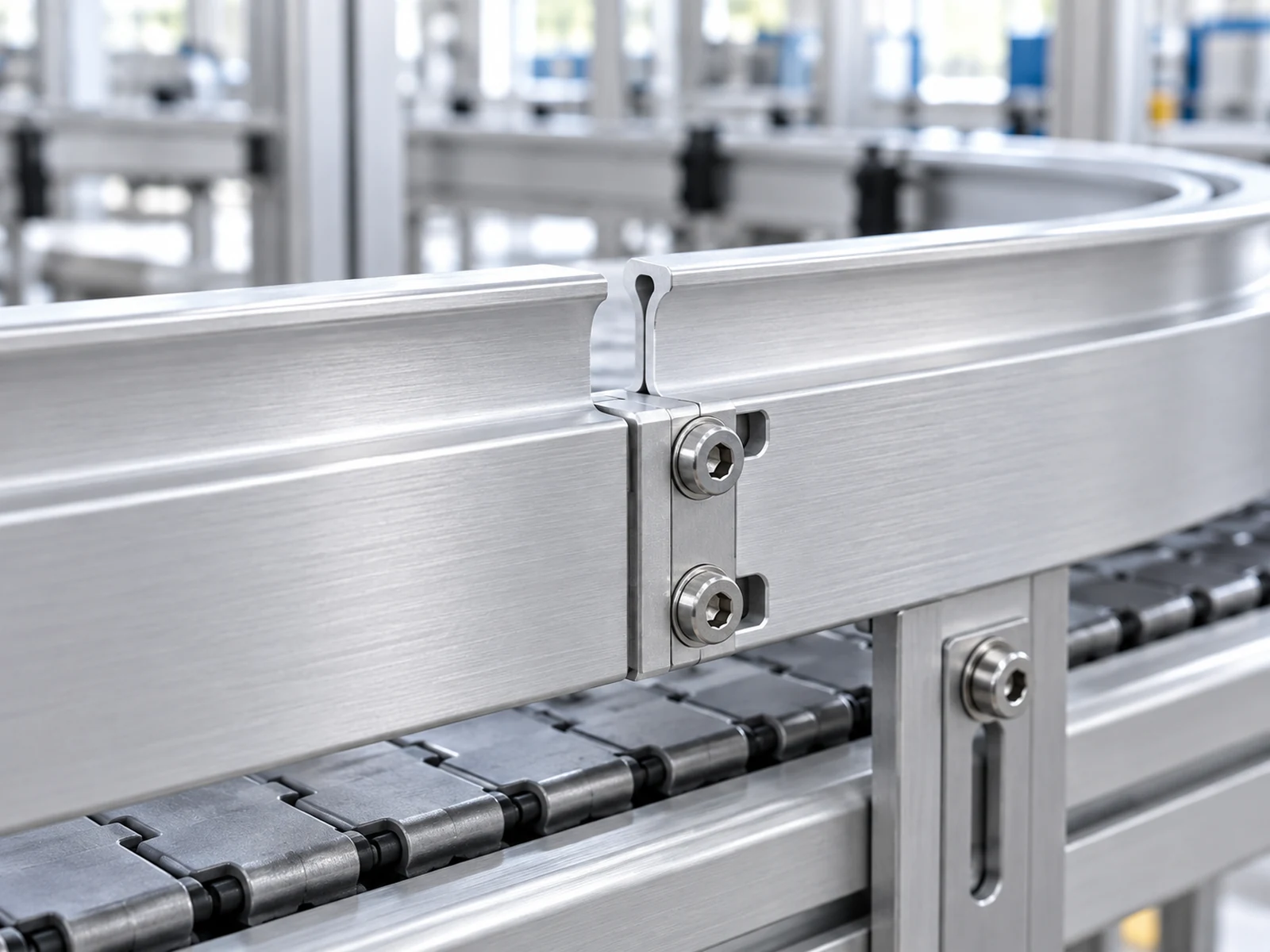
For each straight rail, release profile ID and revision, stock finish, cut datum, finished length, end angle, handedness and visible or contact face. Identify where an end cap or connector enters a groove, and whether a burr or protrusion could obstruct it. Keep curve segments and non-saw machining on an explicitly named route. A supplier can price an additional process or partner, but the buyer needs to know which entity delivers the accepted finished item.
Compare three purchase routes at one handover
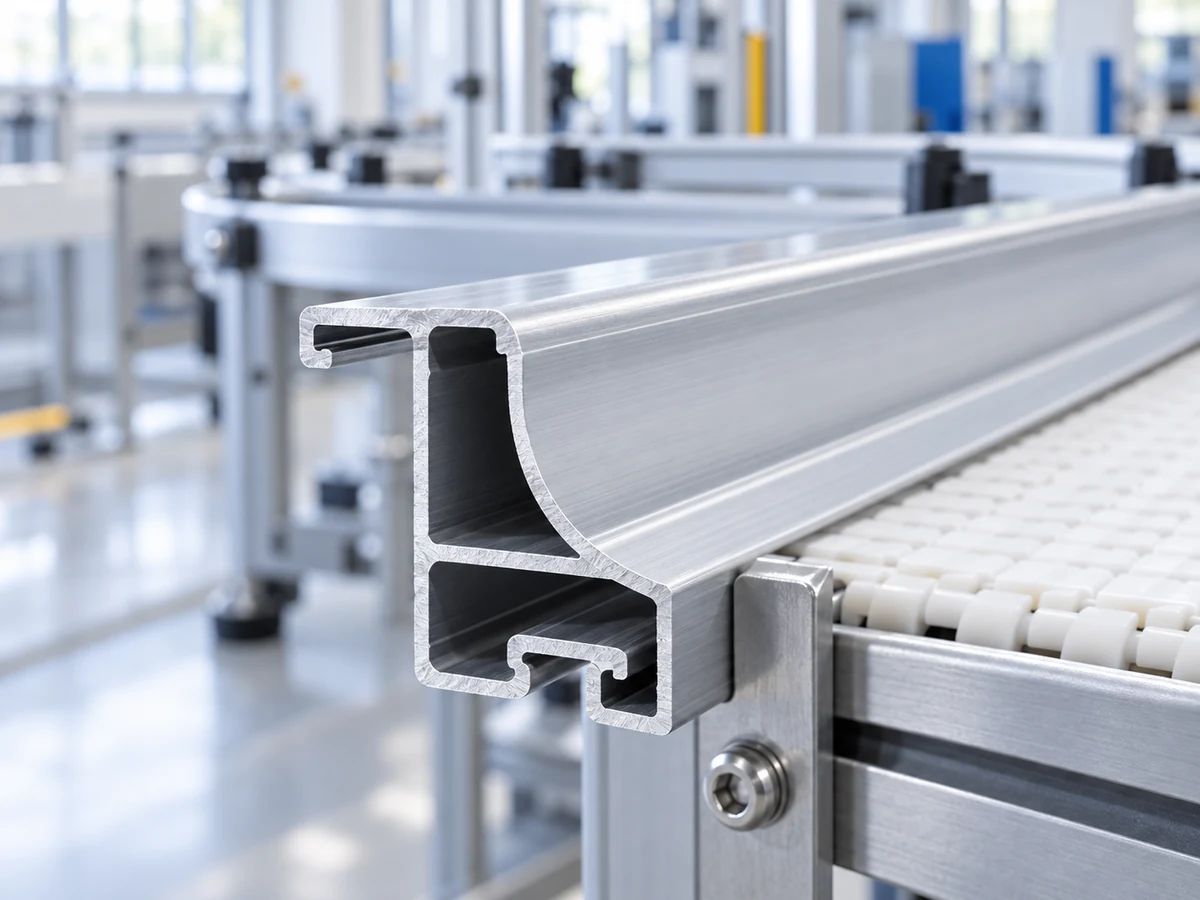
| Route | Supplier delivers | Buyer must still assign |
|---|---|---|
| Cut-only straight blank | Identified profile, agreed length and end condition, count and reject record. | Mounting features, holders, wear strips, joint parts, assembly and line setting. |
| Prepared straight-rail kit | Accepted cut blanks plus specified secondary work, matched connectors, labels and protected grouping. | Installation, site alignment and any curved or special sections excluded from the kit. |
| Mount-ready guide assembly | Released rail, holders, strips and joint set, with a defined fit and adjustment handover. | Site interface and final product-path trial unless expressly included. |
Compare total scope at the same stage: a guide installed on the intended conveyor section with a documented product path, or a kit handed to the buyer for that installation. Include the time and ownership for changing guide width, joining two straight segments and replacing a damaged rail. A lower blank price is only a saving if the buyer has capacity and drawings for the missing operations.
Use a trial that proves the disputed interface
Ask the candidate supplier to cut representative straight rails at both relevant ends of the size or finish mix, using the proposed support and clamp approach. Inspect finished length with a stated method, end angle where specified, contact-face damage and the groove or connector entry. Then dry-fit an actual approved connector, holder or wear strip for the selected system. An isolated clean cut is weaker evidence than a cut that assembles without forcing the mating part.
The trial should record stock/profile identity, drawing revision, tooling and support setup, quantity accepted or rejected and who witnessed the result. If the guide needs a stepped transition or curve, the saw trial should explicitly leave that feature outside its proof. Verify the full line path later with the real conveyed product and operating conditions. Do not convert a generic machine video into a guarantee of line tracking, throughput or a particular rail’s finish.
Put these decisions in the RFQ
- Which rail family, profile revision, connector and wear strip are approved for the new line?
- What exact straight sections, curves, joint pieces and handed parts are included?
- Is the quoted unit a cut blank, a prepared kit or a mount-ready assembly?
- Who makes and inspects holes, slots, tapped ends or other secondary features?
- Which sample fit and product-path checks release the purchase, and who witnesses each gate?
- How will a changed conveyor width, holder or profile trigger a new quotation and trial?
Video context: general cutting equipment
This Jiurun Machinery channel video shows general aluminum-cutting equipment footage. It does not prove the pictured rail profile, mounting configuration, customer line, cutting trial, product-path performance or the contents of a proposed conveyor kit.
Decide at the line interface, not the saw name
Release the rail system and delivered-unit boundary before comparing saw quotations. If the buyer retains machining and assembly, request a cut-only trial and a precise blank handover. If the supplier offers a guide kit, require the actual connectors, holders, labels and receiving evidence. For the broader machine investment, see our conveyor manufacturing saw guide. Send JiurunCut the rail drawings and intended handover to discuss the cut stage and an appropriate representative trial.