
Control cabinet frame replacement is a parts and acceptance decision before it is a cutting decision. A damaged upright, door-side member or corner may look like an ordinary aluminum extrusion, yet the installed cabinet also depends on its joints, panels, doors, hardware and electrical equipment. The buyer must establish which part is approved for replacement, who owns the installed assembly, and what evidence will release it back to service. A circular saw can prepare an eligible aluminum member; it does not certify the repaired enclosure.
This guide compares three purchasing routes: order the maker’s identified replacement part or kit, buy a prepared frame member to an approved drawing, or retain the aluminum cutting operation in-house. The answer depends on the accepted handoff for a particular cabinet, not on the cheapest price per length of extrusion. Electrical isolation, wiring, bonding, enclosure ratings and return-to-service decisions belong to the qualified equipment owner and applicable manufacturer instructions.
1. Control cabinet frame replacement starts with an approved boundary
Start with the cabinet manufacturer, model or system, serial or project reference, installed revision, and the location of the damaged member. Record whether the frame is a modular aluminum-profile assembly, a welded or folded housing, or another construction. The distinction matters: a photograph of a slotted profile does not show that a different manufacturer’s cabinet accepts it. The approved parts list, drawing and assembly instructions have priority over visual similarity.
Ask the owner to mark the failed component on a drawing and photograph its two ends, mating joints, panel edges, door interface and mounting points. Record what will remain in place. A “frame repair” might mean a replaceable post only; it might instead require a complete door frame, joined module or cabinet because the corner or seal interface is integral. Keep the electrical subpanel, wiring and enclosure assembly outside the saw quote unless the responsible parties explicitly specify separate work packages.
Manufacturer catalogs illustrate why the boundaries vary. nVent HOFFMAN’s replacement-parts catalog lists doors, door frames, roof and side panels as distinct parts for certain enclosure families. That catalog is an example of model-specific ordering, not proof that any pictured aluminum member here is an approved substitute. Bosch Rexroth’s aluminum framing overview likewise distinguishes profiles, dimensions and accessories within its own modular system. Do not mix those systems or infer interchangeability from a nominal profile size.
2. Compare three sourcing routes at the same accepted handoff
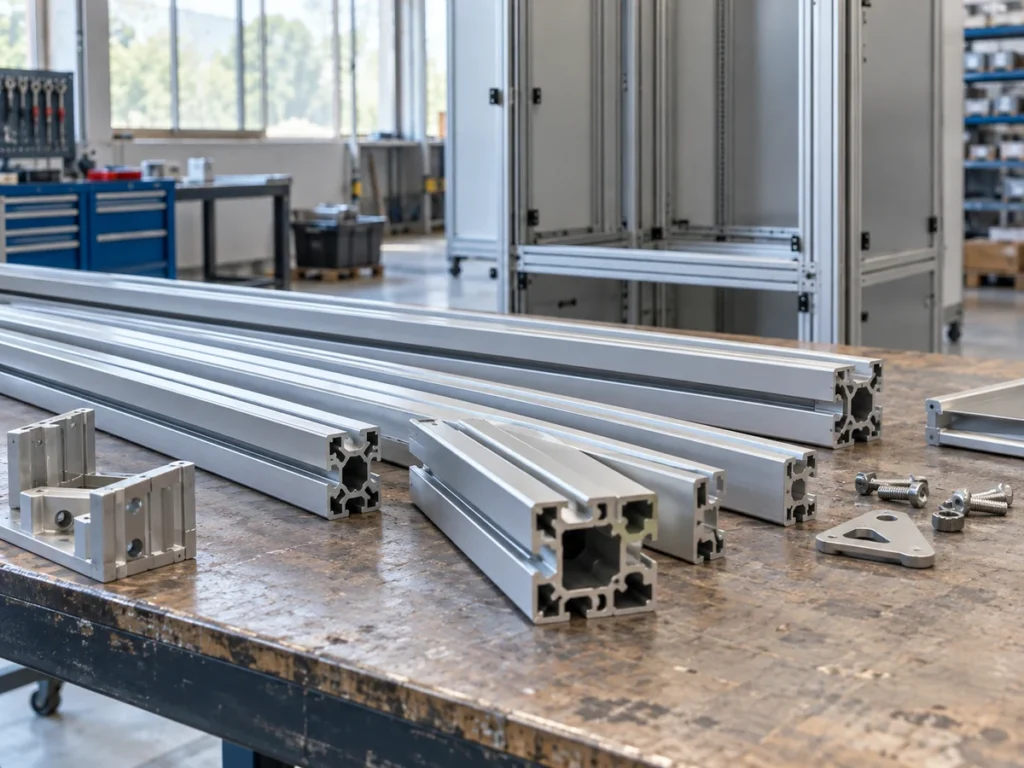
Route A: an identified replacement part or complete kit
Choose the maker’s identified part when the original catalog, approval or installed condition requires it, or when the frame end, corner, hinge, panel or sealing features cannot be separated reliably. The order should name the exact compatible system and revision, quantity, finish, included connectors and expected receiving condition. “Includes hardware” is too vague: ask whether fasteners, gaskets, inserts, end caps and instructions are included. The buyer receives an identified component; installation and the cabinet’s final acceptance remain separate responsibilities.
Route B: a prepared member from a qualified supplier
This route can suit an approved modular aluminum frame when the manufacturer or responsible designer provides a released member drawing and permits a separate replacement. The supplier may deliver a cut member, or a further prepared part with holes, threads, protective finish or hardware. State exactly which features are in the order. A saw-only supplier should not quote drilled, tapped, finished or electrically verified work as if cutting alone produced it. Request a first article against the released drawing and the mating parts that control fit.
Route C: retain approved aluminum cutting in-house
In-house cutting may be economical if the factory repeatedly prepares approved replaceable members across a stable family, has controlled stock and drawings, and already owns the downstream inspection and assembly process. A purchase case for a saw should count only the aluminum cuts it will actually retain. Stock that arrives in a nominally similar section but with an unknown alloy, temper, finish, slot geometry or supplier revision is not automatically acceptable. A representative saw trial should use authorized stock and the actual length and end conditions; a general machine video cannot stand in for that trial.
Compare the three routes after specifying the same receiving point. A complete kit, a cut extrusion and raw stock are different outputs. Normalize the quote to the cost and lead time of an accepted replacement ready for the next owner, including documentation, inspection, rejected pieces, missing hardware and any later preparation. If only one route includes fitting or requalification, show that as a separate cost rather than treating the prices as interchangeable.
3. Define the member before requesting a saw trial
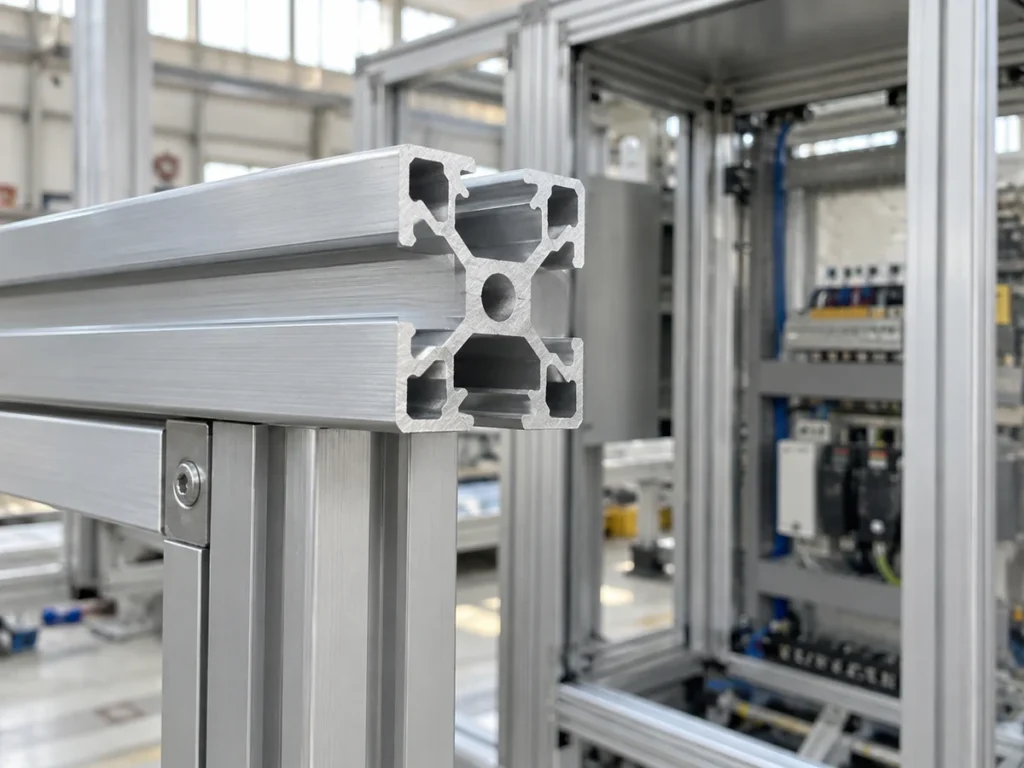
For an approved cut member, release a cut list that links cabinet identity to the profile number, material and finish, stock length and condition, member designation, quantity, reference datum, required length, end geometry and orientation. Include a drawing of both ends and the face that must remain visible or protected. A symmetric-looking extrusion can still have asymmetric slots, hinge-side features or connector access. Mark the installed orientation and the mating corner or bracket; do not rely on a saw operator’s interpretation of a single overall length.
Separate what the saw must leave from what a later process will create. A straight cut does not make a drilled hinge pattern, tapped connector hole, gasket channel, bonded joint or installed cabinet. If those features are critical, name the responsible supplier and the point at which each will be inspected. The receiving owner should state which cut-end condition is acceptable, how burrs or surface marks will be judged, and which surfaces must not contact a fixture. Avoid using an advertised feed-position figure as a promise of finished-part dimensional accuracy; verify actual pieces against the released drawing.
For a mixed repair inventory, create a member-by-member register rather than one generic “cabinet profile” line. Record the revision and approved substitute for each upright, rail or door-side member. Keep a link from every accepted replacement to the cabinet or work order that will use it. This controls both purchasing and later troubleshooting when visually similar pieces are stored together.
4. Keep enclosure and electrical approval with the qualified owner
The replacement path must not silently change the enclosure’s intended protection or electrical arrangement. A different joint, opening, panel, gasket, fastener or finish can affect the assembled result even if the cut length is correct. nVent HOFFMAN’s enclosure-alterations guidance says its general information does not remove the need to consult equipment manufacturers and observe applicable procedures for proper electrical and mechanical function. Apply the instructions for the actual cabinet, rather than borrowing a rating or repair rule from another product family.
If a certified or listed product has been modified and its continuing compliance is uncertain, the responsible party should determine whether the manufacturer or an appropriate authority must review it. UL Solutions’ panelboard application guide describes field evaluation as a way to assess certain modified products when compliance is in question. That is a decision for the owner, manufacturer and relevant authority, not a service or certification offered by the saw supplier. Do not promise that a new aluminum cut preserves an IP, NEMA, UL or other rating.
During procurement, ask who will approve the repair design, who will remove and reinstall the component, who will inspect mechanical fit, who will check the electrical installation and who will authorize return to service. Put these names on the order or work package. The saw quotation should be limited to the cutting configuration and acceptance sample, with all other work explicitly excluded or assigned.
5. Plan a meaningful sample and receiving check
Do not approve a new cutting route from one attractive end-face photograph. Select the member that most clearly tests the purchase decision: the actual profile section and finish, the shortest or most demanding retained length, the orientation-sensitive end and the joint or door interface that will receive it. If several member families differ materially, sample each relevant family. Agree the inspection method, datum, quantity and acceptance owner before the trial. Record any rejected piece and the reason; do not report only the best sample.
At receiving, compare the label and documentation to the released cabinet and member revision, then check the cut piece against the specified datum and end condition. Confirm the mating connector or bracket can be evaluated at the next assembly stage. A dry mechanical fit can help expose an obvious mismatch, but it does not prove sealing, electrical protection, long-term performance or regulatory acceptance. Keep any required installed-state inspection as its own release gate.
For repeat orders, retain the accepted drawing, stock identity, sample photos, measurement record, machine and fixture setup reference, and the buyer’s acceptance decision. If a later cabinet revision changes a hinge, panel or joint, stop and decide whether the old cut trial remains relevant. Reusing a score or sample from a different revision without that decision weakens the purchase evidence.
General cutting-equipment footage
The following Jiurun video shows general aluminum-cutting equipment in operation. It is an equipment example only. It does not document this cabinet material, an approved replacement part, the exact model configuration, a customer repair, a cabinet-frame trial, dimensional results, enclosure ratings or performance for this article.
6. Send an RFQ that allows comparable answers
Give each supplier the same cabinet identity, approved part reference, drawing revision, material/finish specification, estimated mix and annual quantity, packaging requirement and required receiving stage. Ask for separate prices and lead times for: identified replacement kit; prepared individual member; and raw stock plus eligible in-house cut. State which route you are actually willing to operate. Ask the saw supplier to quote only the chosen aluminum cutting job, the profile support and clamping approach, trial plan, expected deliverables and exclusions.
A useful reply should identify the exact output at handoff, the assumptions behind it, and any missing approval. If a supplier substitutes a different extrusion or proposes to alter the cabinet frame, request the responsible designer’s review before comparing price. If a quote omits the drawing revision, finish, connectors, inspection or downstream owner, treat it as incomplete rather than cheaper. The buyer can then compare total accepted-output cost, lead time, change-control burden and inventory exposure.
Decision rule: buy the identified part when compatibility or enclosure approval requires it; buy a prepared member when a released separate-part specification and qualified supplier exist; consider an in-house saw when approved repeatable aluminum cuts remain and the factory owns the downstream checks. The lowest cost per cut is not the deciding metric. The right question is which route yields the approved replacement at the agreed handoff with accountable evidence.
For an eligible aluminum-member cutting inquiry, review JiurunCut aluminum profile cutting machines, then send the released member list and sample requirements. Include the cabinet system, profile drawings, length mix, annual quantity, permitted operations and acceptance owner. We can discuss a suitable saw configuration and representative cut trial; cabinet design approval, electrical work and final enclosure certification remain with their qualified owners.