
Conveyor side rail spares are easy to misbuy because the visible aluminum rail is only one part of a guide assembly. A replacement may also need a wear strip, bracket, fasteners, and a particular end or curved transition. Stocking generic extrusion lengths can appear inexpensive until a line stops and the available profile does not match the installed system. The buyer should decide whether to hold identified stock sections, order ready-to-fit kits, or maintain a controlled mix of both.
This guide addresses procurement of replaceable aluminum side-guide members on an existing conveyor. It does not approve a guide geometry, product containment, guarding, or a Jiurun saw configuration. Keep the conveyor manufacturer, maintenance owner, and site safety authority responsible for those decisions. The cutting-machine question begins only after the spare rail and accepted cut-member scope are defined.
Identify the installed side rail before setting a stock level
Begin with an asset record, not a visual guess. For each conveyor, record the manufacturer and model, rail or profile part number, drawing revision, straight or curved location, handedness where applicable, mounting pattern, usable guide height, wear-strip type, and connection hardware. Photograph a clean cross-section and the installed interface. Mark the installed segment positions on a plan, including infeed, discharge, transfer, and access points. Similar-looking aluminum sections can use different grooves and retainers; a replacement length alone is not an interchangeability test.
The side-rail supplier mk describes side rails as sheets or aluminum profiles with wear strips fixed to the conveyor frame. It distinguishes fixed and adjustable arrangements and offers different fastening choices. Those are system examples, not specifications for your line. A buyer should therefore ask which parts of the installed guide can be replaced individually and which must be ordered as an approved assembly.
Conveyor side rail spares: three supply routes
- Stock approved straight profile sections. Hold the exact profile family and finish in a documented length, then cut replacement members against a released schedule when demand arises. This can suit repeated straight segments if the shop has qualified cutting, labeling, and inspection capacity.
- Buy ready-to-fit rail kits. Order each line position as a supplier-defined bundle of prepared rail, wear strip, connectors, brackets, and hardware. This reduces interpretation at the point of repair when the installed interfaces vary or the rail includes special ends.
- Use a controlled hybrid. Keep common approved straight members as stock while sourcing curves, transition sections, uncommon brackets, or special finishes as prepared parts. The hybrid is valid only if the parts list states who prepares and accepts each item.
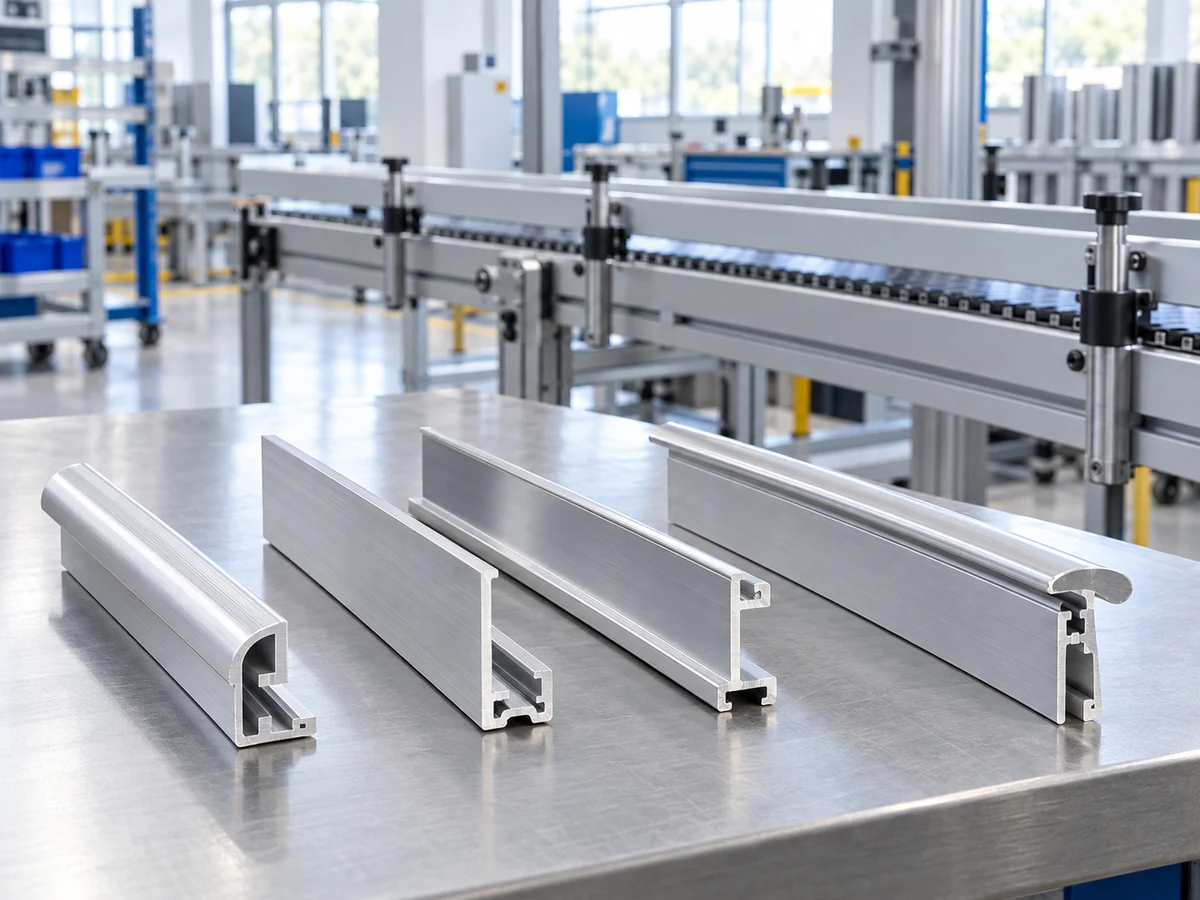
Do not treat the three routes as a contest between a low profile price and a high kit price. Compare the same accepted replacement boundary. A stock-section route still consumes receiving checks, labeled storage, cutting setup, scrap allowance, end inspection, missing hardware recovery, and a planned response when the shop is unavailable. A kit route includes supplier preparation and shipment but may still require site verification and installation. The economical choice changes with failure frequency, segment variety, lead time, and the cost of holding obsolete revisions.
Build the replacement bill of materials around the connection
A rail that physically fits the side of the conveyor may still fail at a joint. The kit record should show the profile, wear surface, connector, clamp or bracket, fastener, and any end cap as separate line items or as a clearly defined assembly. Distinguish consumable wear strips from aluminum structural profiles: they are different materials and may be replaced by different processes. Do not ask an aluminum circular saw supplier to qualify a polymer strip, curved guide, or installed conveyor assembly through a profile-cutting demonstration.
A Dorner maintenance and parts manual illustrates why that distinction matters: its adjustable-guide service-parts list identifies an aluminum profile guide alongside a tee bar, mounting bracket, shafts, cross block, flat extruded guide, and fasteners. Those are parts for a named Dorner system, not a universal bill of materials. Use the correct manual and revision for your own conveyor before ordering or cutting replacements.
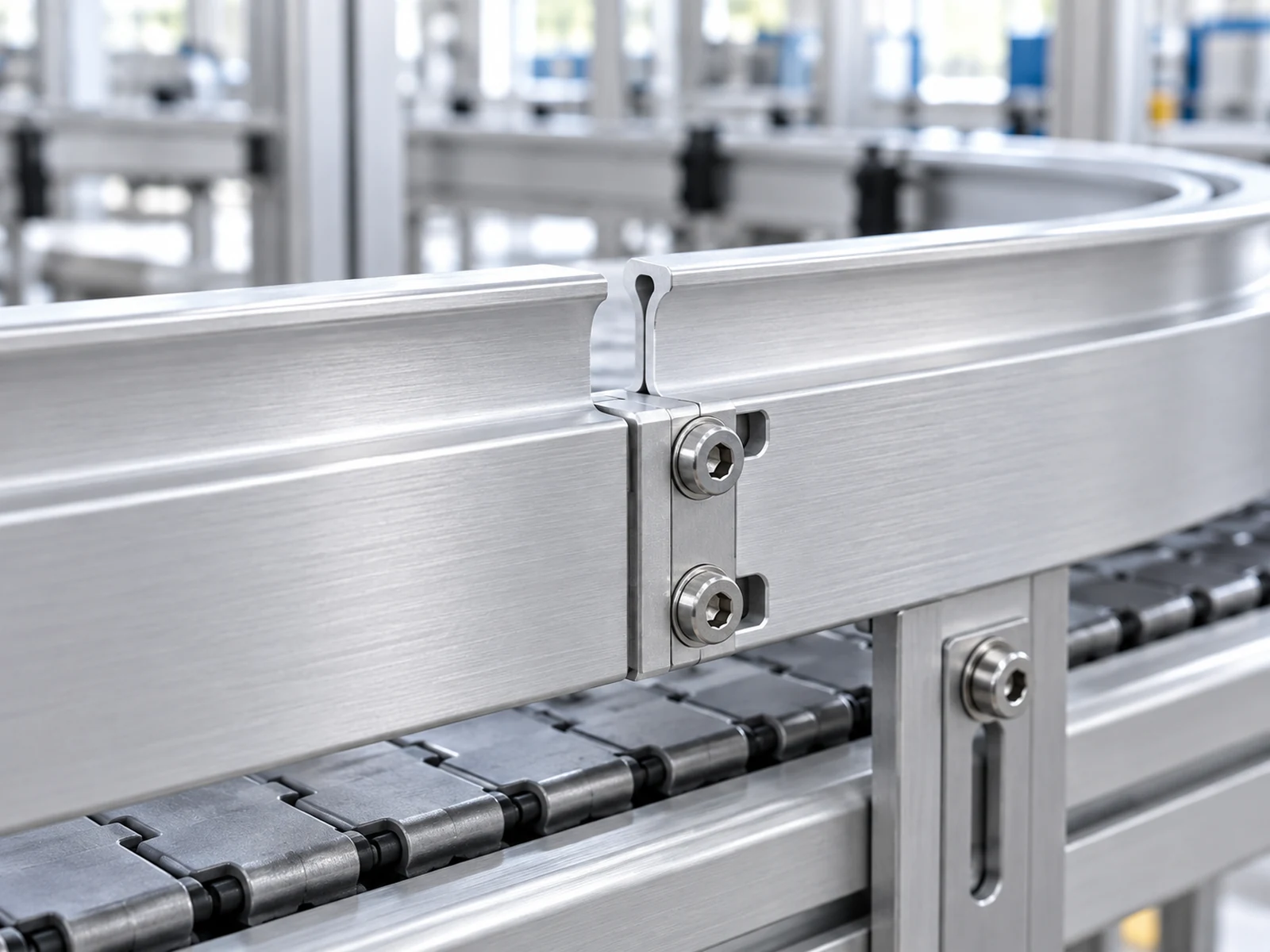
The acceptance question is local to the installed position: does the prepared member seat in the specified bracket and join its neighbor without changing the approved guide path? Record which party checks end clearance, hardware engagement, wear-strip continuity, and rail location. If the transition is curved, formed, or otherwise produced by a process beyond straight profile sawing, keep that work with the relevant system supplier. A straight cut on an unrelated sample cannot prove the finished transition.
Size inventory from actual replacement demand
Use maintenance and change records to identify which positions have actually required replacement, why they were replaced, and whether the underlying issue was wear, collision, a product-format change, or an obsolete system revision. Group demand by interchangeable part number rather than by conveyor count. Separate emergency coverage from normal replenishment. A single shared spare may cover several positions only if the manufacturer-approved interface and length preparation really permit that use. Otherwise, label it for its exact line and position.
The stock-level worksheet should state on-hand quantity, replenishment lead time, storage location, corrosion or surface-protection requirements from the supplier, revision control, and the person allowed to release a spare. Include a retirement rule when a conveyor is modified. Do not derive a universal minimum stock number from this article: a line with one unique curve has a different exposure from a plant with repeated identical straight sections. Confirm the final holding level against the site’s downtime exposure and supplier response options.
When does in-house cutting belong in the spare route?
Only a recurring need for approved straight aluminum members can justify evaluating a saw for this spare policy. Before comparing machines, obtain the actual extrusion drawing, shortest and longest released replacement length, end condition, surface that must remain visible, expected batch pattern, and the accepted output boundary. Ask the supplier to examine a representative worst-case profile, not a convenient round tube. The offer should name the proposed machine and clamping arrangement, what is included, and any downstream deburring, cleaning, labeling, or assembly work that remains outside the saw scope.
A supplier demonstration should reproduce a realistic changeover between different approved rail sections and report accepted output, setup effort, scrap or trial pieces, and observed cut-end issues. Measure the features specified by the conveyor system owner; do not convert a feeding-stroke or machine-repeatability number into promised finished-member accuracy. If the required spare is a ready-to-fit kit, evaluate whether buying that kit is more reliable than creating an internal cutting and assembly workflow.
Send one RFQ that both supply routes can answer
- List each conveyor asset, installed rail part number and drawing revision, location, straight or curved classification, handedness, finish, and required quantity.
- For stock sections, state the received form, protected storage length, cut-length reference, end condition, labeling method, and who accepts the cut member.
- For kits, identify the rail, wear strip, connector, bracket, fastener, and prepared-end scope; request a position-specific pack list and compatibility statement.
- For any saw proposal, supply physical stock and released drawings, identify the visible surfaces and connector interface, ask for an actual cut trial and a written configuration boundary.
- Compare delivered and accepted parts, replenishment timing, holding cost, and recovery route for a missing or obsolete item—not merely price per length.
Approve the spare strategy only when the asset record, interchangeable part identities, kit boundary, storage policy, and acceptance owner agree. If one of those is unknown, obtain the conveyor supplier’s clarification before filling a shelf with material. JiurunCut can review the aluminum profile-cutting portion of a defined replacement route; see its aluminum profile cutting machines and send the relevant drawings and sample details for a configuration discussion. A saw proposal cannot certify the conveyor system or its operating performance.
General equipment video
The following video shows general Jiurun aluminum-cutting equipment for process context. It does not show the conveyor side-rail sections, a proposed configuration, a customer replacement, a qualified test cut, installed fit, or any performance result discussed in this guide.