
Industrial partition frame reconfiguration starts with a different question from a new-build project: which approved members can stay in service after the layout changes, and which parts must actually be made again? A saw quote based only on the new overall wall length may include work that reusable modules already cover. Conversely, an optimistic reuse plan can fail when old members, connectors, doors, and infill panels do not fit the released layout. The buyer should compare three complete routes: move intact modules, buy prepared replacement modules, or cut identified new aluminum members in-house.
This guide concerns modular industrial partitions and the aluminum profiles used in their frames. It does not establish a machine-guard design, a fire or acoustic rating, an electrical installation, or suitability for any particular Jiurun saw. Those approvals remain with the responsible system designer and site owner.
Freeze the new layout before counting saw cuts
Start with a controlled drawing for the installed system and another for the proposed location. Label every panel, opening, door, post, beam, base fixing, and interface to adjacent equipment. Identify the profile family and connector system rather than assuming that two similar-looking T-slot sections are interchangeable. A modular system may be extendable and adaptable, as the industrial-partition manufacturer item explains, but that design capability does not prove the condition or compatibility of the particular parts already on your floor.
The scope boundary matters. A simple straight run with unchanged panel heights may be a relocation job. Adding a door, moving a corner, changing infill, or routing a conveyor through the partition creates new interfaces even if most aluminum remains. Record which party supplies panels and seals, which party verifies fixings and access, and which party approves the finished installation. Do not turn a profile-cutting quote into an implied complete partition-system approval.
Industrial partition frame reconfiguration: sort installed parts
- Reuse intact: approved members and panels that fit the new layout without cutting or altered connections. Keep their identity and condition record.
- Rework after approval: members that may be shortened or have a new end preparation, provided the system owner accepts the resulting connection and finish. A saw cannot add length back to a member.
- Buy as components: new profiles, connectors, doors, infill, and hardware supplied under a compatible system specification.
- Buy as prepared modules: complete replacement panels or framed door units when fit, finish, access hardware, and installation responsibility are better controlled by a system supplier.
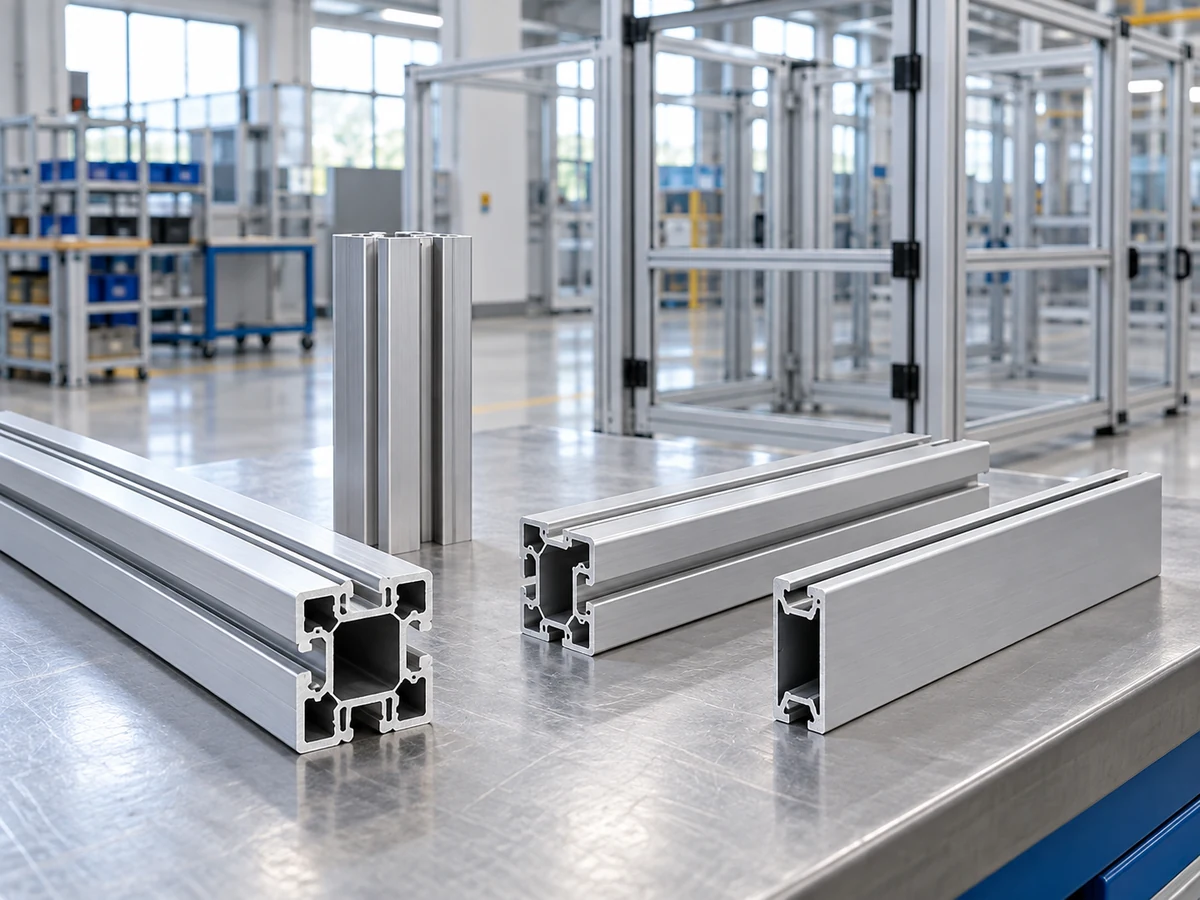
Make the sorting sheet part-specific. For each member, record the old location, section drawing, stock or finished length, end type, surface condition, planned new location, and disposition. If the member already carries holes, plates, or wear at the connection end, record them before anyone assigns a new cut. Keep a separate list for removed pieces that may become spares. The outcome is a net new-member schedule, not a gross count of every profile visible in the new layout.
Compare complete routes, not only the cost of a saw
Route A moves intact modules and buys the missing interfaces. It may be attractive when the approved system permits disassembly and the new layout preserves module geometry. Route B buys prepared panels, doors, or kits to a released drawing. It transfers much of the cutting and kitting work to the module supplier, but still needs receiving and site-fit acceptance. Route C buys raw compatible profile and cuts the newly required members in-house. It may be justified when approved changes recur and the plant can control the drawing, stock, saw setup, labeling, downstream preparation, and final assembly.
A manufacturer such as 80/20 describes modular framing as reconfigurable. Treat that as system context, not as a guarantee that every previously cut profile can be reused. The economical route depends on the actual released layout, physical condition, compatible hardware, change frequency, labor availability, and the value of avoiding a second shipment or work stoppage. Put those variables in one comparison sheet. Do not assume a universal payback period.
For each route, price all remaining work: design revision, disassembly, stock inspection, replacement material, cutting, any approved end machining, panel handling, hardware, labeling, transport inside the plant, assembly, and acceptance. A bare saw cycle-time estimate omits much of the decision. Include the cost of one wrongly cut or damaged visible member and the recovery path for a missing door component.
What must be proven before buying a cutting machine?
If the net new-member schedule contains a real recurring cutting job, take representative released drawings and actual stock to the saw supplier. Separate straight cuts from angled joints. Show the longest and shortest finished members, largest section, any delicate visible face, and profiles with a panel channel or asymmetric cross-section. Ask the supplier to confirm the offered machine and clamping arrangement for those specific profiles; do not infer capacity or finished-part accuracy from a feeder specification.
The trial should include at least one typical repetitive member and one difficult member from the same proposed production route. Agree how the stock is oriented, where clamping may contact a finished face, which end is the datum, who supplies the blade, and how the cut part is marked. Measure the finished length and end geometry against the buyer-approved drawing. Then test the part in its intended connector or panel-frame assembly, because a clean-looking cut alone does not establish fit.
Ask the operator to run the actual changeover sequence between the selected members. Record setup, scrap or trial pieces, accepted output, and any hand correction. A short video of a machine cutting aluminum is useful for seeing general motion but cannot establish the tolerance, finish, safety design, or throughput for your partition stock.
Check the connection and panel interface after a cut
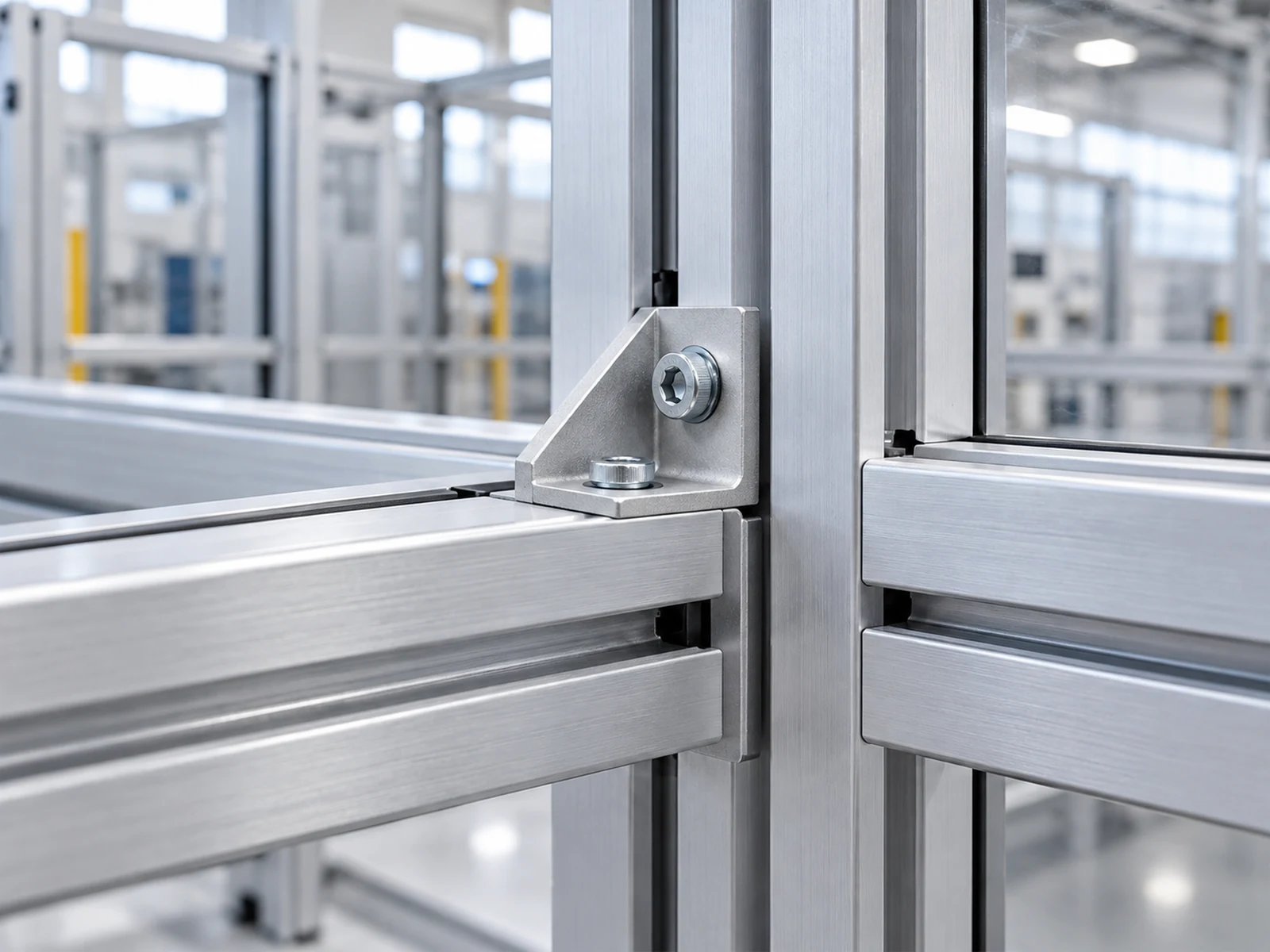
For a bolted modular joint, the end cut, connector seating, panel channel, and bracket position interact. Ask the partition-system owner which surfaces and clearances must be inspected. A member can meet a nominal length yet still interfere with a panel, leave a visible corner gap, or shift an access opening. Keep the connector and infill supplier in the acceptance loop rather than asking the saw vendor to approve the complete structure.
If the partition also serves as a barrier around hazardous machinery, the site must treat a changed layout as a safeguarding change, not merely a framing revision. OSHA describes general guarding requirements for machinery in the United States; the applicable rules and design review depend on the installation. A cut sample or an editorial image cannot certify reach distances, interlock behavior, panel strength, or the finished safeguard. Keep the safety approval outside the saw-cut acceptance and assign it to the competent responsible party.
Build a procurement packet the supplier can actually quote
- Released old and new layouts, with module and member identifiers and the boundary of the proposed change.
- Profile drawings, material and finish requirements, actual stock lengths, and photos of the existing connection details.
- Net new-member schedule by section, finished length, end type, quantity, visible face, and batch.
- List of approved reuse, rework, new components, and complete bought modules, with the person who owns each decision.
- Representative trial stock and inspection method for cut ends and assembled fit.
- Expected revision frequency, delivery window, plant space, loading and outfeed constraints, and operator handoffs.
- Written exclusions for panel fabrication, doors, fixing design, controls, safety validation, and installation unless separately quoted.
The same packet lets buyers compare a module supplier with a cutting-machine supplier on the same scope. If no approved new cutting work remains after the reuse audit, buying a saw for this project has no demonstrated basis. If repeated released revisions produce a stable stream of profiles, request a configuration-specific proposal and a witnessed sample trial. Review the aluminum-profile cutting machine category as a starting point, then ask Jiurun to assess the actual profile, cut list, finish, and handling route.
A practical decision gate
For industrial partition frame reconfiguration, approve the route only when the new layout, reuse disposition, supplier boundaries, cost comparison, and final acceptance owner are aligned. The decision to buy a saw comes after that gate. For a quote, send the profile drawing, representative stock, member schedule, required cut-end checks, and whether the accepted output is loose cut members or a kitted assembly. Use the JiurunCut contact form to request a configuration review; do not treat this article, its images, or the general equipment video as proof of a particular machine result.
General equipment video
The following video is general JR aluminum-cutting equipment footage for process context. It does not document the industrial-partition profiles, a proposed model or configuration, a customer installation, a test cut, or any performance result discussed in this article.