
Aluminum saw returnable rack transfer is a purchasing question that can disappear between a saw quote and a warehouse plan. A trial may show that a machine cuts the specified aluminum profile, yet the proposal may stop at a discharge table while the buyer expects accepted pieces to arrive in a reusable rack with protected faces and a traceable batch label. Define that handoff before ordering. The saw’s cut result, the way people or automation move each piece, and the rack’s shipping condition are separate responsibilities. This guide helps buyers compare their scope without claiming that any pictured rack or saw has passed a particular customer test.
Define the aluminum saw returnable rack transfer boundary
Start with a simple flow for each part family: final cut, any deburring or inspection, discharge, pickup, placement, separation, rack identification and release to the next operation. Mark the point at which the saw supplier’s equipment ends and the buyer’s handling process begins. A gravity slide, powered conveyor, robot, operator or external cart can all create different contact and staffing assumptions. Do not let “automatic outfeed” stand in for a description of what the machine actually delivers.
List the part number and drawing revision, section, finish condition, shortest and longest released blank, cut angle, accepted end features, batch size and the receiving rack or container. State whether the part is still awaiting inspection when it first touches the rack. If the buyer’s rack is custom or changes by customer, supply drawings, photographs or a physical example during quotation. Ask whether any transfer mechanism, stop, separator or label printer is included in the quoted machine configuration, supplied by another contractor, or left for the buyer.
The existing outfeed-support guide addresses the shortest piece’s contact footprint at discharge. Here the decision continues beyond that footprint: how accepted pieces reach a reusable receiving unit without losing their identity or the finish requirements set by the drawing.
Specify contact faces and the receiving orientation
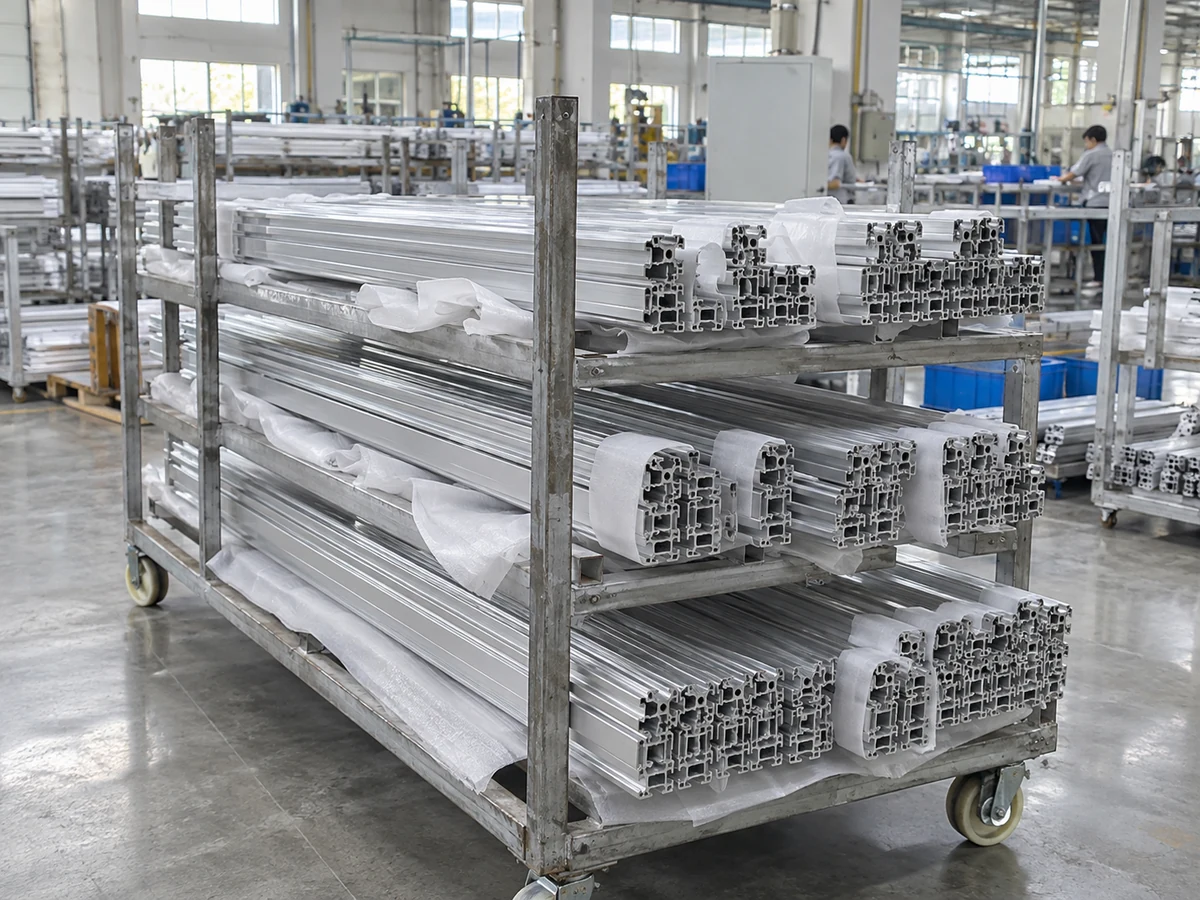
Use a marked profile section to name faces that may touch guides, hands, rails and rack members. Distinguish cosmetic faces, machined references, mating slots and cut ends. A rack arrangement that protects one face may expose another when the part is rotated or stacked. Record whether pieces leave the saw cut-end first, whether the operator must turn them, and which orientation the next process needs. Do not assume that a photograph of wrapped stock proves that the proposed saw transfers cut pieces safely.
For each permitted contact, agree the support material, replaceable pads, separators and cleaning or inspection responsibility. Define what happens to burrs and chips before pieces are placed against a finished surface. If a protective film or sleeve is required, specify who applies it and at what stage. The protective-film ordering guide helps define that material separately; the rack handoff still needs its own placement and release criteria.
Keep each rack load tied to a released batch
Decide what one rack load means: one drawing revision, one lot, one machine setup, one inspection status or an allowed mix of clearly separated groups. Identify who counts the pieces and reconciles exceptions before the rack moves. A saw cycle counter, even if accurate for a chosen setup, is not automatically a count of accepted parts in the rack. Rejected, sampled, reworked and held pieces need explicit dispositions. The outfeed counting guide examines the narrower detection question; this article concerns the receiving unit’s final identity and contents.
Put a legible rack identifier, part and revision, quantity, status, date and destination into the handoff record according to the buyer’s own system. For multi-part racks, provide position or compartment references and a rule for incomplete loads. If the rack becomes a transport unit shared with a trading partner, the ISO 15394:2017 abstract describes labels and unique identifiers for such units. It does not require every internal rack here to use a barcode or certify a Jiurun installation. NIST’s manufacturing traceability framework likewise emphasizes linked event data across a supply chain; the buyer still chooses the practical record and responsibility for this cell.
Quote the transfer method and changeover work
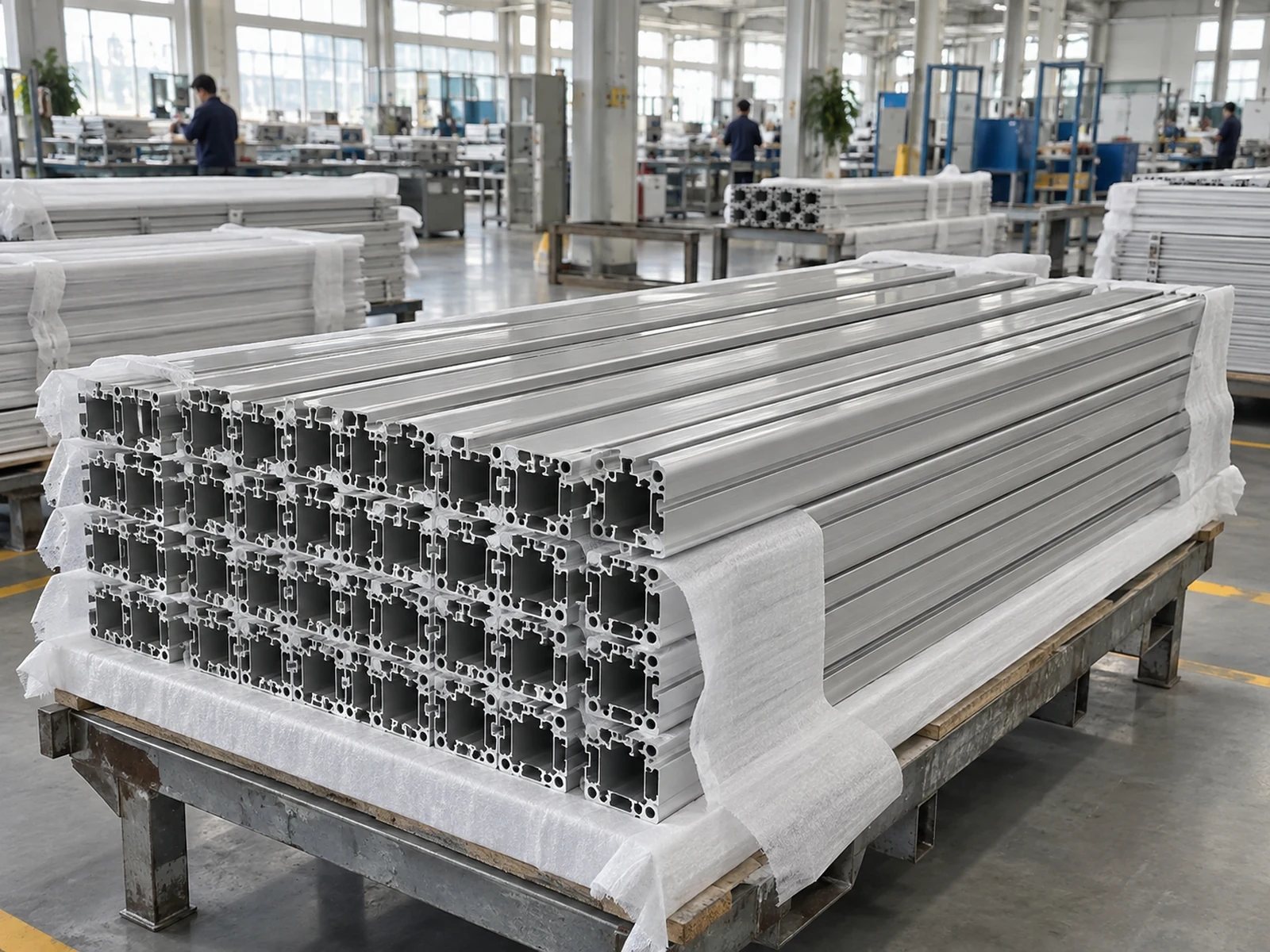
Request a line-item answer for discharge hardware, rack positioning, transfer labor or automation, guarding interfaces, sensors, changeover parts and any software data exchange. Ask the supplier to name what the saw can signal—such as a cycle or ready state—and what a separate handling system must interpret. Do not infer a complete rack-loading function from a machine display, feeder video or generic quotation phrase. Where several part families share the cell, request a changeover sequence for both the machine and the receiving rack.
Check the physical route with the actual floor plan: available walking and cart paths, rack approach, parking and replenishment location, and access for normal cleaning and maintenance. State whether the operator can clear a full rack without stopping the next cut, or whether the planned process intentionally pauses. If the handling concept depends on a powered device or a second person, record that in the staffing and cycle assumptions used to compare quotes. Any ergonomic or safety design must be reviewed by the responsible site specialists; this article provides a scope checklist, not a machine-safety approval.
Returnable racks also have a supply cycle. Define how many are needed at the saw, at downstream inspection or assembly, in transit and awaiting return. A low rack count can stop an otherwise capable saw. Conversely, excessive racks tie up space and money. Compare the total operating arrangement, not just the saw purchase price, using the buyer’s own demand and replenishment data rather than a supplier’s generic throughput claim.
Test the complete handoff with representative pieces
A useful acceptance demonstration starts with the same released part and finish condition that the quote covers. Observe the shortest and longest relevant blanks and any section that changes the pickup or support contact. Agree the sequence: cut, inspect, identify, transfer, place, protect, count and release. Record the setup, rack type, permitted contact faces, operator actions and exceptions. If only a cut trial is available, state that rack loading and finish protection remain open; do not present the cut trial as proof of the entire handoff.
Use a simple comparison sheet for the part ID and revision, sample number, cut result, transfer observation, contact or rub marks, rack position and disposition. Include a hold state if the cut or surface has not yet passed the buyer’s inspection. When a piece is damaged or misidentified, establish whether the cause was cutting, discharge, handling or rack contact before changing the saw specification. Keep finished-part acceptance separate from the machine’s feed-position specification. Neither a nominal stroke nor a video frame proves the final part meets its drawing.
Close the purchase order with an explicit interface
The final RFQ response should show a boundary drawing, included and excluded hardware, rack ownership, required inputs, changeover steps, sample plan, acceptance responsibility and a method for recording exceptions. If the supplier quotes only cutting and a discharge table, accept that scope only if the buyer has a documented path from the table to a protected, identified rack. If a complete transfer is claimed, require a named configuration and a representative demonstration before treating it as delivered capability.
Send JiurunCut the released drawings, finish requirements, typical and limiting blank lengths, proposed rack photos or drawing, floor layout, expected mix and the current inspection route. Ask for a quote that identifies the saw-to-rack boundary, the tests needed to close it and any handling equipment outside the proposed machine. That makes competing bids comparable and leaves no assumption hidden between a good cut and a usable rack load.
Related equipment footage
This Jiurun channel video is general saw and feed-area footage. It does not show the returnable rack, the proposed outfeed transfer, the material or finish in this article, an ordered machine configuration, a customer trial or a measured handling result.