
Buying an aluminum plate cutting machine starts with the stock and the blank, not with a blade diameter on a quotation. A shop that receives full plate and releases rectangular blanks has a different handling and cutting problem from a shop that receives cut-to-size flat bar. Both may describe their material as “aluminum plate,” yet the equipment, floor space, workholding and acceptance trial can be very different.
This guide is for a buyer defining a saw-based route for solid aluminum plate blanks. It does not assume that every circular saw can cut full panels, that a profile saw can become a panel saw, or that a sawed blank is a finished machined part. The first purchasing decision is whether the supplier must quote a complete panel-cutting system, a smaller blank-sawing cell, or only downstream processing of blanks delivered at size.
1. Name the material at the point it reaches the saw
Record what arrives at the cutting station: full plate, pre-cut strips, rectangular blocks, or already separated blanks. Give the largest and smallest incoming length, width and thickness by material family. State alloy and temper when known, the finish or protective film, whether both faces need protection, and any incoming bow or surface condition that affects support. Do not replace a material specification with a generic “aluminum sheet” label.
The distinction changes the machine boundary. Long flat bar may be fed and crosscut like a one-dimensional member. Full plate demands a two-dimensional handling plan: staging, datum edges, rotation or reorientation, support of the remaining panel, and removal of each blank. If the supplier proposes an aluminum profile saw for a full-panel job, ask for a written demonstration of the largest actual stock and the intended handling sequence. Do not infer panel capacity from an advertised cross-section envelope.
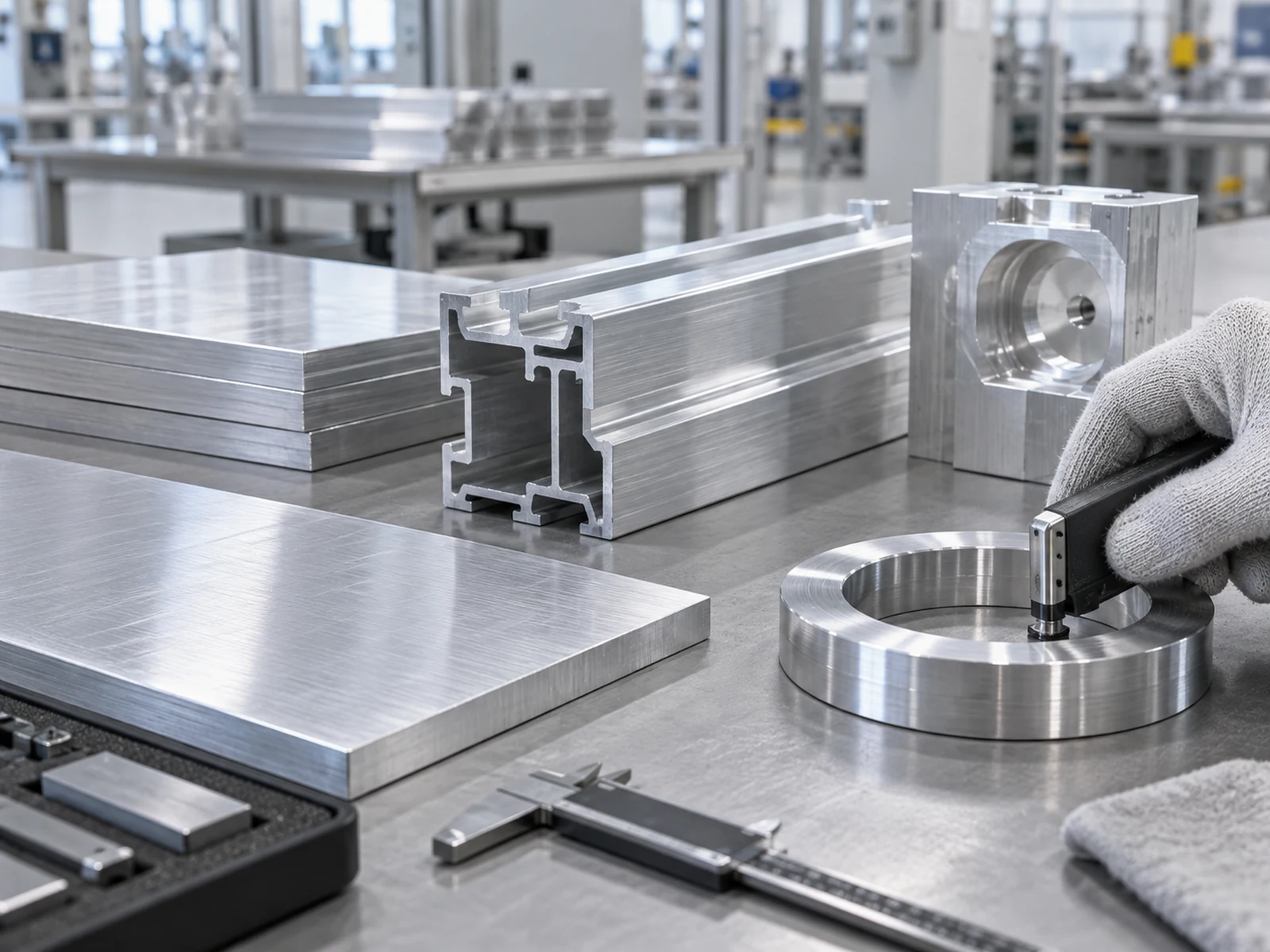
2. Describe the released blank, not only the finished component
A manufacturing drawing may show pockets, drilled holes and a tight finished outline. The saw may be responsible only for a rectangular or near-net blank that will be milled later. List each saw-release size separately from the final part size. Identify whether the called-out dimensions are before deburring, after deburring, or after a secondary machining operation. Define which edges are datums for the next operation and which edges merely need adequate stock.
For each family, add the largest blank, the smallest blank that must still be safely supported, and the thickness range. Include an example drawing or cut list with tolerances that actually apply at the saw handoff. If a proposed machine has a feeding repeatability figure, do not treat it as a guaranteed finished-blank accuracy figure. Require a trial on the relevant stock and an agreed measurement method.
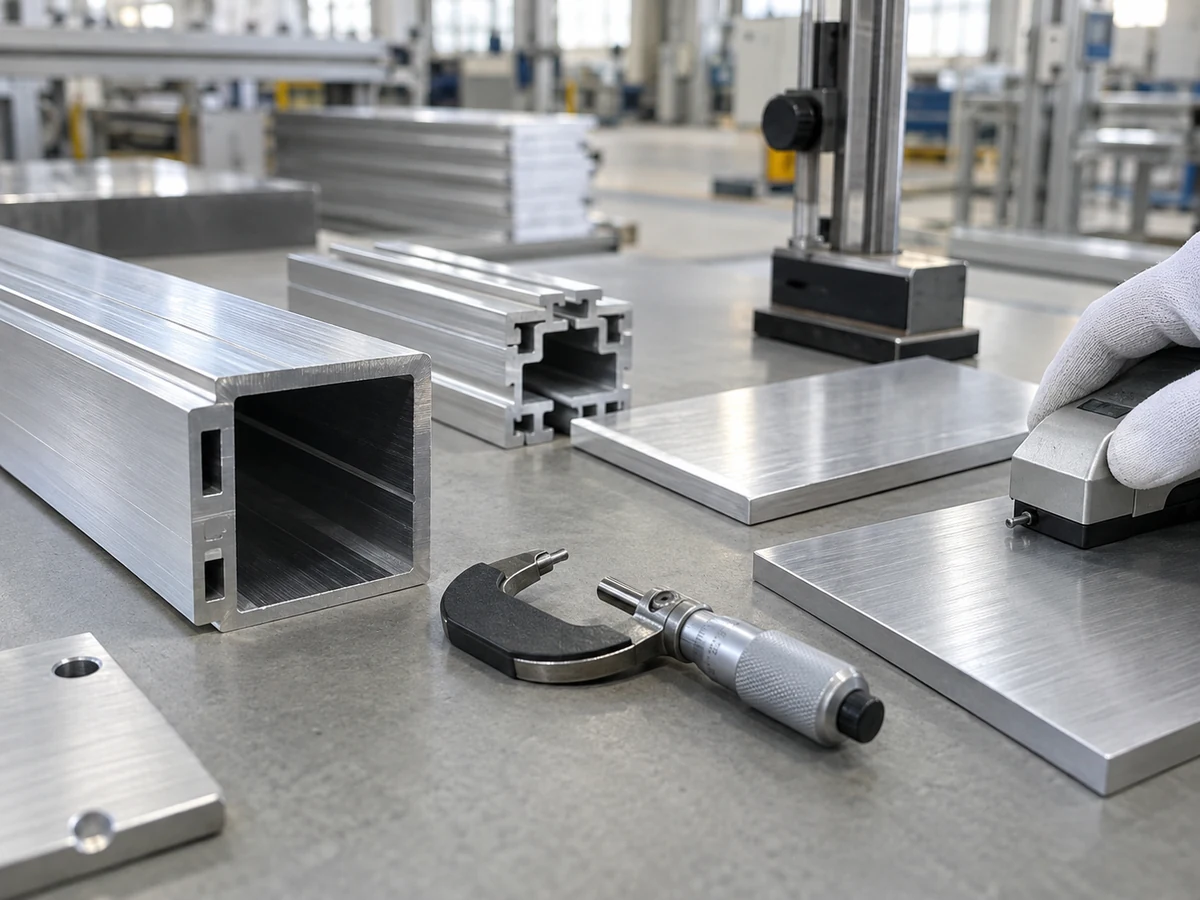
3. Make the cutting pattern and allowance assumptions visible
A material-yield estimate needs more than a panel area divided by a blank area. The quote should identify saw kerf, edge trim, any surface or defect exclusion, orientation constraints, minimum usable remnant, and handling clearance. Ask who owns the nesting or cut sequence and whether the vendor is quoting a fixed recipe or a flexible job mix. Keep the allowance figures as explicit assumptions until trial data confirms them.
Consider a hypothetical 1,000 × 600 mm incoming plate and a 200 × 150 mm nominal blank. A simple five-by-four grid ignores kerf, edge trim, clamping space and rejected edges. It is therefore a screening sketch, not a yield claim or a machine-performance promise. The real RFQ should show the actual drawing, the permissible blank orientation and the allowance to be tested. If multiple thicknesses or alloys share a nominal footprint, quote them as separate trial families when they alter cutting or handling.
4. Walk through every move of one plate
Ask the supplier to map the complete route from storage to released blank: lifting the plate, placing it on the infeed, locating it, making the first cut, moving or rotating the remaining stock, removing strips or blanks, managing offcuts, and returning a remnant. State which movements are manual, assisted or automated. A cycle-time claim based only on blade engagement will miss the labor and floor-space cost that may dominate a large-plate job.
Large or surface-sensitive panels also need a support and workholding discussion. The manufacturer’s actual table, clamps and handling aids must be quoted for the intended plate, not assumed from a photograph. An example of how a specialist vendor treats this as a system issue is the IMA Schelling panel-saw range for non-ferrous metals, whose published description discusses panel handling and workholding alongside cutting. That source describes IMA Schelling equipment; it is not evidence that a Jiurun model has the same features, capacity or performance.
5. Separate cut quality from downstream acceptance
Write down the conditions that release a sawed blank to the next operation: dimensional check, edge condition, visible surface damage, burr handling, identification and traceability. Define how many pieces to sample, who measures them and which instrument and datum method are used. Where later machining removes material, state the stock left for that process rather than asking the saw to meet the final-part drawing by implication.
The acceptance plan should include start-up pieces, a representative production sequence and the difficult end of the range, not only one favorable sample. If surface protection matters, inspect both the blank and the supported underside after handling. If chip containment or cleaning matters, decide whether the quote covers extraction and housekeeping equipment; avoid accepting an unverified cleanliness claim as a substitute for a trial.
6. Quote the job mix and the staffing boundary
Give the expected weekly or monthly volume by blank family, batch size, change frequency and peak demand window. A dedicated high-volume route may justify different handling from a mixed-size job shop. Ask what changes between thicknesses or alloys: blade selection, support, clamps, cut program, inspection and offcut handling. Require the supplier to separate any optional automation, loader, extraction unit or software from the base saw.
Decide who supplies the plate, who loads and unloads it, who disposes of offcuts, and who measures and labels the blanks. A line diagram is useful only if it includes these handoffs. A quote that says “automatic cutting” without defining upstream and downstream responsibilities leaves the buyer with an incomplete capacity calculation.
7. Test the boundary between panel sawing and alternative supply
Before purchasing, compare at least three feasible routes on the same accepted blank specification: cut full plate in-house; buy pre-cut strips and crosscut locally; or buy accepted blanks from a service center. Compare delivered material cost, scrap ownership, handling labor, floor area, inspection responsibility, lead-time exposure and the volume that truly needs local control. The cheapest quoted saw does not necessarily produce the lowest accepted-blank cost.
Ask prospective machine suppliers to respond to the same stock-and-blank schedule. If their standard product is a profile or tube saw, request an explicit statement of whether the full-plate job is in scope. Do not turn an unrelated published model specification into a promise about plate capacity. A supplier who declines an out-of-scope panel task gives a more useful purchasing answer than a vague “suitable for aluminum” claim.
Aluminum plate cutting machine RFQ: what to include
- Incoming plate or strip dimensions, alloy, temper, surface condition and maximum handling weight from the buyer’s actual material record.
- Released blank drawings with saw-stage dimensions, tolerance, datum and required downstream allowance.
- Annual and peak volume by family, typical batch sizes and changeover frequency.
- Proposed cut pattern, kerf and trim assumptions, acceptable remnant and scrap ownership.
- Plant layout, lifting limits, available infeed and outfeed space, operator responsibilities and utility constraints.
- Trial pieces and the measurement, edge and surface criteria for acceptance.
- A quotation split for saw, handling, extraction, tooling, controls, installation, training and support.
Send the real plate and blank schedule when requesting a recommendation. Contact JiurunCut to discuss the saw-stage requirement and ask the supplier to identify plainly which parts of the job its documented equipment can cover. If the requirement is full-panel sawing beyond the documented range, the responsible next step is a specialist panel-saw quotation rather than an unsupported model claim.