
An aluminum saw for 3D printer manufacturing should be specified around the frame members your factory actually cuts, not around the printer’s build volume or a photograph of a complete machine. A printer can contain aluminum, steel, printed polymer parts and bought-in electronics. Only the retained aluminum stock and the condition of the member at the saw’s exit define the cutting task. Start with a model-specific bill of materials and a drawing-controlled cut list; then decide which work is performed before and after sawing.
For example, Prusa’s product comparison describes the MK4S frame with aluminum extrusions, the CORE One with an all-steel exoskeleton, and the XL with aluminum extrusions and steel sheets. Those are descriptions of named products, not evidence that every 3D printer frame uses the same material or that Prusa uses a particular saw. The buyer must confirm the material, stock form and retained cutting route for its own current revision.
Aluminum saw for 3D printer manufacturing: define the member
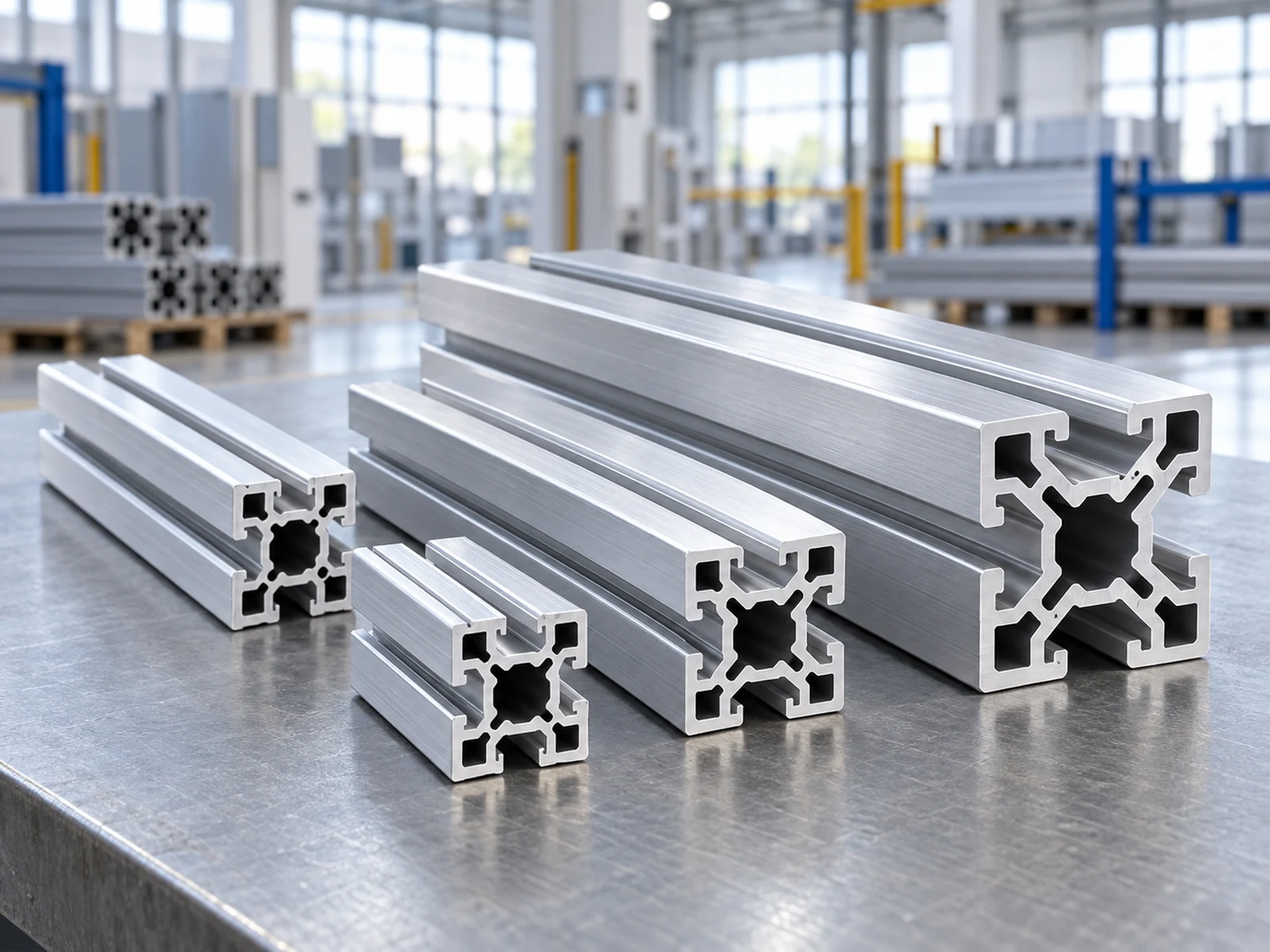
Make one row for each aluminum member that will pass through the cutting cell. Record its printer family, frame position, drawing revision, profile or section drawing, stock length, required cut length, end form, quantity per machine and receiving operation. Keep distinct rows when the same-looking extrusion has a different orientation, end treatment or receiving module. A model name alone cannot tell a supplier whether the saw will handle square T-slot extrusion, another open section, a hollow member or a pre-finished frame piece.
Ask the design and purchasing teams to identify the actual starting state: as-extruded bar, coated stock, a pre-machined member, or a kit already supplied by another source. A saw quotation for full bars is not interchangeable with a quotation for pre-cut parts. Show the supplier a real cross-section, a marked stock photograph and the drawing revision, then request a clamp and support plan for that section. If a sample is available, state whether it is representative of production stock.
Separate the saw exit from the finished frame
Choose a clear handoff point. The saw may deliver a length blank, a cut member that still needs holes and surface work, or a part ready for a specified downstream receiving check. These are different purchasing scopes. Show the required end direction, reference face and allowed stock presentation. State which team performs drilling, tapping, deburring beyond the quoted cut condition, coating, corner joining and frame alignment. Do not assign a complete assembled frame to a saw solely because the first operation is a cut.
For each end, the drawing should say what is checked at the saw exit and what is checked later. A requirement such as “printer frame accuracy” is too broad: it can include extrusion variation, machining, joints, assembly and calibration. If a final frame dimension matters, identify its controlling dimensions and owners. Do not treat a quoted feeding repeatability value as the finished member’s dimensional accuracy or as printer positioning performance.

Make the cut list traceable across variants
A shared extrusion can appear in more than one printer family while requiring different lengths, quantities or end conditions. Give each released line a member ID, family, revision, batch and receiving module. Mark whether the member is used in the base machine, an optional enclosure or another variant. Keep steel sheets, polymer prints, fasteners and electronics outside the aluminum-saw workload. The supplier needs a count of retained aluminum members to be cut, not the manufacturer’s total printer sales or the number of printed products.
Consider a hypothetical factory with two printer families. Family A uses several aluminum frame members; Family B uses a steel frame and only a small aluminum accessory. Forecasting both complete machines as identical saw demand would overstate the eligible workload. Instead, multiply released member counts by planned build quantities, separate rework and spare demand, and note the confidence of each forecast. This is a planning method, not a promise of throughput.
Request a sample cut list with the longest, shortest and most awkward actual sections. Include changes of family and revision, not just a run of identical bars. The seller can then explain how stock is identified, loaded, supported, clamped, cut, separated and handed off. If a required section cannot be presented safely in the proposed fixture, resolve that before discussing cycle time.

Compare quotations at the same acceptance boundary
Ask both suppliers to price the same sample set and the same saw-exit condition. The comparison should name the included machine configuration, blade and fixture assumptions, stock infeed and outfeed arrangements, cut program or manual setting responsibility, handling of short remnants, and the evidence available for each quoted claim. Record exclusions beside the price. One offer may include a support arrangement while another assumes the buyer will provide it.
For each critical member, propose a practical acceptance record: drawing revision, stock identity, orientation at loading, programmed or set length, actual measured result, inspection method and the person who accepts the output. Agree how nonconforming cuts are segregated and how a revised drawing reaches the saw operator. A useful trial is witnessed on representative material under an agreed setup; an unrelated promotional video cannot replace that record.
The wider build route still matters. A cut blank may require machining, coating, assembly with steel or printed parts, belt and motion-system alignment, wiring and final calibration. Compare the saw only at its own boundary. Where an alternative supplier delivers a complete frame module, compare total remaining work and the timing of ready-to-assemble modules, not just raw cut cost. A lower saw price is not automatically a lower cost per accepted frame.
What the equipment video shows
The video below is from Jiurun Machinery’s own YouTube channel. It is general cutting-equipment footage. It does not show a 3D printer frame job or prove the material, profile, model configuration, customer, trial cut, dimensional result or throughput discussed in this article. Use the actual member drawing, sample and written acceptance plan for those decisions.
Questions to send with the RFQ
- Which released aluminum member IDs and revisions are in the saw scope, and which frame or printer parts are excluded?
- What stock form, cross-section, surface state and length range will arrive at the saw?
- What is the required condition of each cut end when the piece leaves the saw, and who owns later features?
- How will the proposed configuration support and clamp the most difficult representative section?
- How are mixed models, revisions and short pieces identified so the wrong member does not enter a frame kit?
- Which measurements, sample conditions and acceptance records support each quoted claim?
- What loading, outfeed, guarding and site interfaces are included in the offer?
For an aluminum saw for 3D printer manufacturing, send the supplier a current cut list, cross-section and representative sample with the answers. Ask for a configuration-specific reply that labels assumptions and unresolved items. Contact Jiurun to discuss whether an aluminum cutting setup fits the retained members in your actual printer build route; final machine selection and acceptance should follow the agreed drawings and test plan.