
Two quotations can both say “JR-455CNC” while describing different ways to handle the material after a cut. For a buyer comparing the standard JR-455CNC with the JR-455CNC-2A-1S material-separation variant, the useful question is not which name looks more advanced. It is where the finished piece, the remaining bar and any short offcut go during a real production cycle—and which movements the supplier has actually included in the quoted configuration.
The catalog presents both machines as automatic 90° crosscut options. The 2A-1S designation identifies a material-separation model; it should not be read as an angle-cutting upgrade or as a guarantee that every profile will leave the saw in a sorted, damage-free stream. Define the part route first, then ask each supplier to show the matching cycle on your representative stock.
Start with the output, not the model suffix
Write down what counts as an accepted part at the saw. For one shop, a cut length placed in a shared collection area is enough because an operator sorts it later. For another, the cut piece must be kept away from the uncut bar before the blade returns, identified by job and transferred without striking a finished face. Those are different purchasing requirements even when the saw is cutting the same profile.
Draw a simple route with five positions: incoming bar, clamped cut zone, finished piece, remaining bar and scrap or setup offcut. Mark who moves each item after the cycle. If an operator is part of the accepted process, include that labor and safe access in the comparison. If the machine must separate or present a piece automatically, ask exactly when that movement occurs and whether the proposed path covers your shortest and longest accepted pieces.
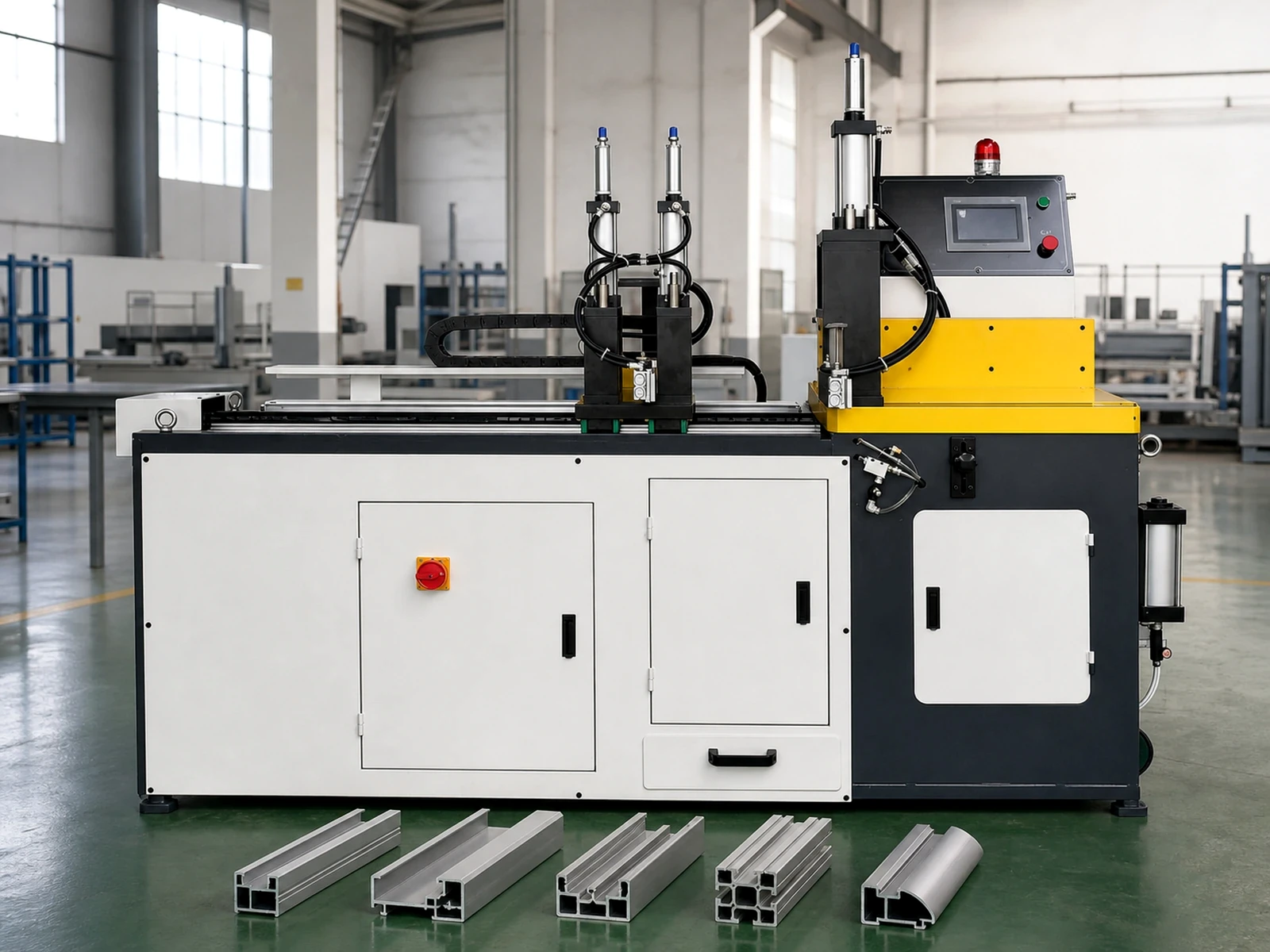
Compare what the two catalog descriptions actually establish
The standard JR-455CNC catalog entry describes an automatic up-down-feed 90° saw. The JR-455CNC-2A-1S entry is the 90° material-separation variant. That distinction is a starting point for an RFQ, not a substitute for a layout drawing or a witnessed cycle. A catalog label alone does not specify the receiving bin, transfer height, operator involvement, sensing logic or the range of cut lengths that a particular quotation will handle.
Ask the supplier to identify the actual infeed, clamps, blade path, outfeed, part collection and remnant path in the offered machine—not in a generic brochure image. Confirm which accessories and safeguards are standard, optional or excluded. If a simpler JR-455CNC route meets your accepted output and labor plan, the extra handling stage may add little value. If repeated part mixing, manual retrieval or contact damage is the current bottleneck, the 2A-1S route deserves a representative trial and a precise scope comparison.

Build one trial that can reveal the difference
Send profiles that expose handling risk, not just the easiest straight bar. Include the largest cross-section within your intended envelope, a thin-wall or marked face if finish matters, your shortest saleable part, a long part and a realistic remnant. State the alloy, temper, surface protection, cut-length drawing and permissible marks. The supplier must assess feasibility against the actual catalog model and quoted fixtures; the presence of a sample on a saw table does not prove that it was cut successfully.
Request an unedited cycle view showing the bar before feed, clamping, cut, blade return, release, piece presentation and what happens to the remaining stock. Record whether an operator reaches into the collection zone, clears a short part or separates good pieces from setup waste. Run more than one length so the route is not validated by a single favorable example. A photo of a finished piece is useful for geometry inspection but cannot establish the route or cycle sequence.
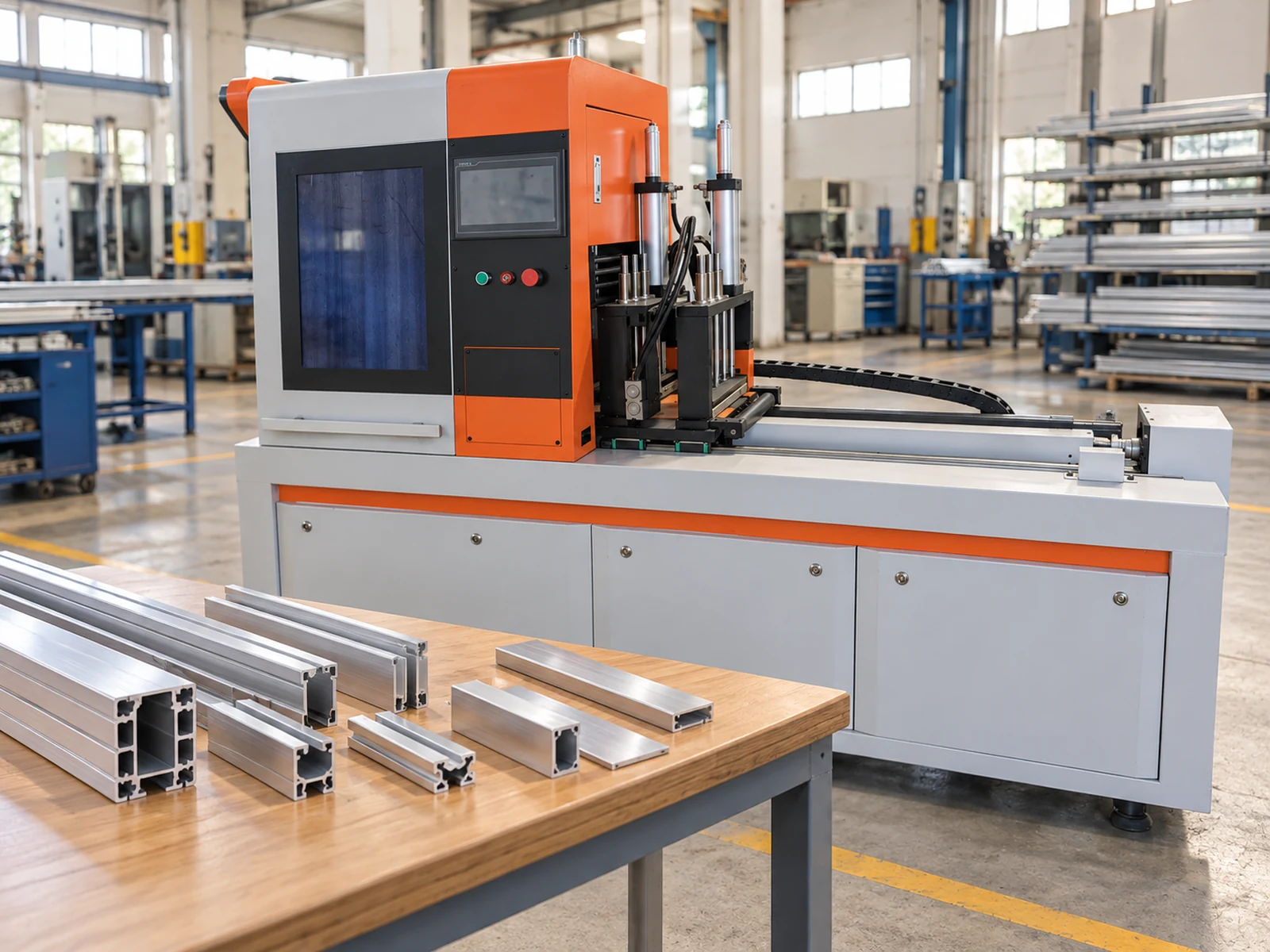
Measure the route as well as the cut
For each trial part, check length and squareness against the drawing using a stated measurement method. Separately inspect burrs, profile deformation, clamp marks and visible-face contact. Feeding repeatability is not the same as finished-part accuracy; the latter also depends on the blade, workholding, profile behavior and inspection method. Agree the accepted tolerance and sampling plan before anyone describes a machine as “accurate enough.”
Then observe handling. Does the cut piece stay clear of the blade and uncut stock? Where does it land? Can the operator identify it without mixing it with a short remnant? Does the path still work at the shortest length, or only for longer pieces? Check whether a delicate surface touches rails, neighboring parts or a collection container. These are observable acceptance questions, not performance figures that can be inferred from the model name.
For a deeper review of the separation step within any saw cycle, see Aluminum Saw Cut-Piece Separation: A Critical Cycle Review. If mixed cut lengths and quotation boundaries are your main problem, use the JR-455CNC mixed-length buying guide alongside this route comparison.
A different Jiurun saw on video
The Jiurun channel video below shows a JR-550CNC angle saw, a different model. It offers general equipment context only; it is not a demonstration of either JR-455CNC route, this article’s sample profiles, a customer installation, a witnessed separation trial or any quoted performance. Request a video of your proposed layout and actual test pieces when comparing offers. You can also view this general equipment video on the Jiurun channel.
Put the decision into the quotation
Ask for two clearly named offers, each tied to a machine layout and your sample set. Require the supplier to mark the boundaries of infeed, cut-zone workholding, separation or presentation, part collection, scrap handling, guarding, installation and operator tasks. Confirm any change parts or settings needed for the full profile family. An allowance for “automatic separation” is not enough if the quotation never says which items it separates or where they are delivered.
Compare the complete route cost: fixtures, handling accessories, guarding, collection, operator time, rework and integration, as well as the saw price. The standard JR-455CNC may be the practical fit where the accepted collection method is simple. The JR-455CNC-2A-1S may be worth evaluating when an explicit separation path removes a documented bottleneck. Neither conclusion is universal; choose from the tested output and written scope.
To request a useful recommendation, send JiurunCut your profile drawings, material and finish, shortest and longest accepted parts, current scrap/remnant rule, expected shift volume and a sketch of where good parts must go. Ask for the catalog model, configuration list, layout and representative trial plan in one reply. That package lets you judge the production route rather than buy by suffix alone.