
A JR-550Q quotation is useful only when the supplier can show how your actual angle-cut parts will be located, clamped, guarded, and checked. The model name alone cannot answer whether one operator-loaded single-head station will suit your mix of profiles. Start with the released parts and the sequence of angle changes, then ask for a representative trial and a written quote boundary.
This guide is for a buyer comparing an operator-loaded angle saw with more automated or two-head arrangements. It is a request-for-quotation framework, not a claim that any pictured or filmed sample meets your drawing.
When does a single-head angle saw make sense?
The JR-550Q is a single-head, operator-loaded option. It is most worth considering when batches change often, one end can be cut and checked before the opposite end is presented, and an operator can handle the profile safely. The published JR-550Q angle range is 35–145°, but that headline range does not prove every combination of profile section, clamp position, blade approach, and finished-length datum is usable. Ask the supplier to confirm your specific part at its required orientation.
For the published angle range, see the manufacturer’s JR-550Q specification page. Confirm the current machine configuration and your profile’s usable clearance in the written offer.
For a steady production run with tightly linked left- and right-hand ends, compare the complete workflow against a programmed corner-cutting or double-head alternative. Count loading, turning, reclamping, measuring, and sorting—not just the time the blade is moving. A lower machine price can be offset by handling work; a more automated system can be unjustified for short, changing orders. Your own part mix determines the trade-off.
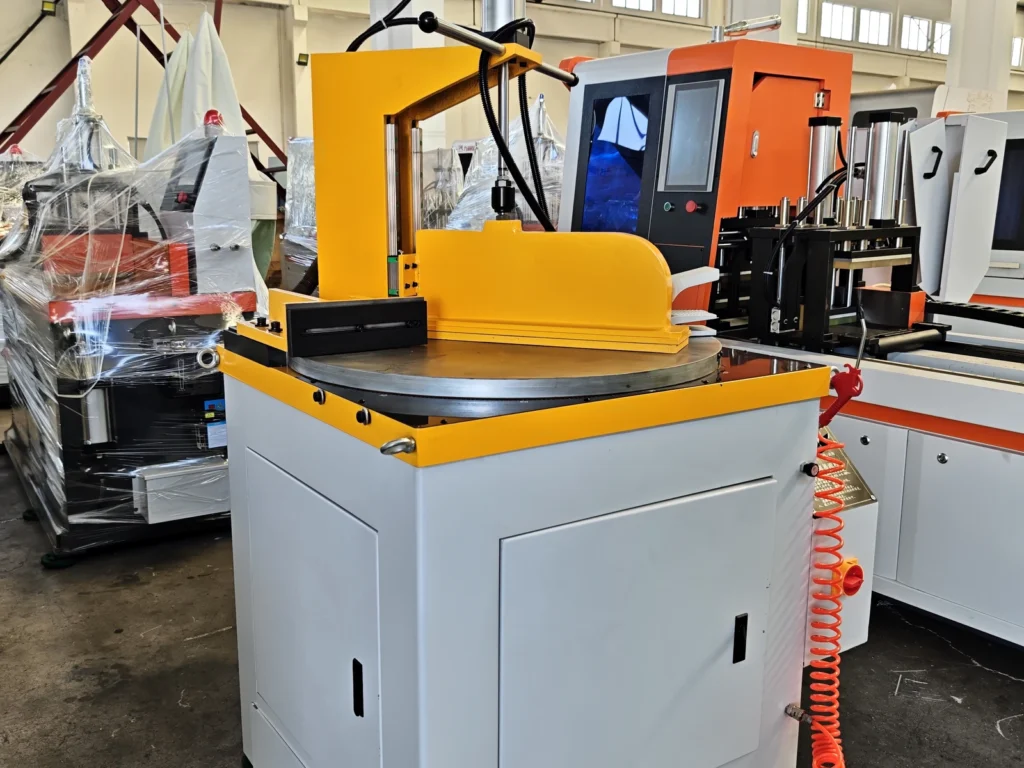
Send a part family, not only a maximum size
Include a drawing and a small schedule for every profile family: section sketch, alloy or supplied stock condition, wall variation, required cut angle at each end, finished length and datum, allowable end-face or burr condition, annual and typical batch quantities, and whether the finished pair must be handed. Mark the surface that must remain cosmetic and identify any protective film. Separate mandatory dimensions from preferences.
The most informative trial set contains the smallest stable part, the largest section that needs support, the most awkward left/right pair, and one changeover between two common jobs. If a drawing allows alternate datum or fixture contact surfaces, state that before the trial. Do not substitute a straight-cut sample for an angle job simply because it looks cleaner on camera.
Watch the complete operator sequence
Ask the supplier to show where raw stock rests, how the operator locates the first end, how the angle is set and confirmed, where the clamp contacts the profile, what remains supported beyond the blade, and how the cut part leaves the machine. Repeat with the opposite hand and the next part number. For a long or thin extrusion, support and clamp reach may matter more than a brochure’s nominal section size.
Record the number of touches and reorientations and identify any step where an operator must reach near a moving area. Have the supplier explain the guards, stops, controls, and restart sequence on the quoted machine. Confirm safety arrangements against your site’s own assessment and local requirements; a photo of a switch or guard alone is not a safety validation.
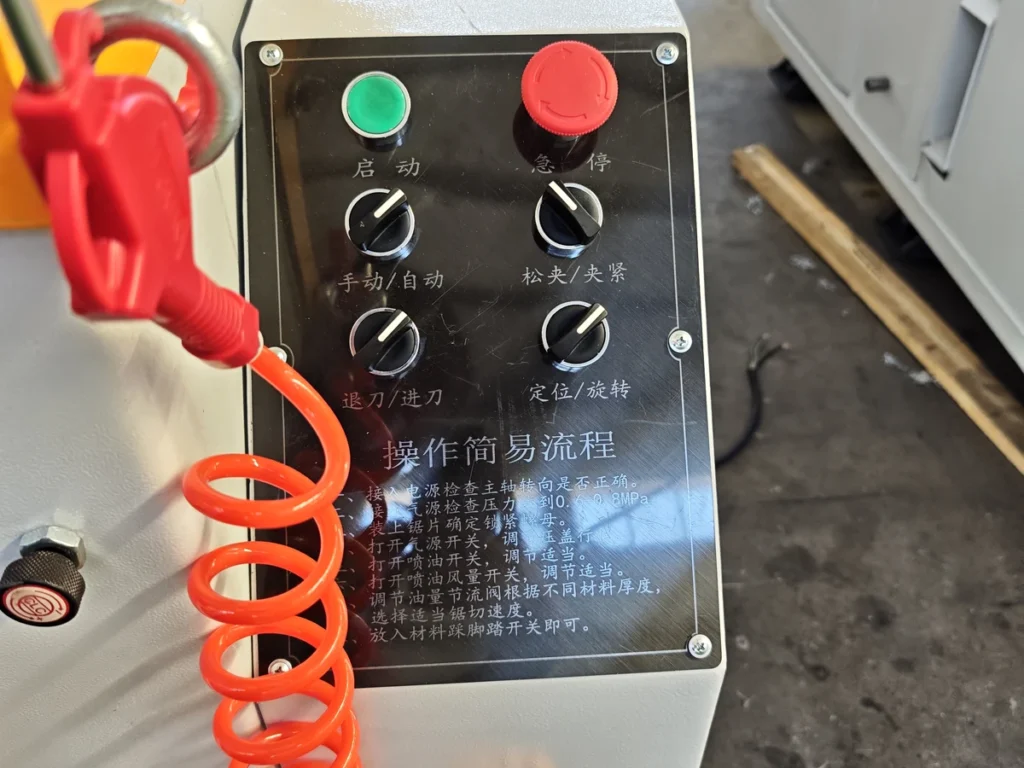
Define an acceptance check that can be repeated
Before cutting, agree on a sample count, measuring instruments, datum method, operator setup, and drawing revision. Measure the angle and length from the drawing’s specified references, then inspect both ends and the exposed surface for burrs, marks, deformation, and fit. If a mitered pair matters, assemble that pair or measure the interface as the drawing requires. Keep the first approved sample and a record of settings and inspection results.
A single attractive sample does not establish sustained capability. If production repeatability is critical, request a longer run with a documented changeover and multiple measurements. Ask whether blade type, lubrication, clamping pads, material condition, and inspection method used in the trial are included in the quote. Any tolerance or output promise should be tied to your drawing, trial record, and commercial acceptance terms rather than inferred from a video.
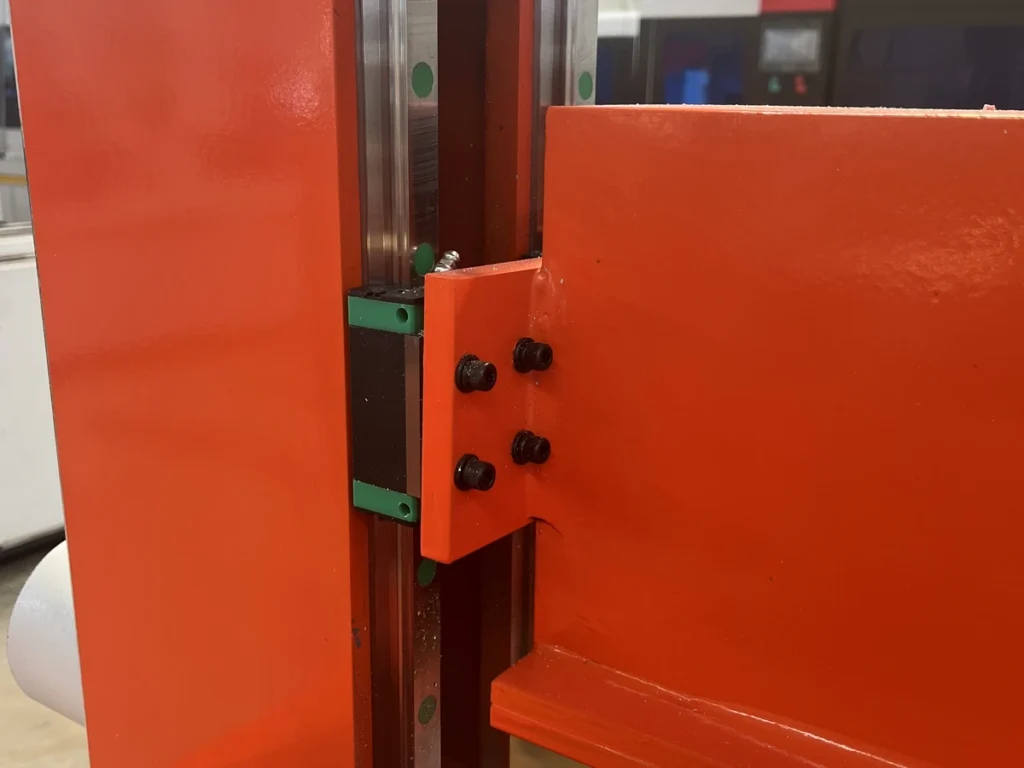
Put the quote boundary in writing
Request a line-item offer that identifies the machine model and actual angle-setting arrangement, blade and spare blade specification, supplied clamps and contact pads, stock supports, lubrication arrangement, power and air needs, guarding and interlock scope, installation and training, consumables, commissioning, warranty, and service response route. Mark each item included, optional, or excluded. Ask how a future part-family change would alter tooling or setup.
For an apples-to-apples comparison, give all suppliers the same part pack and acceptance method. Compare the documented sample outcome, handling labor, changeover work, maintenance access, floor-space allowance, and delivery scope. Avoid converting a feed-position figure or a component’s stated accuracy into guaranteed finished-part accuracy; finished parts must be evaluated with your measurement method.
Questions to close before approval
- Which drawing revision and left/right parts were actually trial-cut, and which remain untested?
- What locating surface, clamp pad, blade, and support were used for each sample?
- Can one operator present, remove, and inspect the longest and shortest parts in the proposed layout?
- Which guards, controls, tooling, and services in the demonstration are in the quoted configuration?
- What constitutes acceptance if a part changes after purchase?
If those answers are documented, you can judge whether the JR-550Q is a practical fit for your batch mix or whether a programmed or two-head workflow deserves a trial. Send your part drawings and production mix through our contact page and ask for a configuration-specific review. You can also compare the programmed corner-cutting option when opposite-end handling or changeovers dominate.
The video below shows a JR-455CNC machine as a general equipment and handling example from our YouTube channel. It does not show the JR-550Q, your material, the quoted configuration, a customer trial, tolerance, or production output.