
An aluminum saw for AHU manufacturing is worth evaluating after the factory decides what it will actually supply. An AHU order may be fulfilled with bought casing sections, prepared frame kits, or aluminum profiles cut in-house. Those routes deliver different objects to the next operation. A saw quote based only on the outside dimensions of a finished unit cannot show whether the retained frame work justifies the machine.
This guide is for a manufacturer comparing the complete casing supply route. It explains how to define the purchased and retained work, build a representative cutting trial, and compare the routes at the same accepted handover stage. It does not prescribe AHU design, thermal or leakage performance, filtration, or a certified construction.
Start with the accepted casing section, not the saw
Choose one released AHU family and identify what the receiving station accepts: a loose profile member, a labeled frame kit, an assembled casing section, or a complete unit. Then keep that receiving stage fixed while comparing suppliers. A quote for raw extrusion cannot be placed beside a quote for a tested assembled section without adding the factory work, bought parts, inspection, and responsibility that remain between them.
| Supply route | What arrives | What the factory still owns |
|---|---|---|
| Buy assembled casing sections | Specified sections at an agreed acceptance state | Incoming checks, integration, and unit-level obligations in the contract |
| Buy prepared frame kits | Identified members and approved companion parts | Kit verification, joining, panels, doors, and section assembly as assigned |
| Cut retained aluminum profiles | Approved stock in its documented incoming condition | Member cutting, identification, downstream preparation, assembly, and the remaining verification route |
Ask each bidder to price a complete, identified section set for the same order mix. Include shortages, changeovers, handling, inspection, scrap, and the cost of finishing the route to that common acceptance point. This makes the saw investment a comparison of complete manufacturing routes rather than a comparison of two prices per cut.
Freeze the approved frame system before defining cut work
An air handling unit can contain frame profiles, corners, panels, a base, access doors, fans, coils, filters, and other internal assemblies. Only the members assigned to the retained cutting route belong in the saw worklist. Vortice’s CTAE product sheet, for example, describes an anodized aluminum profile frame with corner joints, double-shell panels, and a separate base. It also distinguishes its thermal-break profile and corner arrangement. That is an example of why a buyer must identify the actual approved system; it is not a specification for every AHU or a recommendation to change systems.
Record the released profile series, cross-section drawing and revision, alloy and temper if specified, incoming finish, permitted stock length, corner or joining interface, and the section family that consumes each member. Mark panels, base beams, door hardware, seals, and internal equipment as separate supply objects unless the contract explicitly assigns them to the same workstation. A saw sized from the outside casing alone may be too small for a stock section or unnecessarily large for the parts that remain in-house.
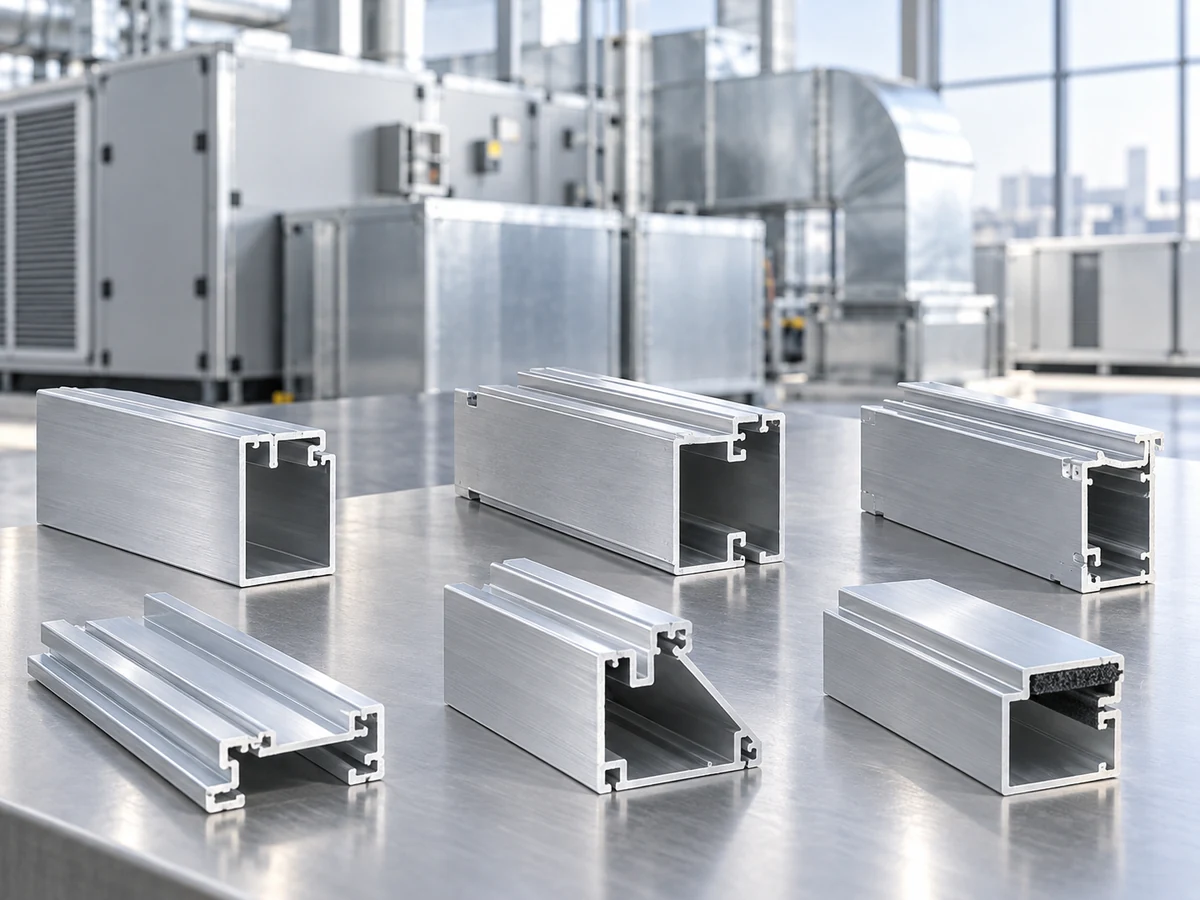
Some designs use nonmetallic or combined profile systems. Technoform’s HVAC frame-profile example shows that a thermoplastic frame route also exists. The buyer must confirm whether a proposed member is an eligible aluminum cutting job, a bought composite item, or work for another process. No material substitution should be inferred from a cutting-machine proposal.
Translate the released section into member-level instructions
Make one schedule for each frame family. Give every member a part ID, section ID, drawing revision, quantity per complete section, approved stock identity, cut reference, orientation, and downstream destination. Keep the finished casing envelope separate from the cut length. Panel thickness, corner geometry, joining allowance, and the released member drawing determine the member reference; they cannot be guessed by subtracting one generic allowance from an AHU dimension.
For each end, state which drawing or master sample controls the interface and who accepts it after cutting. If joining, drilling, notching, or surface protection happens later, name that station and the handover condition. Include whether the incoming profile is bare, finished, protected, or fitted. A finished or combined section may need different handling from plain stock, but that is a trial question for the actual material, not a claim that any particular saw automatically covers it.
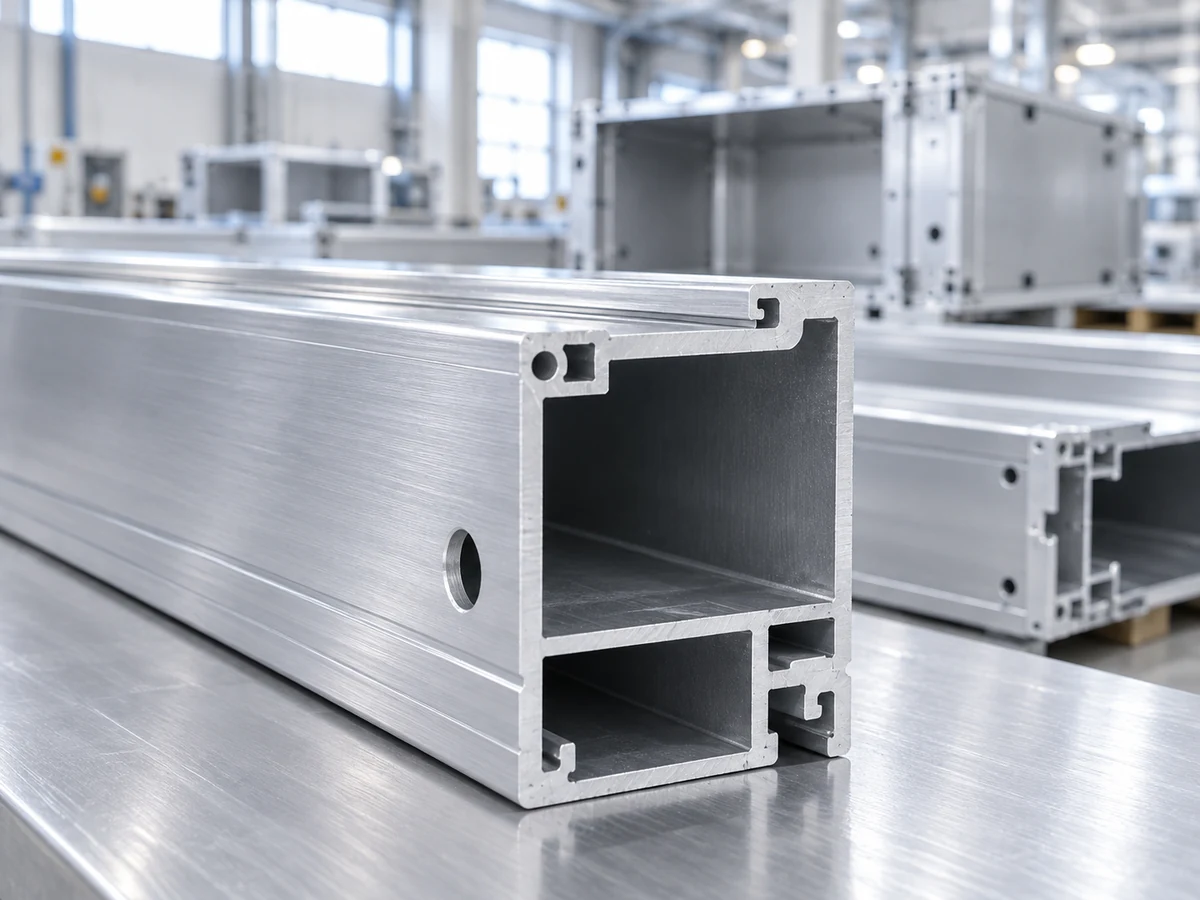
The kit record should also show completeness. A run of accurate individual pieces still fails the delivery task if a section arrives without one required member, has the wrong revision, or mixes profiles from different systems. Trace member IDs into the accepted section set so a supplier can demonstrate the same order output the factory intends to ship.
Trial an aluminum saw for AHU manufacturing on the full portfolio
Present the candidate saw supplier with representative released stock and drawings, not only the easiest straight extrusion. The trial mix should include the largest and smallest eligible sections, the relevant end conditions, visible-surface handling requirements, realistic batch sizes, and changes between profile families. Include a complete casing-section member set, then ask the downstream team whether the resulting kit can be processed as planned. Keep a separate list of panels, corners, seals, and other items outside the saw trial.
Agree the evidence before the demonstration: what is measured at the cut, what is checked after the next operation, who signs off on appearance or end-interface acceptance, and what counts as a complete kit. Record the setup, batch sequence, rejected pieces, offcuts, operator handling, and the revision of every sample. A machine’s stated feeding accuracy is not the same as demonstrated finished-part accuracy across this AHU mix. Ask for cut-sample results on the actual approved profiles, then let the factory’s downstream checks determine whether they meet the released member requirement.

Compare costs at the same accepted handover point
For the retained-cutting route, add stock purchase, usable yield, setup, blade and consumables, labor, inspection, handling, identification, downstream joining and panel operations, rejected parts, inventory, and equipment cost. For a prepared-kit supplier, add incoming kit checks, assembly work, shortages, freight, and change-control costs. For an assembled-section supplier, add the checks and integration that remain with the AHU factory. Compare all three against the same released section mix and delivery period.
Do not assume a lower price per profile automatically reduces the cost per accepted casing section. The economic answer changes with batch size, revision frequency, the number of frame families, section completeness, and which operation currently constrains output. If the same saw would serve several products, allocate its time and changeover burden across the genuine approved workload, not an optimistic volume for one AHU model.
Send a decision-ready RFQ
- The released AHU family and casing-section drawings, with revision and quantities.
- The exact profiles retained for cutting and their approved incoming stock condition.
- The member schedule, end references, orientation, length range, and visible-surface requirements.
- The bought frame, corner, panel, base, door, and internal-component boundaries.
- The required output: loose members, identified kits, or a later accepted section state.
- The representative mix and agreed sample-cut acceptance method.
- Expected batches, changeovers, labor and handling constraints, and quotation assumptions.
Ask the supplier to state the offered configuration, what it will and will not process, what must be proven on the supplied profiles, and what remains the factory’s responsibility. Request a trial plan and sample record rather than a universal throughput or accuracy promise. A separate unit-level engineering and qualification review still governs the finished AHU.
See a general saw process example
The Jiurun machinery video below shows general JR-455Q equipment and circular-saw handling. It is included only as a visual example of machinery context. It does not show the AHU profile family discussed here, its approved frame joints, a casing-section trial, a customer order, or verified performance for this RFQ.
Frequently asked buyer questions
Can one saw be selected from the finished AHU dimensions?
No. The released member drawings, stock sections, end conditions, and retained manufacturing scope determine the cutting workload. Unit dimensions describe the assembled product, not the cut instruction by themselves.
Should thermal-break members be included in the same trial?
Only if they are part of the approved retained route and the actual incoming form is supplied for evaluation. Their interface and handling conditions must be reviewed separately; a plain aluminum sample does not qualify a combined member.
Does an acceptable cut prove the casing or unit performance?
No. Cut acceptance is one manufacturing evidence layer. Joining, panels, sealing, and the complete AHU are subject to their own released requirements and verification responsibilities.
Next step: send the approved profile and member drawings, stock samples, section quantities, and required cut evidence through JiurunCut’s application review. We can discuss a cutting-machine quotation against that defined workload. For a narrower view of frame assembly checks, see the related HVAC aluminum frame cutting guide.