
An aluminum saw for extrusion fabrication should be selected for the customer-component work retained by the fabrication department. An extrusion plant can sell commercial-length profiles, supply cut members or deliver components that also require machining, forming, joining and finishing. Adding a saw is therefore a decision about the service route your plant intends to operate, not simply another cutting location beside the extrusion press.
Begin with the approved orders and the actual state of stock released to secondary fabrication. Separate this equipment inquiry from any proposed replacement of a press-line saw or integration into moving extrusion equipment. A standalone cutting proposal does not establish hot-stock suitability, press-line synchronization or compatibility with an existing runout and handling system.
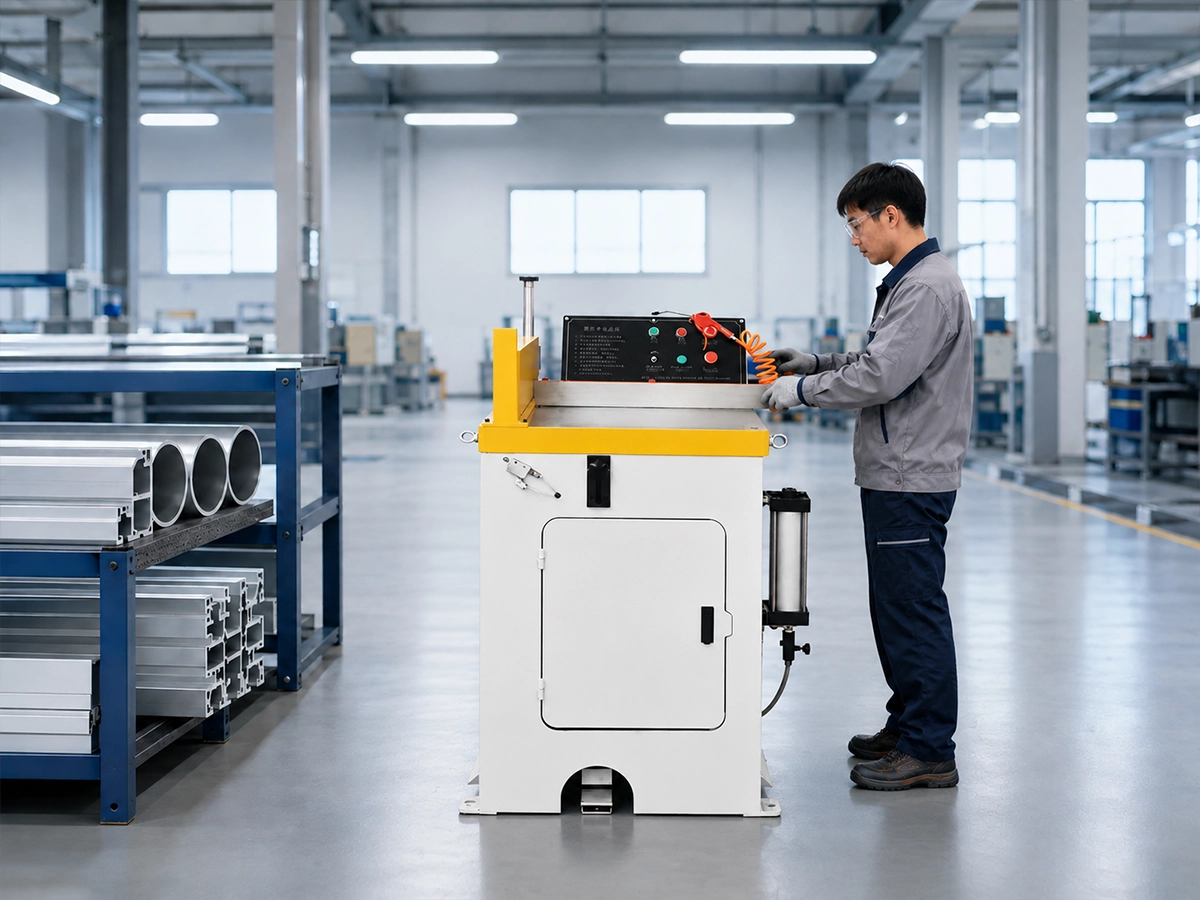
Define the retained route for an aluminum saw for extrusion fabrication
The Aluminum Extruders Council’s fabrication overview distinguishes extrusion production from the secondary operations that turn profiles into functional components. It describes both sequences of standalone equipment and dedicated cells for repetitive work. Its cutting and forming page also identifies later deburring, punching, forming or machining as possible separate operations.
Use this context to define your plant’s commercial deliverable. If the contract is for a cut member, identify its drawing, length reference and end condition. If the plant offers a prepared component, identify the additional operations and the accepted output at each handoff. These routes can use the same extrusion section while placing different demands on equipment, staffing and transfer.
Exclude work already completed by the existing supply route. Profiles sold at their current commercial length may require no additional cut for that order. A bought prepared component can also remove a task from the fabrication department. Use the retained workload rather than the plant’s total extrusion tonnage to justify a proposed saw.
Compare three department-level purchasing choices
Keep the delivered component and included operations consistent when comparing alternatives. The following choices identify the principal boundary each quotation must resolve. They are not claims that one arrangement is always cheaper or that JiurunCut supplies downstream machining or an integrated extrusion line.
| Department route | Retained cutting workload | Purchasing boundary |
|---|---|---|
| Commercial-length supply with selected bought fabrication | Only separately retained customer cuts | Confirm the remaining orders before adding equipment |
| Standalone saw and separately arranged downstream equipment | Defined blanks or cut members transferred to the next operation | Specify stock release, component references, handling and receiving conditions |
| Dedicated component-processing cell | Cutting within the actual quoted cell and manufacturing sequence | Confirm all equipment, interfaces and acceptance responsibilities; a saw-only offer is a narrower scope |
Compare the route to the same accepted output. Include the handling, preparation and separate processing needed between a saw-cut blank and a customer-ready component. A cell quotation containing machining and transfer cannot be compared with a bare saw price as though both deliver the same result.
State what stock is released to secondary fabrication
Describe the incoming profiles at the point where the proposed station receives them. Provide actual cross-sections, incoming lengths, material designation, temper and surface condition. Record the manufacturing stage and the plant’s release criteria. Do not use the words as-extruded or finished stock as a substitute for the actual state presented for supplier review.
Identify whether required upstream processing and inspection are complete or whether the cutting task intentionally precedes a separately approved operation. Keep the material release decision with the responsible plant process. The saw inquiry should state the condition it must accept without inventing a new extrusion or heat-treatment recipe.
Any proposed work on hot, moving, joined or otherwise different input needs a distinct assessment. Keep it outside the accepted standalone scope until the actual supplier reviews it. A general industrial aluminum cutting capability does not establish suitability for an extrusion press outlet or a line’s existing mechanical and control interfaces.
Distinguish a commercial-length profile from a component blank
A customer part can be shorter than the supplied profile and can require an end reference different from the existing commercial-length cut. Specify the output at the fabrication stage using the approved component drawing. State whether the saw establishes a finished length or leaves a blank for a later process.
Where machining, forming or joining changes the component, obtain the required blank references and allowances from the responsible operation. Do not apply a generic extra length across all orders. Preserve the distinction between a cut piece accepted for further processing and a component accepted for customer delivery.
Include relevant end directions and surface conditions. Ask the proposed supplier to review the actual section and required result. A drawing of a completed assembly does not always identify the cut length of each member, and it should not replace the approved fabrication drawing.
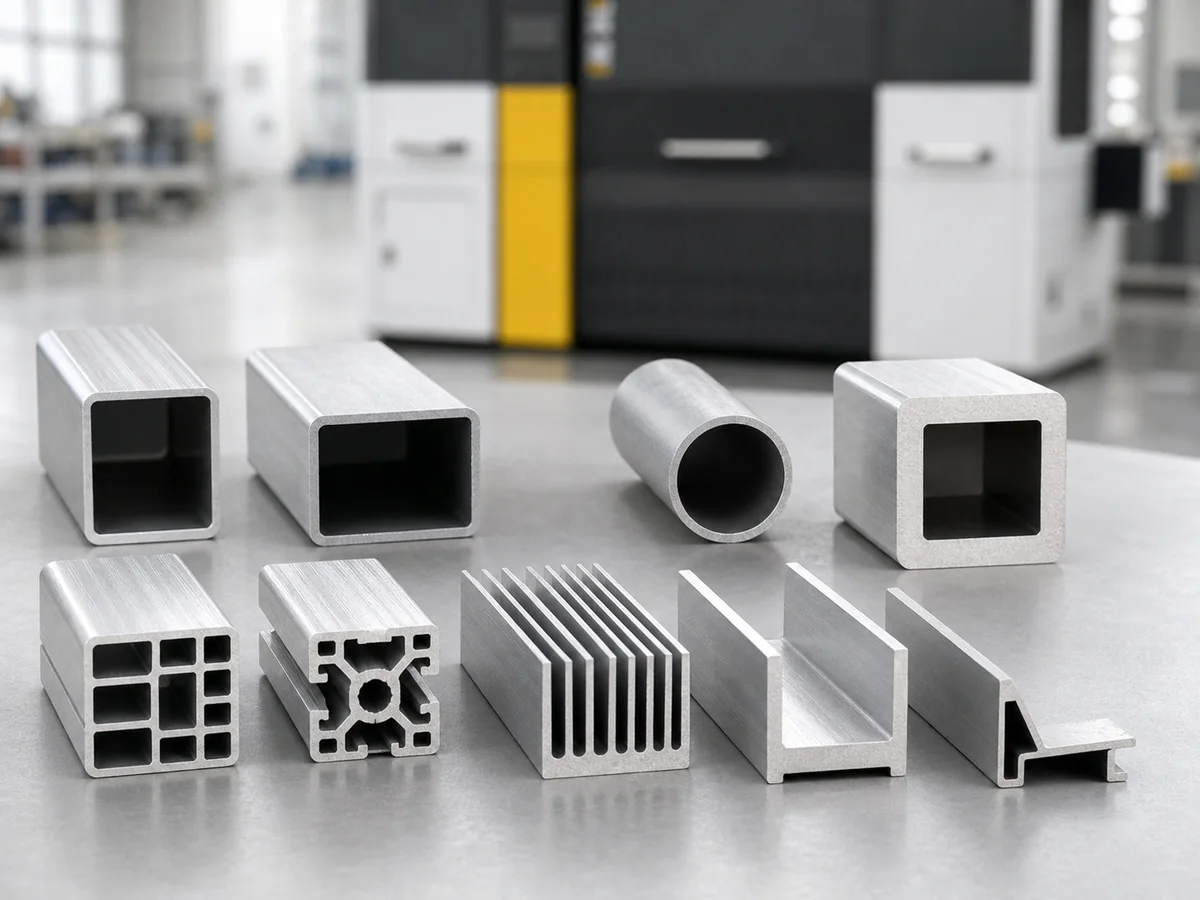
Build the workload from the customer-component portfolio
List the retained order families that materially affect cutting: repeat members, short customer batches, different sections and any end-geometry changes. Keep unrelated commercial-length dispatch work separate. A large extrusion output can coexist with a small fabrication workload, while a modest material volume can involve many distinct customer-component releases.
Use actual releases or clearly marked demand assumptions to build the comparison. Explain which orders are repeatable enough to evaluate a dedicated cell and which need independent scheduling through standalone equipment. A future volume forecast is a planning input, not evidence of a guaranteed station throughput or a confirmed supplier delivery.
Compare preparation, cutting, family changes and transfer on the same mix. Identify the actual demonstration configuration and record observed trial timing separately from production estimates. Do not compare a single cutting stroke with the elapsed time to deliver the complete prepared component route.
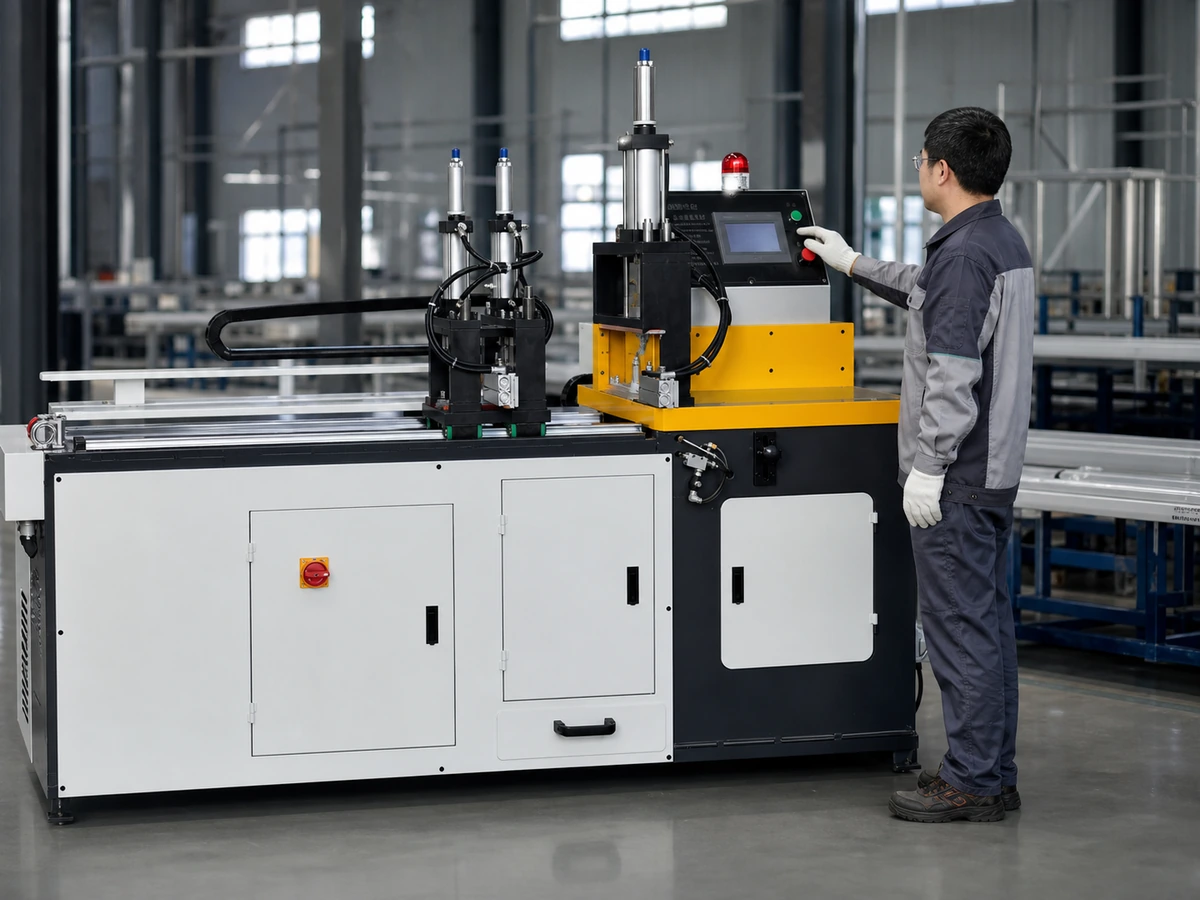
Specify retrieval, presentation and receiving handoffs
Map the actual movement from released stock to the saw and from cut output to the next process. Identify whether profiles arrive individually, as an approved grouped presentation or through existing handling equipment. Ask the supplier to review the presented object and its support and contact requirements. Multiple loose profiles are not automatically one accepted bundle-cutting case.
Clarify which functions the offer includes: stock feed, holding, cutting, collection, identification and any transfer arrangement. Keep each function tied to the reviewed configuration. An automatic feed description should not silently include stock retrieval from storage or delivery into another machine.
For each receiving operation, define the part identity, processing stage and accepted condition. Identify handling provisions your plant supplies separately. Where an interface to existing equipment is requested, provide its actual requirements and assign responsibility for reviewing the relationship. Do not presume shared controls or included software from a workflow image.
Compare the complete scope of standalone equipment and a cell
A standalone saw can be evaluated as one station within an approved department route. The purchasing record should show what it delivers and how the remaining operations receive that output. For a cell, identify every included operation, machine and handoff, together with exclusions. Ask the actual suppliers to confirm the boundaries rather than treating the word cell as a complete specification.
Use the same customer-component cases when comparing proposals. Determine which unresolved questions concern the saw and which concern machining, forming, finishing or transfer. A cutting trial cannot establish those other operations by implication. Keeping the tasks separate makes the combined proposal reviewable without narrowing the buyer’s overall manufacturing goal.
Record the plant’s required inspection and component-release responsibilities. The quoted saw can provide evidence for defined cutting outputs; it does not itself establish the material’s conformity, the finished component’s performance or the fabrication department’s complete quality system.
Use representative trials for the proposed department role
Select actual released stock and approved customer-component drawings. Include the section that resolves support and contact, the end or length case important to the next operation and a materially different family where the quotation claims to cover it. Explain what purchasing uncertainty each trial should resolve.
The sample cutting trial checklist connects the supplied input, requested output, actual model and configuration and observed results. Preserve measurement references, end and surface observations, exclusions and remaining questions. A required result must remain distinct from a result actually demonstrated.
Where trial stock, supports or configuration differ from the offer, document the relationship before acceptance. Review changes in the manufacturing stage or incoming material condition against the original evidence. Do not turn one satisfactory profile cut into coverage of every extrusion output or downstream component operation.
See JiurunCut cutting equipment in operation
This JiurunCut video provides equipment inquiry context. It is not a trial of your extrusion-plant stock, a complete fabrication cell or proof of press-line integration. Agree the actual retained input, proposed configuration and cutting acceptance evidence separately.
Prepare a complete extrusion-fabrication inquiry
For an aluminum saw for extrusion fabrication, send the department’s customer deliverable scope, retained-versus-bought operations, released incoming stock state, component drawings and revisions, length and end references, representative order mix and receiving-process conditions. State excluded press-line integration, hot or moving stock and unreviewed combined objects explicitly.
Use the JiurunCut aluminum cutting equipment range to discuss the proposed cutting configuration. Contact JiurunCut with your extrusion-fabrication cutting requirements and request the included station scope and a trial plan for the retained component route. A clear production-to-fabrication boundary supports a complete investment comparison without assuming unverified line-integration or downstream manufacturing capabilities.