
An aluminum saw for office partition manufacturing should be purchased for the approved metal work behind the partition system, not for the floor area of an office project. A room layout describes the intended space. The saw needs a controlled list of actual profiles, finished members, orientations, and delivery conditions. Connect those two records before comparing equipment.
A manufacturer that receives finished partition assemblies has a different cutting requirement from one that buys long extrusions and prepares each project kit. A third business may retain fixed-partition members but purchase door-equipped units from another supplier. Select equipment around the work that remains in your factory, with a clear handover to fabrication, packing, and installation.
This guide compares those procurement boundaries and explains the information needed for a useful saw quotation. It concerns industrial aluminum profile cutting. Glass processing, door hardware installation, building performance approval, and installation design have separate responsibilities. A suitable cutting station does not establish the performance of a completed partition.
Start with the approved partition system
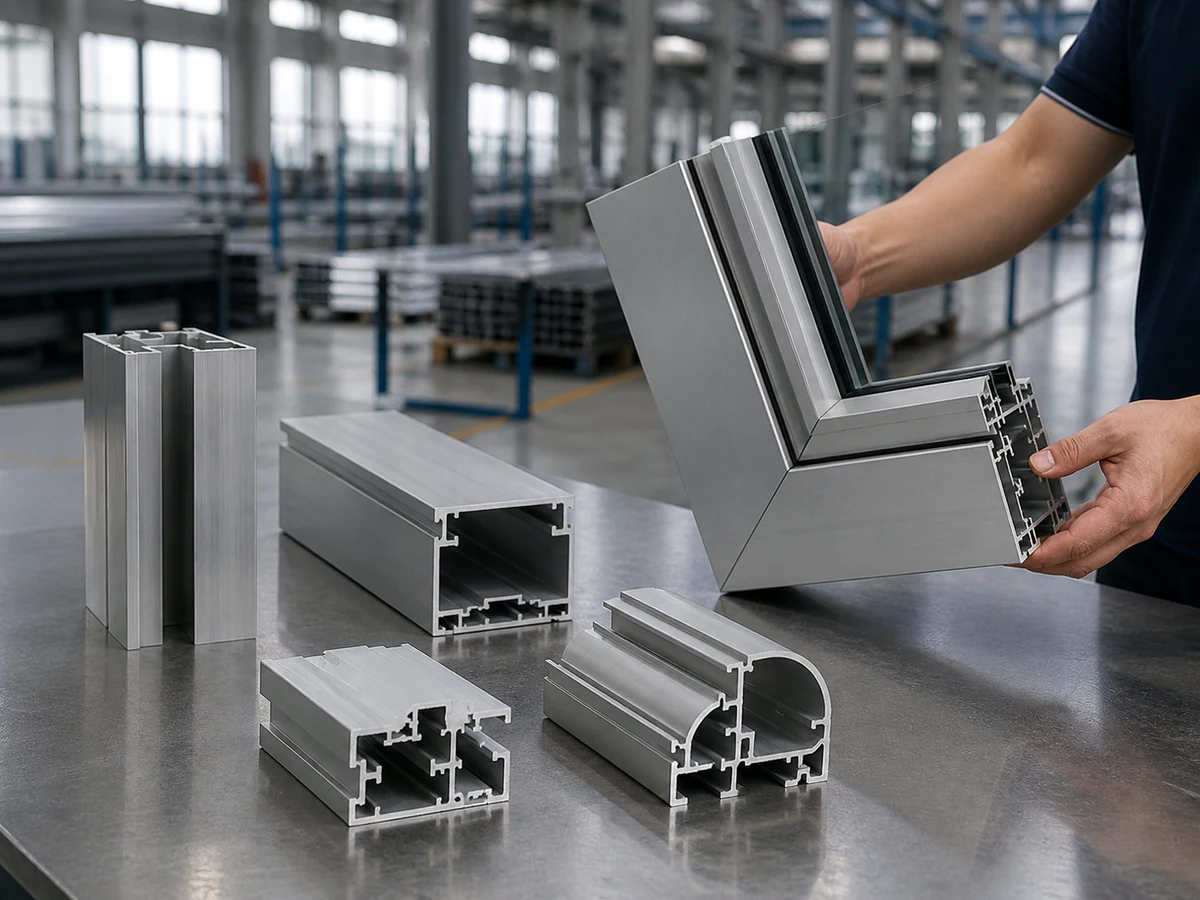
Identify the system and revision used for the project. “Office partition” can describe several different member arrangements and supply formats. Record the actual profile codes, mating components, door interfaces, and following operations from the approved system information. Similar-looking channels should not be treated as interchangeable stock.
For application context, Aluprof describes MB-45 OFFICE as a fixed and openable partitioning system. Its description explains how base and adaptive profiles can have different member functions and how the arrangement can change. This is an example of system-specific member roles, not evidence that any proposed JiurunCut configuration can process that system.
Request the actual production drawings that apply to the work you retain. A product overview is useful for identifying the system, but it may not contain the member dimensions, end details, or stock conditions needed for a machine assessment. The supplier should evaluate the proposed cutting task from those records rather than from a photograph of a completed office.
Keep project requirements for glazing, doors, acoustic performance, or other finished-system properties with the responsible system and project team. Do not convert a general system description into a performance promise for an individual cut member. The saw acceptance package should define the cutting requirement and its contribution to the retained route.
Compare the complete manufacturing boundaries
| Procurement route | Retained cutting work | What the purchase must include |
|---|---|---|
| Buy prepared partition assemblies | Only specifically approved supplementary members or replacements | Delivery format, receiving checks, change responsibility, and any genuine retained workload |
| Cut profiles for fixed partition kits | Defined long-stock conversion for the approved fixed-member package | Actual sections, cut list, surface handling, identification, and kit release |
| Prepare fixed and door-equipped project packages | The explicitly retained profile families and following fabrication stages | Separate door and fixed-partition requirements, machining interfaces, hardware responsibility, and project packing |
These routes should be compared on the same project basis. If one supplier includes prepared doors while another supplies stock for your factory to fabricate, the difference extends beyond saw price. Identify the labor, equipment, stock, inspection, and supplier coordination that each route leaves with your business.
A saw-only offer can be appropriate when the following processes are already provided. A broader package can be appropriate when your factory will retain them. The offer should make that boundary explicit. Do not assume that a machine described as automatic also drills lock positions, mills interfaces, assembles doors, or prepares glazing.
Exclude bought assemblies from the internal cutting demand. Keep optional future work separate from released projects. This lets the machine supplier propose a configuration for a defined workload and lets the purchasing team see which additional responsibilities would be needed for a larger scope.
Translate the project layout into a controlled member list
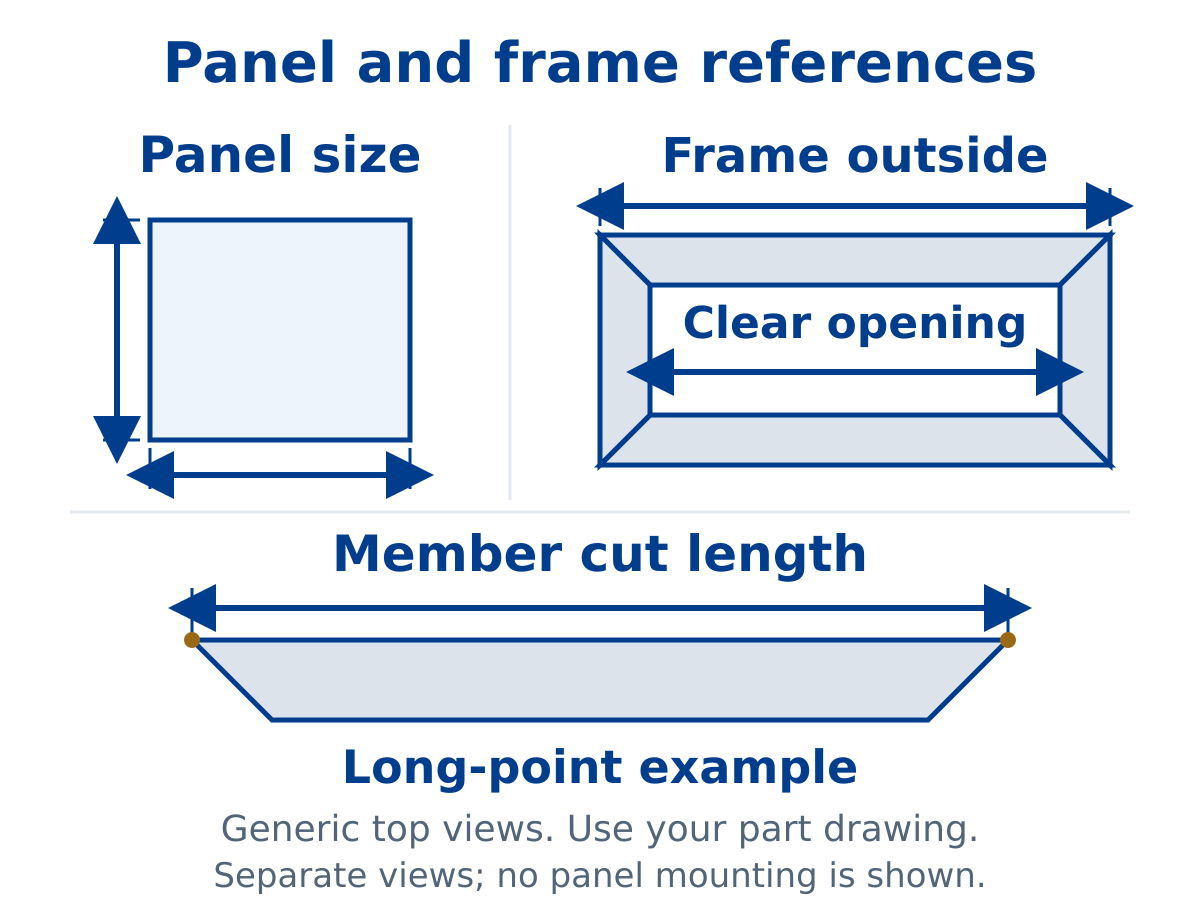
The project drawing and the cutting list have different purposes. A measured room opening, a partition centerline, an overall frame dimension, and an individual member length may refer to different points. Use the member dimensions derived and approved by the responsible designer or system team. Do not ask the saw operator to infer undocumented deductions.
For each member, record its part number, profile code, revision, finished length, end condition, and destination. Where a part is supplied as a blank for later fabrication, distinguish the blank dimension from the completed dimension. Identify any allowance that has actually been approved for the next operation.
Specify how revisions reach production. A room layout can change while previously released members remain in the stock rack or packing area. The change record should identify what can still be used, what needs review, and what must be replaced. Without that distinction, a fast saw can produce a large quantity of parts for a superseded layout.
Separate site measurements from production authorization. A revised measurement is an input for the responsible project review; it is not automatically a new cut instruction. A practical equipment inquiry describes who releases the list, how the active version is identified, and what happens when the project changes after cutting starts.
Define fixed and door-equipped packages separately
Record which profile families belong to fixed partitions and which belong to door-equipped areas. Some components may be shared within an approved system, while others have different member functions or following operations. Use the actual system documentation to identify those relationships instead of relying on a shared finish or external width.
For a hypothetical planning example, suppose a project contains four fixed sets and two door-equipped sets. Each fixed set requires four internally cut metal members, while each door-equipped set requires six. The retained requirement is sixteen fixed-set members and twelve door-set members, or twenty-eight in total. These are invented counts for a purchasing discussion, not a partition design or a cutting schedule for an actual building.
If both door-equipped sets are bought as prepared assemblies, remove their twelve members from your internal saw workload. The saw requirement becomes the sixteen retained members, plus any separately approved supplementary work. Keep the purchased assemblies in the receiving and project delivery plan rather than counting their parts again as internal cutting.
Then examine the mix behind the total. Different sections, end requirements, surface conditions, and job changes can alter the station workload. Discuss representative retained families with the machine supplier. An average piece count cannot show whether the proposed support, clamping, and following-process interfaces suit all of them.
Select an aluminum saw for office partition manufacturing from actual profiles
Provide section drawings and representative incoming stock. Describe the cavities, ribs, open sides, and designated contact or appearance surfaces that matter for the proposed task. A quoted external cutting envelope does not by itself verify the arrangement required for every profile in the system.
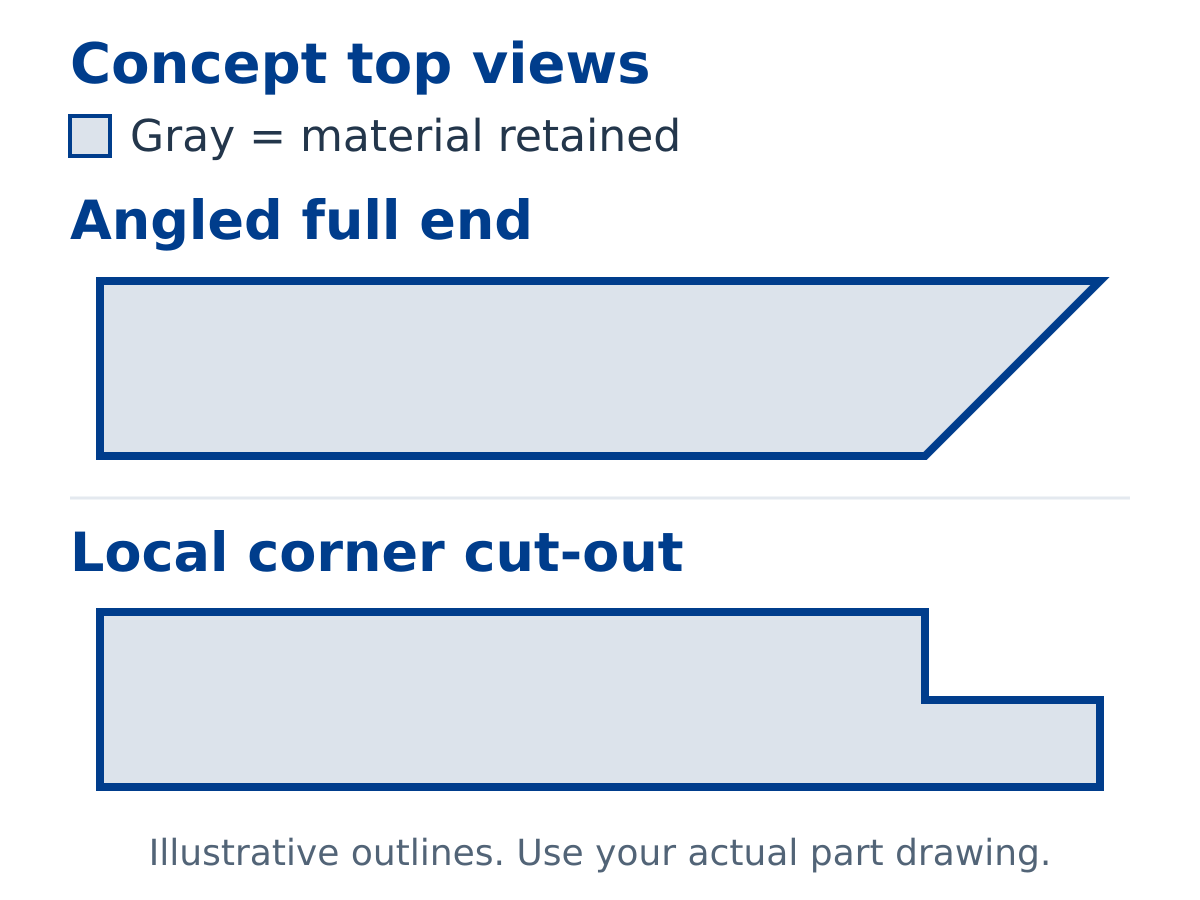
Explain the intended cutting orientation and how the member will be identified after cutting. If parts have different left and right end details, supply the corresponding drawings. If an approved family requires only square end cuts, do not add angle capability to the requirement simply because another partition system uses angled members.
Review the whole stock-to-part path. Identify the supplied stock length, loading arrangement, support, discharge, and space for held and released members. Longer profiles may require a different handling discussion from small supplementary pieces. The proposed workstation should be assessed with the factory space and actual material movements in view.
The JiurunCut aluminum cutting machine range provides a starting point for a drawing-based review. JiurunCut supplies industrial circular-saw cutting equipment for aluminum and nonferrous material applications. The quotation should identify the actual proposed configuration and its assessed work; the product range is not a guarantee for every partition profile or fabrication operation.
Connect end cutting to the retained fabrication work
Determine what condition the next operation needs. Some members may go directly to an approved assembly step after inspection. Others may need separately specified holes, slots, notches, or other fabrication. End cutting and those local features should remain distinct operations in the purchasing scope.
State the reference used by the next process and how the cut part is located. Where an approved member needs additional machining, the dimensional record should distinguish the delivered blank from the final part. The machine supplier can then assess the cutting requirement without being asked to guarantee work outside the offered equipment.
Do not turn feeding repeatability into finished-member accuracy. The accepted result depends on the material, setup, support, clamping, tooling condition, measurement method, and following operations. Agree how actual representative parts will be inspected. Use the final drawing requirements rather than an unsupported catalog interpretation.
If the trial shows that a member needs finishing after cutting, record that retained work. A neat photograph or a smooth-looking edge does not establish readiness for every subsequent process. The comparison between offers should include the actual handover condition, with unresolved questions visible before the purchase order.
Keep finish batches and appearance faces attached to the job
Describe whether the incoming profiles are unfinished, coated, anodized, protected, or supplied in another condition. Identify the appearance faces that must remain acceptable after cutting and handling. Ask the supplier to review the proposed contact and support arrangement for the actual stock condition.
A project may include visually coordinated members from several profile codes. Keep the project and supplied finish-batch identity associated with each approved member through cutting, inspection, and packing. The appropriate method can use a traveler, container record, or approved label, depending on the material and your existing process.
Do not assume that identical color names make members interchangeable. Purchasing and production should use the actual supplied identity and the project acceptance requirements. If a replacement member comes from a different batch, the responsible project team should decide whether it is acceptable before it is released into the kit.
Discuss appearance acceptance with actual samples and agreed records. A generic illustration cannot demonstrate finish protection, matching, or a completed project result. Avoid selecting a workstation on a claim that it will prevent every mark. Ask for the evidence needed to assess the proposed arrangement for your real profiles.
Release installation kits instead of unassigned bundles
A useful cutting output is a released member or a complete defined kit for the next operation. A pile of acceptable pieces can still leave a project short if they belong to the wrong room, elevation, door opening, or revision. Define the release unit before using piece output as the measure of production.
Record the project identifier and the intended location or assembly for each release set. Keep held parts, rejected parts, and accepted replacements distinct. If the installer or next process reports a missing member, the replacement request should identify the approved part and the kit it restores.
For an invented example, two project kits each require three members of family X and two of family Y. Cutting six X members and three Y members produces nine pieces, but only one complete five-piece kit can be released. The second kit lacks one Y member. This arithmetic explains why a cut-piece total can overstate useful project output.
Include kit reconciliation and packing responsibility in the retained-work statement. A supplied saw may support repeatable cutting jobs, but any included marking or production-system interface must be specified. Do not infer a complete project management system from a touchscreen or from the word “CNC” in the machine name.
Compare quotation scope and project change response
Give competing suppliers the same retained component list and stock information. Request an itemized configuration, including supplied support, clamping, discharge, tooling, controls, documentation, and agreed commissioning responsibility. Identify buyer-supplied items and unresolved interfaces separately.
Discuss job changes using a representative project mix. Explain which families repeat, which lengths vary, and which changes require a different approved setup. Ask how the operator confirms the active list and distinguishes similar parts. Assess the proposed workflow against your release process rather than assuming every order will be one uninterrupted batch.
Consider what remains necessary when a project changes after part of the stock has been cut. Your production process needs a disposition for accepted earlier members, held stock, and replacement work. The equipment proposal should fit that process. Buying additional nominal capacity does not resolve an undefined revision handover.
Review operating inputs and service terms from the actual offer. Tooling, consumables, utilities, maintenance, training, and support should correspond to the proposed configuration. A general company statement should not be converted into a guaranteed response time, delivery date, or labor requirement for your factory.
Use a representative project acceptance package
Select actual retained profiles and member requirements for the supplier review. Include the families that distinguish fixed and door-equipped work, relevant appearance conditions, changing lengths or end details, and a small defined release set. The objective is to test the purchase assumptions, not to collect unrelated sample cuts.
Before a trial, agree the drawings, material condition, proposed configuration, inspection method, and responsible decision owner. Identify special support or tooling used. If the trial arrangement differs from the quotation, record the difference and obtain a clear response before treating the result as evidence for the offered station.
Record both cut completion and accepted handover. Include setup observations, measured part results, appearance decisions, required following work, and kit reconciliation. Keep unresolved or failed items in the report. Excluding them can make a station appear to deliver complete project output when it only demonstrates isolated cuts.
Use the sample cutting trial checklist to organize the inquiry. The trial addresses the agreed cutting task. It does not establish acoustic, glazing, door, or other performance approval for the finished partition system.
See JiurunCut cutting equipment in operation
This JiurunCut video provides equipment context for an inquiry. It is not a trial of the proposed partition profiles or proof of your project output. Agree representative material, a quoted configuration and an inspection record when assessing the actual purchase.
Send a project-based equipment inquiry
For an aluminum saw for office partition manufacturing, send the approved profile and member drawings, incoming stock condition, retained families, finished lengths and end requirements, and representative project quantities. State whether door-equipped units or other assemblies arrive prepared from suppliers.
Include the next operation, appearance and identification requirements, release unit, handling space, and job-change process. These details help JiurunCut discuss a proposed saw configuration against the actual work. Ask for the configuration and trial basis in the quotation rather than treating a general machine description as a complete manufacturing commitment.
Contact JiurunCut with your partition profile drawings and project-kit requirements to start a focused review. A clear manufacturing boundary makes the equipment comparison useful and keeps the purchasing decision connected to what your factory must deliver.