
An aluminum saw for packaging machinery manufacturing should be selected for the machine-building work your factory actually retains: approved frame members, enclosure members, supports or other defined aluminum components. The useful output is a released kit that assembly can receive for a particular machine build. A large pile of cut pieces can still be the wrong result if the members belong to different models, lack required later operations or leave one build waiting for a missing item.
Start with your packaging-machine portfolio and the aluminum bill of materials behind it. Separate profiles your factory cuts from purchased frames, conveyor modules and completed subassemblies. Then compare cutting configurations against the retained work, the released kits and the receiving operations. This connects equipment selection to machine completion instead of to an isolated cutting-speed claim.
This guide addresses industrial profile-saw procurement for an equipment manufacturer. It does not design a packaging machine, specify protective functions or establish hygiene or structural compliance. Your approved engineering and receiving requirements define those objects.
1. Identify the aluminum work behind each machine model
A packaging-machine build may combine several purchased and internally manufactured assemblies. Do not treat every aluminum element in the finished machine as potential work for the saw. A complete bought conveyor, a supplier-assembled frame and a locally cut support member have different purchasing and manufacturing boundaries.
Use the released bill of materials for the actual model. Identify which components are made from incoming profile stock, which arrive cut to size and which arrive as completed assemblies. If a component’s route is undecided, leave it as an open make-or-buy decision rather than counting it as committed saw demand.
As an industry reference, mk’s official machine-frame page describes aluminum profile frames for applications that include conveying and packaging. It also identifies frame design considerations and compatibility within its own modular product portfolio. That example establishes an application context; it does not prove the suitability of a Jiurun cutting configuration, transfer mk specifications or establish interchangeability between suppliers’ systems.
Build your own portfolio from real released components. List the profile family, incoming form, end requirement and next manufacturing step for each. A machine model that uses mostly bought assemblies may create little internal cutting work, while another model may create a larger retained frame-member package.
Keep functions distinct even when the members look similar. A load-bearing base, an enclosure frame and an adjustable support can belong to different engineering requirements and receiving routes. Their approval comes from the machine design. The saw supplier assesses the cutting task you have actually specified.
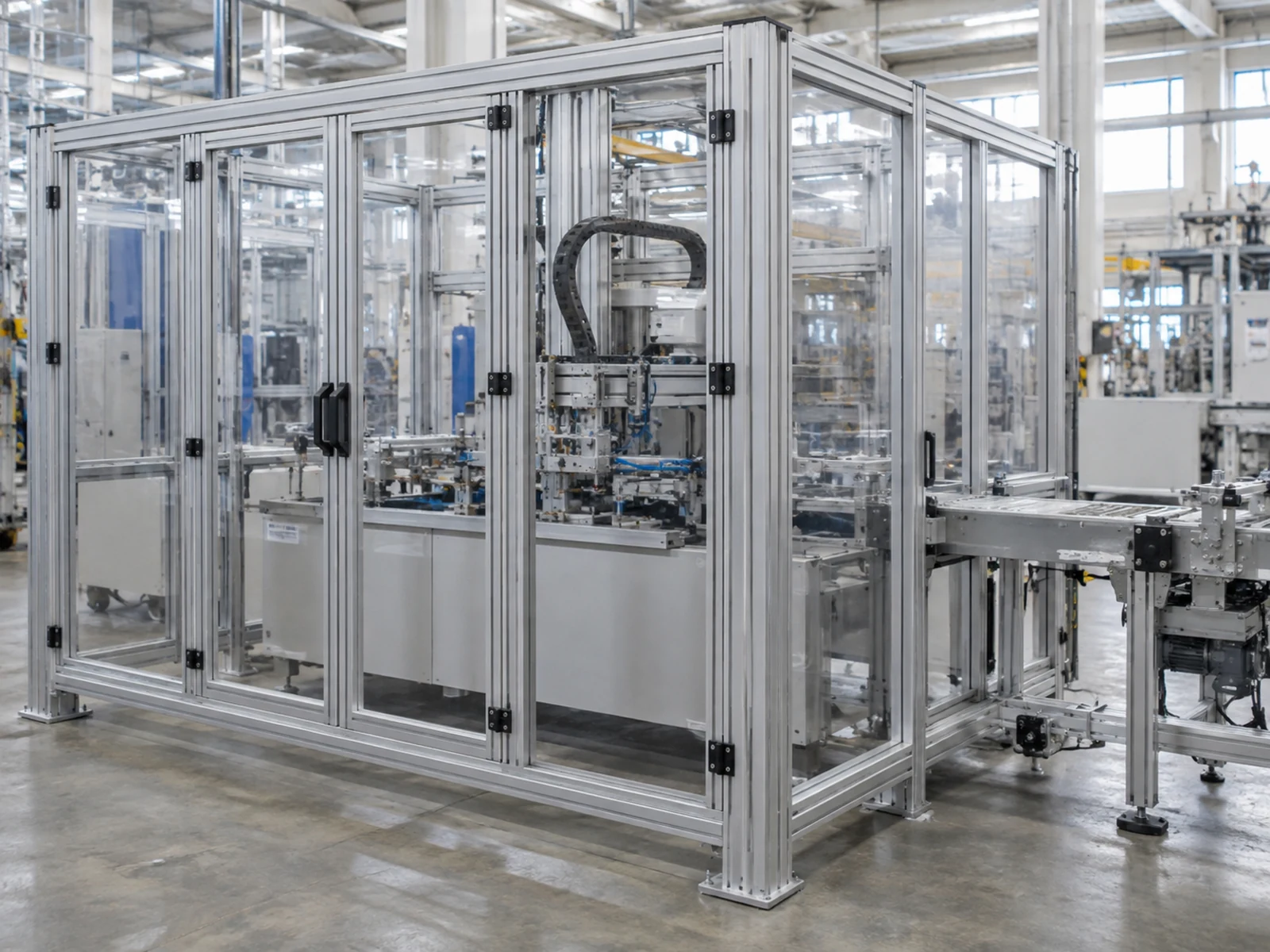
2. Translate the portfolio into comparable manufacturing packages
For each packaging-machine model, define the delivery object expected from the cutting area. It may be cut members for a later machining department, a complete cut-member kit for frame assembly, or prepared parts for several separate receiving stations. State which result is actually retained before comparing machine offers.
| Build package | Clarify in the retained cutting brief | Keep outside an unsupported saw promise |
|---|---|---|
| Approved base-frame members | Actual profiles, end requirements and receiving condition | Strength, alignment and completed machine performance |
| Enclosure or door-frame members | Released member geometry and assigned later work | Panels, protective functions and complete enclosure approval |
| Supports and mounting members | Cut-stage requirement before drilling or machining | Final mounted component position without receiving assessment |
| Bought conveyor or transfer module | Any explicitly retained interface-member work | Counting the complete bought module as internal saw demand |
| Supplier-assembled profile frame | Whether any local cutting is actually required | Assuming stock cutting simply because the assembly contains aluminum |
Compare the alternatives at the same receiving point. A quotation for an assembled frame cannot be compared directly with raw profiles and cutting equipment while ignoring machining, connection work and assembly. Likewise, a cut-member kit and a machining blank package are different supply objects.
Ask the people receiving the parts to state what they need. If a later operation establishes a final face or feature, preserve that route in the cut-stage requirement. If the cut member is received directly for assembly, define its relevant acceptance requirements there. Do not turn feeding repeatability into finished-frame accuracy.
Write the unresolved work alongside the proposed package. It might be supplied by another department, an external provider or a purchased module. That list gives the saw investment a clear purpose without making it responsible for the whole packaging-machine manufacturing route.
3. Buy for the actual section and end mix
A family of packaging machines can share a profile system while using different member sizes, lengths or ends. Give the saw supplier the actual section information and retained job mix. A familiar profile-series name or a photograph of a completed machine is not enough to assess every cut.
Identify repeated straight-end work separately from jobs needing assessed angles or a later operation that establishes the final geometry. Ask which configuration is proposed for each task. Do not assume an added fixture or an attractive demonstration covers an end form the supplier has not assessed.
Show the incoming lengths and the output range. The machine enclosure is only one part of the stock-to-member station. Support, presentation, completed-piece collection and the approved working arrangement need assessment for the actual input and output.
If you use several approved material or finish variants, retain their identities in the brief. Similar-looking stock should not silently become interchangeable. The released machine design and purchasing specification determine the accepted material; the cutting station must support that identified job.
Ask for a proposed configuration record rather than combining features from unrelated product pages. A general range overview can introduce alternatives. The quotation and assessment should describe the equipment offered for your retained portfolio, including which provisions are included, optional or supplied locally.
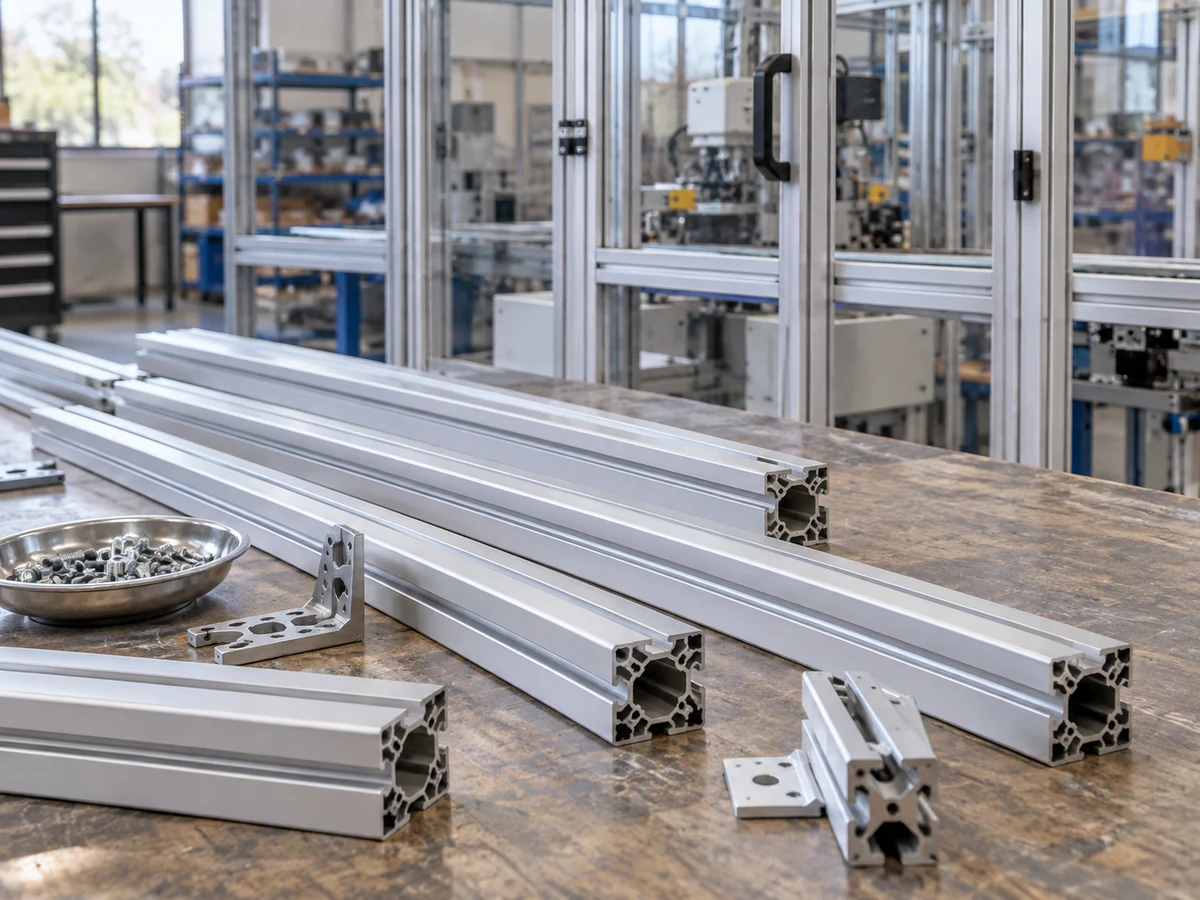
4. Separate component batching from build-kit completion
The cutting area may prefer batches of one member because preparation is shared. Assembly may need all members for one machine build together. Those priorities can coexist, but the handover plan must connect a component batch to the released build kits it serves.
Here is an invented build example. Six machines of model A need eight retained frame members each, while four machines of model B need ten each. The released requirement is 6 × 8 + 4 × 10 = 88 members. This count describes the assumed kit requirement; it is not a Jiurun capacity or a measured factory production result.
Suppose 84 members have reached the receiving point but the four missing members belong to four different model-A builds. If all other members are correctly assigned and accepted, only two of the six model-A kits are complete; the four model-B kits may be complete. The assumed maximum is six complete kits, not ten completed machines. Later operations or other missing components can reduce that number further.
The example is deliberately about kit readiness. A count of 84 cut pieces does not establish how many packaging machines can move to assembly. Your actual bill of materials, member assignment and receiving records determine the answer.
Compare proposed equipment and supporting workflow using both component work and usable kit output. Preserve the preparation benefit of batching where it exists, but account for job assignment, completion of missing members and the handover to assembly. Faster cutting of an already plentiful member may not unblock the waiting builds.
5. Preserve the build identity when models share members
Common members can simplify a portfolio, but they also require a clear allocation rule. Record when a component is genuinely interchangeable across released models and when apparently similar members differ in material, finish, end requirement or later work. That decision comes from your controlled engineering information.
Choose the handover identifiers your factory actually uses: machine serial number, project number, released assembly number or another accepted job reference. The point is that a receiving person can connect each package to a build without reconstructing the cutting area’s intentions from a pile of similar parts.
Keep the identity of later operations attached to the cut-stage output. Two equal-length blanks may receive different holes or features. Combining them into an unassigned batch can create work for the receiving department even if the saw has produced the requested physical length correctly.
When a model changes, confirm which previously prepared members remain valid for the released build. Do not assume every old member becomes scrap, or that every common length remains usable. Preserve the engineering decision and actual material identity so that the workshop can use approved work without guessing.
This article’s purchase question is whether the complete cutting station and supporting route deliver the required model mix and build packages. It is broader than revising one cut list or documenting one profile drawing. Include a representative shared-member case in the equipment assessment so that the proposed workflow can be discussed concretely.
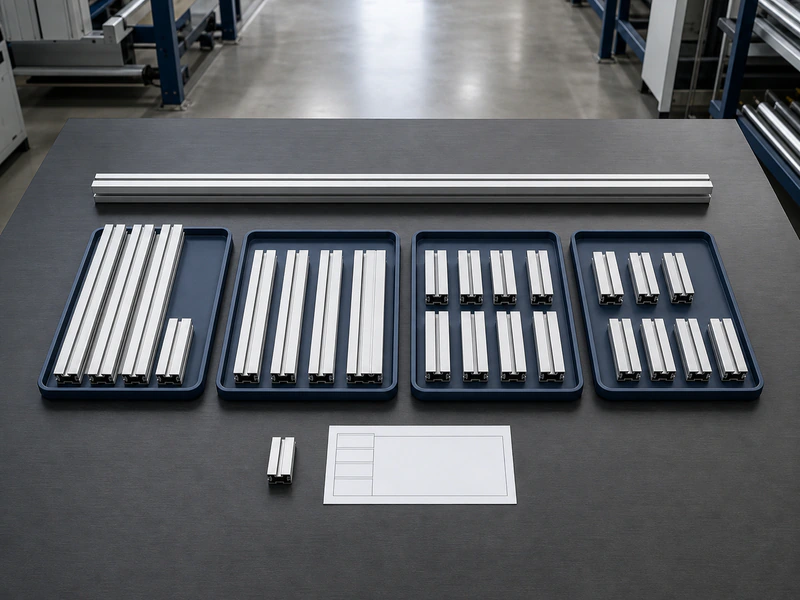
6. Include the operations that still determine assembly readiness
A profile cut can be followed by machining, connection preparation, surface treatment or another specified operation. Bought brackets, panels and fastening items may also be needed before the frame can be assembled. State which of those dependencies are retained internally and which are purchased.
Use a build-route table for the actual offer comparison. The table should identify the delivery object after cutting, the next owner and the condition needed for that owner to receive the work. This prevents a saw demonstration from being interpreted as a demonstration of a completed packaging-machine frame.
| Receiving route | Output to request from the cutting area | Question for the purchase comparison |
|---|---|---|
| Further machining | Identified blank to the released receiving requirement | Will the proposed station prepare that assessed blank portfolio? |
| Direct frame assembly | Accepted member package with assigned build reference | Can the complete retained route deliver the required kits? |
| External later operation | Accepted and identified material for that provider | What receiving work and transport remain after internal cutting? |
| Bought completed assembly | Any separately defined local interface members | Is enough retained cutting work left to support the investment? |
Engineering requirements for rigidity, guarding, electrical arrangements or a specified operating environment belong to the complete packaging machine and its assessed components. Do not infer compliance from choosing aluminum profiles or from obtaining an acceptable saw-cut sample.
For a plant serving several packaging processes, keep any different environmental or finish requirements visible in the component portfolio. Ask the responsible engineering and purchasing people what they require. A general cutting-equipment quotation should not quietly substitute its own assumptions for the machine builder’s approved specification.
7. Compare internal cutting with purchased kits and assemblies
The alternative to a saw is not always a supplier sending the same raw profile away for cutting. It may be purchased members, a ready-to-assemble kit or a completed profile frame. Compare those actual supply options with the work your factory proposes to retain.
Use the same model portfolio, released quantities and receiving conditions for every comparison. Include the supporting station, preparation, staff work and operations still needed internally. Ask external suppliers to state their delivery scope and the order information needed for their actual offer.
Do not use the fastest observed cut as a forecast of complete build output. Identify which constraint the investment addresses. Stock preparation, machining availability, kit completion or assembly capacity can remain decisive even after a faster cutting station is installed.
A mixed arrangement may fit a portfolio that contains standard repeat builds and infrequent special projects. Some frames or modules can remain bought, while the factory assesses internal cutting for an approved recurring member package. State that boundary rather than presenting the equipment purchase as a commitment to manufacture every aluminum component.
Where the buying case includes response time or cost, use your actual records and comparable offered scope. Keep estimates labeled. Do not invent a customer order rate, labor saving, downtime figure or investment payback to make one arrangement look certain.
8. Use an assessment package that represents the build portfolio
Choose representative released work for the supplier assessment. Include the section and end forms that distinguish the retained tasks, the incoming material conditions and the receiving requirements. Explain which examples are common and which are exceptional, so that one convenient demonstration does not stand in for the entire range.
Ask the supplier to identify the tested configuration and any preparation or supporting provisions used. Compare that arrangement with the quoted station. Record what the observed result establishes and what remains unassessed. A successful sample from one model does not automatically cover another model’s material or receiving route.
Include kit handover in the discussion where it affects your investment. The assessment can define the accepted cut-stage output and its identification, without pretending that the saw supplier has validated assembly or complete packaging-machine performance.
For the individual trial record, an agreed sample-cutting assessment checklist can help organize the inputs and open questions. Keep that task-level record distinct from the wider equipment purchase decision about model mix, build packages and retained operations.
9. Prepare an aluminum saw for packaging machinery manufacturing inquiry
Send Jiurun your retained aluminum component portfolio, not only a photograph of the completed packaging line. Include actual section information, incoming lengths, end requirements, material and finish identities, released model quantities and the next receiving operations.
Explain which frames, members and modules are bought. State the output expected from your cutting area, the build identifiers used at handover and the model variations that change preparation. Include the proposed site arrangement, supporting provisions and actual staff responsibilities.
Ask for an assessed configuration and comparable complete station scope. Use the Jiurun aluminum cutting equipment range to discuss alternatives, then obtain a response tied to that portfolio. A range description does not establish fit for every retained member.
Discuss your packaging-machine build kits with Jiurun. The clearer the retained manufacturing package and receiving requirement, the more concrete the cutting-equipment assessment can become.
Questions from packaging-machine builders
Should every aluminum component in the finished machine count as saw demand?
Count the cutting work your factory actually retains. Bought conveyors, completed frames and other assemblies may contain aluminum without creating an internal profile-cutting task.
Is component batch output the same as complete build-kit output?
No. A kit needs its assigned and accepted members. Many completed pieces can coexist with a missing member that prevents the next build from moving to its receiving operation.
Does a good saw-cut sample prove the frame or packaging machine meets its requirements?
The sample supports the assessed cutting task. The frame and complete machine have separate engineering and acceptance requirements. Keep those conclusions distinct.
Can one station serve standard models and special projects?
Give the supplier the actual retained portfolio and ask for the configuration’s assessed scope. Preserve a route for jobs outside it rather than assuming that a successful common-member demonstration covers every special project.
Watch general Jiurun cutting context
This video introduces an aluminum cutting example. It is not a demonstration of a complete packaging-machine frame kit or evidence of a particular machine builder’s assembly result.