
An aluminum saw for a maintenance workshop should be purchased for work the plant is actually authorized and prepared to complete. An urgent request for a replacement member does not establish the required material, geometry, receiving condition or suitability of a particular saw. Start with the approved repair work your maintenance team retains, then compare an internal cutting station with reliable access to externally supplied parts.
The decision is broader than choosing a machine that fits the largest section someone remembers cutting. Maintenance requests can arrive with different levels of information, different consequences for the receiving equipment and different downstream work. A useful purchase plan connects the saw to those real requests, the people who release them and the point at which the repaired assembly can return to service.
This guide concerns procurement of an industrial aluminum cutting station for a plant workshop. It does not provide repair designs, operating settings or permission to alter equipment. The responsible engineering and equipment authorities determine the acceptable replacement and repair route.
1. Define which maintenance work belongs in the workshop
Make a list of the aluminum work your team currently performs or regularly buys. Separate an identified replacement member, a planned modification and an unidentified damaged item brought to the bench. All three can involve aluminum, but they begin with different information and need different decisions before stock is cut.
A replacement member with a released drawing and material requirement may have a defined cut-stage task. A proposed modification can need engineering review before its geometry is established. An unidentified component can need an approved replacement source rather than local fabrication. The saw purchase must not erase these distinctions.
For each retained job, record who specifies the part and who accepts it after the workshop’s work. If the maintenance team produces only a blank for another department, define that handover. If it completes a member for assembly, identify the operations and checks beyond cutting. The buying brief should state the actual responsibility, not the broad ambition to handle every breakdown.
Also list excluded work. Components whose material, manufacture or qualification cannot be established should not be assumed suitable for workshop reproduction. A photograph or a familiar-looking section is an input to a question, not approval to replace the original component with available stock.
The result is a bounded service portfolio. It tells the supplier what cutting work needs assessment, while your plant retains authority over whether the completed repair is acceptable. That separation keeps a machine capability discussion from becoming an unsupported repair approval.
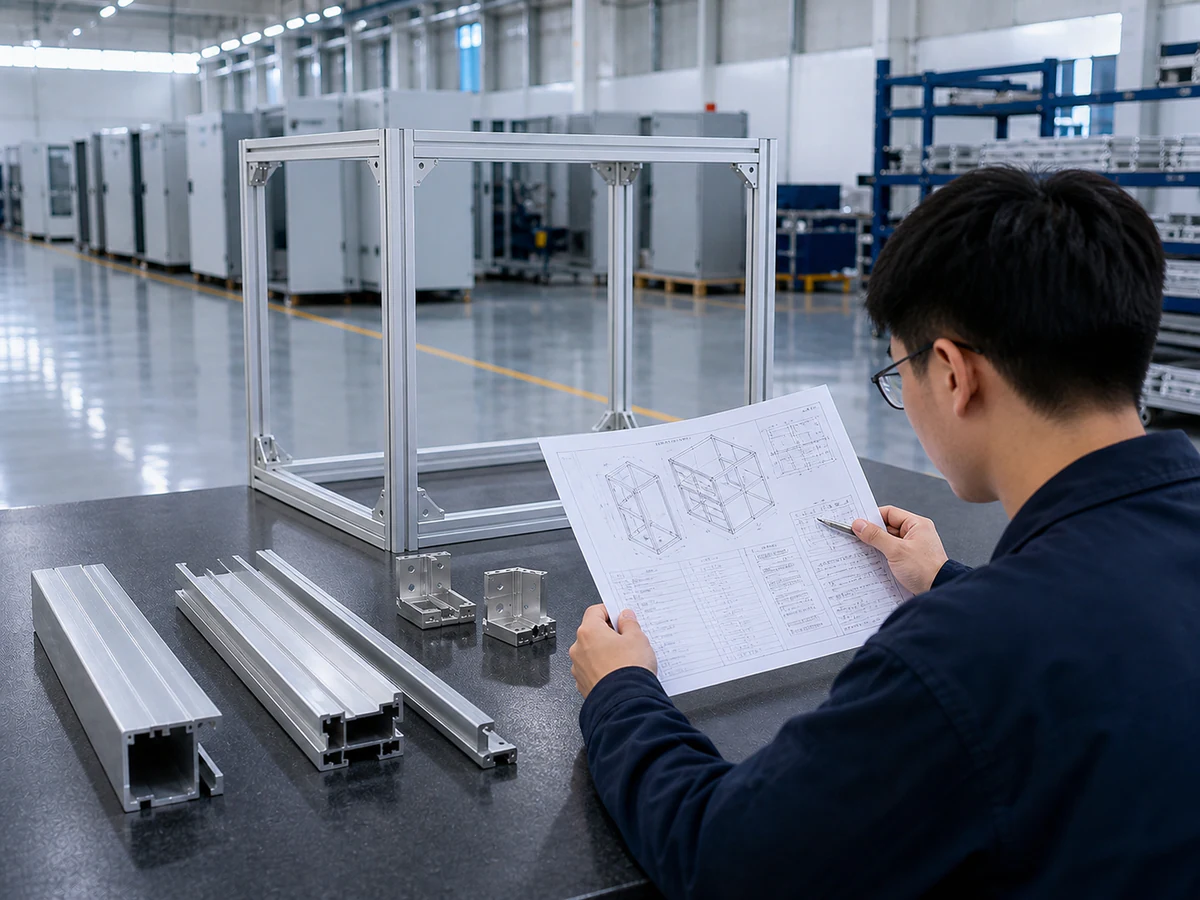
2. Compare approved requests with the total breakdown list
The number of breakdown calls does not equal the amount of work available to an aluminum saw. Some calls need diagnosis, a purchased assembly, machining, electrical work or a repair outside the workshop’s scope. Count the subset that reaches an approved aluminum cutting task.
Use actual job records where they exist. Record the request, the released material and section, the cutting requirement, any later work and the reason the job did or did not stay in-house. If records are incomplete, identify the missing fields instead of treating every aluminum-related call as demand.
| Request condition | Decision before cutting | Meaning for the saw purchase |
|---|---|---|
| Released replacement member | Confirm actual stock and cut-stage requirement | Include the assessed task in the retained-work portfolio |
| Planned equipment modification | Obtain approval of the modified assembly and part requirement | Include only the cutting stage that is actually released |
| Unidentified damaged component | Determine the approved replacement route | Do not assume local reproduction is available demand |
| Complete proprietary replacement assembly | Confirm the purchasing and receiving requirement | Compare ready-part supply rather than counting it as saw work |
Separate recurring work from exceptional requests. Repeated approved members can support a clearer equipment assessment than a one-off item whose specification is unresolved. Exceptional jobs may still matter, but describe them honestly and ask how they would be assessed individually.
Do not inflate the portfolio with possible future projects. A planned expansion or an anticipated modification is a scenario until its requirements and ownership are established. Keep committed work and potential work in separate columns so that the purchase can be assessed under both conditions.
3. Buy the retained repair route rather than an isolated cut
Map the route from released stock to the next accepted operation. The saw may prepare a member that then needs drilling, machining, finishing or assembly. It may also require an external provider for some of that work. Identify those dependencies before assuming that an internal saw creates an internal repair service.
A clean-looking cut face does not establish that the receiving assembly is ready. The part may still require features or a finish defined elsewhere. Conversely, a blank intended for further machining may have a different receiving requirement from a finished member used directly in an assembly. Describe the appropriate cut-stage output to the supplier.
Keep feeding and positioning figures separate from final cut-piece acceptance. Ask for an assessment of the actual stock and output task rather than transferring a catalogue figure to a repaired assembly. The plant’s completed repair criteria remain a separate acceptance object.
For a worked scope example, imagine that a released replacement member needs saw cutting followed by machining at another department. The workshop’s saw investment can shorten or change blank preparation only if that stage is retained and ready. If the machining department is unavailable, purchasing the saw alone does not complete the repair route. This is a planning example, not a claim about a particular machine or plant.
Price supporting work on the same basis when comparing internal cutting and external supply. An offer for a ready member includes a different delivery object from an offer for raw stock and a machine. Make those objects comparable before judging which arrangement provides better access to the needed part.
4. Separate urgency from missing information
Urgency can justify prioritizing an approved task. It does not supply the material identity or acceptance requirement that the task lacks. A useful maintenance purchase plan gives the team a way to distinguish a ready job from a job waiting for a responsible decision.
Record the point at which a request becomes ready for cutting. That may require a released drawing, an identified stock item, a confirmed cut-stage requirement and access to the remaining operations. The exact release process belongs to your plant; the purchasing question is whether the proposed station supports the work once that process has been completed.
When comparing response time, include the stages before and after the saw. Time to identify a part, obtain stock, release a requirement and arrange receiving work may dominate the request. Faster machine cycling will not remove an unresolved specification or create unavailable stock.
Consider two different situations. A ready job waits because the approved aluminum material must be sent off-site for cutting. Another job waits because no approved replacement requirement exists. An internal saw may address the first constraint if the complete station is suitable. It does not by itself address the second.
Maintain an external route for work outside the retained scope. A qualified ready-part supplier or an assessed manufacturing provider can remain useful after the saw is installed. Owning equipment should not force every request into local fabrication merely to demonstrate use of the investment.
5. Assess stock variety and the complete working station
Maintenance stock can include different material forms and lengths. List the approved forms your retained work actually uses, then obtain a supplier assessment of that portfolio. Do not assume that a familiar aluminum designation, a nominal width or an old sample establishes fit for every job.
Show the actual section and incoming length where they affect the proposed station. Identify whether jobs require straight ends, assessed angles or a later operation that establishes the final geometry. Ask which proposed configuration addresses each released task and which tasks remain outside its scope.
Include the support, presentation and output arrangements in the offer comparison. A machine enclosure that fits the workshop floor does not establish that the complete stock-to-output route fits. Long incoming members, completed pieces and approved working access all need attention from the responsible people.
Ask which provisions are supplied with the machine, which are optional and which the plant must arrange. Include utilities, supporting equipment and installation responsibilities for the actual quotation. Avoid filling gaps with assumptions drawn from a general photograph or a demonstration video.
Decide how identified stock, unfinished work and completed members will be kept distinguishable. A workshop that handles many urgent requests needs to preserve which material and requirement belong to each job. The saw specification and the plant’s material-control arrangements should support the same released workflow.
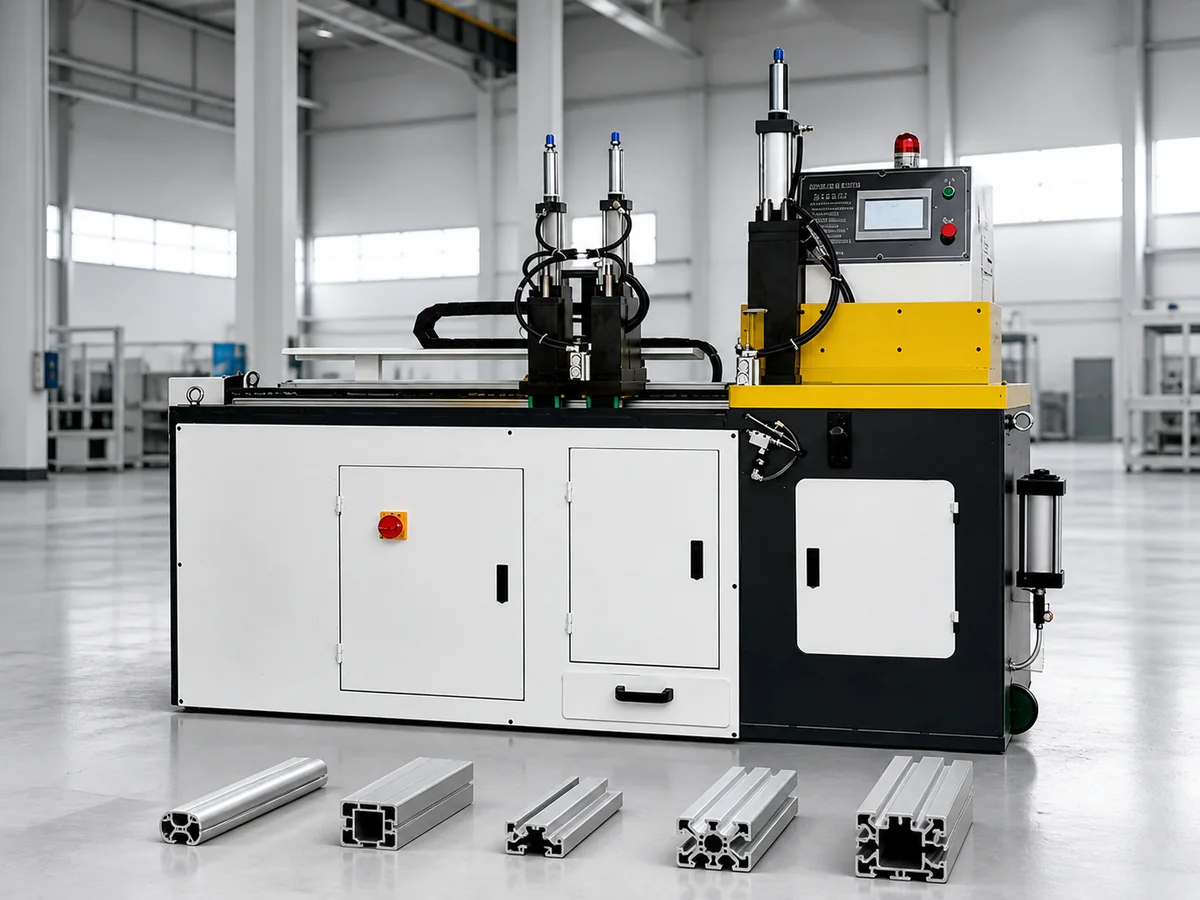
6. Compare access to approved output, not only cutting speed
The relevant outcome is access to an accepted member at the point where the next operation or assembly needs it. Compare the complete response route for the retained jobs: stock readiness, preparation, cutting, receiving work and any external transport. Use observed times when available and label assumptions when they are not.
Here is an invented monthly workload example. A workshop has 12 ready jobs requiring 20 minutes of preparation and 10 minutes of cutting-stage work each. It also has four unresolved requests requiring 90 minutes of information collection and review. The assumed ready-job workload is 12 × 30 = 360 minutes, while the unresolved-request work is 4 × 90 = 360 minutes.
The two groups total 720 minutes of assumed work, but only the first group is ready for the assessed cutting route. Treating all 720 minutes as recoverable saw time would confuse specification work with released production work. These numbers illustrate categorization; they are not machine cycle times, measured workshop performance or a financial return forecast.
For each arrangement, also ask what happens when a required person, material or supporting operation is unavailable. An internal station can depend on the same limited staff that performs other maintenance work. An external supplier can depend on order readiness and an agreed delivery response. Compare those dependencies using the jobs that matter.
Keep a proposed faster response separate from a guarantee. Until the complete arrangement has been assessed and the relevant work observed, record the anticipated benefit as an assumption. The plant can later compare actual accepted-output response against that assumption.
7. Assign people and protect job identity between interruptions
Decide who prepares the cutting job, who operates the station and who releases the result to the next stage. In a maintenance workshop these duties may share people with other urgent work. The purchase plan needs their actual availability, rather than the assumption that a machine is always ready because it is on-site.
Ask the supplier about training and documentation actually offered for the proposed configuration. Describe the staff roles and languages involved, and request a clear account of what the offered preparation covers. Do not assume that a generic equipment video provides training or permission for every retained task.
Plan how an interrupted job will remain identified. The next person needs to know the released requirement, material identity, work completed and remaining action. A physically short piece with no job record can be hard to distinguish from a spare or a rejected member.
Keep the machine’s approved operation separate from improvised repair methods. New material, changed geometry or a different proposed configuration may need a fresh assessment. The workshop should preserve open questions instead of presenting an operator’s familiarity with another job as proof of suitability.
Also assign responsibility for the station’s own service and availability. Buying a saw creates another asset requiring attention. Obtain the actual offered support arrangements and include the plant’s corresponding responsibilities in the operating plan. A promise of instant availability should not be inferred from ownership.
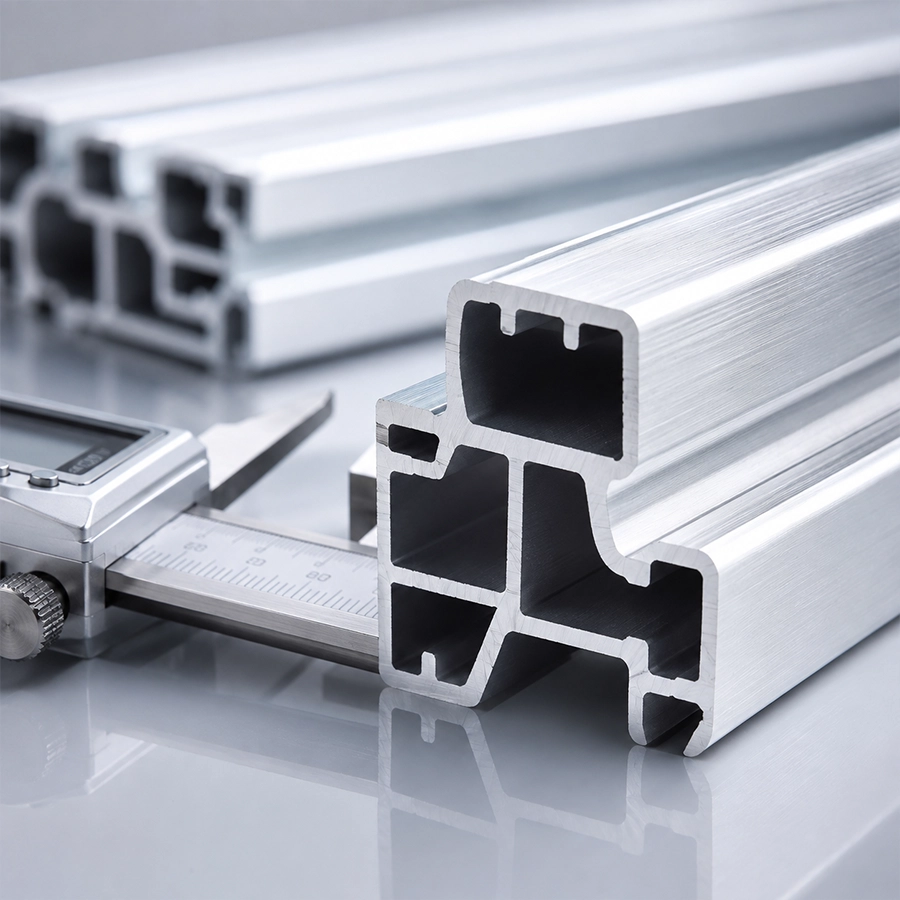
8. Compare internal cutting with ready-part and outsourced alternatives
Compare alternatives at the same receiving point. If the plant needs an accepted finished member, a quotation for cut stock alone is incomplete. If the workshop needs only a machining blank, paying for an unnecessary later process may change the comparison. State what each provider or internal department will deliver.
Ask external providers about the real order information they require, accepted input or stock supply, delivered condition and response arrangements. Ask the machine supplier what configuration would support the retained internal task. Keep those answers attached to the same job portfolio.
A mixed arrangement can be useful when different jobs belong to different routes. Repeated released members may be suitable for internal assessment, while proprietary components or uncommon tasks remain purchased. The buying decision need not be an all-or-nothing claim that the maintenance department will manufacture every replacement.
Evaluate costs using actual comparable scope. Include the proposed station and supporting provisions, staff preparation, stock arrangements and the external operations still needed. Do not invent a downtime cost or a conversion rate to make the purchase appear attractive. Use the plant’s approved records when such values are available.
Make the decision reviewable. State which jobs support the proposal, which assumptions remain open and what an unsuccessful or unavailable route would require. The equipment investment should have a defined purpose even if the next unexpected request falls outside it.
9. Prepare an aluminum saw for a maintenance workshop inquiry
Send Jiurun a representative portfolio of the approved aluminum cutting work your maintenance team retains. Include material forms and actual sections, incoming lengths, cut-stage requirements and the next receiving operation. Separate regular released jobs from exceptional requests and proposed modifications.
Describe the workshop layout, available utilities, stock handling and supporting operations. Identify staff roles, expected job interruptions and responsibilities supplied locally. Ask for the assessed machine configuration, included provisions and the training and documentation actually offered.
Compare that response with the Jiurun aluminum cutting equipment range. The range introduces possible configurations; a specific assessment still needs the actual task. If one job is ready for evaluation, use an agreed sample-cutting assessment without assuming its result covers the complete maintenance portfolio.
Discuss your retained maintenance cutting work with Jiurun. Start with the approved jobs and the output your workshop must hand over. That brief makes the equipment discussion more concrete than a request to solve every urgent repair with one saw.
Questions about a maintenance workshop saw purchase
Does a high number of breakdown calls justify an aluminum saw?
Identify the calls that become approved aluminum cutting jobs first. Diagnosis, specification work and purchased assemblies are different workloads. The buying case should use the retained cutting portfolio and its complete receiving route.
Can the workshop reproduce a damaged component from a photograph?
A photograph can help explain a request. It does not establish the required material, geometry, manufacture or acceptance. Obtain the responsible approval and replacement requirement before treating the component as an internal cutting job.
Will an internal saw remove every external delay?
No. It addresses only the assessed cutting stage. Stock, engineering release, downstream operations and staff availability can remain dependencies. Compare the complete route to accepted output.
Should all aluminum replacement work move in-house after purchase?
Keep work within the assessed and approved scope. Purchased ready parts and external manufacturing can remain appropriate for other requests. Equipment ownership does not itself approve a repair route.
Watch general Jiurun aluminum cutting context
This video introduces a general aluminum cutting example. It does not demonstrate your plant’s replacement member or prove acceptance of a repaired assembly.