
An aluminum saw for a distributor showroom is an investment in demonstrations, customer assessment and local technical communication. It should help the distributor answer real buying questions with a machine and a team that are ready for the appointment. Choosing only by maximum section size can leave an impressive machine on display without a reliable way to show the work prospects actually need.
Begin with the customer tasks you want the showroom to cover. Separate a general introduction, a demonstration using your prepared material, and a customer-specific cutting trial. Then specify the equipment, preparation, staff and follow-up needed for each. The demonstration machine, its visible accessories and the offer eventually sent to a customer must remain distinguishable.
This guide addresses the purchase of a working industrial aluminum cutting station for a showroom. It does not provide cutting settings or instructions for operating around visitors. The supplier’s approved procedures and your responsible site’s requirements govern operation. A display-only exhibit is a different purchase brief.
1. Define the buying question behind each showroom visit
A showroom serves several kinds of visitor. A business exploring industrial cutting may want to understand the production route. A manufacturer replacing an existing saw may want to see the operator work and material transfer. A buyer with a defined component may need an assessment of its stock and output requirements. These visits should not all receive the same demonstration merely because the same machine is available.
Write a small portfolio of questions that recur in your actual inquiries. Examples include whether the station can be assessed for a particular profile family, what work remains with staff, how different jobs are prepared, and which provisions are included in the proposed package. Use genuine inquiry records when available. An anticipated market segment should be labeled as a hypothesis until inquiries support it.
For an industry example of a focused format, Haas Factory Outlet Allendale’s published 2025 event page described topic-based showroom sessions combining demonstrations, short seminars and access to applications engineers. That historical example shows how a visit can have a defined subject. It does not establish Jiurun’s distributor services, training availability or any relationship with Haas.
Your own station should be chosen for the questions your team is equipped to answer. If a market mainly asks about repeated straight-cut members, buying for an unrelated showpiece can consume space and preparation effort without improving that assessment. If meaningful inquiries concern a different end form, ask the supplier to assess it explicitly rather than presenting a straight-cut example as an answer.
Record which requests will be handled locally, which need manufacturer assessment and which are outside the proposed showroom scope. A clear limit makes the appointment more useful: the visitor knows what can be observed and what information still needs a separate response.
2. Separate a demonstration from a customer-specific trial
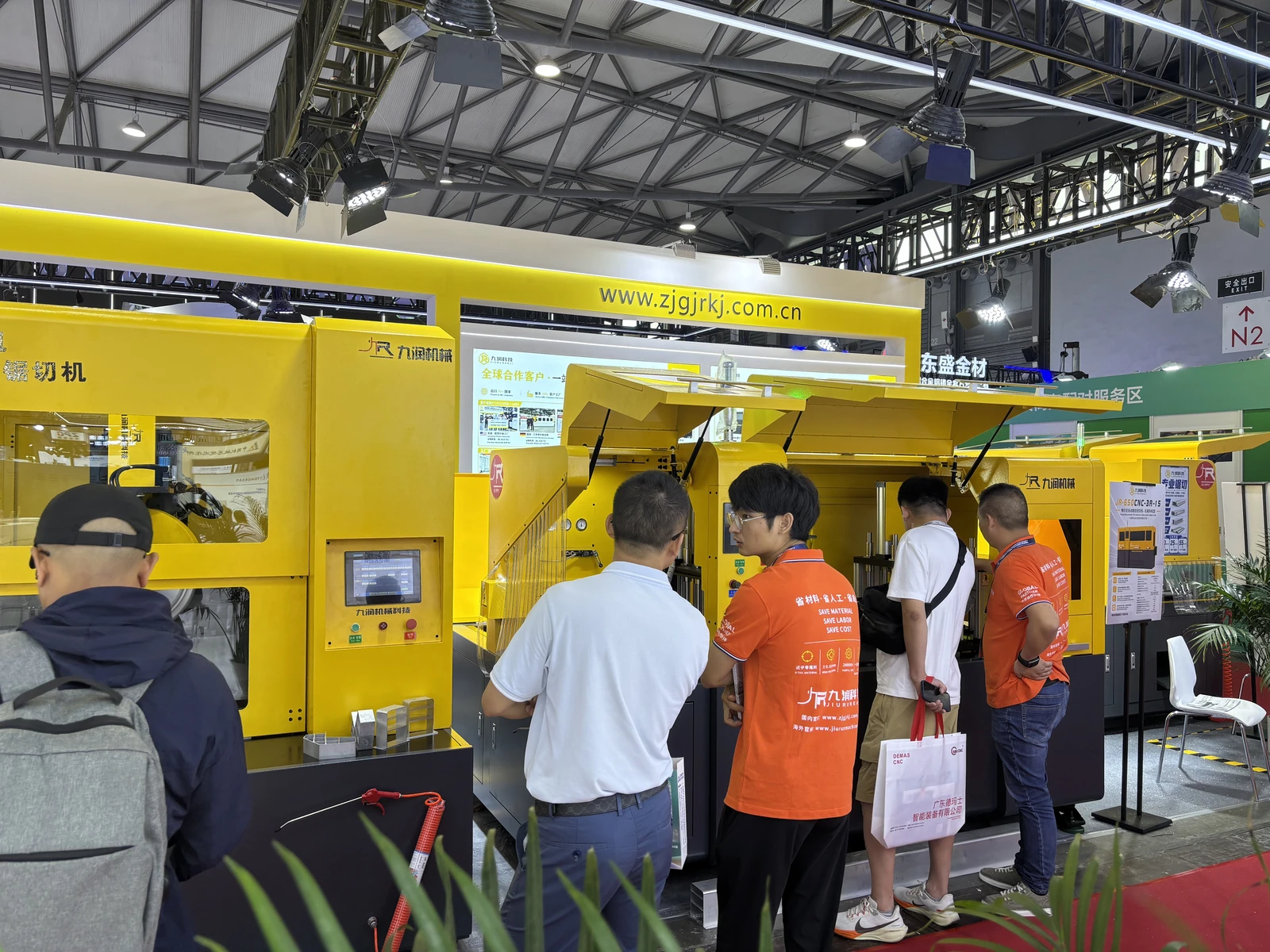
A prepared demonstration illustrates an assessed task using known material and a defined setup. A customer-specific trial asks a different question: does the proposed arrangement produce an acceptable result for that customer’s stated input and receiving requirement? Success with your convenient stock does not answer the second question automatically.
| Visit format | Prepare before the visit | Useful result |
|---|---|---|
| Equipment introduction | Station scope, approved explanation and visible configuration | Visitor understands the cutting stage and next assessment step |
| Prepared task demonstration | Identified stock, agreed output and approved demonstration method | Observed record of that bounded task |
| Customer-specific trial | Assessed input, released cut-stage requirement and acceptance basis | Accepted output or a documented unresolved result for that task |
| Offer clarification | Demonstrated provisions compared with the customer’s proposed package | Included, optional and external work clearly distinguished |
Give a customer trial time for preparation and review before the machine runs. Obtain the material designation and condition, actual section or input dimensions, incoming length, cut-stage output requirements and the intended next operation. Ask for photographs or drawings where they resolve missing information, while keeping any confidentiality arrangements specific to that inquiry.
If the inputs are incomplete, use the visit for explanation and clarification. Do not convert incomplete information into an improvised trial to keep the appointment moving. The manufacturer or responsible assessor may need to review the material and proposed task first.
Identify the basis of acceptance with the customer. A feeding or positioning figure is different from the finished cut-piece result. A piece suitable as a machining blank may be different from a member ready for assembly. Agree which result the trial is meant to assess, and retain open questions rather than describing every visible cut as a pass.
3. Buy the complete demonstration station, not only the saw
The showroom brief should include the path from incoming material to the point at which the visitor can review the result. Ask which support, presentation, output collection and other provisions belong to the offered station. Show the supplier the actual incoming material and planned site arrangement so that the proposal can be assessed as a whole.
A compact finished sample is not a substitute for the length and shape of stock used to make it. The station’s proposed working space must account for the assessed input, the output and the approved access arrangement. A plan that fits the machine enclosure alone may leave material movement or visitor placement unresolved.
Distinguish the operating area from the explanation and sample-review area. Ask the supplier what its approved use requires and have the responsible site personnel address visitor access. The showroom drawing should not invent a universal safe distance or use an attractive display arrangement as evidence that operation is suitable there.
Include utilities, supporting provisions and the installation work actually needed for the quoted configuration. Request a list of what the manufacturer supplies, what the distributor supplies locally and what another provider must assess. Price the same complete station when comparing options.
Also plan how stock and completed samples are identified between appointments. A visitor should be able to connect an observed result to the material, job requirement and configuration behind it. A pile of visually similar pieces with no record makes the next explanation harder and can encourage unsupported claims.
4. Keep the showroom configuration separate from the customer offer
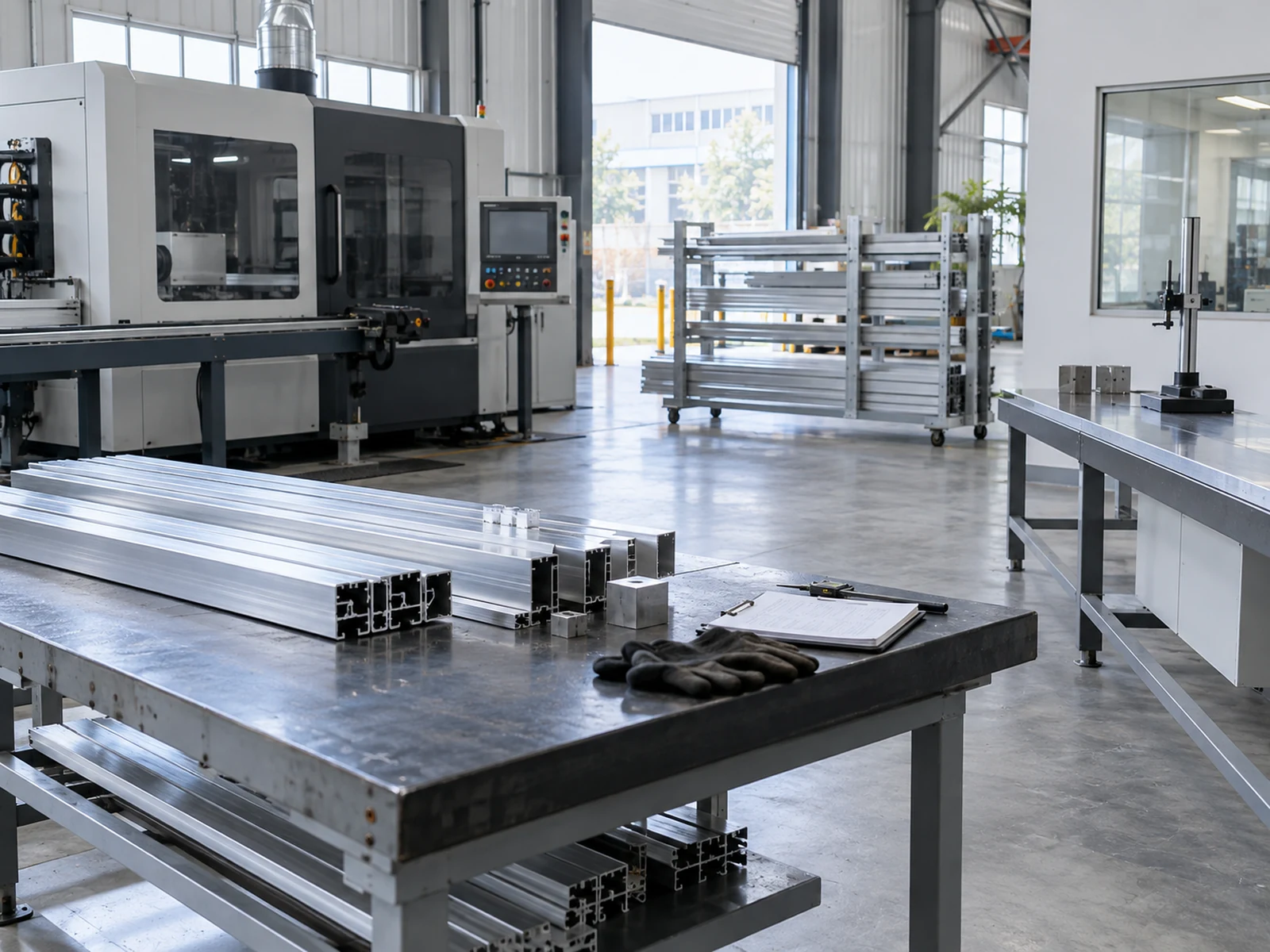
A demonstration environment may include accessories, support equipment or preparation that are absent from a customer’s base offer. Before buying, ask for a configuration record of the machine and provisions that will be demonstrated. Maintain that record when the station changes.
After an appointment, compare the observed arrangement with the proposed customer package. Identify what is included, what is optional, what the customer must provide and what needs further assessment. An accessory visible in a video should not silently become a promised supply item.
Use a simple purchasing example. A showroom demonstrates a repeated member job with a prepared stock rack and a separate output-review bench. The customer receives an offer for the saw and a defined support arrangement. The rack and review bench must be assigned explicitly: included items, separately offered provisions or customer-supplied site equipment. The example is a scope comparison, not a description of a particular Jiurun configuration.
The same rule applies to staff work. If your team identifies, checks or sorts output during the demonstration, explain that work. Do not let a polished presentation imply that the machine performs a task supplied by the demonstrator or by separate equipment.
Ask for a consistent way to refer to available configurations and options. Photos, sample records and quotations should identify the assessed arrangement. Marketing material can introduce a range, while the offer must describe the equipment being proposed for the customer’s job.
5. Prepare people who can explain and operate the assessed task
Decide who owns each part of the appointment before specifying the machine. The person welcoming a visitor, the person operating the station, the person interpreting the requirements and the person issuing the follow-up may be different people. Availability of one does not establish availability of the others.
Ask the supplier what training and documentation are actually offered for the proposed configuration. Describe the languages and roles involved. Request clarification of what the training covers, what prior knowledge is expected and which questions require manufacturer support. Do not advertise an unspecified training or service commitment as already included.
A sales explanation should preserve the boundary between an observed result and an unassessed request. Give staff a practical response for a new profile or material: collect the necessary inputs, record the question and obtain an assessment. Avoid answering a technical fit question by matching only a familiar model name.
Include an alternative plan for staff absence. If only one person can prepare and run the assessed demonstration, a visitor appointment depends on that person. Decide whether another prepared person is available or whether the appointment must change format. A video-supported explanation is a different service from an actual local cutting trial.
Keep the demonstration method aligned with the manufacturer’s instructions. Do not modify protective functions, control behavior or operating procedures to make a visitor presentation more dramatic. Requests for a changed configuration need the supplier’s proper assessment and documentation.
6. Compare appointment capacity with actual preparation work
A showroom machine may be used intermittently, yet appointment preparation can still be a constraint. Record the work needed to receive the inquiry, assess the input, prepare the task, conduct the visit and restore the station for the next agreed job. Identify which activities can occur separately and which need the same people or station.
Here is an invented scheduling example. A distributor has four customer-specific trials requiring 60 minutes of preparation each and four 45-minute visits. The assumed workload is 4 × 60 + 4 × 45 = 420 minutes, or seven hours, before any separately required follow-up. This is appointment planning arithmetic, not a cutting-rate claim or measured showroom performance.
If the calendar records only the 180 minutes of visitor time, it hides 240 minutes of preparation. That does not prove every activity must happen consecutively at the saw. It shows the work that must be assigned and accommodated somewhere. Replace the assumptions with observations from your actual assessed appointments.
Track the reason an appointment could not complete its objective. Missing customer information, unavailable material, an unresolved equipment assessment and absent staff are different causes. Faster machine cycling may not resolve any of them.
Use those records when comparing a larger station with a more limited demonstrator or remote manufacturer-supported assessment. The relevant question is whether the proposed investment allows your team to deliver the appointments your market needs, with the required preparation and support.
7. Record evidence a customer can use after the visit
A useful visit ends with more than a photograph of the customer beside a machine. Provide a record of the assessed task: incoming material identity and dimensions, the relevant drawing or requirement, demonstrated configuration, observed result and any open issue. Follow the arrangements agreed for the customer’s information and samples.
Keep prepared showroom examples identified as prepared examples. They can explain a process well, but should not be presented as the customer’s own trial. Likewise, a general cutting video can support orientation without proving the result for an untested material or component.
Make the next step specific. A buyer may need a revised requirement, a configuration response, a quotation or another trial. Assign that next step and preserve what the demonstration did establish. Do not add a performance promise merely because the visitor appeared satisfied.
When material or samples are returned, retained or disposed of, follow the arrangement made for that inquiry. Avoid using a customer’s identified part, drawing or result in public promotional material without the appropriate permission. The showroom equipment purchase itself does not authorize publication of customer information.
The article’s focus is the station that supports these appointments. A separate sample-cutting trial checklist can help organize an individual trial, but it does not replace the distributor’s decision about recurring demonstration scope and resources.
8. Plan continuity when the demonstration machine is sold
If your business intends to sell the showroom unit, state that intention in the buying plan. Selling the machine and retaining the ability to demonstrate are separate outcomes. Decide what happens to booked visits while the unit is prepared for delivery and a replacement station is assessed and installed.
Identify which supporting provisions stay in the showroom and which accompany the sold machine. Keep their status visible in the sale description and in the replacement purchase. A customer should understand the actual supplied package, while your team needs to know whether the showroom can continue its agreed tasks.
Record the unit’s actual status, configuration and relevant use and service history when presenting it for sale. Obtain the supplier’s response about inspection, documentation, remaining support arrangements and any changes required for the customer’s site. Do not infer a warranty, an unused condition or a new-machine equivalent from appearance.
Consider a replacement with a different configuration as a new assessment. Existing demonstration stock, prepared examples and documentation may not transfer unchanged. Review the portfolio and update the station record before accepting appointments against the new machine.
This continuity plan is part of the distributor’s purchase case. A unit that generates a sales opportunity but removes the only local demonstrator can create a gap. The solution depends on your actual appointments, stock and supplier response; no generic sales-volume threshold decides it.
9. Send a clear aluminum saw for a distributor showroom inquiry
Send Jiurun the customer tasks your showroom should demonstrate, the actual material forms and sizes, and the formats of appointments you intend to offer. Include the site layout and available inputs, staff roles, preparation responsibilities and questions needing manufacturer assessment. Separate known inquiry demand from market assumptions.
Ask for the assessed configuration, included supporting provisions, training and documentation actually available, and the process for handling jobs outside the local demonstration scope. Describe any plan to sell the demonstration unit and ask how the replacement or customer handover would be addressed.
Compare the proposal with the Jiurun aluminum cutting equipment range using that showroom brief. A broad range description introduces possibilities; it does not establish that one selected station demonstrates every configuration.
Discuss your showroom demonstration portfolio with Jiurun. Start with the visits you need to deliver and the questions behind them. A clear brief makes it easier to identify an appropriate equipment assessment and the remaining information required.
Questions from distributors planning a working showroom
Should the largest machine be the first demonstration purchase?
Assess the customer tasks, site and team resources first. Maximum stated capacity does not establish whether the station answers recurring inquiries or fits the complete showroom workflow.
Can every visitor bring stock for an immediate trial?
Do not promise that without assessment and preparation. Collect the input identity, physical dimensions and output requirement, then determine whether the offered station and approved method can be assessed for that task.
Does a successful demonstration cover the customer’s base quotation?
Only the demonstrated and proposed scopes establish what can be concluded. Compare accessories, staff work and supporting provisions explicitly. Visible demonstration equipment may be optional or supplied separately.
How should a distributor assess the return from a showroom saw?
Use actual appointment outcomes, preparation work, costs and completed sales where available. Keep inquiries, quotations and sales separate. Do not assume that every attendee becomes a customer or apply an invented conversion rate.
Watch general Jiurun cutting context
The video below introduces an aluminum cutting example. It is not a customer-specific showroom trial, a description of the complete quoted showroom station or a promise of distributor training and sales results.