
An aluminum cable tray cutting machine is a useful investment only when its quoted work matches the components your factory makes. Cutting loose side rails and cross members is a different job from producing an assembled cable ladder section. A factory making sheet-bottom trays or covers may also need a separate sheet-processing route. Start with the actual incoming material and the output released to the next operation, before comparing machine names or a supplier’s fastest demonstration.
This guide is for manufacturers assessing an industrial cutting station. It does not specify a cable tray installation or qualify a cable support system. The finished product’s design, connections, electrical requirements and acceptance remain with the responsible product and project process. A saw assessment can address the retained cutting work; it cannot replace that broader qualification.
1. Identify the product you manufacture and the material you cut
The phrase cable tray can hide several production jobs. One factory may receive long aluminum members, cut them and assemble ladder sections. Another may buy prepared rails and retain only a limited cross-member operation. A third may manufacture a trough from sheet or supply a mixture of purchased straight sections and locally made fittings. Those factories should not send the same equipment inquiry.
List the product families you actually supply, then map their component routes. State which straight sections, bends, branches, reducers, covers and accompanying parts are manufactured in-house. Mark purchased components separately, including parts that arrive with holes, formed features or finished connections. The purpose is to define a workload, not to imply that one saw performs every process named in the catalogue.
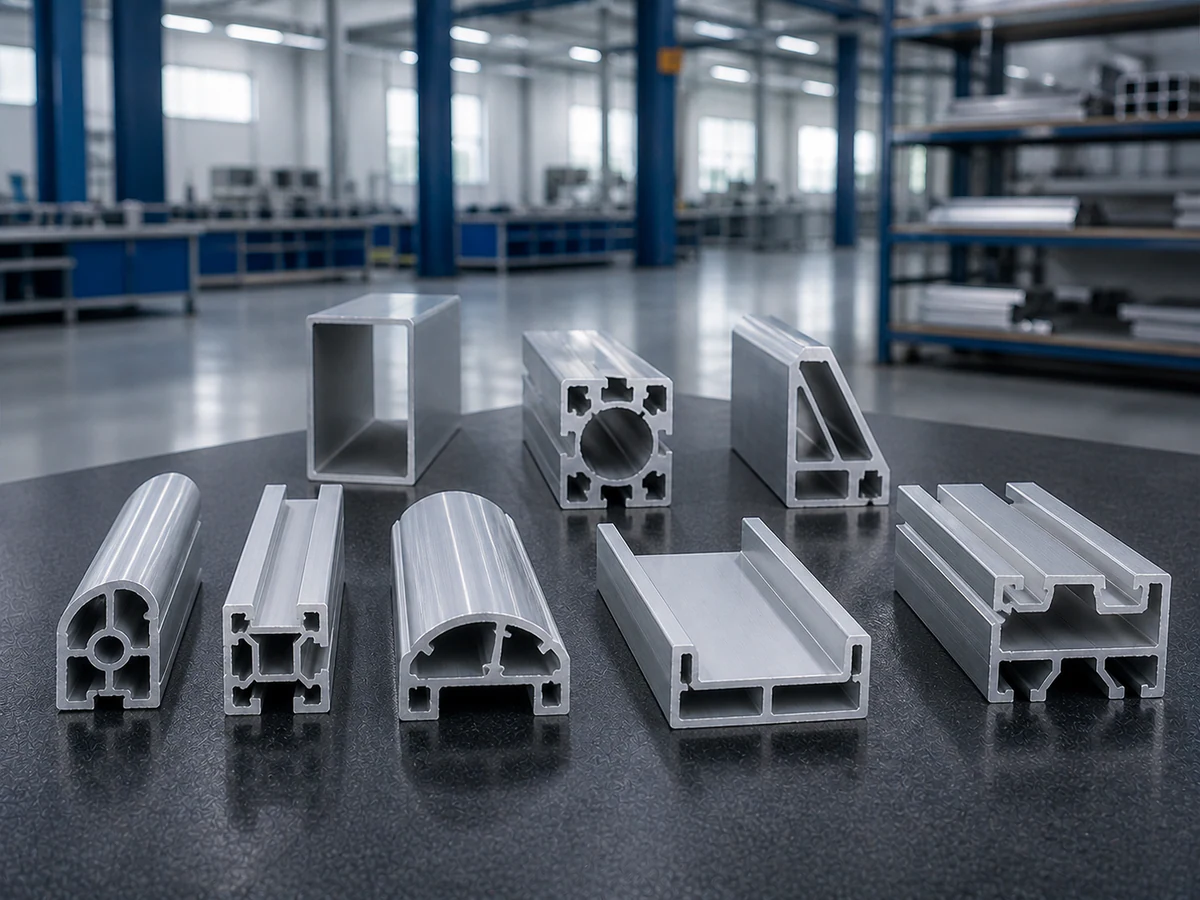
Check the incoming form for each retained component. A rail may be supplied as an extrusion or another prepared section according to your product design. A cover may enter as sheet, a formed piece or a finished purchased item. Describe what your factory receives, rather than assuming a manufacturing route from the component’s name. Include the actual section drawing and material designation for any member proposed for saw cutting.
The official Eaton imperial cable tray and ladder range illustrates why this distinction matters: it lists aluminum ladder and trough options, fittings, covers and accessories separately. That is a product-scope reference, not evidence that a Jiurun saw makes the range, accepts its components or reproduces its performance. Use your own released design to define the proposed cutting job.
2. Separate member cutting, sheet processing and assembly
Define the work package in terms of its input and output. For loose-member cutting, the input is identified stock and the output is a released, inspected member. For an assembled section, the route includes the connection process and assembly acceptance after cutting. For a sheet-derived component, blank preparation and forming may precede or replace a proposed saw operation. The supplier needs to know which package is being quoted.
| Factory requirement | Cutting inquiry should state | Separate work to resolve |
|---|---|---|
| Loose side rails and cross members | Incoming sections, end requirements, quantities and receiving inspection | Holes, connection features, assembly and product qualification |
| Complete ladder sections | The retained member-cutting stage within the full route | Joining, section identification and assembled-product acceptance |
| Sheet-bottom or cover components | The actual sheet or prepared-part input; a separate suitability assessment | Blank development, perforation, forming and subsequent assembly |
| Project packages with fittings | Which fitting members are made locally and which are purchased | Complete fitting supply, accessories and package reconciliation |
The table describes inquiry boundaries, not universal process instructions. A specific product may use a different route. If a supplier offers combined cutting and another operation, ask for the offered configuration, material conditions and output definition in writing. Broad labels such as fully automatic production line do not establish the included operations.
This distinction also improves price comparison. A saw-only quotation should not be treated as a cheaper version of a complete tray assembly proposal. Compare cutting packages with cutting packages first, then identify the additional equipment, labor and services required for the full route. Otherwise a missing stage can look like a saving until the factory has to purchase it separately.
3. Group the workload by rail and cross-member requirements
Build a workload summary from representative released orders. For each member family, record the stock form, section drawing, finished length reference, end geometry, quantity and next operation. Keep the drawing revision with the record. A dimension on a sales catalogue page can describe a finished product while leaving the member fabrication dimensions unresolved.
Rail and cross-member jobs can create different handling questions. A long rail needs a defined support and transfer route. A shorter cross member needs a defined way to retain its identity after it leaves the cutting station. Explain the actual dimensions to the supplier and ask it to assess the proposed arrangement. Do not assume the longest catalogue length is a machine feeding stroke, or that a machine’s name establishes its smallest safely handled part.
Separate repeat straight-section work from fitting-related work. If a released bend or reducer uses members with different ends, show those drawings as a distinct family. A cutting angle must come from the component design, with its reference face and length convention stated. The shape of the complete fitting does not, by itself, tell the operator what angle to set on each loose member.
Include the product mix and the period from which it was observed. A month dominated by one repeat rail may not represent a month containing several widths and fitting packages. State the quantity of accepted members required for each route, rather than presenting an unsupported total pieces-per-day target. The supplier can then discuss how the offered station would serve the actual mix.
4. Keep connection features and material identity visible
A member’s cutting requirement depends on what the next stage does with it. If a drilling fixture locates from one end, identify that end in the drawing package. If a prepared connection feature must remain with a particular end or orientation, include its position and identity. Cutting a preprocessed rail is not the same inquiry as cutting plain stock that will be drilled later.
State which operations are retained elsewhere. Holes, slots, formed details and joining preparation need their own scope and acceptance. A drawing that contains these features does not mean a saw quote includes them. Ask the supplier to mark included operations, exclusions and any proposed handoff, so purchasing can see where the work will be performed.
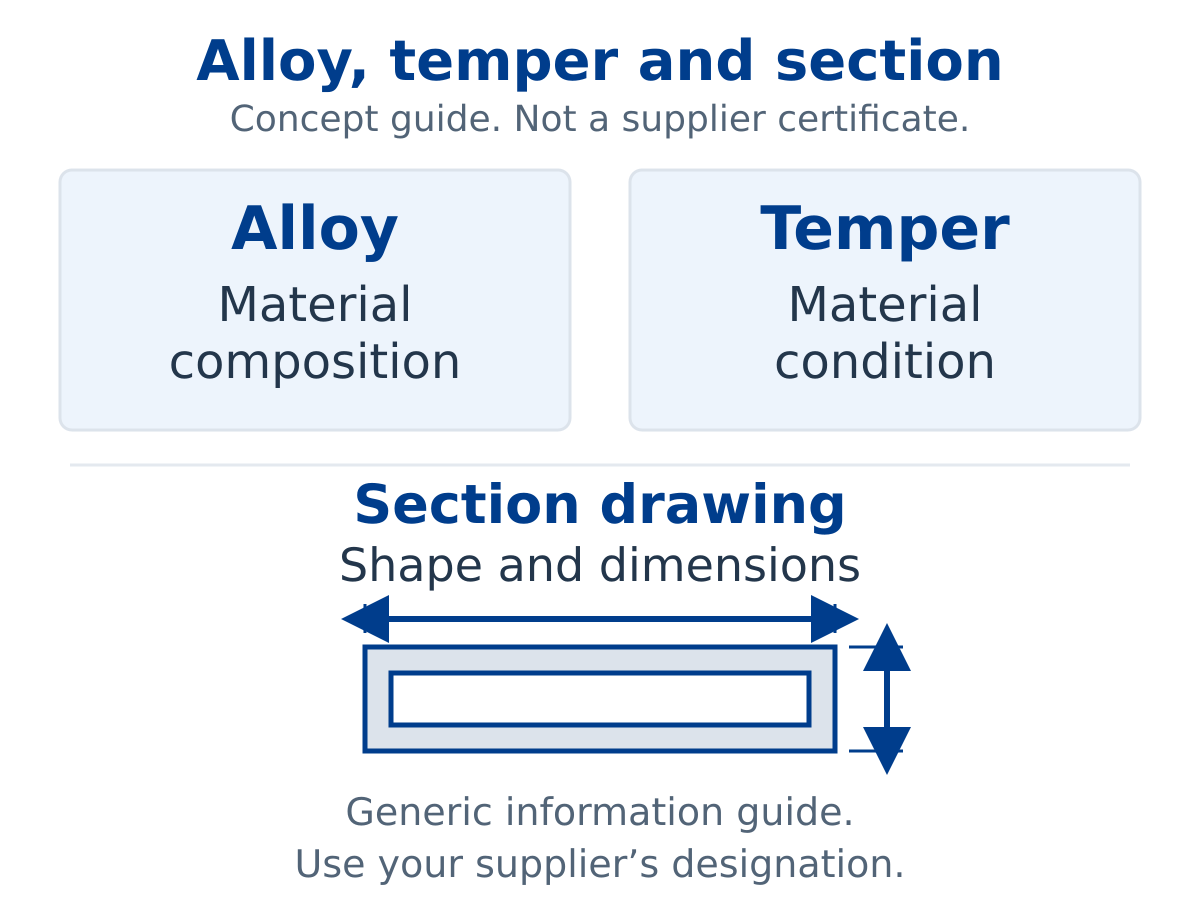
Material identity needs more than the word aluminum. Use the supplier’s actual designation and condition, linked to the stock and drawing. A similar-looking section may belong to a different specification or product family. Identify any surface treatment or protective layer relevant to handling. Do not select a universal alloy, temper or cutting recipe from this article; the quoted configuration must be assessed against the actual material.
Maintain those references through receiving, cutting and transfer. If similar rails share a rack, describe how the factory distinguishes them. If a cut part is held for inspection, explain how it remains linked to its order. These are workflow requirements to discuss; they do not imply an automatic identification function unless the offered equipment explicitly includes one.
5. Compare accepted sections rather than pooled cut-piece counts
Use a calculation that preserves the product structure. The following numbers are invented only to explain the comparison. Suppose one released ladder-section design requires two rails and eight cross members. An order for thirty sections requires sixty accepted rails and two hundred forty accepted cross members before assembly losses or holds are considered.
If inspection releases fifty-eight interchangeable rails of the correct family and all two hundred forty cross members, the member counts support at most twenty-nine sections. If only two hundred twenty-four correct cross members are available, the maximum falls to twenty-eight. Neither quantity proves that those sections are assembled or released. Joining, inspection and the accompanying component supply still have to complete their own work.
Now suppose the rails are not interchangeable: the design distinguishes a left rail and a right rail. The pooled total of fifty-eight is no longer sufficient to calculate complete pairs. Count the accepted identities separately. The same applies when cross members of different widths belong to different orders. A surplus for one product cannot fill a shortage for another simply because both are aluminum.
This example helps determine whether more cutting capacity would change the outcome. If the actual constraint is a missing purchased fitting, a joining queue or held material, a faster cutting station may only create additional loose inventory. If accepted rails are consistently the shortage and the receiving stage is ready, a cutting-capacity assessment is more directly relevant. Establish the constraint from factory records, not from this invented arithmetic.
6. Assess changeovers and long-stock movement as part of the purchase
Ask for a proposed work sequence covering more than the cut itself. Explain how stock arrives at the station, how the required section is located, how pieces are identified and how accepted output moves to the receiving stage. Include any current manual handling problem. A demonstration of blade motion does not establish the space, staffing or transfer arrangements needed for production.
Choose a representative changeover from your order history. It might involve changing a rail family, a cross-member width, the end requirement or the material batch. Ask which settings, tooling or supports change, what information the operator checks and which first-piece inspection releases the new job. Compare the offered workflow against that actual transition rather than an unspecified setup-time claim.
Review the long-stock path using the actual site layout and proposed configuration. Identify the receiving and output areas, access routes and the handoff to other stations. The supplier should confirm its equipment and support requirements. The factory’s responsible personnel should resolve site handling and safety arrangements. Do not improvise clamping or bypass protective measures to fit an assumed layout.
Discuss the mixed-order sequence as well. A large batch of one member may suit the cutting station while delaying the complementary members needed by assembly. Explain whether jobs are released by component family or by section package. Ask how the proposed station fits that scheduling approach, without assuming that an unquoted software function automatically balances the order.
7. Agree trial evidence and quotation boundaries
An agreed trial should start with representative material, released member requirements and a stated inspection plan. Select cases that expose meaningful differences in the workload: the dominant rail, a different section and a member that changes the handling or end requirement. The appropriate selection depends on the factory’s scope; there is no universal number of samples that qualifies every product.
Record the machine configuration, relevant tooling, material identity and drawing revision with the observations. Identify which results were measured, who inspected them and which questions remain open. A supplier description and a measured result are different evidence. Keep an unresolved condition visible instead of rewriting it as a pass.
Separate feeding-position information from finished-member results. A feeding accuracy figure does not, alone, establish the length or end condition of a released part. Nor does a satisfactory cut member establish the load capacity, electrical behavior or project acceptance of the assembled cable tray. Those product-level requirements need their own responsible assessment.
Compare quotations using the same cutting package. List the machine, tooling, supports, offered fixtures, commissioning, training and documentation. State what the buyer supplies and what remains outside the offer. If a proposal includes drilling, joining or another process, show its scope separately so the price difference can be assessed fairly. Request conditions behind any output claim and distinguish cut pieces from accepted output.
Commercial comparison should also identify the delivery point, site preparation responsibilities and stated service arrangements. Ask for written answers to the open production questions before treating the quotation as final. A low price with an unresolved material or handling requirement is not yet a comparable offer.
8. Send a bounded cable tray manufacturing inquiry
Prepare a factory summary that names the products you manufacture and the stages retained in-house. Identify whether the intended purchase serves loose-member supply, an assembled ladder route, selected fitting components or another defined job. Keep sheet-processing and purchased-component routes visible, even where they fall outside the saw quotation.
Attach representative member drawings, stock photographs and material designations. Include the observed order mix, receiving inspection requirements, important changeovers and the current production constraint. Show the handoff to drilling, joining, inspection or packing. If the product design or an end requirement is not released, mark it as unresolved rather than asking the supplier to invent it.
Ask Jiurun to assess the retained aluminum cutting scope and explain the proposed configuration, assumptions, exclusions and evidence needed to resolve open questions. This is an equipment inquiry, not an endorsement of a cable tray system. The responsible product and project process must retain ownership of system suitability and finished-product acceptance.
Frequently asked purchasing questions
Does an aluminum cable tray cutting machine make a complete tray?
That depends on the offered scope. A saw-only station cuts specified members; a complete manufacturing route may include other preparation, connection and inspection stages. Ask for the actual input, output and included operations. Do not infer a complete tray line from the product name.
Can a profile saw also process tray covers or bottoms?
Provide the actual incoming form and proposed operation for a separate suitability assessment. Sheet, formed components and long sections present different jobs. A quotation for one member family does not automatically cover the others, and an aluminum material label does not establish suitability.
What is the best way to compare production claims?
Use the same observed product mix, material conditions and work sequence. Identify loading, changeover, checking and transfer as well as cutting. Compare accepted members at the agreed receiving stage, then check how those members contribute to complete sections. Keep measured trial results separate from estimates.
Should the cutting supplier approve the cable tray design?
A cutting assessment should address the quoted equipment’s retained job. Product design, connections, electrical requirements and application acceptance belong to their responsible processes. A machine purchase or a video of cutting does not establish those approvals.
Review the separate cutting and drilling route discussion when that handoff is part of your scope. Compare Jiurun aluminum cutting equipment against the actual member package, then send Jiurun your cable tray member drawings and production mix for a configuration assessment.
Watch the cutting stage in context
This Jiurun video provides general aluminum cutting context. It is not a cable tray manufacturing trial, a product certification or proof of the invented section-count example. Assess the actual material and proposed configuration separately.