
An aluminum saw for greenhouse manufacturing should be specified against the component package your factory has agreed to produce. Roof glazing bars, sidewall members and opening-vent frames can belong to different released assemblies. A saw capable of cutting one long profile does not by itself show that the proposed production arrangement can deliver the required greenhouse package.
This guide is for manufacturers buying industrial aluminum extrusion cutting equipment. It connects the approved greenhouse system, stock form, part schedule, cutting arrangement and project handover. It does not select a greenhouse structure, calculate its loads or approve its glazing, drainage or weather performance. Those decisions belong to the responsible system designer and project team.
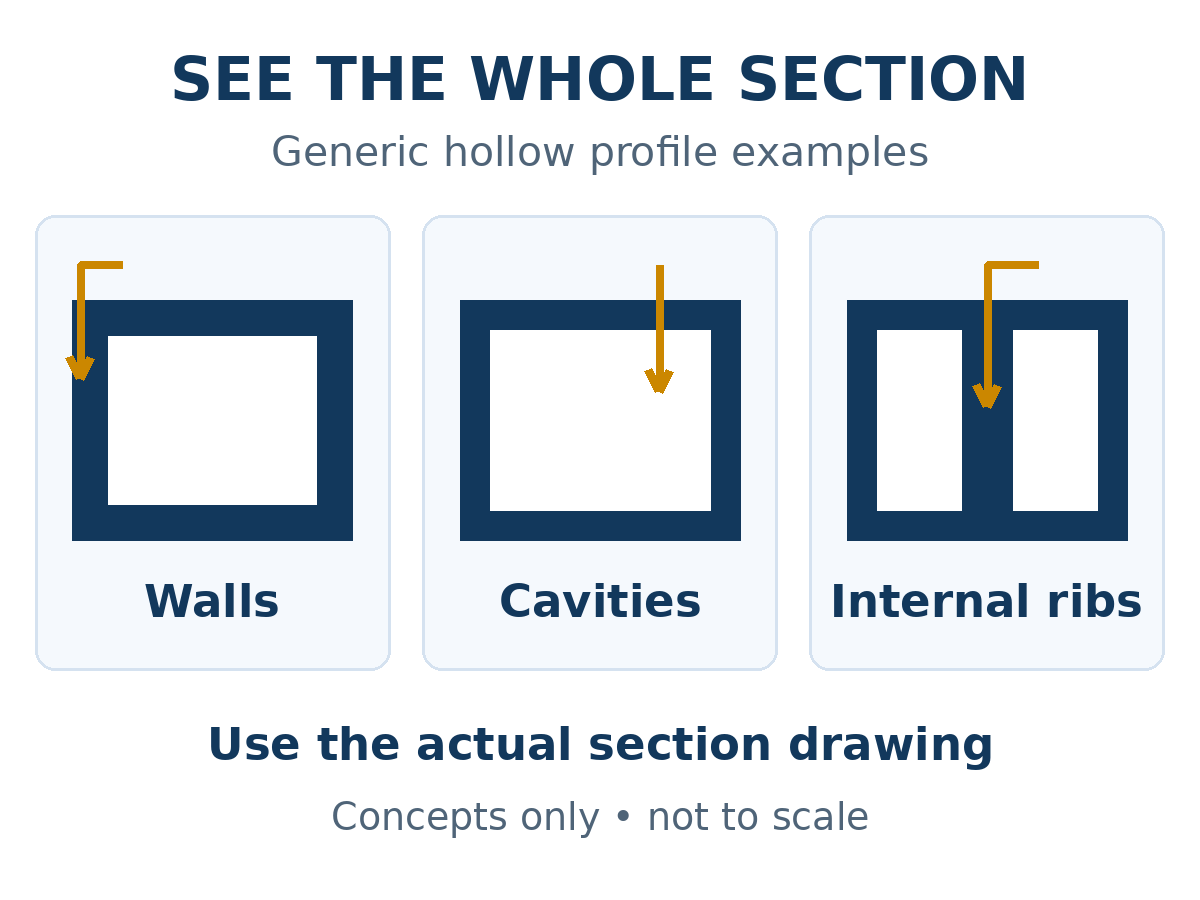
1. Decide what your factory will manufacture
Begin with the commercial and manufacturing boundary. Will your factory cut supplied roof and sidewall extrusions, manufacture vent-frame members, prepare accessory pieces, or receive a ready-to-build package for installation? These are different workloads. A machinery investment should follow the work retained in your factory rather than a general description such as “greenhouse production.”
BOAL Systems describes aluminum roof and sidewall systems for glass or poly greenhouse construction and delivery of ready-to-use flatpacks. This illustrates a real distinction between producing profile components and buying a prepared system package. Its descriptions are examples of that supplier’s scope, not a Jiurun product specification or an endorsement of a particular production route.
If components are purchased ready to assemble, identify the cutting work that genuinely remains. It may be a released local adjustment, a separately manufactured accessory family or preparation for another approved assembly. Do not size a new saw against the total aluminum weight in the project when much of that material arrives in its final required length.
If your factory receives extrusion stock, list the assemblies you will release. Separate roof members from sidewalls, opening elements and accessory parts. Identify material supplied by another organization and processes retained elsewhere. The proposed saw should have a defined entry condition and a defined accepted output for each included family.
State where the investment begins and ends physically. For example, it may receive identified extrusion stock from an internal rack and release checked members to project containers. If retrieval, initial loading, downstream machining or packing sits outside the machine offer, retain that work in the overall production comparison. The omitted work still requires capacity and an owner.
2. Start from the released greenhouse system
A building plan is not automatically a machine-ready part schedule. Roof dimensions, glazing dimensions and cut-member lengths describe different things. Obtain the released manufacturing records that translate the approved system into the actual parts your factory is authorized to produce. The saw supplier should assess those records rather than derive a production program from a photograph.
Record the project identifier, approved system family and drawing revision. Identify the relevant profile drawing for each part. If two greenhouse projects use similar-looking extrusions, do not assume that their component lengths, end conditions or later operations are interchangeable. A common appearance is an incomplete basis for grouping production work.
The Michigan Greenhouse Company description distinguishes its glazing and framing options and identifies system-specific features such as internal weep arrangements and bolt tracks. That supports the need to retain the supplied system identity in a cutting inquiry. It does not establish that those particular features are present in your greenhouse or that a saw can approve their function.
Show which part records are released and which remain open. A missing vent-frame detail or unresolved roof-to-sidewall connection should remain visible. If the uncertainty could change the proposed cutting arrangement, ask for a conditional assessment. Do not hide it inside a general statement that the machine will handle all greenhouse profiles.
Keep the design decision with the responsible designer. Do not ask the machine seller to choose a structural section, invent a wind or snow rating, determine glazing support or promise watertightness. The useful machine response identifies how the offered equipment will produce the agreed cut-stage members and what evidence remains necessary.
3. Build a component matrix before comparing saws
Use one row per manufacturing family rather than one row per nominal greenhouse width. Record the actual input section, stock condition, cut-length definition, end details, project quantity and later receiving operation. Include the smaller accessory parts as well as the longest members; either can expose a limitation that a headline machine capacity misses.
| Component family | Information to release | Question for the equipment offer |
|---|---|---|
| Roof glazing members | Profile identity, end references and approved roof assembly | Can the offered arrangement produce and collect these members in the specified condition? |
| Sidewall members | Section, required ends, lengths and receiving assembly | What changes are needed from the roof-member job? |
| Vent-frame members | Individual part drawings, handedness and later features | Which square or angled cuts are included, and what remains downstream? |
| Accessory pieces | Actual material, short-part geometry and required quantity | Are support and accepted collection assessed for these pieces? |
| Purchased finished items | Supplied condition and any approved retained work | Is there a real cutting task within this investment? |
The labels above are inquiry categories, not a claim that every greenhouse uses the same parts. Replace them with your released assembly structure. A manufacturer of one system may retain a different set of operations from another. The component matrix should describe your production boundary, not become an assumed greenhouse bill of materials.
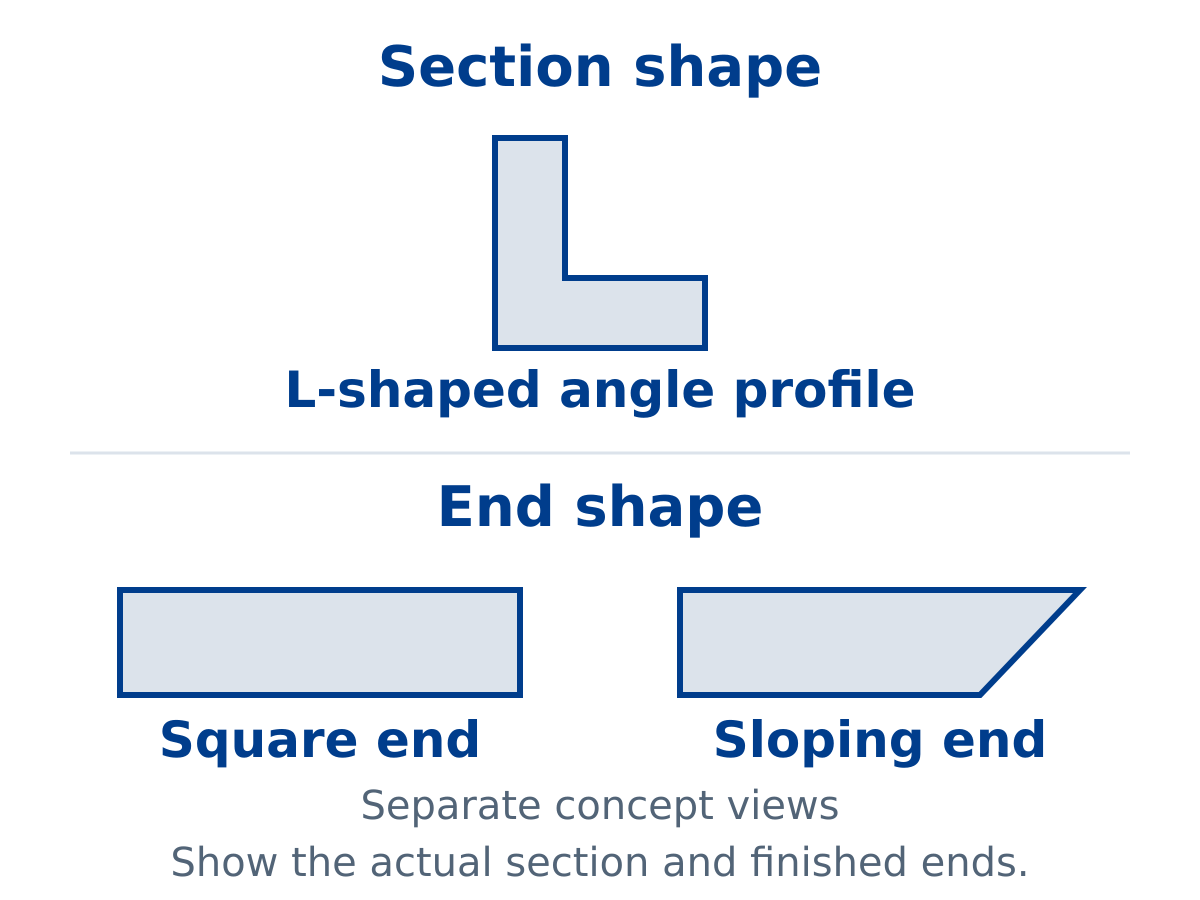
For angled parts, show both end definitions and the measuring reference on the actual drawing. Identify mirrored or handed variants where relevant. Do not enter the visible edge dimension into a machine program without a released reference. A profile’s contour and orientation can make apparently similar member descriptions represent different production tasks.
Record incoming finish, film, packaging and any protected surfaces. If profiles arrive with components already inserted, identify that supplied construction rather than treating them as bare aluminum stock. Ask the supplier to assess the actual material presentation and to state any excluded condition.
Keep glass, polymer glazing sheets, seals, fasteners and purchased hardware outside an extrusion-saw capability claim unless the offered equipment expressly covers a separately assessed task. Their presence in the greenhouse package does not make them aluminum cutting jobs. This prevents a quote for one production stage from being mistaken for a complete greenhouse factory offer.
4. Preserve interfaces without asking the saw to design them
A component may have a drainage route, a gasket interface, a fastening track or a mating end detail within its approved system. Identify the relevant interface and its accepted condition at the cutting handover. The system owner must release what is required; the saw supplier must assess whether the proposed cut-stage arrangement can meet the specified responsibility.
If drainage or other local features are produced after cutting, name that later operation and its owner. Do not assume a saw creates required holes or slots because the extrusion drawing shows them in a finished assembly. Conversely, if the stock already includes a feature that must remain intact, provide its supplied location and the released relationship to the cut ends.
Ask how the assessed proposal retains the intended orientation from loading to accepted collection. The question is particularly useful when a family includes mirrored members, directional tracks or different roof and sidewall receiving operations. A demonstration using one convenient orientation cannot settle all the included variants.
Keep functional verification separate from dimensional observation. A measured cut length supports the stated length check. It does not alone establish drainage performance, glazing retention or weather sealing in the assembled greenhouse. If an assembly check is part of the purchase evidence, identify who performs it and the released procedure that governs it.
Document the disposition of a member whose interface condition is unresolved. Holding it pending review is different from releasing it into the project package. Do not allow a successful length reading to turn an unassessed interface into an accepted part merely to achieve a complete count at the machine exit.
5. Assess an aluminum saw for greenhouse manufacturing against the order mix
Compare repetitive square-cut work, changing lengths and specified angled work as separate tasks. A factory may need one assessed arrangement for a repeated roof member and another for vent-frame ends. The purchase decision depends on the actual component matrix and production mix, not simply on whether the machine is described as CNC or automatic.
Jiurun manufactures industrial circular-saw equipment for aluminum and non-ferrous materials. Request a configuration-specific proposal for your greenhouse components. A general company scope does not confirm every member family, and feeding repeatability is not a finished-part accuracy guarantee. Keep any quoted performance tied to the named model, configuration and assessment.
A straight-cut arrangement may be appropriate when the retained work consists of released square-ended members and the supplied configuration covers their sections. If angled end work is required, obtain a proposal for those drawings and orientations. Do not assume that adding an angle label to an inquiry extends a straight-cut capacity entry to the angled jobs.
Include the shortest relevant parts, the long members and the transitions between profile families in the assessment plan. Confirm how stock enters, how accepted cut members leave and which handling items are included. A feed action observed on one profile does not establish automatic retrieval, finished-part sorting or loading of an entire project order.
Compare alternatives against the same component package. An offer for repetitive roof bars alone is not directly equivalent to an offer covering roof bars, sidewalls and vent-frame end preparation. Add the retained operations to each alternative so the comparison shows the complete work required to release the agreed project output.
6. Count usable packages, not just cut pieces
The manufacturing goal may be a roof bay, a vent assembly or a project delivery batch. Define that output before interpreting a machine’s part count. A surplus of one easy member cannot compensate for a missing different member needed in the same released package. Keep accepted quantities by required family.
Invented package example: one approved roof-module package needs four members of family A and two of family B. An order for 12 packages therefore requires 48 A members and 24 B members, or 72 accepted members. The quantities are illustrative only; they are not a greenhouse design or Jiurun production claim.
Suppose the cutting observation separates 50 A members and 26 B members. Two A members and four B members are held pending the agreed checks. The released quantity is then 48 A and 22 B. Although 70 members have been released, only 11 complete packages can be allocated because each package requires two B members. Four A members remain beyond those 11 packages.
This example shows why a headline piece total can conceal an incomplete project handover. Record held quantities, released quantities and allocatable package quantities separately. Extra A members do not close the B shortage. If replacement pieces are produced, preserve the disposition of the original held pieces so both are not counted as successful output for the same requirement.
The same logic applies when later operations are necessary. A correctly cut member awaiting a required hole or other released feature remains work in progress for that later handover. Define the cut-stage output honestly, then assess the retained route separately. Do not call a cutting demonstration a completed greenhouse package when essential included work has not occurred.
7. Include changes and project staging in the observation
Use representative work from the released order mix, including a repeated family, a changed profile and a relevant end variant. Record the work boundary, observed period, operators and included handling. A promotional clip showing consecutive cuts provides context, but it cannot replace a representative observation of the proposed package-production task.
Include the point where the previous job stops and the next released job starts. Record the activities actually needed to make that change. If a bidder presents only the steady cutting interval, identify the omitted preparation and checking work before using the number in a production comparison.
Ask where checked members will wait for the receiving assembly or project batch. Long roof members, short accessories and finished vent-frame parts may require different handovers. Assess the proposed collection arrangement using the relevant parts instead of assuming that anything leaving the blade is ready for packing.
Retain the relationship between the project revision and the stock-to-part record used in the observation. A later system change may affect the component package even when the nominal greenhouse footprint stays the same. Have the responsible planner confirm the revised manufacturing inputs before treating an earlier demonstration as evidence for the changed work.
Separate measured evidence from estimates. If a family was not assessed, identify its conditional status. If the intended staffing or material-presentation arrangement differs from the demonstration, obtain an explicit response to that difference. This keeps the purchase decision grounded in the work your factory will actually retain.
8. Compare the complete offer and send a focused inquiry
Build the commercial comparison around the released component matrix. List the quoted cutting equipment, relevant tooling, stock support, collection arrangements, programming scope, training and documented installation or service responsibilities. Show buyer-provided items and retained downstream operations alongside each offer.
Use supplier quotations and your own production records for cost assumptions. Do not invent tool life, hourly output or staffing savings to make a more automated arrangement look economical. Where an unresolved family could require another production route, keep that uncertainty in the comparison until assessed.
Identify which answer would change the purchase: coverage of an angled family, accepted handling of a protected surface, inclusion of a collection item or evidence of complete package output. A focused follow-up on that question is more useful than another general demonstration that repeats the easiest profile.
Send the approved system identifier, project revision, actual profile drawings, supplied-stock condition, cut-stage member records and quantities. Identify roof, sidewall and vent work individually. State the entry and exit of the intended investment, which operations remain elsewhere and how accepted package quantities will be counted.
Contact Jiurun with your released greenhouse component package to request an aluminum circular-saw configuration assessment. Ask for included and excluded families, the proposed evidence for unresolved jobs and a quotation covering the agreed cutting handover. System performance, trial arrangements, supplied configuration and commercial scope require their own specific confirmation.
See the circular-saw stage in context
This Jiurun video illustrates a general aluminum cutting-stage context. It is not a greenhouse-system trial, proof of the illustrative package quantities or evidence that every roof, sidewall or angled member is covered. Confirm the actual task and supplied configuration separately.