
An automatic feeding feature tells a buyer something about a proposed machine function. It does not, by itself, describe all the work people must perform around the cutting job. Material preparation, part collection, production records and job changes may sit outside the quoted feature or be assigned to different people.
Build an aluminum saw staffing plan around the actual job and supplied package before accepting a headcount or productivity assumption. The purchasing question is whether the factory can provide the required people, time and responsibilities under the proposed arrangement. A description such as “automatic” does not answer that question without a defined scope.
This guide provides an original procurement worksheet and invented workload examples. It does not recommend unattended operation, sharing an operator between machines or a safe operating arrangement. Actual attendance, supervision, procedures and task assignments require the applicable equipment instructions and the responsible workplace assessment.

Keep three different records in the comparison
The first record is the proposed machine scope. Ask the supplier which actions the quoted configuration performs and which actions remain outside that description. Keep its answer tied to the actual material, job and included equipment. Do not combine features from different model descriptions into one assumed cycle.
The second record is the human work associated with the job. Identify the activities that the proposed production arrangement assigns to people. These may include preparing material for the station, collecting and identifying pieces, making required records and preparing the next job. The list must come from the actual arrangement; it is not a universal description of every saw.
The third record is staff availability. The factory needs to identify who can perform those tasks and when that person or team is actually assigned. A shift duration is not automatically a block of available labor for this one job. Other responsibilities, breaks, handovers and qualifications belong in the factory’s own plan.
Keep these records connected but separate. The supplier can explain its quoted equipment scope. The factory can explain its staffing commitments. Neither should silently supply the missing assumptions of the other. A clear quotation comparison shows where each statement originated and which details remain open.
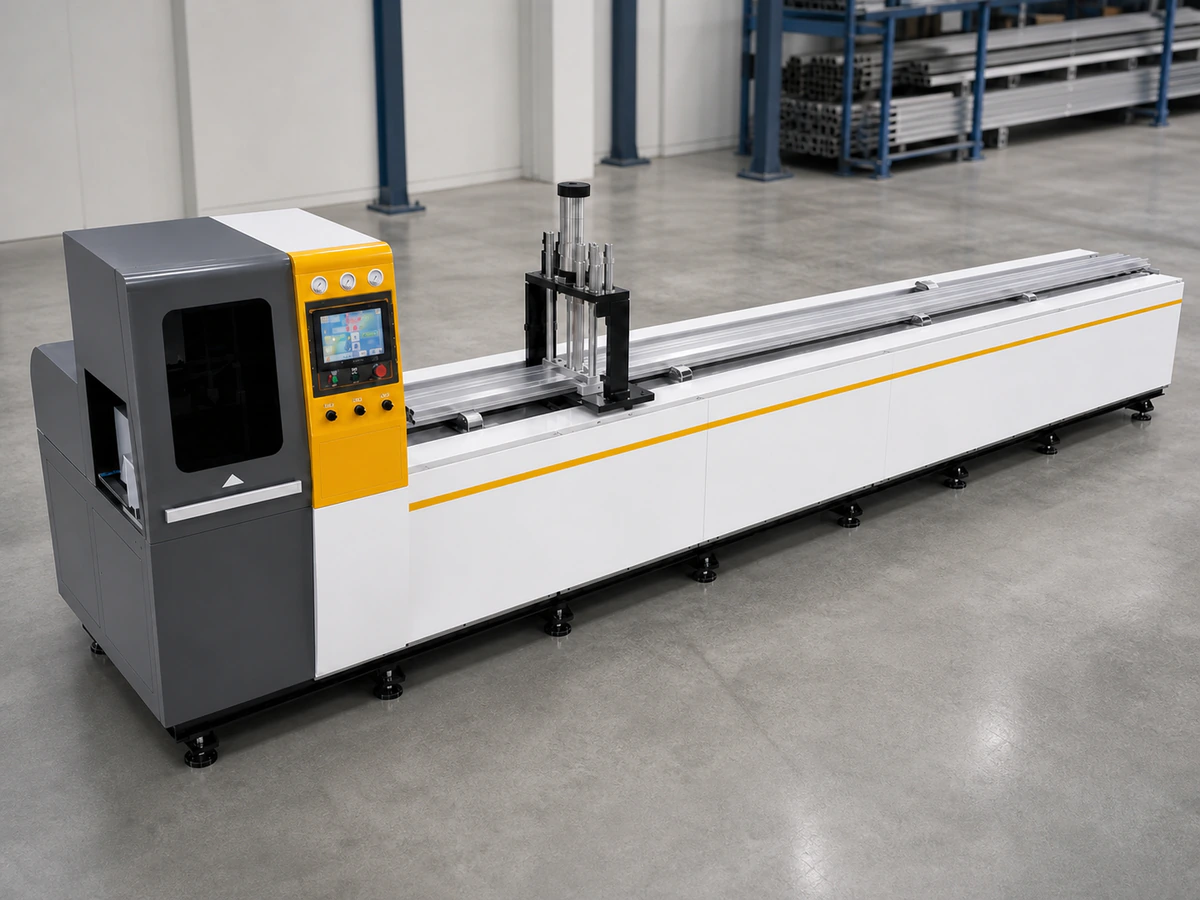
Define labor assumptions in your aluminum saw staffing plan
If a production estimate is supplied, ask which human activities it includes. Does its time basis include material preparation, collection of completed pieces and the records required by the buyer? Which activities were performed by someone else during the assessment? An observed cutting sequence may be useful without representing the complete staffing requirement.
Ask what job and incoming material the estimate describes. Changing the supplied stock form, the quantity pattern or the required handoff can change the task list the factory needs to review. The supplier’s response should state the relevant configuration and the qualifications of any estimate. Do not present a generic product-category statement as a staffing result.
Also identify what the buyer is trying to achieve. A factory might want to reduce repetitive handling, make a job less dependent on a particular manual action or use available staff more effectively. Those objectives are different from a guarantee that a specific number of people can run a stated production volume.
Use the staffing discussion to request the missing basis, not to demand an unsupported promise. Jiurun’s actual operator requirements, verified labor savings and suitability for any parallel task arrangement are not established by this article.
An invented workload example: total minutes are only one check
Imagine a buying team planning one hypothetical cutting job of 300 pieces in a 180-minute window. It creates the following preliminary labor worksheet. All counts and times are invented assumptions; they are not machine cycle data, validated handling allowances or recommended staffing levels.
| Illustrative job activity | Invented occurrences | Invented minutes each | Modeled labor minutes |
|---|---|---|---|
| Material preparation or replenishment task | 15 | 4 | 60 |
| Collection and identified-part handoff task | 12 | 3 | 36 |
| Required check and production-record task | 10 | 3 | 30 |
| Next-job preparation task | 3 | 12 | 36 |
| Total of these listed activities | 162 |
The modeled total is 15 × 4 + 12 × 3 + 10 × 3 + 3 × 12 = 162 minutes. If the hypothetical person is assigned for 180 minutes, the listed activities use 90% of that assigned time and leave 18 minutes arithmetically. That remainder is not demonstrated spare capacity. The model may omit attendance obligations, other tasks, delays or restrictions on which activities can overlap.
Now imagine three of the modeled requests fall inside the same ten-minute window and require that one person’s non-overlapping attention for four, four and three minutes. They total eleven minutes. The aggregate 162-minute total does not show how that local eleven-minute demand can fit into ten minutes.
The example identifies a planning conflict, not an instruction to change machine attendance or combine activities. The buying team must establish which tasks are actually required, when they occur and what arrangement is permitted before it can judge the staffing proposal. More automation is not automatically the answer to a conflict that may instead involve an omitted task or a mistaken assignment.
Review task timing and ownership without inventing a schedule
For each material or part handoff, ask what causes the human task to become due. Is it associated with the start of the job, a replenishment need, a completed group of pieces or a required record? Describe the event and the responsible role. The aim is to understand the proposed workflow, not to write an operating sequence from a catalog photograph.
A task can be small in total time but important at a particular moment. Ask whether the person assigned to it is also committed elsewhere in that period. If the timing is unknown, retain it as an open planning assumption. Do not spread the minutes evenly over the shift merely to make the calculation appear comfortable.
Separate tasks that the proposed machine performs from tasks that an existing factory service performs. For example, a quotation may assume material has already been prepared for the station. If the buyer instead expects the quoted package to provide that preparation, the disagreement is about supplied scope as well as staffing. Resolve it before comparing labor estimates.
Record each person’s or team’s actual responsibility, including any role that is outside the saw supplier’s offer. Avoid using the same available minutes twice in two department plans. A staffing model should make those commitments visible instead of treating shared personnel as a resource with unlimited availability.
Keep availability and competence as separate questions
HSE’s guidance on work equipment discusses training and competence for users, supervisors and managers. It also notes that changes to equipment or the system of work may require additional training. See HSE’s training and competence guidance. It provides a UK guidance context; the buyer must establish the applicable requirements for its own workplace.
For the procurement record, a person being available does not establish that the person is ready for the proposed role. Keep the required familiarization or competence confirmation separate from the numerical availability calculation. Equally, a trained person who is assigned to another task is not automatically available for this job.
Ask what the equipment supplier actually includes in the proposed handover and what the factory must arrange. Do not assume a service, training duration, supervision arrangement or qualification is included simply because the machine is sold as automatic. Record the confirmed scope and remaining responsibility without inventing a universal requirement for every site.
Machine attendance and safe task allocation remain outside the arithmetic example. Do not use the modeled 18-minute remainder as permission to leave a machine, bypass an instruction or assign parallel duties. The actual machine configuration and workplace arrangements must govern those decisions.
Compare a scope change with a staffing change
When an estimate does not fit the factory’s plan, identify what would change in each proposed response. A supplier may clarify an existing feature, propose additional equipment or revise the assumed input and handoff. The factory may need to reconsider a role or provide better information about task timing. These are different proposals.
Keep any proposed additional equipment tied to its actual function and assessment. Do not subtract labor minutes just because an option is called automatic. Ask which identified task the option addresses and which tasks remain. A physical transfer feature, for example, should not be assumed to complete the buyer’s identification or production-record requirement.
Likewise, adding a person to a model is not evidence that a practical arrangement has been established. The responsible team still needs to review roles, availability and the applicable instructions. Preserve the comparison basis so a different staffing assumption is visible rather than hidden inside an improved output estimate.

Compare supplier assumptions with the factory commitment
A quotation can describe a functioning feed arrangement while the buying team has assigned a different incoming-material task to it. Before comparing the staffing estimates, ask both sides to complete the same handoff record. Use the actual proposed package as the reference. A title such as loading system or automatic collection is too broad to establish which factory task disappears from the plan.
| Handoff question | Supplier response to request | Factory information to provide |
|---|---|---|
| Incoming material | What condition and presentation the proposed package assumes. | How the identified stock will actually reach the station. |
| Completed parts | Which part transfer or collection functions are included. | The destination and identification needed for the next process. |
| Job information | What information the offered arrangement requires for the stated task. | Who supplies the approved work record and when it is available. |
| Assessment basis | Which human tasks were included, performed separately or left unassessed. | Which of those tasks already have a confirmed factory owner. |
For an invented purchasing discussion, assume one proposal treats material preparation as a buyer-supplied service and another includes a separately described preparation arrangement. Their quoted staffing descriptions may refer to different work boundaries. Do not compare the headcount statements as if both proposals begin with the same incoming material. First explain the boundary and request the information needed for a fair assessment of each actual offer.
The same issue can arise at the output side. If the factory requires pieces to be associated with a particular production record, ask how that requirement is addressed. A collected group of cut pieces is not automatically an identified handoff to the next process. Keep any remaining identification work in the proposed task list. This is a question for the actual project, not a claim about an included Jiurun function.
Record the date and quotation revision beside each response. If a provider changes an assumed handoff, review the affected task entries before carrying over the earlier minutes. A new statement may change the scope being discussed without supplying a measured replacement time. Leave that time unresolved until its basis is established. Subtracting an assumed saving can make the spreadsheet look improved while the real staffing question remains unanswered.
End the purchasing discussion with a list of confirmed responsibilities and the remaining requests. A named responsible role should correspond to an actual commitment in the factory plan. If the factory and supplier still disagree about where a task belongs, keep that disagreement visible in the quotation review. This record organizes the buying decision; it does not define an operating procedure or authorize a staffing arrangement.
View equipment context before defining the staffing question
This Jiurun equipment video provides context for an inquiry. It does not establish the labor minutes in the invented example or approve any attendance or shared-operator arrangement.
Information to send with the staffing question
- Identify the material, workpiece, required cuts and the actual quantity pattern.
- Describe the proposed incoming-material and completed-part handoffs.
- Ask which machine actions and supporting equipment the quotation includes.
- List the human activities the factory expects around this job.
- State the assigned roles and their actual available periods.
- Identify timing conflicts or tasks whose frequency is still unknown.
- Separate competence and handover questions from labor-minute calculations.
- Ask for the assumptions and limits of any supplier staffing or output estimate.
The machine RFQ checklist helps describe the complete cutting inquiry. To discuss a proposed Jiurun configuration, send the cutting job, handoff needs and staffing questions. Ask for a response tied to the actual offered package. A useful staffing plan connects equipment scope, human work and real availability without turning an automation label into an unverified headcount promise.