
A buyer may need an aluminum cutting machine before the supplier can see the full customer drawing. The project still needs a budget, a shortlist and a next step. The difficulty is deciding how much confidence a quotation deserves when important details remain unavailable. A low number based on broad assumptions can be less useful than a carefully limited estimate that identifies exactly what still needs checking.
A confidential aluminum saw RFQ should therefore state the decision you want to make now. Are you screening possible equipment routes, comparing a defined machine scope, or arranging a specific technical assessment? Those are different purchasing questions. Share only information whose release for that purpose and recipient has been authorized. Then ask the supplier which conclusions that information actually supports. Permission to share a document and enough detail to assess a cutting task are separate questions.
Start with the purchasing decision, not a demand for a final price
For an early budget discussion, you may only need to learn whether a supplier will consider the task and what broad equipment scope its estimate assumes. That does not establish final tooling, finished-part quality, throughput or a complete installed price. For a machine comparison, you need the included equipment and exclusions to be sufficiently clear that the offers refer to comparable work.
Write a short decision statement before requesting a price: “We are comparing initial equipment scope for this cutting task; several part details remain unavailable. Please identify your assumptions and the specific questions you cannot yet resolve.” This gives the supplier a useful response format. It also prevents an early estimate from becoming an accidental promise that the complete production job has already been assessed.
The supplier may respond with a conditional estimate, ask a focused technical question, or decline to quote until a missing detail is available. All three responses can be informative. A willingness to provide a number immediately does not, by itself, show greater technical capability.
Separate disclosure permission from technical sufficiency
WIPO discusses clear responsibility for information-sharing decisions, document identification and access according to need. Its guidance also addresses confidentiality arrangements with recipients. These are general management considerations, not a complete legal solution or an aluminum-saw qualification procedure. See the WIPO Guide to Trade Secrets and Innovation, Part IV.
An internal contact, a “confidential” label or a signed agreement should not be treated as proof that every proposed disclosure is permitted. Confirm the actual scope of authorization and relevant recipient arrangements. This article does not assess a particular contract or establish a supplier’s information-security practices.
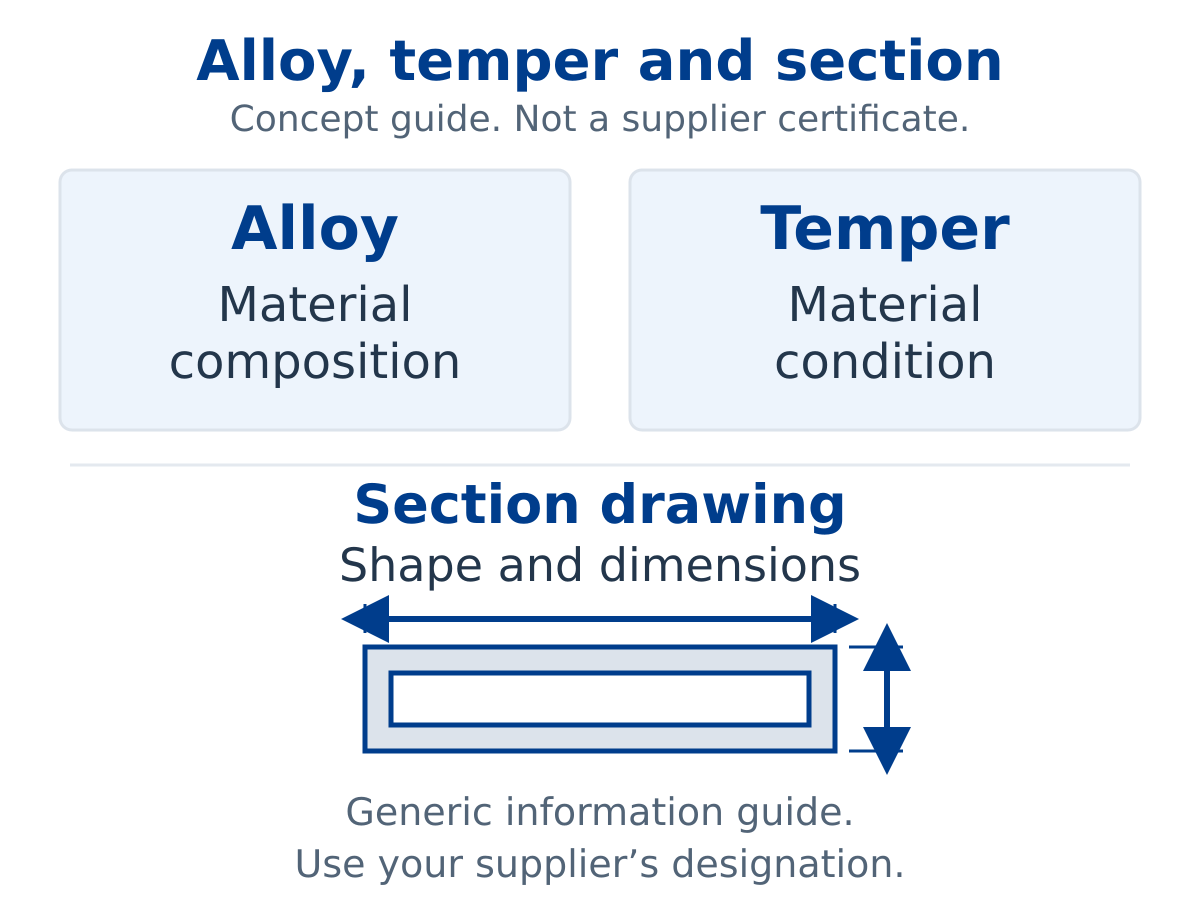
The technical question is narrower: can the information supplied support the decision being requested? A section envelope may help discuss a stated machine capacity range. It may leave other questions unresolved, such as where the actual part may be contacted, how the work is presented, or which finished surfaces are important. Ask the evaluating supplier which missing detail affects its proposed scope. Do not infer a particular fixture or a satisfactory finished part from the envelope alone.
Choose the assessment stage that matches the available evidence
The following stages are an original purchasing framework. They are choices based on the current decision and available information, rather than a mandatory sequence. A project may remain at an initial discussion without progressing to a detailed assessment.
| Assessment stage | Useful supplier response | What remains unproven |
|---|---|---|
| Initial scope screening | A stated equipment scope, broad assumptions, exclusions and questions needed for a more specific estimate. | The actual part’s suitability, final tooling, production output and complete project cost. |
| A defined technical question | An assessment of the particular issue identified, with any resulting scope or quotation changes. | Requirements outside that assessment and performance under conditions that were not evaluated. |
| Agreed assessment using relevant details or samples | Recorded results for the actual assessment object and conditions, together with limits and unresolved questions. | Production conditions or parts that the evidence does not cover. |
For the first stage, describe the cutting task using the information currently available for discussion. Where relevant, this could include the material, stock form, incoming size range, intended cut, quantity pattern and quality questions. Do not make up a tolerance or output target because a field is empty. A target should also be distinguished from a demonstrated result.
For the second stage, ask for the missing information to be connected to a specific decision. “We need the full drawing” is less actionable than “We cannot evaluate the proposed contact arrangement without this feature.” Any additional release still needs authorization for its particular content, purpose and recipient. The buyer can then decide whether that request can be satisfied or whether the discussion must remain limited.
The third stage needs a defined assessment scope. Agree what will be examined, which material or sample represents the task, what results will be recorded and which requirements will remain outside the assessment. Receiving a drawing does not mean a trial has happened. Receiving a trial report does not automatically mean every proposed production condition has been covered.
Compare quotation assumptions before comparing the numbers
Two offers can carry different prices because they describe different jobs. One may cover a basic machine arrangement while another includes additional handling or task-specific tooling. With incomplete part information, the differences can be harder to see. Ask each supplier to identify the same purchasing scope and state where its price remains conditional.
| Comparison field | Question to resolve |
|---|---|
| Purpose of this quotation | Is this an early estimate, a defined equipment offer or a quotation following a particular assessment? |
| Equipment and work included | Which machine, handling, tooling and other identified items are covered? What is excluded? |
| Information used | Which identified technical information and revision formed the basis of this offer? |
| Missing requirements | Which questions remain unknown, unavailable or outside the quoted scope? |
| Consequences of those gaps | Which scope, cost or suitability conclusions cannot yet be confirmed? |
| Basis for a later assessment | Which particular details or samples would resolve the identified questions? |
| Reconfirmation trigger | Which changes would require the supplier to reconsider the offer? |
A blank field should not silently mean “no requirement.” Use clear states such as unknown, not provided, outside this assessment or confirmed not applicable. That distinction helps the buyer avoid comparing a cautious offer against another that appears complete only because its assumptions are unstated.
For broader quotation preparation, the aluminum cutting machine RFQ checklist provides a related starting point. The additional issue here is the relationship between missing part information and the conclusions an offer can support.
A supplier-response note that keeps the estimate usable
Attach a short response note to each offer so the buying team can see what can be compared today. The fields below concern quotation confidence, rather than the terms of any confidentiality agreement. Complete them with the actual supplier reply; a blank is an open question.
| Record | Reply to obtain | Effect on this decision |
|---|---|---|
| Current equipment scope | Named machine arrangement, quoted options, included work and exclusions. | Sets which items can be compared with another offer. |
| Unassessed requirement | The specific missing fact and which conclusion depends on it. | Keeps the relevant suitability or cost question open. |
| Proposed assessment object | Actual part or substitute sample, its identified differences and the question being assessed. | Prevents a limited result being treated as acceptance of the full task. |
| Quote reconfirmation | Which scope, assumptions and commercial terms the supplier will revisit after new evidence. | Identifies what must be checked before a later order. |
For a fictional example, an early offer might identify a machine and exclude a task-specific workholding assessment. The buyer can use it for a preliminary equipment shortlist while keeping the unresolved workholding scope outside a final price comparison. If later evidence changes that scope, request a revision stating exactly what changed; do not treat the earlier estimate as an unchanged complete offer.
If another bidder cannot identify the assumptions supporting its amount, ask it to complete the same note before ranking the offers. A cautious but defined estimate can support a limited decision. A number with invisible boundaries cannot support a broader decision merely because it is presented as a single total. Keep the selected assessment stage and the intended purchasing commitment aligned.
Two hypothetical situations that change the buying decision
Similar outer dimensions, an unresolved contact restriction
Imagine two proposed cutting tasks described with the same external size range. For one task, a particular surface may be used for contact. For the other, the relevant surface restriction has not yet been communicated to the supplier. These are hypothetical tasks, not Jiurun test results.
The buyer should ask what contact assumptions the proposed arrangement relies on. If a later assessment identifies a difference, the supplier may need to reconsider part of its scope. The example does not establish that a different fixture or a price change is inevitable. It shows why the same envelope does not provide evidence that all task requirements are the same.
One estimate looks complete because the unknowns are invisible
Imagine one supplier gives an estimate that explicitly leaves tooling for later assessment. Another gives a single amount without explaining whether that tooling is included. The second offer may look easier to buy, but its format does not establish broader coverage.
Ask both suppliers to state the scope and outstanding questions using the same comparison fields. If the apparent price difference depends on an item neither supplier can yet assess, keep that part of the comparison open. This is a hypothetical decision exercise; it provides no actual prices, quotations or supplier performance evidence.
Understand what a substitute sample can demonstrate
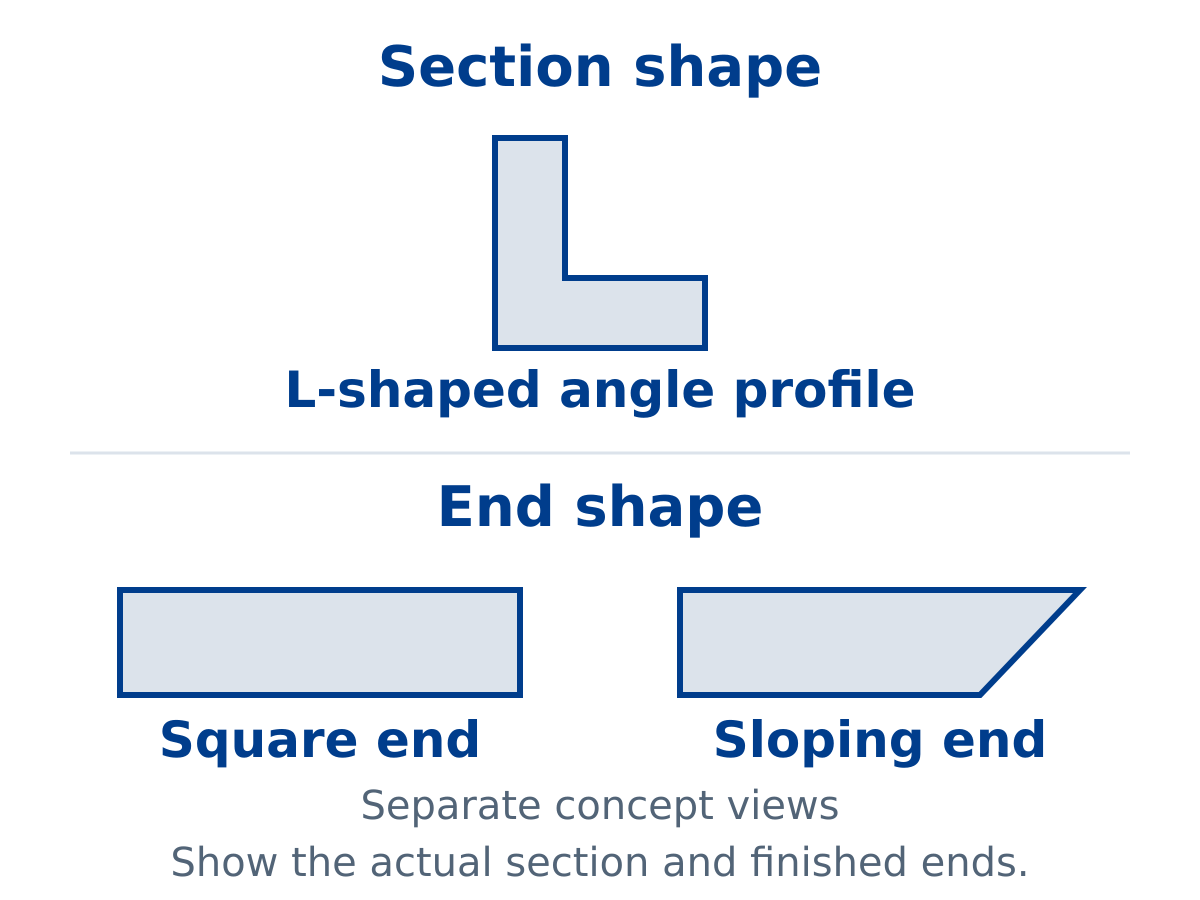
A substitute sample can be useful for a clearly defined question. Its value depends on what was actually evaluated and how the sample differs from the intended production part. Similar external dimensions alone do not establish that it represents the relevant material, contact conditions, surface requirements or finished-part criteria.
Record the sample identity, its stated differences, the assessment conditions and the result that was obtained. Then ask which conclusions can reasonably transfer to the purchasing task. If there is no actual result, record the question as unresolved. Do not describe a substitute sample as a successful trial of the real customer part.
This is an evidence boundary rather than an instruction for selecting cutting parameters or operating a machine. It does not establish a specific Jiurun configuration, fixture capability, sample-testing service or achieved accuracy.
Build a focused follow-up for a confidential aluminum saw RFQ
Use a follow-up that asks the supplier to explain the decision gaps, rather than repeatedly requesting a complete quote from the same limited description:
- State the purchasing decision this response should help you make.
- Describe the material, stock form and cutting task to the extent currently available for discussion.
- Identify the technical information already supplied and the version used for the offer.
- List the unresolved part or output requirements without replacing them with invented values.
- Ask for the equipment scope, assumptions, exclusions and quotation status in writing.
- Ask which specific missing detail prevents each remaining technical or commercial conclusion.
- Check the authority, intended use and recipient conditions before releasing additional information.
- For any proposed sample assessment, state the object, relevant differences and result you need recorded.
- Ask which scope or quotation terms would need reconfirmation after that assessment.
File format is a separate matter. A usable PDF or STEP file does not establish permission to disclose it, nor does a screenshot establish the missing technical facts. See STEP versus PDF for an aluminum RFQ when file choice itself needs clarification.
View a Jiurun equipment video as context
The video below gives equipment context for an initial discussion. It does not demonstrate assessment of your restricted part, confirm a specific quoted package, or replace evidence agreed for your cutting task.
Keep the commitment proportional to the evidence
The useful outcome of an early discussion may be a shortlist and a clear list of unresolved questions. It does not have to be an unconditional production-machine order. If a critical requirement remains unknown, keep the corresponding suitability or commercial decision open. When new details become available, reconnect them to the original assumptions and request confirmation of the affected scope.
For an initial discussion with Jiurun, contact the team with the cutting task, the decision you need to make and the questions that remain unresolved. Use only information you are authorized to share. Ask which assessment is possible on that basis. Do not assume that a first estimate proves the real part, a particular configuration or every production requirement has already been accepted.