
Choose aluminum thread rolling blanks from the process-approved starting geometry and the whole part that must remain. A finished thread designation does not specify the rod to buy. The same thread on different parts can leave different material requirements at the saw, especially when one part retains a larger unthreaded body.
Aluminum thread rolling blanks: separate the finished thread from its starting cylinder
Fictional procurement example: a producer has two independently approved aluminum-part drawings, P and Q, with the same external thread designation. P has no larger unthreaded body to retain. Q has a threaded region beside a separately specified larger cylindrical shank or shoulder. These are different parts, not interchangeable products.
The approvals and material suitability are assumptions within this case, not real customer or JiurunCut findings. No diameter, length or process setting is assigned. The buyer’s task is to preserve both drawings when deciding what stock reaches the saw.
RWT’s blank-preparation guidance explains material displacement from the thread-root region toward the crests and distinguishes the starting diameter from the nominal thread diameter. It also notes that material and design can require adjustments, with special profiles determined separately. This supports requesting the actual pre-roll specification, not copying a universal diameter deduction.
Keep that specification attached to the intended rolling route. The nominal thread designation identifies the finished requirement; it does not establish that available rod already meets every condition of the required starting blank.
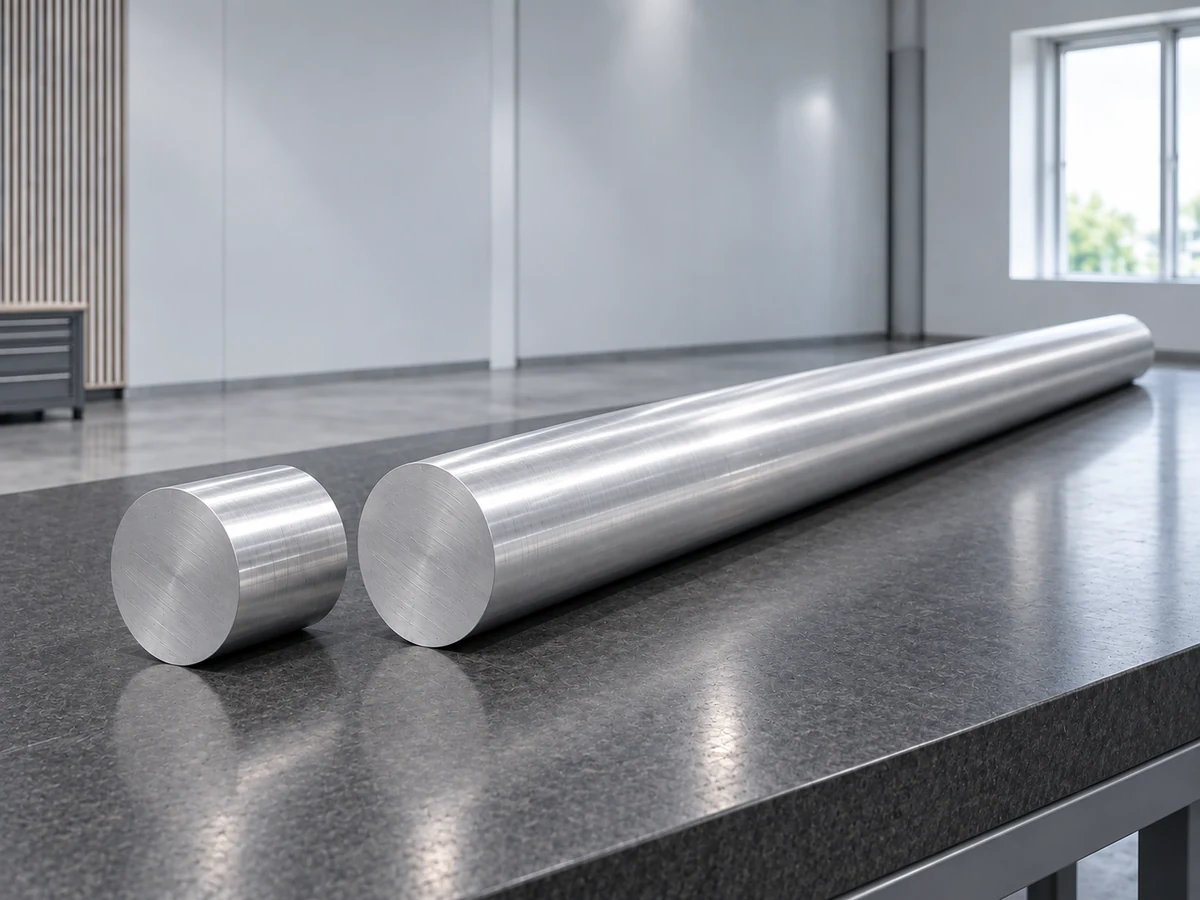
Compare supplied pre-roll rod with stock needing preparation
Candidate A serves fictional P. Assume a supplier can provide solid rod in the material condition and diameter accepted by P’s rolling-process provider. Sawing it produces a cylindrical cutoff at that supplied diameter. The purchase can be assessed on this basis without adding a diameter-preparation operation the confirmed route does not require.
That does not make every cutoff ready to roll. The specified starting length, end condition and any remaining preparation must still be satisfied. A supplier confirming rod diameter has not automatically confirmed the complete blank or the finished thread.
A different route begins with larger stock and leaves diameter preparation after the cutoff. Its saw output is a starting piece for another operation, not the same delivered state as stock already at the accepted pre-roll diameter. Compare the remaining work rather than treating both items as equivalent because they will eventually carry the same thread.
RWT’s thread-rolling overview describes external rolling as cold forming rather than material removal. It also distinguishes external profiles produced with round dies from internal threads made with forming taps. This article concerns external-thread blanks; the internal process is not an alternative name for preparing that solid rod.
Both pages come from the same manufacturer. Neither confirms the buyer’s aluminum material, tool selection or complete route. Obtain the actual provider’s requirements without adopting the pages’ formulas or material limits as a purchasing shortcut.
Keep Q’s unthreaded body in the stock decision
Candidate B serves fictional Q. The proposed larger rod contains the material needed for its retained body. After sawing, a separately confirmed turning operation prepares only the region that will receive the thread, leaving the body required by Q. The particular preparation belongs to that approved route, not to a general instruction in this article.
Candidate C is the mistaken consolidation proposal: buy P’s smaller rod for both parts because their thread designations match. In Q, the larger unthreaded body would already be absent from the purchased material. Cutting that rod to length does not supply the missing body, and Q’s specified local thread-forming operation is not a plan to recreate it.
| Candidate material | What exists after sawing | Procurement consequence |
|---|---|---|
| A — Process-approved pre-roll rod for P | A solid cylindrical blank at the accepted starting diameter. | Confirm the remaining end and blank preparation before treating the cutoff as ready for rolling. |
| B — Larger rod preserving Q’s body | Material for the larger body remains; the future threaded region still needs its specified preparation. | Include the separate diameter-preparation stage. Sawing to length does not complete that stage. |
| C — P’s smaller rod substituted into Q | The material needed for Q’s larger unthreaded body is missing. | The shared thread designation does not make this an equivalent blank within the stated route. |
The table compares actual material states, not supplier features. A common rod specification might still be feasible if the complete routes for both parts expressly accept it. It could leave different preparation work for P and Q. The common thread alone cannot settle that choice.
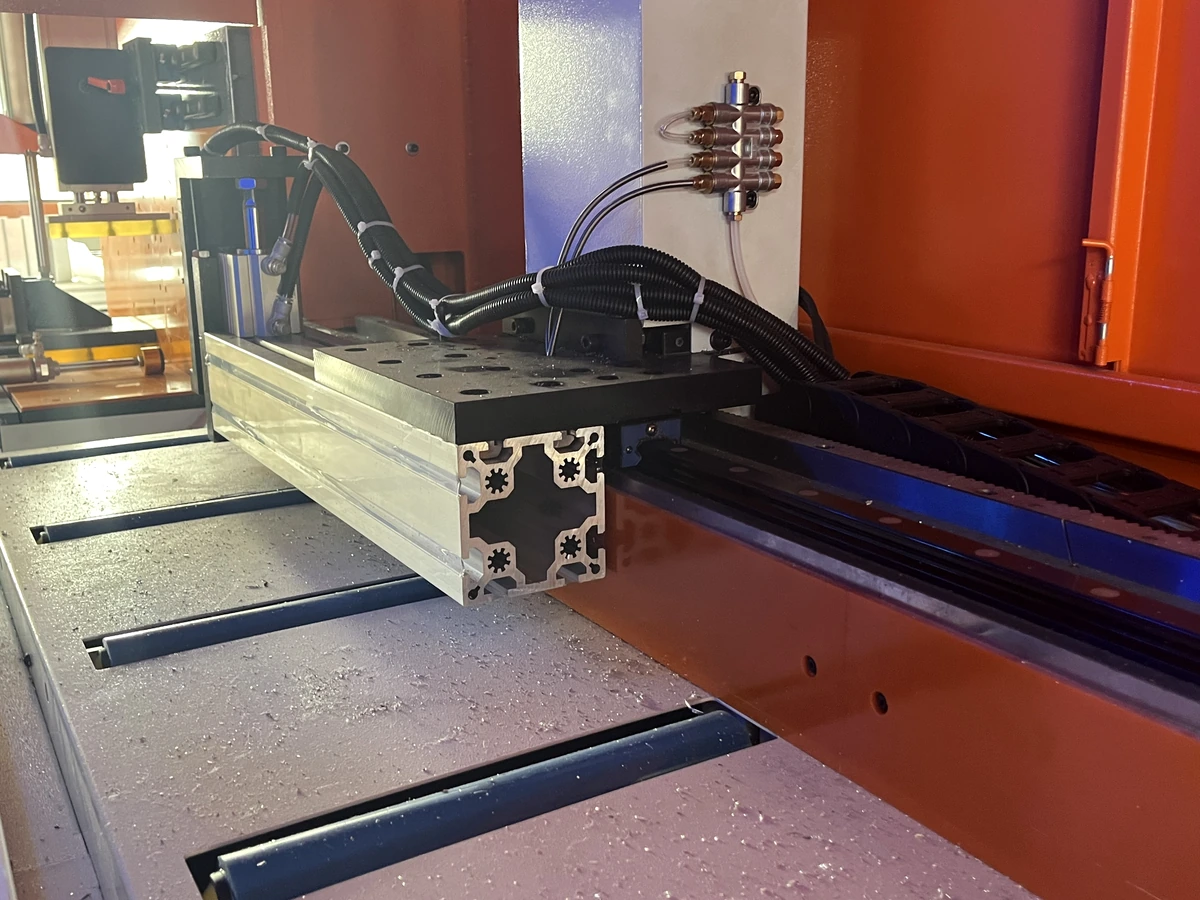
Specify the saw’s real stock and output stage
A supplier might instead offer a stepped blank already prepared for Q’s rolling operation. Ask which work is actually included and whether any cutting remains. That is a different purchasing scope from acquiring long round stock and commissioning the cutoff and turning separately; availability is not assumed.
Before comparing saw proposals, select the actual input and the output that stage must deliver. A general promise to cut rod cannot confirm its downstream rolling eligibility. Likewise, a correct cut length does not establish a prepared outside diameter or the finished thread.
The buyer can clarify the fictional order as follows:
Please keep P and Q separate when proposing stock. P’s candidate rod matches its confirmed pre-roll requirement; Q must also retain its larger body. Identify whether your offered cutoff still requires local diameter preparation, or whether an already prepared blank is being supplied. Keep missing rolling-input requirements unresolved rather than substituting the finished thread designation for them.
Neither supplied pre-roll stock nor a larger machined blank is inherently the better purchase. Compare actual stock availability and confirmed remaining operations to the complete part. Do not infer a saving, a rolling result or a supply commitment from a smaller diameter.

Send the actual rod and required saw-cut blank
Share the selected aluminum stock and blank drawing with JiurunCut, including any larger body that must remain and the downstream preparation already assigned. Ask what can be assessed for the specific circular-saw requirement.
Discuss My Rod and Saw-Cut Blank
This article does not establish JiurunCut rolling, turning, special-diameter rod supply, process approval, automated integration or trial services.