
For aluminum ring blanks, compare starting stock that can contain the complete required ring, not just stock with a similar outside diameter. A suitable tube slice already has an opening, but still needs its remaining work defined. A solid cutoff has no hole yet. Keep both routes tied to the same finished-part requirement.
Aluminum ring blanks start with the same finished ring
Hypothetical purchasing case: a factory needs an ordinary short aluminum ring with a through hole, a continuous surrounding wall, an outside surface and two end faces. Its material and final geometry are defined by an approved part drawing. This example considers only subsequent material removal, not methods that add or rebuild material.
Candidate A is tube whose actual material and geometry have, within this fictional case, been confirmed to contain the entire ring plus the material required for the approved finishing route. Candidate C is solid round stock confirmed on the same basis. Those confirmations are assumptions for the comparison, not assessments performed here or JiurunCut application evidence.
Hydro’s Structural Aluminum Tubing page includes round tubing and describes available sizes by outside dimensions. That identifies a stock form and a dimension reference; it does not confirm that a slice contains the material needed for this factory’s ring.
A produces an annular slice after the agreed cutoff; C produces a solid blank. Neither output is automatically the finished ring. Start the purchasing comparison with that physical difference, then identify the work needed to reach the shared drawing.
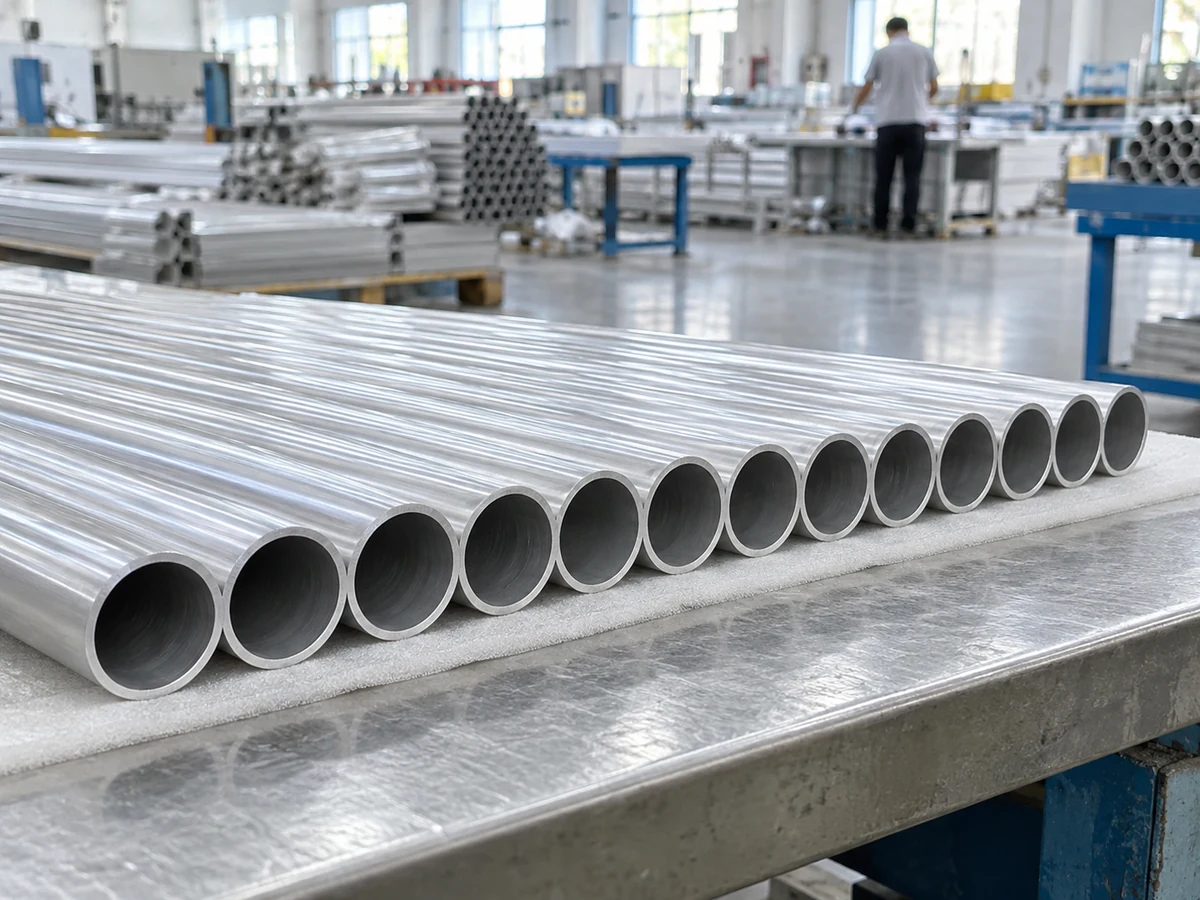
The existing opening must leave the required material
Add fictional Candidate B: another tube in the same outside-diameter category, but its actual opening is already larger than the finished part permits. The example expressly assumes that required inner-wall material is missing. This is not a conclusion drawn from a catalogue name or a photograph.
Cutting B shorter cannot put material back around that opening. Further removal cannot do so either. Under the stated subtractive-only route, B therefore cannot supply this ring. Describing it as thick-wall tube or proposing another machining pass does not resolve the missing material.
This rejects B for the particular route, not tube stock generally. It makes no judgment about B’s usefulness for another part or a different manufacturing process. Changing the finished design or introducing material rebuilding would be a different decision, outside this comparison.
Conversely, an opening smaller than the required finished hole is not enough to establish Candidate A. The actual stock must leave the complete ring material in the required relationship between the inner and outer surfaces. Wall-thickness distribution, their relative positions and the material needed at the end faces remain part-specific considerations for the responsible evaluator.
Where that assessment is missing, keep the tube as an unconfirmed candidate. Do not promote it to A merely because its nominal outside and inside dimensions appear promising. The useful distinction is between demonstrated material coverage for the intended route and a size label that has not answered it.
Compare the remaining route to the same finished ring
The following table summarizes the fictional material decisions. It is a purchasing comparison, not a machine-compatibility chart or an instruction for machining a ring.
| Starting stock | Physical state after the agreed saw cut | Purchasing consequence |
|---|---|---|
| A — Tube confirmed to contain the required ring | A short annular slice with an existing opening and the material required by the agreed downstream route. | Include the remaining approved work on the hole, outside surface and end faces. Do not buy the slice as though those features were already finished. |
| B — Tube with an opening already too large in this example | A slice lacking material needed at the finished ring’s inner wall. | Exclude it from this subtractive-only route; neither a shorter cutoff nor more material removal restores the missing wall. |
| C — Solid round stock confirmed for the part | A short solid blank with no through hole. | Include a separately confirmed hole-creation and finishing route. The saw-cut output alone is not an annular blank. |
Sandvik Coromant’s boring explanation starts with a hole already present in the workpiece: boring increases its size or improves its quality. This describes work on an existing opening, not a statement that boring alone creates a through hole in completely solid stock.
For A, the opening remains an input condition, not proof that the final bore is ready. For C, ask the downstream provider to identify the complete proposed route, including creation of the hole. Do not fill that missing operation by calling every internal-machining task boring. No holemaking method or tool is selected here.
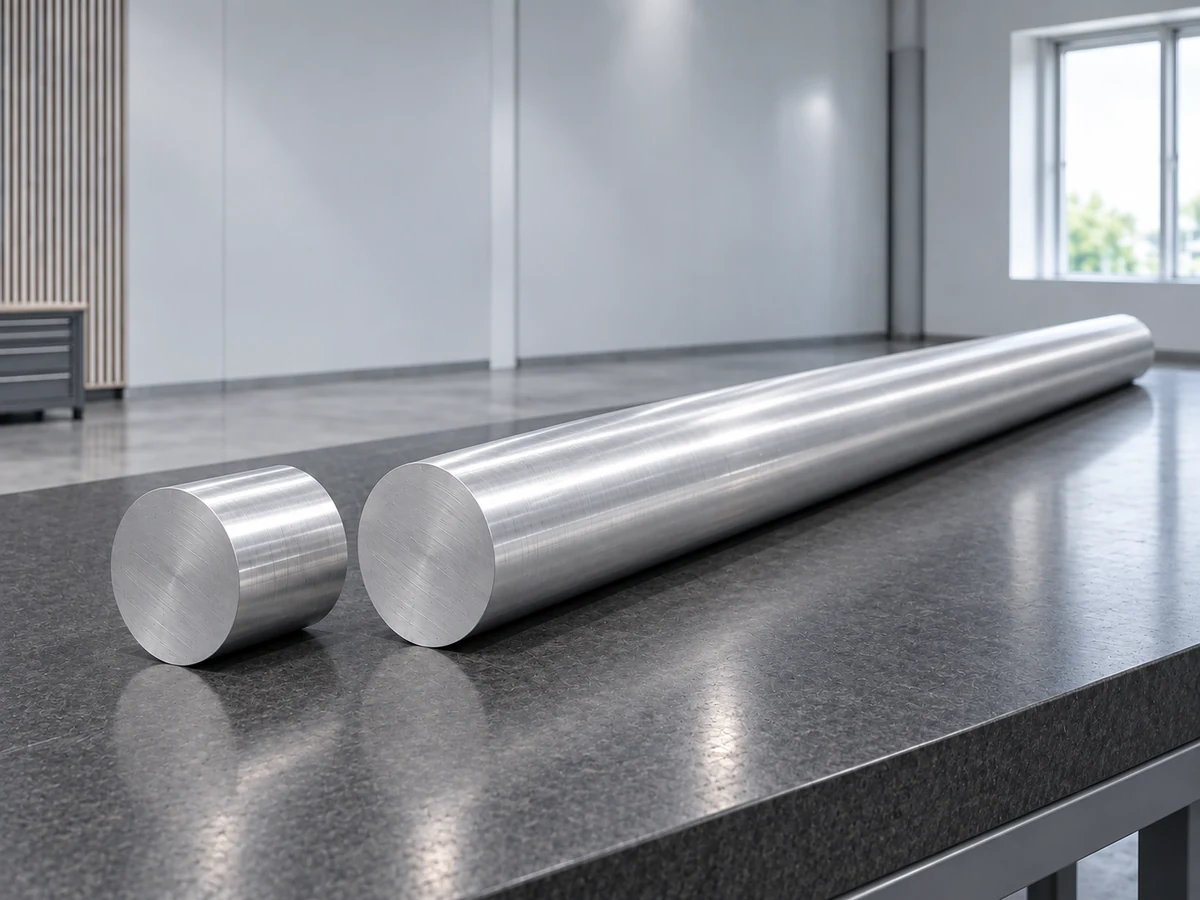
Compare both eligible routes at the same endpoint. A quote for tube slices should not be ranked against a quote for solid blanks with all hole and face work completed as though they buy identical output. Keep the unpriced or separately arranged operations visible without inventing a cost advantage.
Choose the actual saw input before comparing equipment
If suitable tube is available and a confirmed downstream provider can complete the ring, A becomes a route to evaluate. If the available tube is B, investigate other acceptable stock or C rather than treating extra machining as a remedy for absent material. Actual availability and remaining work—not a preference for hollow or solid—guide that decision.
Then give the equipment supplier the selected incoming stock and the blank it must deliver. A finished-ring photograph does not show whether the saw will receive tube or solid bar. Even a shared outside diameter does not establish that the same sawing configuration is appropriate for both.

A focused reply for the fictional case could read:
Please keep the saw-cut blank separate from the finished ring in your proposal. Our tube candidate must contain the complete required part and the material specified for its remaining machining. The oversized-opening candidate does not meet that condition. For the solid alternative, identify the separate hole-creation scope rather than treating cutoff as a finished ring operation.
The stock review and equipment review answer different questions. Confirming A’s material coverage does not approve its cutting setup, and confirming a saw can cut the input does not accept the finished bore or end faces. Retain those boundaries without assuming either route is inherently stronger, more accurate or less expensive.
Send the selected stock and the saw-cut blank you need
Share the actual aluminum stock, its hollow or solid section and the required cutoff output with JiurunCut. Identify which downstream work is already confirmed and which remains open.
Contact Jiurun About the Required Saw-Cut Blank
Ask what can be assessed for the specific proposal. This article does not establish JiurunCut material supply, ring manufacturing, holemaking, finished machining or trial services.