
Specify the output you need from an aluminum saw trim cut: any initial material to remove, the components to retain and the destination of each. Ask the supplier to map its quoted function to that sequence, including any separate work. The feature name alone does not establish that the complete job is covered.
Read the aluminum saw trim cut function description
KASTO’s KASTOspeed M 9 page lists a selectable trim cut alongside remnant recognition and automatic sorting of trim pieces and remnants. These are stated functions of that named product; the wording does not explain the timing or counting rules for your proposed job.
Kombimatec’s DGS530 description associates its trim facility with automated production of equal-size components, using cleats as an example. That description does not, by itself, answer whether an initial unwanted segment is removed or how such material would be collected.
These are different emphases in two manufacturers’ descriptions, not two universal definitions of “trim cut” or proof of equivalent mechanisms. Neither establishes a JiurunCut function. Return to your own output requirement rather than filling gaps in one proposal with the other manufacturer’s features.
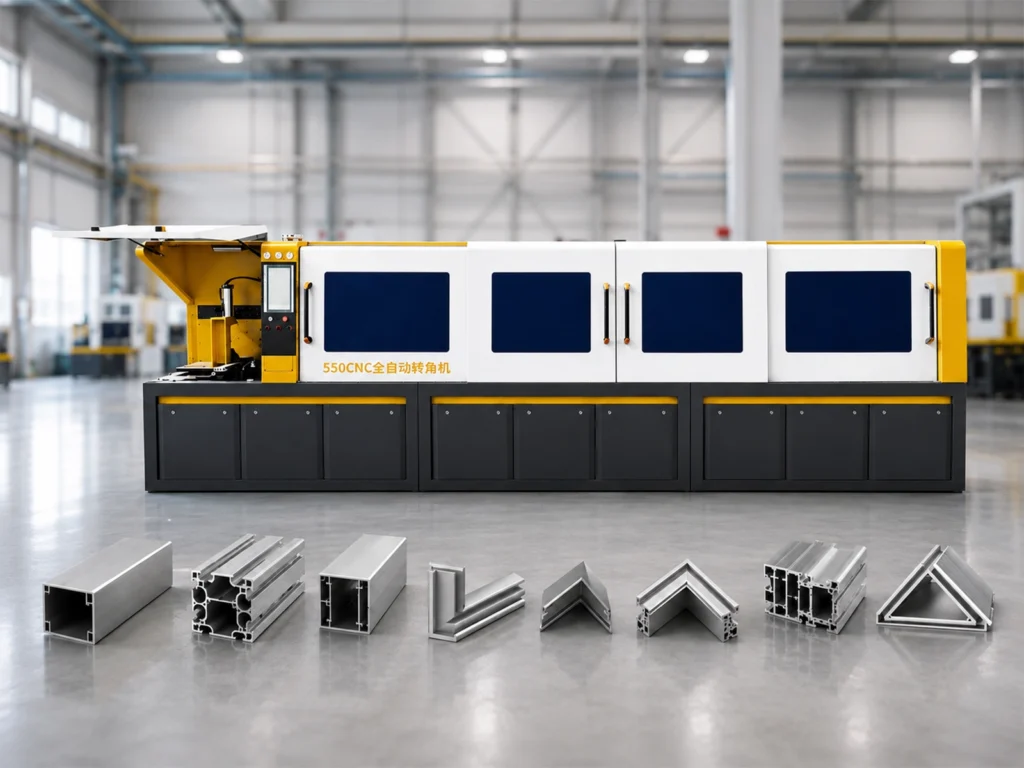
Mark what is removed and what is retained
The following requirements are fictional output concepts, not customer jobs, machine sequences or demonstrated results. R0 labels an initial segment the buyer does not want in the order. P1, P2 and P3 label retained components. The three component labels keep the illustration readable; they do not specify a batch quantity, capacity or controller count.
Requirement A: initial-end removal followed by ordered parts
On the incoming-stock view, the buyer identifies the supplied leading end and marks the unwanted segment R0. The requested result is for R0 to remain distinct from the ordered components that follow.
Required-output concept A:
Incoming-end treatment → R0 assigned to the specified trim-material route.
Subsequent ordered output → P1, then P2, then P3 assigned to the retained-part route.
These arrows describe requested outputs, not feed motions or an automatic routing promise. Ask the supplier to explain how the proposal addresses the two destinations and whether any separate manual work remains.
The actual job must supply or confirm the first intended separation line and any required removal allowance. An entry such as “small trim” remains incomplete until the responsible parties define it; this example proposes no universal removal length.
Requirement B: repeated equal-size components
Here, P1, P2 and P3 are repeated ordered components against the same part drawing and revision. The inquiry describes the repeated retained output, but initial-end treatment has not yet been stated.
Required-output concept B:
Requested component sequence → P1, then P2, then P3 to the retained-part route.
Initial-end treatment → not yet confirmed; do not assume R0 is required or absent.
Ask whether the supplied end can remain as specified for that job or whether an initial removal is part of the proposed scope. The answer belongs to the actual drawing and supplier review, not the word “trim.”
In both examples, retained does not mean accepted. P1/P2/P3 identify pieces intended for the order; they still require the specified acceptance check. R0 is not an ordered component in Requirement A, and its label is not a name for every possible remnant. Keep actual part codes beside these temporary labels in a real inquiry.
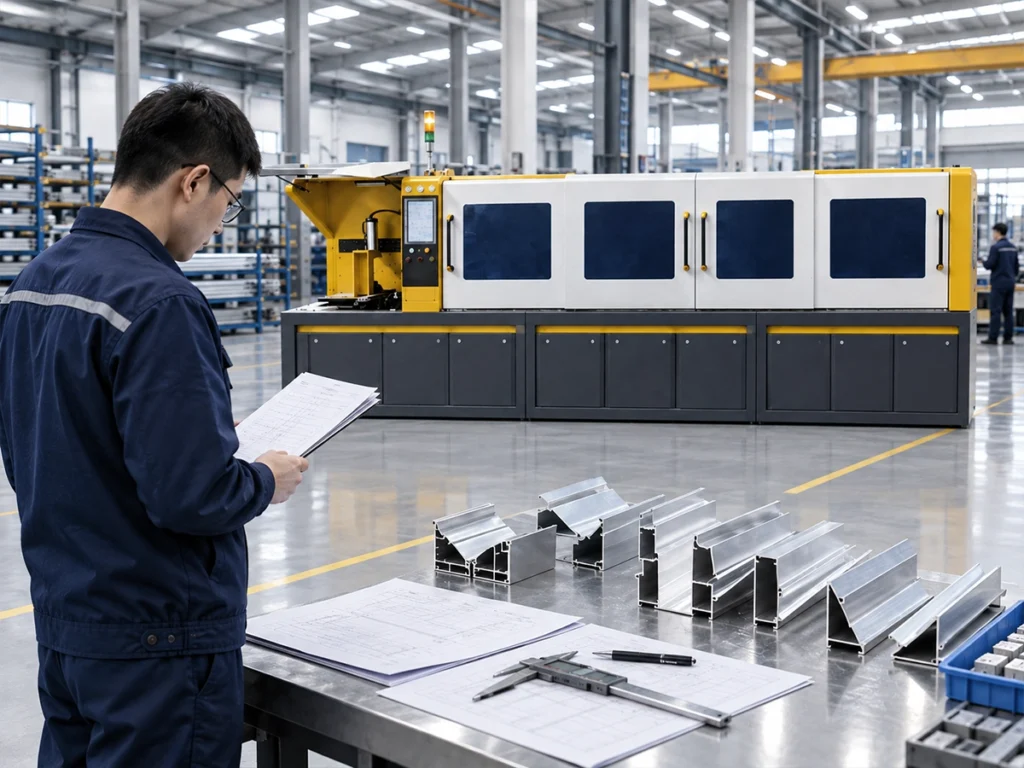
Attach an output-to-function mapping to the inquiry
Use the marked stock view and part drawing with the table below. The supplier-response column contains requests, not confirmed capabilities. This is an editorial purchasing tool, not a manufacturer’s standard or instructions for enabling a cycle.
| Buyer-marked item | Required result | Supplier response / evidence |
|---|---|---|
| Supplied leading end and first separation line | Identify the requested initial removal, explicitly state that none is requested, or mark the requirement undecided. | Return the annotated job sequence linked to the applicable quoted configuration and drawing. |
| R0, if present | Keep this removed segment distinct from the ordered output. | Explain its proposed destination, included handling and any separate manual step. Leave an unanswered route pending. |
| P1/P2/P3 | Provide the designated retained components against their drawing requirements. | Identify the quoted function covering this repeated output, its conditions and any requirements not yet assessed. |
| Transition to the retained-output stage | Make the boundary between any initial removal and the first retained component explicit. | Describe the proposed transition and separately required work; a feature name alone is not the explanation. |
| Each replacement stock item | State whether initial treatment is required again, conditional on the supplied end, or not requested. | Confirm which incoming-stock cases and configuration the answer covers, or identify the open question. |
| Count used in the offer or demonstration | Identify whether the stated quantity means cuts, retained components or accepted ordered pieces. | Define what the count includes and how removal output is treated. Do not infer the controller’s behavior. |
Record a separate step or unavailable function as such. An item awaiting clarification is neither included nor excluded by assumption. Keep the counting answer limited to understanding the offered output; it does not establish a production-data feature or justify a throughput calculation.
Decide whether the proposed function matches the job
Mapped sequence: the supplier links the quoted configuration to the marked removal and retained-output stages, including destinations and any separate work. That provides a defined proposal for further job-specific review, not proof of finished-part performance.
Partly answered sequence: repeated pieces are covered in the reply, but initial-end treatment, transition or handling is still undefined. Request those missing answers before describing the whole job as covered.
Different output: the named facility addresses another result. Keep that difference visible rather than treating the same feature name as an equivalent offer.
Hypothetical follow-up, not actual customer correspondence or an approved sequence:
Please map your quoted trim-related function to our marked R0/P1/P2/P3 requirements. Identify any initial removal, the retained-component stage, each output’s destination and any separate manual step. State whether the initial treatment applies to each replacement stock item, and identify the configuration and conditions covered. Keep unanswered requirements explicit, including what any quoted count represents.
If a supplier demonstration is arranged, request evidence following the identified incoming stock through the first retained component, with removal material distinguished from ordered output. Keep the supplier’s explanation separate from what is actually visible. A demonstrated sequence does not establish precision, minimum part length, sustained output or suitability for every future job.
Send the required output with your saw inquiry
Share the section, supplied-end condition, part drawing and marked removal/retained-output sequence. Include the quoted feature wording and any undecided requirement.
Clarify My Required Trim-Cut Output
Ask what can be assessed for the specific proposal. This article does not establish that JiurunCut offers automatic trimming, scrap routing, repeated-cleat functions or a particular counting rule.