
Not on its own. A capacity entry stated for straight cutting is evidence only for the conditions it describes. To review angled aluminum cutting capacity, ask the supplier to connect its answer to your complete section, each required end and the quoted configuration. An angled-cut requirement without matching evidence remains pending; that is not a finding that the machine cannot cut it.
Keep the drawing package, supplier reply and quotation together so the capacity answer stays tied to the specific member being reviewed.
Table of Contents
Check the conditions in an angled aluminum cutting capacity reply
For a documentation example, elumatec’s DG 244 product page lists angle-related technical information, refers cutting range to a cutting diagram, and separately lists options and controller variants. This illustrates how information can be presented separately; none of that model’s specifications establishes a JiurunCut machine’s capacity.
Ask your actual supplier which document or statement applies to the part in its proposal. A catalog attachment without that connection is useful background, but the part-specific question is still open.
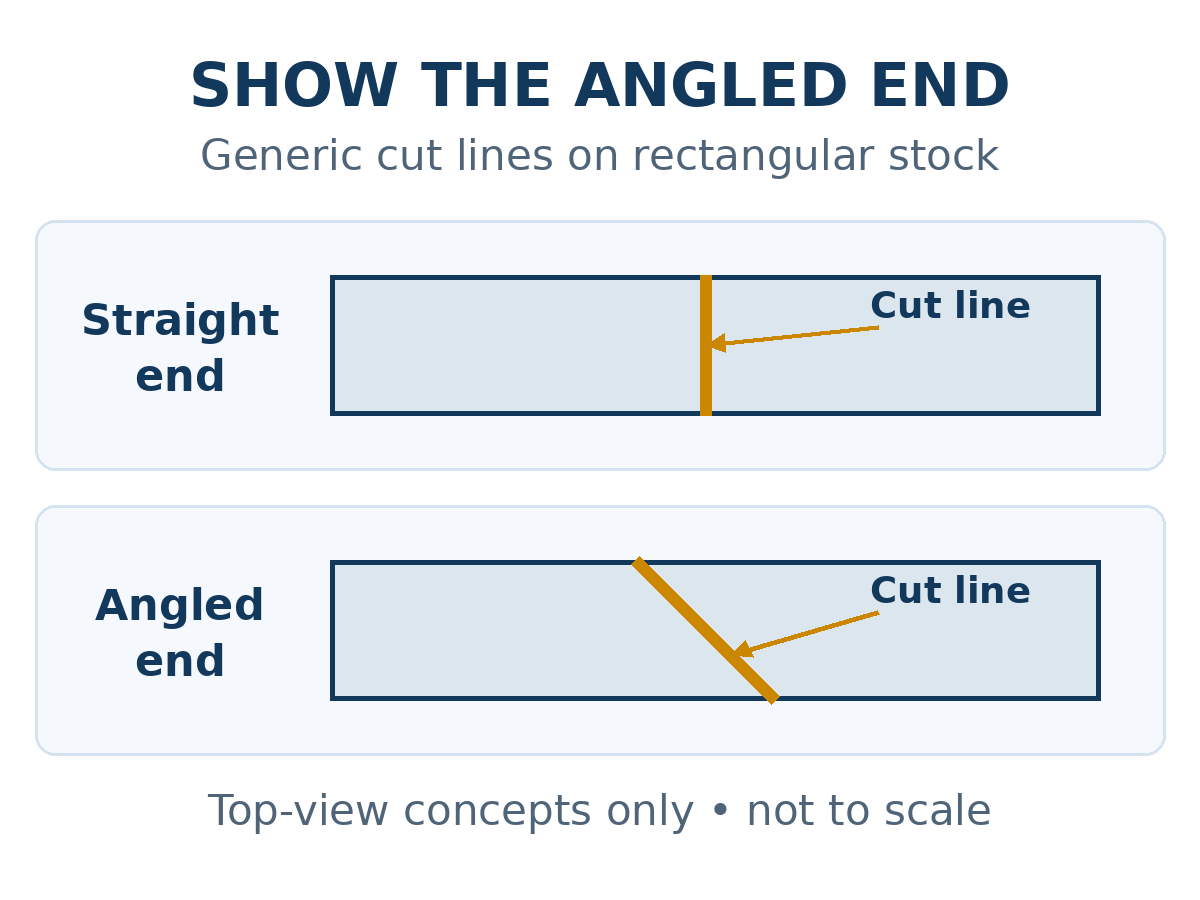
Angled aluminum cutting capacity: six evidence checks
Use the record below alongside the supplier’s original reply. Create identifiable entries for each part and end being reviewed. One statement may cover several entries when the supplier explicitly identifies those cases and their conditions; do not assume that an answer for End A also covers End B.
This is a suggested procurement record, not a mandatory manufacturer format. Keep supplier statements separate from your questions and interpretations.
| Match to establish | What the supplier should identify | What stays pending |
|---|---|---|
| Part and drawing identity | Part ID, section drawing number and revision, and finished-member drawing number and revision used for the reply. | An unnamed attachment, unconfirmed revision or reply referring to a different member. |
| Complete section and view | The full section, including projecting features, and the named view or proposed orientation used in the assessment. | A lone outside dimension, cropped section or viewpoint that cannot be matched to the drawing. |
| Each required end | End A and End B linked to their finished-drawing views, cut directions and angle references. Ask the supplier to explain the correspondence between its machine-angle terminology and the part drawing. | An answer naming only one end, or an angle value without a clear drawing reference. |
| Angled aluminum cutting capacity evidence | Diagram, table or written statement; document identity, date or revision; page, entry or figure; and the angle, material and configuration conditions stated in that source. | For an angled-end requirement, only a straight-cut entry; an unreadable image; missing angle conditions; or no stated connection to the exact part. |
| Quoted configuration | Exact model/version, quotation revision and configuration line. Identify any support or fixture items on which the answer depends and where they appear in the quote. | A similar model’s illustration, a different accessory proposal or required items whose inclusion is unresolved. |
| Coverage and next action | The parts and ends expressly addressed, qualifications or exclusions, the unresolved question, the person responding and the next document or clarification needed. | A receipt acknowledgment without an answer, or a conclusion that extends beyond the evidence supplied. |
Record the source even when it is an email rather than a formal chart: retain the sender, date and exact attachment references. Where two replies about angled aluminum cutting capacity conflict, request clarification instead of choosing the more favorable answer.
Retain any material or sample conditions stated in the evidence and ask which supplied material they refer to. If material information is missing, record the question as pending; do not supply an assumed grade or treat the omission as a confirmed capability or limitation.
Fictional example: the reply covers only straight-cut conditions
This is an invented purchasing example, not a customer case, capacity calculation or cutting trial. DEMO-S and DEMO-A use the same section. DEMO-S has straight ends; DEMO-A has separately drawn angled ends. The supplier’s reply cites only a straight-cut table entry.
DEMO-S: record that the cited entry concerns straight cutting. Still ask the supplier to connect it to DEMO-S’s drawing and quoted configuration; receiving the entry alone is not an approval of that part.
DEMO-A: keep separate pending entries for End A and End B. Request the applicable evidence for each named view and end requirement, and ask whether one statement expressly covers both. Do not transfer the straight-cut entry just because the section is shared.
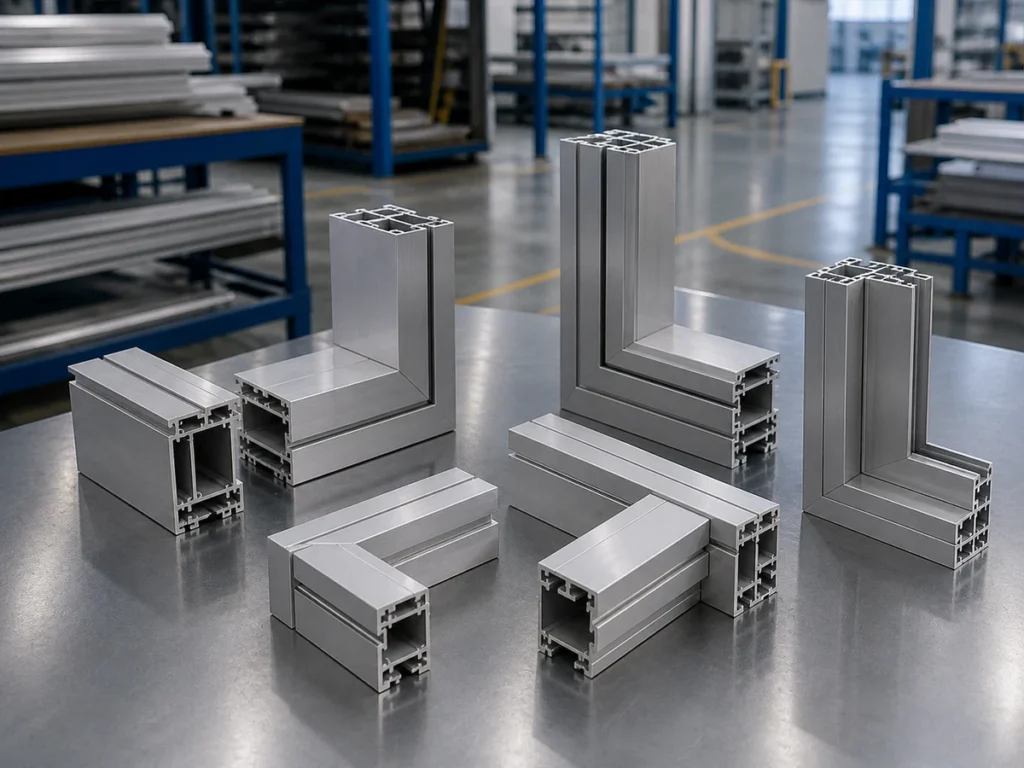
Request missing angled aluminum cutting capacity evidence
When a diagram is unavailable or unclear
Request a legible original or an applicable table. If the supplier does not use a diagram for that case, ask for a conditional written response identifying the drawings, ends, configuration and limitations it addresses. Do not require every supplier to use the same chart format.
Keep the case pending when the response still omits it. Do not draw a missing curve, interpolate an unconfirmed angle or turn a general maximum into a part-specific capacity result. For the separate task of reading chart axes and dimension pairs, use the aluminum saw cutting capacity diagram guide.
When the supplier proposes a different orientation or configuration
Request a revised view and evidence tied to that proposal. Have the supplier explain how the proposed change still produces the original finished-member drawing, and identify any quotation lines it changes. Preserve the previous response as a separate version rather than silently replacing its conditions.
This is a document review, not an instruction to rotate stock, alter fixtures or adjust a machine. The supplier must review the actual proposed configuration.
Record the angled aluminum cutting capacity answer
Label the response according to the evidence supplied. Received means the document is on file. Supplier scope stated means an identified supplier statement addresses the named cases under recorded conditions. Neither label means a cutting trial has taken place or that the buyer has accepted the finished part.
Where an actual trial record is supplied, retain its material or sample identity, part and drawing revisions, tested configuration, agreed checks, recorded results and stated limitations separately. Identify any difference between the tested and quoted configurations. Closing the document-coverage question does not turn an angled aluminum cutting capacity statement into a test result or establish every finished-part acceptance requirement.
Send a follow-up that names the unanswered cases
Use this wording with the drawing package and the reply you want clarified:
Please identify which angled aluminum cutting capacity evidence applies to the attached section and member drawing revisions, the named view, and End A and End B. Link each answer to the diagram, table entry or conditional written statement and to the quotation/configuration it describes. List any uncovered case, changed assumption and next evidence needed. Please distinguish document-based statements from separately recorded cutting-trial results.
Keep equipment references separate from the capacity reply

Existing equipment reference video
Reference only; not a verified capacity trial for your part or quoted configuration. Request the specific evidence identified in the supplier-response record.
Open the reference video on YouTube
Ask JiurunCut to clarify your angled-part capacity scope
Send the section and finished-member drawings, material information, required ends and the quote or capacity reference you need clarified. Identify missing fields and planned changes. You can begin with the information available; this record is not a prerequisite for an initial inquiry.
Discuss My Angled-Part Capacity Requirements
Ask which parts, ends and quoted configuration the response addresses, and what remains to be confirmed. This guide supports a purchasing review; it does not approve a machine setup or guarantee a cutting result.