
Before buying equipment for aluminum frame cutting, explain how you need the cut members collected. Do you want repeated parts together, or a named set for each frame? Ask the supplier to explain who keeps those pieces identified and together after cutting, so the proposed workflow fits the next stage of your work.
Two collection plans for the same kind of cut members
Plan 1: repeated parts grouped together
A workshop may want matching members collected by part code. Parts with the same profile section, finished length and end shapes belong to one clearly identified group. The assembly team then selects the required members for each frame.
This plan needs the part groups to be clear and the quantities to match the order. Ask how the operator identifies each group and where the finished pieces are placed before moving to assembly.
Plan 2: a named set for each frame
Here, a frame set means the loose cut members identified for one frame. The member list shows which pieces belong together. If connectors, further machining or assembly work are also required, identify that scope separately.
This plan needs the frame or project code to stay connected to its members. Ask who checks that the set contains the required pieces and how it reaches the next workstation.
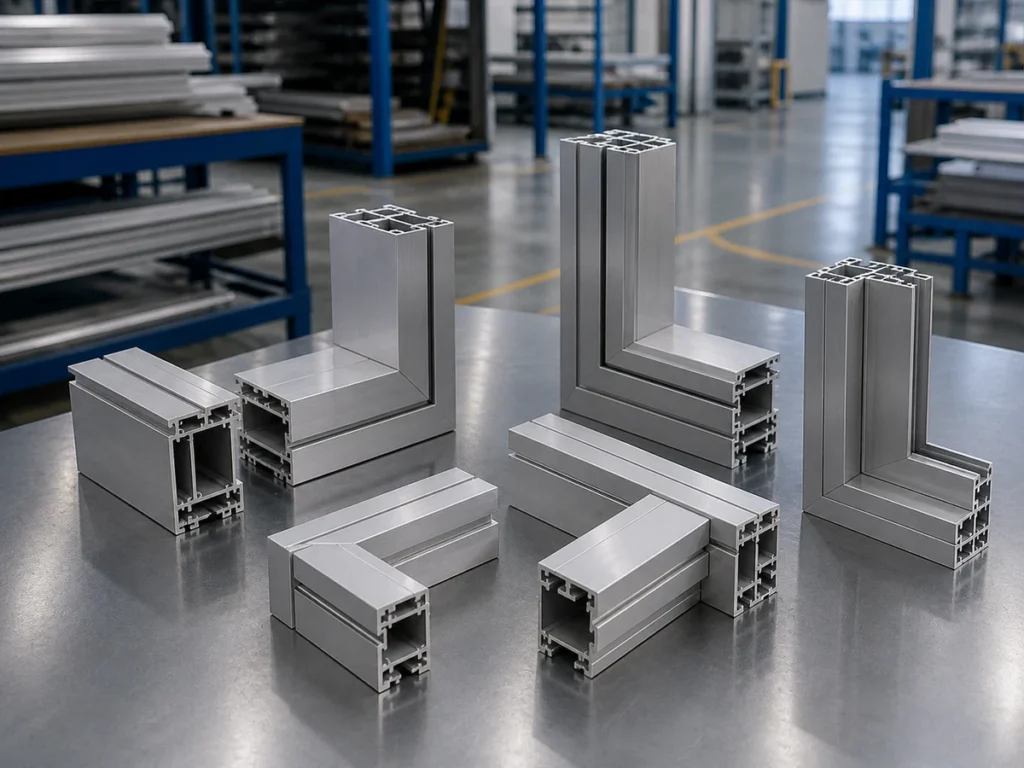
What does your assembly team need to receive?
Tell Jiurun whether the normal job calls for repeated part groups or the members for each frame together.
A simple example: similar pieces for different frames
Imagine two frame orders using the same profile. Some members look similar, but their finished lengths or end directions differ. A profile name alone will not identify which piece belongs to which frame.
Use a clear frame code and a member code. For example, an identification line might read “Display A / top member / profile P1 / drawing A-Top.” Use the codes that fit your actual order.
Keep the same member code on the cutting list and the assembly information. Then explain whether the desired collection group is all matching top members or the complete set of members for Display A.
Our cutting-sequence guide discusses the order in which parts are planned. The collection requirement is the next question: how will those cut pieces stay identified for assembly?
Keep the collection responsibilities clear
Ask who identifies a finished piece, collects it and moves it to the next stage. If the operator handles those tasks, include that work when comparing the proposed workflow with your current method.
Discuss where the parts are placed and how different orders are kept distinct. Ask the supplier to explain the proposed arrangement for a representative part mix. A machine cutting a member does not by itself describe the collection plan for the whole order.

Jiurun’s brochure identifies this model as an automatic corner-cutting machine. Use the member list and the desired collection plan when discussing its proposed configuration.
Show how the pieces belong together
Share the part list, frame codes and desired grouping so the cutting and collection work can be discussed together.
Keep the member list with the assembly drawing
The assembled drawing shows the intended frame. The member list identifies the loose pieces needed to make it. Keep the finished length, end direction and profile section attached to each member code.
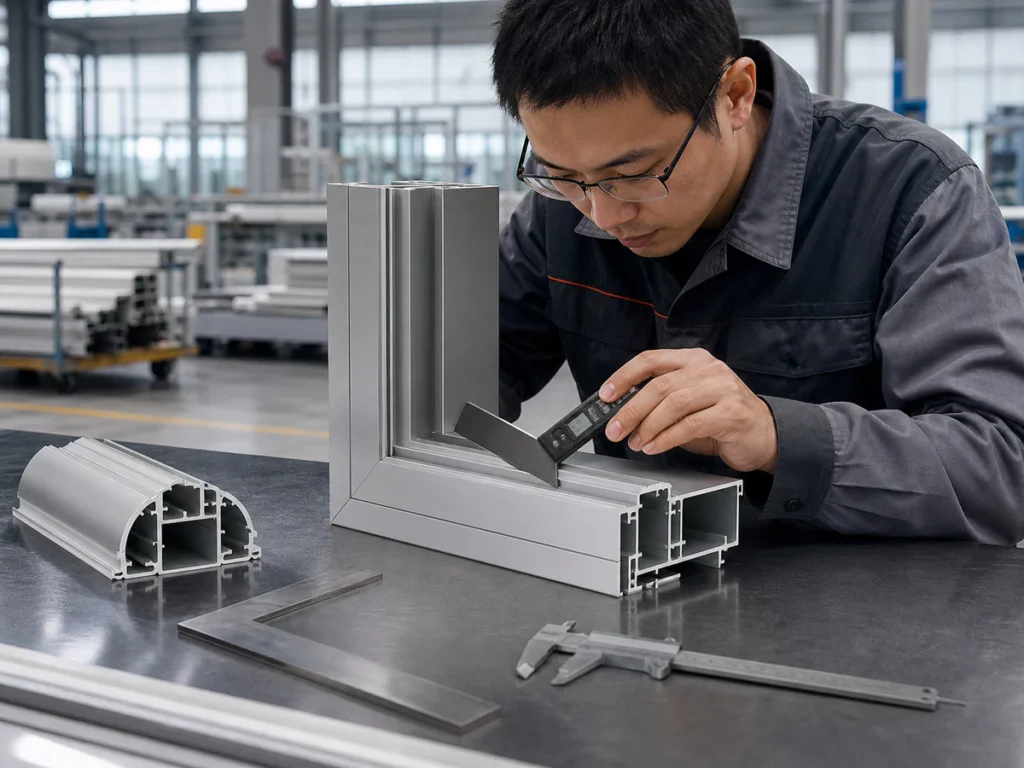
The Aluminum Extruders Council’s fabrication overview places cutting and later assembly within the broader component process. Agree what the next stage needs to receive, then connect that requirement to the cutting-machine proposal.
Watch: Jiurun angle-saw demonstration
Use this reference when discussing the end shapes of the members in your normal frame orders.
Discuss aluminum frame cutting with Jiurun
Describe the parts your assembly team needs and how they should be grouped. Ask for the actual equipment and operator responsibilities to be clear in the proposal.
Machine context: Jiurun brochure, physical PDF page 13, through Catalog & Downloads. Part identification and collection must be explained for the proposed configuration; the collection plans here are buyer requirements to discuss.