
Review aluminum saw material waste across a complete agreed cutting job, not just the short piece visible at the end of one bar. Separate material removed by cuts, planned end trims, remaining stock and rejected parts. Record the accepted parts too, so the discussion shows what the stock actually produced.
Start with the order you need to make
Share the incoming profile and stock lengths alongside the finished part list. Include the end shapes and the quantities that normally run together. This gives a material-use discussion a clear starting point and a clear finished result.
Imagine comparing a demonstration of repeated short pieces with your normal order of longer, differently angled members. The remaining stock in those two jobs may differ. A small leftover in the demonstration does not establish the result for your order.
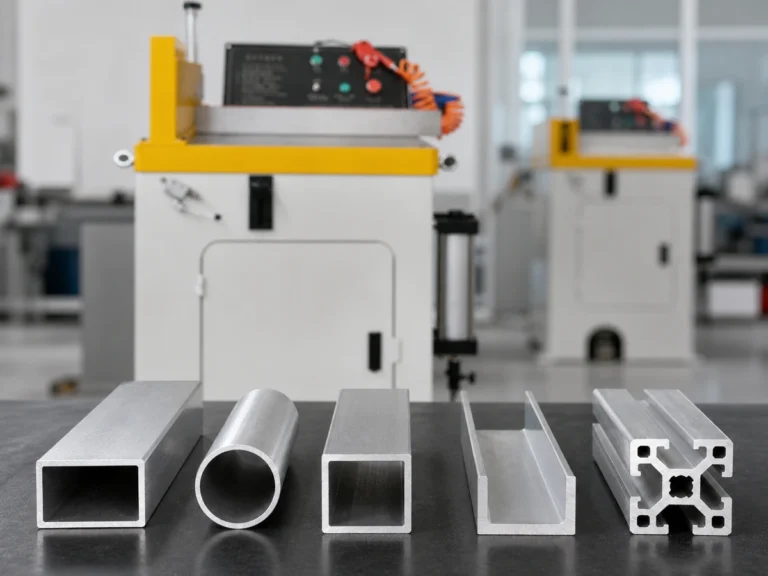
Which part of the material loss concerns you?
Tell Jiurun whether the main issue is offcuts, repeated trimming or finished pieces that must be rejected.
Keep four material records separate
A single scrap total can hide different causes. Use these records to describe the job. Remaining stock belongs in the record even when you intend to keep it for another order.
| Record | What to identify |
|---|---|
| Material removed by cuts | The cutting gaps and the blade/setup used in the comparison. |
| Planned end trims | Sections removed to establish the required stock end or finished end shape. |
| Remaining stock | What remains after the job, and whether a specific later use is agreed. |
| Rejected parts | Pieces that do not meet the agreed finished-part requirements, with the reason. |
Saw cuts remove material. The cutting width, often called kerf, belongs in the material discussion. Ask the supplier to identify it for the blade and setup being reviewed instead of assuming a value from a machine photograph.
Also state how you measured the records. Do not compare one offer’s leftover length with another offer’s total scrap weight as if they describe the same result. Agree on the basis before drawing a conclusion.
Bring the stock and the accepted parts into the same discussion
Share the part list and your existing material records so the comparison covers the complete job.
Give remaining stock a clear destination
A remaining piece may have a useful later job, but that job needs to be identified. Check its section, condition, available length and required end shapes against the later part. Ask whether the proposed cutting arrangement can handle that piece before counting it as reusable stock.
Keep “retained for a named job” separate from “put aside with no plan.” This makes the material discussion clearer without treating every leftover as either worthless scrap or a guaranteed usable part.
Count the finished parts that meet the drawing
Material use is only useful when it is connected to acceptable parts. Keep the finished length, end direction, fit and surface requirements clear. Record rejected pieces separately so a small visible offcut does not hide a finished-part problem.
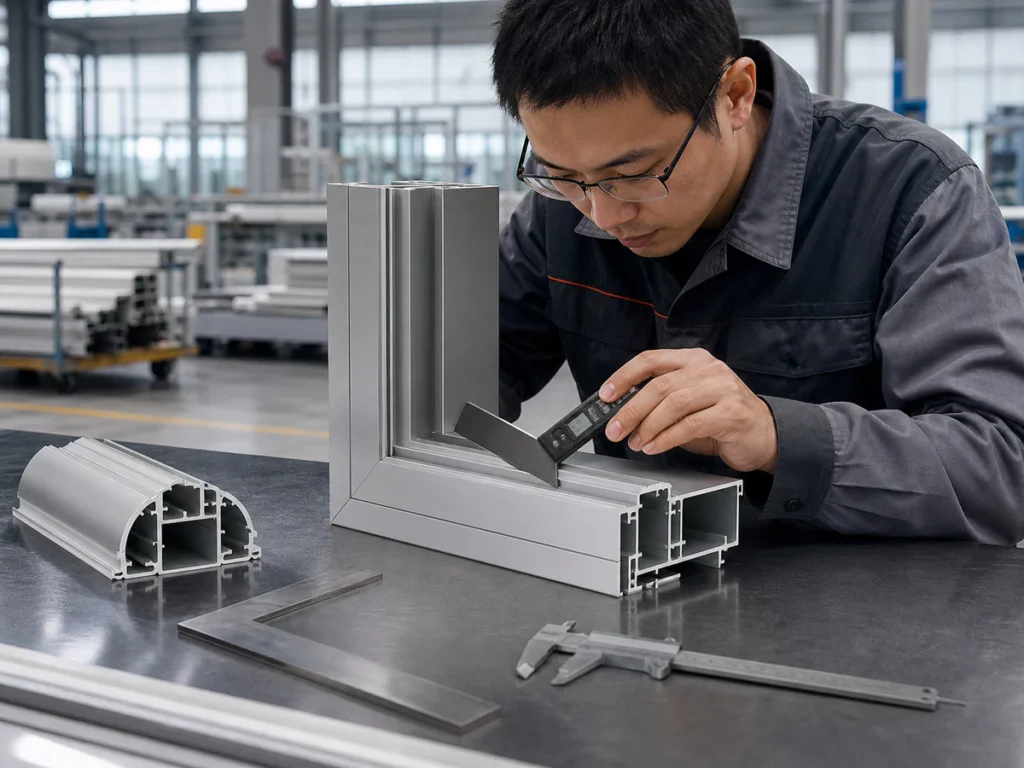
Our sample and first-batch guide explains why the normal order belongs alongside a finished sample.
Connect the material review to the saw proposal
Ask Jiurun to explain the proposed stock route and cutting pattern for your actual order. Keep the machine configuration, included equipment and operator responsibilities visible in the comparison. Ask what has been observed and what still needs to be checked.

Jiurun’s brochure identifies this model as an automatic corner-cutting machine. The cutting-sequence guide gives more context for discussing a part mix before choosing a workflow.
Watch: Jiurun angle-saw demonstration
Use this machine reference when discussing the stock route and finished parts in your order.
Discuss aluminum saw material waste with Jiurun
Start with a normal order and the material problem you want to address. Ask for a comparison tied to your stock and acceptable finished parts.
Machine context: Jiurun brochure, physical PDF page 13, through Catalog & Downloads. LEUCO’s blade listing provides cutting-width context; blade suitability and the actual cutting arrangement belong in the supplier’s review.